The Incident DVD


I am not a fan of Matthau but he is undeniably strong in this one.

Produced in 1990 by Qintex Entertainment

The Incident is an Emmy-winning made for TV movie about a fictional POW camp for German soldiers in World War II. They are being held in Camp Bremen, in Bremen, Colorado (the movie was actually filmed in Colorado Springs).  During the World War II, the United States held thousands of Axis POWs in similar camps in rural areas throughout the country.

The local town doctor is also the POW camp doctor. He is murdered at the camp and a German sergeant looks to be guilty. A civilian trial is ordered due to political considerations and the local ne'er-do-well attorney played by Walter Matthau is appointed by the judge (played by Harry Morgan of M*A*S*H and Dragnet fame) to defend the German suspect.

Matthau is strong with a wide variety of emotions displayed - not overdone, not underdone - just right. He has several strong scenes with his character's granddaughter played by Ariana Richards (best known as the blond girl from the Jurassic Park movies).

This movie inspired two sequels starring Matthau and Morgan. Richards was in one of the sequels.

I rate this DVD 5 stars out of 5. It can be found on Amazon.com here: The Incident

Reviewed on August 8, 2007.

Letters from a Slave Girl: The Story of Harriet Jacobs by Mary E. Lyons


The fictionalized version of a real-life runaway slave story.

Originally published in 1996.

Mary E. Lyons' book Letters from a Slave Girl is a fictionalized account of the true story of Harriet Jacobs, a slave girl from North Carolina who escaped and hid in her grandmother's attic for seven years, beginning in 1835, before making her way north to freedom.

Lyons chose to use a fictional diary format to tell the story of Harriet Jacobs. In real life Jacobs could read and write and actually published a book about her life in 1861 called Incidents in the Life of a Slave Girl.

The reward notice for Harriet Jacobs
The diary format has some strengths - it is an efficient way to note the passage of time and to tell about Harriet's feelings. However, it is not nearly as memorable as telling her story as a novel. The letters just do not have the same flow and impact as a story.

The book also include a set of pictures of some of the real people and places involved, a family tree and a thorough bibliography.

I rate this book 4 out of 5 stars.

This book can be found on Amazon.com here: Letters from a Slave Girl.

Reviewed on August 15, 2007.

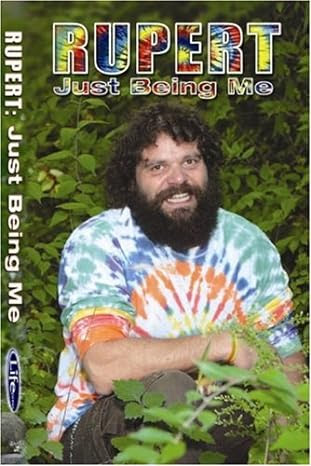
Rupert: Just Being Me by Rupert Boneham


Despite the lack of details about "Survivor" it is a solid autobiography


Published in 2007 by Life Press

Rupert Boneham is one of the few bona fide celebrities to have come from the "Survivor" television show. Rupert tells about his difficult family life growing up in Kokomo, Indiana, his difficulties as a young man struggling with alcohol, drugs, tricky female relationships and his own desire for an instant family. However, through it all that big heart of his shines through and the reader is rooting for him to find his way.

Despite his gruff and bearlike appearance, Rupert: Just Being Me confirms that the attribute that we loved him for on Survivor was no act - this man is a Teddy Bear with a heart as big as all outdoors.

Most enjoyable is Rupert's discussion of helping troubled teens. Even at his lowest, Rupert helped out kids - often his program was their last chance to stay out of jail. Rupert proudly details some of his successes and acknowledges that some kids need "a thousand strikes" before they get it figured out.

Rupert Boneham
You know how people say that if they won a million dollars they'd help out this charity or do something to help make things better. Mostly that's wishful thinking. But, Rupert is a guy that followed through and he proudly talks about his Rupert's Kids program in the last half of the book. He also includes addresses, websites and e-mails for his organization. As an Indianapolis resident I can assure you that Rupert still is quite active in the community and still attracts a crowd around here. His image and name are used with a number of good programs around town, and that's one of the reasons we love him.

Unfortunately, due to contractual obligations with the TV show, Rupert is not allowed to discuss "Survivor" at all in his book. In fact the word "Survivor" is not even in the text, only in a legal disclaimer page inside the front cover. Too bad, but it is still a strong read.

I rate this book 5 stars out of 5.

This book can be found on Amazon.com here: Rupert: Just Being Me.

Reviewed on August 15, 2007.

The Fall of Rome: A Novel of a World Lost by Michael Curtis Ford ...


Solid and entertaining with good battle sequences

Published by Thomas Dunne books in 2007

While not as strong as Stephen Pressfield in Gates of Fire, Michael Curtis Ford makes a strong contribution to the burgeoning collection of historical fiction books set in ancient times.

In The Fall of Rome, we follow Odoacer, a real-life German/Hun who variously fights against and fights for the Roman Empire in its last days. The fight sequences are strong and with the exception of a couple of slow spots early on, this book hums right along. If readers are unaware of Odoacer's true place in history they may want to delay researching him until they have finished the book in order to avoid spoilers.

A coin bearing the image of
Odoacer (433-493 A.D.)
Part of Ford's style is to narrate without necessarily telling you the year or how much time has passed. From time to time he gives dates but oftentimes you have to guess how many weeks/months/years have passed. This is annoying at best and sometimes confusing for several pages.

This book is not an overall sweeping epic that covers all aspects of the fall of Rome. There is minimal discussion of corruption, except at the very highest levels. There's no discussion of cultural aspects, financial troubles and any of the other myriad issues that caused the collapse of the Roman Empire. The book focuses almost exclusively on the military aspects of the time.

One glitch leapt out at me - on page 84 Ford has the Huns using "compound bows" rather than compound recurve bows. The compound bow was not invented until the 20th century. I am sure this was a mis-stroke of the keyboard, perhaps he meant a similar word such as "compact" or "composite." The only reason I mention it is to warn readers who are familiar with the true destructive power of a compound bow - the Huns would have loved them but they did not have them.

I rate this book 4 stars out of 5.

This book can be found on Amazon.com here: The Fall of Rome: A Novel of a World Lost.

Reviewed on August 20, 2007.

Slave Ship (Star Wars: The Bounty Hunter Wars, Book 2) (audiobook) by K. W. Jeter


This is a prime example of the worst that can happen to a perfectly good sci-fi series.


Published in 1998 by Random House Audio
Read by Anthony Heald
Duration: 2 hours, 58 minutes
Abridged

The action in Slave Ship takes place during Episode VI (Return of the Jedi) but includes plenty of flashbacks to right after Episode IV (A New Hope).

To be fair to K.W. Jeter, it's not like he has a completely free hand to do what he would with these characters - there's an existing Star Wars timeline to deal with. However, that is not the entire problem with this book. It is repetitive and tedious - the audiobook presentation only enhances the repetitive nature of the text. I must have heard the phrases "Kuat of Kuat" and "Kuat Driveyards" a hundred times in a 10 minute period. Pronouns, anyone? So much conversation and so much of it repeating the same phrases over and over again.

This book also hold the record for most uses of the word "murderous". "Murderous rage". "Murderous glare". "Murderous intent". I actually considered keeping a tally.

Anthony Heald, the reader
The book was well-read by veteran actor and reader Anthony Heald. He did a very good job with all of the voices, including using many different accents and speech patterns. I like Heald's work so I was glad to see him get the opportunity to read this book because a paying gig is a paying gig, but I also felt bad that he actually had to read this book out loud.

As in other Star Wars audiobooks there is a liberal sprinkling of the original Episode IV soundtrack and it incorporates original Star Wars special effects. However, from time to time the music drowned out the reader's voice and some of the special effects were irritatingly repetitive (spaceship background noise, etc.).

I rate this audiobook 2 stars out of 5.

This audiobook can be found on Amazon.com here: Star Wars: The Bounty Hunter, Book 2: Slave Ship

Reviewed on August 29, 2007.

The Last Voyage of Columbus: Being the Epic Tale of the Great Captain's Fourth Expedition, Including Accounts of Mutiny, Shipwreck, and Discovery by Martin Dugard


"He chose to live a bold life rather than settle for mediocrity"

Published by Back Bay Books in 2006.


"The only certainty about Columbus is that, for better or worse, he chose to live a bold life rather than settle for mediocrity." (p. 268)

That is how Dugard ends a lively and informative biography of Christopher Columbus. As the title indicates, Dugard focuses on the fourth voyage of Columbus and its successes and mishaps. In order to properly place this voyage in its correct context, he uses the first half of the book to give the reader a fairly comprehensive biography of Columbus, as well as a thorough look at the politics of the day and other voyages of exploration, especially those of the Spanish and Portuguese.

Christopher Columbus
(1451-1506)
Columbus has been a whipping boy for the politically correct crowd for decades now. Dugard does a solid job of putting Columbus's actions in their proper context without becoming an apologist for his actions. Dugard is unabashedly admiring of Columbus's skills as a navigator and his bravery, but he's quite critical of his abilities as a colonial administrator. His narrative would be a wonderful movie except for two things: #1) Columbus is still radioactively politically incorrect; #2) No one would believe it.

It is a fascinating story and I highly recommend this read. However, I cannot give it 5 stars because Dugard does the unthinkable for a writer of any history - he fails to provide any sort of footnotes or endnotes. None. He does provide an extensive bibliography, but that is not good enough. I require my high school students to provide footnotes or endnotes. Dugard should do the same thing.

This book is found on Amazon.com here: The Last Voyage of Columbus.


I rate this book 4 stars out of 5.

Reviewed on August 31, 2007.

"R" is for Ricochet (Kinsey Millhone #18) (audiobook) by Sue Grafton


Should have been titled "S is for Slow" or "T is for Tedious"

Published in 2004 by Random House Audio
Read by Judy Kaye
Duration: 11 hours, 33 minutes

"Occasionally I'm simply a minor character in someone else's play." -Kinsey Millhone.

R is for Ricochet really is an appropriate title for this one since, like a misfired bullet that bounces around and hits uninvolved bystanders, Kinsey gets caught up in a client's mess and nearly gets herself killed.

Set in July of 1987, this is one really slow-developing book. Lots of detailed descriptions of Kinsey's clothing, her client's clothing, the bad guy's clothing, Kinsey's thought processes about her clothing choices, the clothing of the IRS agent in the story, the clothing of a witchy rich lady, the clothing of Kinsey's love interest, the clothing a stripper wears to work, shopping malls, the clothing they look at in the shopping mall, hotel hallways, hotel lobbies, streets, and two separate descriptions of the same office hallway all make it one boring audiobook experience.

Now, don't get me wrong - the reader (Judy Kaye) does a tremendous job of giving each individual character a distinct voice and she captures Kinsey's wisecracking side perfectly, but this story cannot be saved by a great presentation. It is too slow and it should have been about one-half as long. I listen to audiobooks as a diversion as I drive. Many times I had to turn this "diversion" off so I would not fall asleep and careen off the road. It is not saved by the fact that the book does pick up the pace at the end - all that did was make me wonder why we had to lollygag through the first 80% of the book.

I rate this audiobook 2 stars out of 5.

This audiobook can be found on Amazon.com here: R is for Ricochet by Sue Grafton.

Reviewed on September 22, 2007.

The Real Stars: In Today's America, Who Are the True Heroes? by Ben Stein


Thoroughly enjoyable. Quick, thought-provoking read

Published by New Beginnings Press in 2007

The Real Stars: In Today's America, Who Are the True Heroes? is inspired by Stein's "Nick and Jessica" column - a column that was copied and pasted and forwarded to millions of e-mails across the world. Stein has collected a series of columns from the years 1978-2006, mostly from the 1998-2005. Topics range from Elvis and the celebrity culture to Richard Nixon to current foreign policy to the widows and orphans of fallen soldiers to the deaths of his parents.

Ben Stein
Often profound and usually very funny, Stein usually has a gentle wit and tries to put a gentle spin on things. But, 2 or 3 of these essays demonstrate that Stein can be cutting (however, his cutting observations are correct) and those are all of the more powerful since they stand out from the norm.

Although this is a relatively short book, Stein's essays about his parents are worth the price of the book all by themselves. If his comments about his father ("My Father's Estate") don't bring a tear to your eye your soul is in serious trouble.

Ben Stein - a Hollywood insider, a political insider and, more importantly, a guy that does get it - he understands what's really important in this life.

I rate this book 5 stars out of 5.

This book can be found on Amazon.com here:
The Real Stars: In Today's America, Who Are the True Heroes?

Reviewed on September 27, 2007.

A People's Army (kindle) by T.C. McCarthy


Published in 2012 by Orbit

This short story (Amazon's Kindle Store estimates its length to be about 32 print pages) is the tale of a North Korean tank commander named Choi Chung Ho in a future war against the Americans on a frozen planet. The North Koreans and the Chinese combined forces are taking a beating from an advancing formation of American tanks. There are four people in Choi Chung Ho's damaged tank and two are rookies. His under-gunned, practically crippled tank is the only thing that can prevent the American forces from completely sweeping the field.

Kim Il Sung (1912-1994)
The story of how Choi Chung Ho repairs his tank and goes back into the fight is interesting enough, but McCarthy spices things up by throwing in little tidbits like having the North Koreans cloning Kim Il Sung (the original member of the Kim family to rule North Korea) over and over again to lead North Korea. Kim Il Sung #58 is in charge now. It seems a little crazy at first, but then again, maybe not. North Korea is more than a little odd and they still refer to him as the "Eternal Leader" and his son has been given several posthumous jobs (yes, he still gets work, even though he is quite dead).

T.C. McCarthy
A frequent theme of the story is the ubiquitous presence of the North Korean propaganda machine and how the experienced soldiers just aren't buying it any more. This is not just a North Korean issue - in all wars the propaganda just loses most of its meaning when the bullets are flying and your friends are dying. It is interesting to watch the changes in one of the newbies as the story moves along.

I was also struck by the parallels to the Korean War. One of the most famous battles is the Battle of Chosin Reservoir. At the "Frozen Chosin" we have the position reversed - overwhelmed American forces barely escape an onslaught of Chinese and North Korean troops.

With top rate action and plenty to think on as you read, A People's Army is a great one sitting short story.

I rate it 5 out of 5 stars.

You can find this short story on Amazon.com here: A People's Army

Reviewed on June 21, 2012.

A War Like No Other: How the Athenians and Spartans Fought the Peloponnesian War by Victor Davis Hanson


Published by Random House Trade Paperbacks in September of 2006.

A War Like No Other is classical historian Victor Davis Hanson's offering on the Peloponnesian War - the 27 year struggle between the Delian League (Athens and its allies) and the Peloponnesian League (Sparta and its allies) that ran on and off again from 431 to 404 B.C.

Hanson's book is perhaps also a "book like no other" if I may borrow a phrase. Despite the prominently placed quote for the New York Times on the front cover proclaiming that it is a contemporary retelling of the war, this is not a narrative history of the war. Rather, it does exactly what the subtitle promises - it tells the reader HOW the war was fought. It analyzes the techniques, the weapons, the strategies and the tactics but it is not a history per se. The book vaguely follows the course of the war, but often shifts backwards and forwards through the decades of the war and even before and after the war.

Victor Davis Hanson
Giving this one a rating is tricky. It is well-researched and well-written. Hanson does a tremendous job of linking the events of the past with more current events, such as World War II, the Cold War and terrorism. In a way, you could say that the quote (and title of the book) from the ancient historian Thucydides was really not true, this war was not a war like no other, instead at least parts of it are like every war that followed since.

While well-written, I think that Hanson's decision to break the book up into thematic units ("Fire", "Disease", "Terror", "Armor", etc.) made the book less strong than if it had been told in more of a narrative manner. Hanson provided tons of endnotes to document his work which is a strength and indicative of the quality of work that Hanson creates, it was also quite annoying. Not the notes themselves, but the fact that they were endnotes with commentary requiring the reader to constantly flip back and forth to the end of the book and to keep two sets of bookmarks- one for the text and one for the endnotes. If a writer plans to write additional commentary in his or her notes common decency would suggest that footnotes are better for the reader. The continuity and flow of the main text is not broken by constant flipping to the back of the book. Shelby Foote did this to great effect in his gigantic 3 volume Civil War series. Tom Holland uses both in his book "Rubicon" - notes at the end, additional commentary at the bottom of the text.

As a history teacher, I found immediate uses for portions of the book in my classroom. I read to my class from Hanson's description of life on the Greek naval vessels and was able to use his information to give a brief description of the war and the experience of the soldier. I do recommend this book for serious world history teachers and any aficionados of classical ancient history.

I rate this history 4 stars out of 5.

This book can be found on Amazon.com here: A War Like No Other.

Reviewed on October 6, 2007.

Killer Smile (Rosato and Associates #9) by Lisa Scottoline


Mary DiNunzio is back for more.


Published in 2004 by HarperCollins 

I have a soft spot for Lisa Scottoline. Many years ago I was working in a used book store when I ran across her first book, Everywhere that Mary Went and I loved it. We had two copies of that book and we must have re-sold them a dozen times after I started recommending them to people who asked for someone new to read. Pretty soon, Lisa Scottoline was one of our hottest items - we even special-ordered in some new copies! I like to think that I had a very, very small part in her success, even though the used book store is now defunct.

Killer Smile continues on with several familiar themes in Scottoline's books. Once again Bennie Rosato's all female (with the exception of an office manager) law firm swings into action in a case involving the Italian neighborhoods of Philadelphia. Mary DiNunzio, Scottoline's original character is back with a pro bono case based in history. Some Italians were sent to internment camps during World War II (much like the Japanese camps but not nearly as numerous) and this is at least the second book in the series that focuses on this sad fact of American history.
Lisa Scottoline


DiNunzio is investigating the mysterious death of a prisoner in an Italian internment camp, despite the 60+ year time lag. And, it turns out that some people do not want this old case solved and are willing to use violence to keep Mary away.

This is a fun, quick read - great escapist reading.

I rate this book 4 stars out of 5.

This book is available at Amazon.com here: Killer Smile.

Reviewed on October 6, 2007.

Superman/Batman Vol. 1: Public Enemies (graphic novel) by Jeph Loeb


A review by an infrequent reader of comics

Published in 2005 by Titan Graphic Novels.
Originally published in 2004 by D.C. Comics

First things first.

If you are a writer, Superman can be limiting as a character. He can't be hurt (technically, I know he can but who has Kryptonite sitting around?), he has the tools to deal with any situation. He has a healthy psyche. Good guy to have on your side but not particularly interesting. 

Batman, on the other hand, he oozes character exploration opportunities.

Surprisingly, Loeb and company have made Superman very interesting, by looking at him through the prism of Batman, and also by seeing Batman through Superman's eyes. Their chosen format of having dueling interior thought lines from Batman and Superman offer the reader an interesting opportunity to see these tried and true characters anew.

This was a fun plotline - an interesting and entertaining read. The choice to use the Adam West TV show Batmobile was great, since it was by far the coolest of the bunch. There are lots of inside jokes, such as having lines lifted from the various TV shows and movies that have featured Batman and Superman.

Highly recommended.

I rate this graphic novel 5 stars out of 5.

This graphic novel can be found on Amazon.com here: Superman/Batman Volume 1: Public Enemies

Reviewed on October 6, 2007

Rubicon: The Last Years of the Roman Republic by Tom Holland


Published in 2005 by Anchor

Rubicon: The Last Years of the Roman Republic is a well-written fact-filled narrative interpretation of the end of the Roman Republic. Interpretation? Of course - all history books are the author's interpretation. Holland has his biases, but it does not distract from the power of the book. With the exception of a slow bit in the middle, this is an entertaining read and worthy to sit on the shelf next to other histories of Rome.

I wholeheartedly recommend this one for enthusiasts (his spin on things should pique your interest) and also for newcomers to Roman history. It is a fine springboard for further study.

Tom Holland
That being said, I do have a little bone to pick with the author, on a topic that has little bearing on the text as a whole. On p. 21 (paperback) Holland claims that the Circus Maximus, the chariot racetrack, was the largest sports arena in the world (200,000 spectators) and it still holds that title today. That is an oft-repeated by British authors and documentaries. As an Indianapolis resident I must correct this - the Indianapolis Motor Speedway has permanent seats for more more than 250,000 and more than 400,000 have been known to cram in to the track in May to watch the Indy 500. Around 300,000 come to the Brickyard 400 as well.


I rate this book 4 stars out of 5.

This book can be found on Amazon.com here: Rubicon: The Last Years of the Roman Republic.

Reviewed on October 22, 2007.

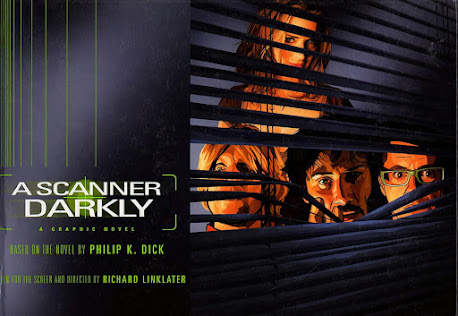
A Scanner Darkly [Graphic Novel] by Philip K. Dick


I was expecting more


 Published in 2006 by Pantheon

I may be living in a box because I had not heard of this book or the movie before I found the graphic novel. When I saw it was based on a Philip K. Dick book I was hopeful - after all, he is the author of such thought-inducing works as Do Androids Dream of Electric Sheep (A.K.A. Blade Runner) and he is the inspiration for The Minority Report and Total Recall (Not that Total Recall is as deep as the other two, but there are some themes that the three share, including a caste system based on birth, be you an android, a mutant or someone who can see the future).

What I hoped would be a thoughtful commentary on the "War on Drugs" and/or the damage that drugs do to the user turned into a rambling work of several episodes in the lives of some druggie pals and the undercover narc officer who has caught himself in the web of addiction. Sometimes funny, usually odd, this book just never lived up to the other Philip K. Dick works mentioned above. It never gelled, it never reached that critical mass where it started to make commentary on the folly of drug use, or the folly of empowering our government to go after users, etc.

Much like its characters, this book never really got off the couch and did anything, despite a series of fits and starts in which I thought that it might finally be going somewhere.

I rate this graphic novel 2 stars out of 5. This graphic novel can be found on Amazon.com here: A Scanner Darkly (graphic novel).

Reviewed on December 13, 2006.

Deogratias, A Tale of Rwanda (graphic novel) by J.P. Stassen


An important tale to be told - unfortunately this one fails to tell it well enough

Published by First Second in 2006.

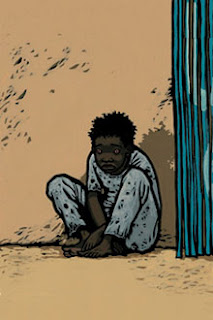
Deogratias is the name of a young man from Rwanda. The story dances back and forth between pre- and post-1994 massacre Rwanda. Pre-massacre Deogratias is a likeable young man. Post-massacre Deogratias is insane. As one reads this graphic novel one finds out what drove him insane - in a climax that is not all that surprising or shocking (just sad), especially if one knows any of the detail of the Rwanda massacre.

An image from the graphic novel
Great works take the story of one person or group of people in a tragic situation and somehow make their story universal. For example, the Civil War movie Glory is the story of the first all-Black Federal regiment in the Civil War - it is also the story of every soldier - black or white, Union or Confederate. In Saving Private Ryan, the Tom Hanks character epitomizes the average man stuck in a terrible situation doing the best he can and dying in the process.


Deogratias fails to do this. It is too personal. The story is too small. Not to say it isn't important, but rather to say that it fails to become a universal story of the Rwanda tragedy.

My copy of the book has an introduction from Alexis Seigel, the translator. He does an exceptional job of explaining the Rwanda tragedy and its aftermath. I would give his introduction 5 stars.

However, the grade has to go to the graphic novel, not its introduction. So, I give this graphic novel 3 stars out of 5.

This graphic novel can be found on Amazon.com here: Deogratias: A Tale of Rwanda.

Reviewed on December 11, 2006.

This book was listed on a "banned book" list in Florida. Ugh.

And it was put on a book ban list in Tennessee. The article has a searchable database because the list has more than 1,100 unique titles.

The Glory Field by Walter Dean Myers


Published by Scholastic in January of 1994.

The Glory Field is the story of an African-American family and their tie to a piece of land on Curry Island in South Carolina over the course of 250 years.

Reminiscent of the James Michener sagas that follow the same format, The Glory Field is not nearly as detailed or as rich as a Michener selection. However, Michener's primary audience was adults and Myers' intended audience is young adults, most of whom would not have the patience or the courage to pick up a 1,000+ page book.

Myers has broken this book up into a series of six stories, snapshots of the Lewis family throughout nearly 250 years of history. The quality of the stories goes up and down. The 2nd, 3rd and 4th stories are so-so. The first is vivid, strong and way too short. The last two are so strong that, in my mind, they saved the book. I was considering not including it in my classroom library because of the middle stories - they drug along and just didn't have any pizzazz - they were historically accurate - just with no zip.

So, final grade: 4 stars out of 5 (and a place in my classroom library!)


This book can be found on Amazon.com here: The Glory Field by Walter Dean Myers.

Reviewed on December 7, 2006.

The Shape Shifter (Leaphorn and Chee #18) by Tony Hillerman


Despite some flaws, still a strong story (and a possible explanation for the flaws- as a literary device...)


Published by Harper in November of 2006. 

There are numerous flaws in Hillerman's newest book, The Shape Shifter, including a confusing, often rambling first 100 pages or so. However, at about the halfway point in the book it catches some traction and moves forward with purpose and speed and the last half of the book reminds me of the Hillerman of old.

For those readers who are disappointed with this one, might I suggest that some of the flaws are built in on purpose. Not to see if you are paying attention to the overarching plot line, but because the story is not being told with strict and exact attention to detail. Remember, the story is being told from Leaphorn to Chee and Bernadette. Leaphorn makes several references to the old days in which the Navajo stories would be passed down from one generation to the next. Leaphorn missed out on those days because he was bussed to mandatory English school and kept there for months at a time.

Tony Hillerman (1925-2008)
I propose that the story is being told as one of those stories being told from one generation to the next: Leaphorn to Chee and Bernie. It starts and ends in Chee's kitchen with Leaphorn telling them the story. In the end, we know that Leaphorn does not tell them the complete story since they do not know all of the details of the death of the "Shape Shifter". It would be interesting to look at the details of the Navajo creation myths that Leaphorn references so many times (especially those of the brothers who defeat the evil mountain monster that represents greed) and the details of Leaphorn and his ragtag group as they ascend the mountain to take on Mr. Delos, an evil man of multiple personas. Leaphorn's story is not exact to the timeline since it is not really of the timeline - he has taken it out of the timeline and made it one of the stories that the elders teach to their children (Chee is the closest thing Leaphorn has to a son in the stories). Leaphorn's lesson might be that despite the fact that Leaphorn is the Legendary Lt, sometimes the strictest attention to the law is not necessary and does not lead one to Justice.

For those that tire of the references to "Legendary Lt. Leaphorn" and "Lt. Leaphorn, retired" - those are most certainly plot devices. He uses Legendary to poke fun in a self-deprecating way at Leaphorn when he is not doing well at detecting (as in, look at the legend - he's not doing so hot right now, is he?) and Retired when he is confronting new physical limitations. This would go quite well with my thesis of the previous paragraph. It would also explain why Bernie is so insistent on being called Mrs. Chee every time we see her - she is not the real her, she is the Bernie of Leaphorn's story - a caricature of herself, as is everyone else.

So, if my thesis is correct, Hillerman still really has it and has moved on to a higher level of storytelling. Or, he's lost it in a lot of ways and I'm just grasping at straws and seeing connections that are not really there.

Either way, I give this one a grade of 4 stars out of 5 - the last half of the book is so strong that it saves the rambling beginning.

Reviewed on December 3, 2006.

This book can be found on Amazon here: The Shape Shifter

Q-Squared (Star Trek: The Next Generation) (abridged audiobook) by Peter David


A thoroughly entertaining audiobook experience

Published in 1994 by Simon and Schuster Audio Division
Read by John de Lancie
Duration: 2 hours, 59 minutes
Abridged

I picked this audiobook up at a library sale - they were clearing out all of their audiobooks on cassette. So, I picked up a bunch of them and dusted off the Sony Walkman (literally) and gave it a listen. Back in the day (1994) most audiobooks were edited to about 3 hours. This book was originally over 400 pages long so it was edited extensively as well, although the cover does not admit to it. That being said, the editing was very well done here. This could have been an extraordinarily confusing book considering that it bounces around in 3 different universes, but the editors have demonstrated a great deal of skill. All that being said, Q-Squared is not an audiobook for the Star Trek newbie.

In the original Star Trek, Captain Kirk and company encountered Trelane, a being of extraordinary power but very little maturity who called himself "the Squire of Gothos." Trelane captured the Enterprise, verbally sparred with Spock and Kirk and finally ended up in a sword fight with Kirk. He was just about to beat Kirk when Trelane's parents interceded and took their very naughty boy away and set the Enterprise free.

Peter David goes ahead and makes Trelane a member of the Q Continuum and has Q, the character from Star Trek: The Next Generation serve as Trelane's godfather. Trelane is basically working as an apprentice under Q as a favor to Q's friends, Trelane's parents. Trelane and Q come to Captain Picard's Enterprise to learn about humans and see how they operate.

Picard and Q. Q is played by the reader of this audiobook, 
John de Lancie
But, Trelane gets a bellyfull of being told he's a nuisance and that he shouldn't use his awesome powers to make people he dislikes disappear. Trelane comes up with a plan...


There is a theory that there are actually multiple universes out there, not just one. This book follows three of them. The first is the standard Star Trek storyline. The second is a storyline in which the Federation and the Klingons are at war and the Federation is losing badly. The third is one in which Jack Crusher, husband of Dr. Beverly Crusher and best friend of Captain Picard is not dead. In fact, he is the Captain of the Enterprise, newly divorced from Dr. Crusher and Picard and Dr. Crusher are having a secret torrid affair.

Trelane's plan to get even with the Enterprise involves melting away the "walls" that separate these universes (and all of them, I suppose), blocking the Q Continuum from interfering and killing Q. But, Q does not die and the injured Q works his way through all 3 universes to fight Trelane with Picard's help. It is entertaining to listen to the interaction amongst them all and painful to listen to Trelane do his best to make Jack Crusher a source of even more pain for Dr. Crusher and Picard.

Trelane and his harpsichord in the original 
Star Trek series
The audiobook is read by John De Lancie, the actor who portrayed Q in the Star Trek: The Next Generation television shows. He captures the voice of his own character perfectly (of course) but he also nails the voice of Trelane as well with a manic and injured tone that captures his insanity and his dangerous side. Throw in some decent sound effects (including what has to be the loudest turbolift in Star Fleet...) and an interesting twist to the musical score that includes a harpsichord being played as Trelane's insanity builds to a crescendo (Trelane really enjoys the harpsichord) at the end of the book and you have a thoroughly entertaining audiobook experience.

I rate this audiobook 5 stars out of 5.

This audiobook can be found on Amazon.com here: Q-Squared by Peter David.

Reviewed on June 19, 2012.

Guilt (Abe Glitsky #2) by John Lescroart


I hate to be the party pooper but...


Published in 1997.

Despite good experience with Lescroart in the past, despite the rave reviews on the back cover of Guilt and a dozen rave reviews inside the front cover, I found myself only caring about what happened to Abe Glitsky. The slow-moving, plodding plot line only reinforced the fact that I did not care what happened to the Mark Dooher. Did he kill his wife? I don't know - it's mentioned in the first sentence in the plot synopsis on the back cover and 200 pages into the book she's still alive and I'm getting irritated at reading about Dooher's connivings to sleep with one of his young employees.

So, anyway, I read exactly 200 pages of this book. It was not easy. I was forcing myself to continue on, much like I would do with a college textbook.

Then I came across the new Tony Hillerman book and I gladly dropped this one into the box of books that I'm dropping off at the Goodwill. Thank goodness I am now "Guilt" free!.

I rate this book 1 star out of 5.

This book can be found on Amazon.com here: Guilt by John Lescroart.

Reviewed on November 26, 2006.

Featured Post

<b><i>BAN THIS BOOK (audiobook)</i></b> by Alan Gratz

Published in 2017 by Blackstone Audio, Inc. Read by Bahni Turpin. Duration: 5 hours, 17 minutes. Unabridged. My Synopsis Ban This Book is t...

Popular posts over the last 7 days