Showing posts with label gun control. Show all posts

CITY of WINDOWS (Lucas Page #1) by Robert Pobi


Published by Macmillan Audio in 2019.

Read by Stephen Graybill.
Duration: 11 hours, 5 minutes.
Unabridged.

City of Windows features Lucas Page, a certified genius (an astrophysicist) with a special talent - he can envision the relations between the stars as they rotate in the sky above and predict where they will go mathematically. It is a natural talent, one he's had since he was a little boy. He can apply this skill to crime scenes as well. He can eyeball a crime scene and tell from what direction and angle a shot came from without having to take all of the steps that Crime Scene Investigators usually have to take. 

But, he was seriously injured while on the job with the FBI several years ago. The incident took an eye, a hand and part of a leg. He gladly walked away from the FBI and became a college professor.

But, when his old partner is killed by a sniper with a very long-range shot on a busy road in New York City in the middle of a snowstorm, Lucas Page is reluctantly called back into duty. He easily figures out the angles for the shooting, but the secrets he uncovers along the way in his investigation aren't nearly as easy to deal with...

City of Windows had a lot of positives going for it, including an interesting back story for the Lucas Page, supporting characters that you want to root for and a grown up discussion of guns and violence in America.

*****SPOILERS*****

The book has a lot of discussion of militias and "patriot" movement groups. People who follow these topics, even on a superficial level will recognize the parallels to Ruby Ridge siege of 1992 in Idaho involving the FBI and the U.S. Marshals. It starts out very unsympathetic to their arguments, but then takes a turn that shows that sometimes they have a point. It does not end up supporting them, but makes an interesting discussion.

The book also has an interesting discussion of guns. It never advocates getting rid of them, but readily acknowledges that groups like the NRA (I am a former member) and its ever-active spokesman Wayne LaPierre whip up a lot of outrage no matter whether it makes sense or not and how this interacts with the politics of militias and patriot movement groups.

*****END SPOILERS*****

I ended up rating this book 3 stars out of 5. The mystery was very solid but the author's writing style was often overdone. Too many times he added an extra metaphor that didn't need to be there. For example, I clearly remember a reference to a rope ladder hanging from a house window being compared to a disconnected spinal column. It struck me as the author trying too hard. 

On top of that, the main character, Lucas Page, was more than a little hard to take. Would I want him working on a murder case if I were the FBI? Of course - he's talented and who cares about his manners?

But, I am not working with him - I am choosing to spend 11 hours with him in an audiobook and I don't think I will choose to spend another 11 hours with him in the next book since I wouldn't want to spend 11 hours with him in real life.

Bottom line: This book has some good points, a solid mystery but not enough for me to say it was more than "just okay" and certainly not enough for me to go on with the rest of the series.

This book can be found on Amazon.com here: CITY of WINDOWS (Lucas Page #1) by Robert Pobi.


COSTLY GRACE: AN EVANGELICAL MINISTER'S REDISCOVERY of FAITH, HOPE and LOVE (audiobook) by Rob Schenk


Published in 2018 by HarperAudio.
Read by the author, Rob Schenck.
Duration: 11 hours, 26 minutes.

Unabridged.

In Costly Grace, Rob Schenck tells the story of his life as a story of three conversions. His first conversion was a conversion from Judaism to Christianity as a teenager. Soon after graduating high school, he married and began to work to his certification to join the ministry. He first worked in a shelter for junkies but he found that to be a little too dangerous for his wife. Plus, he longed for something with a larger impact.

He became a pastor with a church but still felt that wasn't enough. He participated in joint missions in Mexico to help those that live in the garbage dumps and scrounge them for food and recyclables. After one of his trips he found that his twin brother (also a pastor) had become involved in Operation Rescue, the anti-abortion movement that encouraged protesters to block the entrances to abortion clinics and use non-violent resistance to stop women from getting an abortion. Eventually, the police would show up and start arresting people and it would become a big spectacle that would make the news.

Schenck was persuaded to attend a protest. This was his second conversion. He promised his wife that he wouldn't get arrested - he was just going to observe. But, the lure of the action was too much and he ended up getting arrested. He was hooked. He loved the idea of taking direct action in the name of the Lord.

He became a top figure in the anti-abortion movement. He confronted public figures for their support (twice he ended up being held for questioning for confronting Bill Clinton). He carried actual aborted fetuses to rallies to show people what they were really talking about when they discussed abortions. He became very familiar with the process of being arrested for the cause.

And the cause was also becoming an influential force in Republican politics.  Schenk worked with all the major players. At this time, he began to seriously study the works of Dietrich Bonhoeffer, a German Lutheran minister who was placed in a concentration camp for his constant questioning of Nazi authorities. Eventually, he was executed by  the Nazis just days before the end of World War II. His studies of Bonhoeffer made him question what he was doing as a Christian.  He began to question the cozy relationship he had with the powers that be in Washington. His questions led him to conclude that his fellow evangelicals were wrong in their unlimited support of the NRA and gun rights, especially after two abortion providers were assassinated.
But, he was most moved by the reaction of several Amish families after a school shooting in an Amish school by a non-Amish man. This is a very powerful section of the book. He begins to openly question how one can be pro-life and pro-gun. Should Christians trust a pistol at their side more than the God who says they should "fear not" and trust only Him? How many other things had he not considered? This is his third conversion.

This third conversion made him look at the close relationship between church and the GOP that he had been advocating since Ronald Reagan first ran for President in 1980. Was the church selling its soul for access to political power? Were basic Christian tenets being forgotten for the opportunity to use the government's power rather than depend on God and his people? Was the price of access to the pinnacle of power too high, especially in the Age of Trump?

Costly Grace is an interesting trip down memory lane for me in a lot of ways. I very much remember Operation Rescue and the mass abortion clinic protests. I also happened to stumble upon a documentary made about him ("The Armor of Light") that struck me and made me do some thinking. Ironically, I didn't remember that he was the subject of this documentary until he described one of the scenes in this book.

Rob Schenck reads his own audiobook and does a good job with it. The book is a little slow at times, but I found the discussion of his third conversion to be well worth the wait. Easily the best part of the book. I know that Rob Schenck and I would not agree on everything, but I also know that it would be a respectful and meaningful discussion. Very thought-provoking book.

I rate this audiobook 5 stars out of 5. It can be found on Amazon.com here: COSTLY GRACE: AN EVANGELICAL MINISTER'S REDISCOVERY of FAITH, HOPE and LOVE.

THE CONSERVATARIAN MANIFESTO: LIBERTARIANS, CONSERVATIVES, and the FIGHT for the RIGHT'S FUTURE by Charles C. W. Cooke


Libertarians and Conservatives - Natural Allies, Natural Rivals

Published in 2015 by Crown Forum

Charles C. W. Cooke is a writer for National Review and as such he has been in the center of a storm as the political Right works through a new generation of thought on a variety of issues. In some issues, the political Right is united, such as on the concept of Limited Government and keeping taxes as low as possible. In others, they have a variety of opinions.

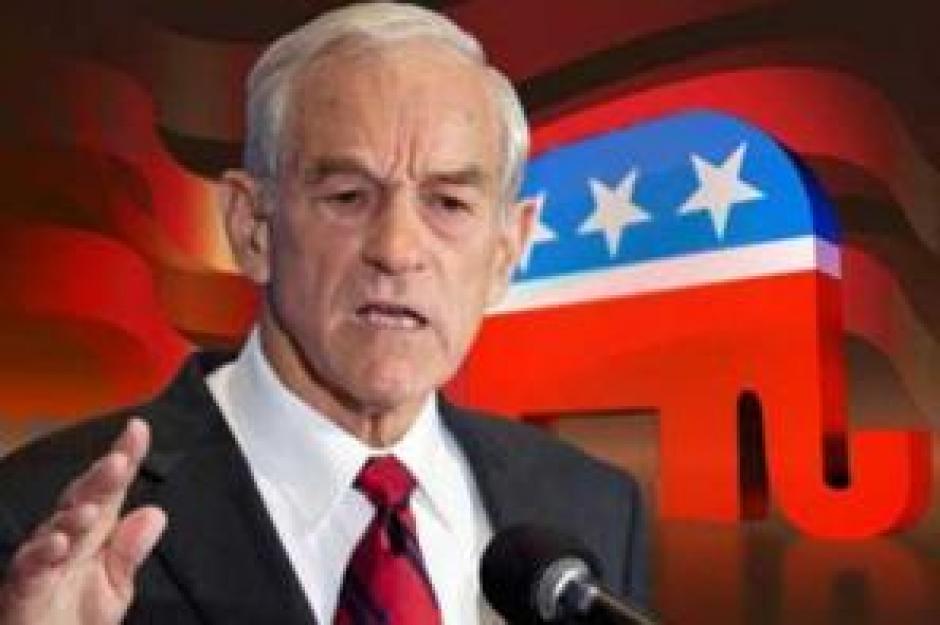
Generally speaking, Libertarians bond more readily with the Right than the Left, which is why Ron Paul identified as a Libertarian for years yet caucused with the Republicans in the Congress and ran for president as a Republican. The dislike of the Nanny State on many issues pushes them together as temporary allies on many issues.

But, on other issues such as the War on Drugs and Gay Marriage the Right is split and split deeply. In The Conservatarian Manifesto, Cooke is attempting to nudge the Republicans a little more to the Libertarian point of view on things so that these temporary alliances between the Libertarians and Conservatives can become more permanent.

This can be difficult, though. The Libertarians tend to view traditional Conservative views as hypocritical - too willing to promote some intrusive acts by the government while decrying an intrusive government. Conservatives tend to view the Libertarian position as naïve and too willing to walk away from any sort of compromise because compromise is in and of itself unacceptable. Or, as Cooke puts it on page 32, "...convinced that logic-on-paper can answer all the important questions about the human experience, dismissive of history and cultural norms, possessed of a purifying instinct, and all to ready to pull down institutions that they fail to recognize are vital to the integrity of the society in which they operate."
Ron Paul


So, the two sides clash "...when the question is 'What should we do' rather than 'what should we oppose?' " (p.33)

So, that is the crux of the book. The two sides have deep divisions but large areas of agreement about where government should not act. It is a well-written, quick read. I come at things from the Conservative with Libertarian leanings camp (like Cooke) so I readily see what he is advocating. My Libertarian relatives are not likely to compromise on any issues, even in the name of making real advances on issues that they hold dear. For them, it is an all-or-nothing proposition (which I get - they hold all of their ideals dearly) but that just is not the way that politics works. Play the game and move towards what you really want. Don't play the game and get none of what you really want but stay ideologically pure.

At least this can be a place to start the discussion.

I rate this book 4 stars out of 5.

This book can be found on Amazon here: 
The Conservatarian Manifesto: Libertarians, Conservatives, and the Fight for the Right's Future

Note: 9 years later anyone can see that the Ron Paul movement and its hybrid Republican/Libertarian movement has become nothing. It looked like the future,  but it is now nothing but an odd offshoot in the MAGA Republican Party represented by almost no one at all. DWD -July 16, 2024.

Deer Hunting With Jesus: Dispatches From America's Class War by Joe Bageant


Published in 2007 by Crown Publishers

Just to get it out of the way, Joe Bageant (1946-2011) and I differ politically despite sharing similar roots. We both grew up in rural America near a working class town. We both were educated in the local public schools and left to go to college and never really went back except to visit (although do I live in a working class neighborhood in a city). Admittedly, his town (Winchester, Virginia) is a little more poor and run down than mine but I may be remembering my home with rose-colored glasses and he may be intentionally focusing on the worst aspects of his.

But, Bageant did return to Winchester in order to write Deer Hunting with Jesus. He returned to be a foreign correspondent of sorts. His aim is to explain white working-class America ("...that churchgoing, hunting and fishing Bud Light-drinking, provincial America...the people who cannot, and do not care to, locate Iraq or France on a map - assuming they even own an atlas." [p.2]) to the left-leaning, college-educated urban wine and cheese set.

Bageant's prose is interesting and lively, but prone to exaggeration, much like a liberal version of P.J. O'Rourke or like the overwrought rantings of stand up comics like Dennis Leary or Lewis Black or Dennis Miller. His points are there and based on real situations but he takes liberties to make his point or to get a good punchline so take everything with a grain of salt. For example, he argues that Presidents don't come from modest beginnings in a rather nice rant but since FDR they all have except for JFK and the Bushes (and maybe Carter, but the other two families were far, far richer than his).

Sometimes his devotion to a certain line of thought leads him to contradictory comments. For example, he deplores the way social security does not take care of widows very well and how it does not pay enough to really take care of a retired worker. But, he rants against any sort of privatization of Social Security over and over again (you may remember that Bush43 tried to reform Social Security right after he re-election) even though the proposed reforms were modeled after programs that let workers pass on the proceeds of their investments to their widowed spouses or even their children.  See page 236-242 for the longest rant on this topic.

Clearly, Bageant does not seem to grasp the religious aspect of Winchester. He does not completely belittle religious belief but he does not understand it. I was struck by an incident early on in the book. He does not grasp the profound generosity of a small congregation of relatively poor people that buys an old pickup truck for a couple that lost theirs to repossession. The congregation has little money and yet they pool what little they have together to  give two of its members an expensive gift (even an old truck costs several hundred dollars). I find that to be a remarkable act of Christian charity. Instead, he dismisses the whole thing with a single comment.

Bageant does a fabulous job of explaining guns, gun rights and notes correctly on page 129 that beginning in the 1960s the left was "arrogant and insulting because they associated all gun owners with criminals but were politically stupid."

Generally, I found the book to be very entertaining, full of interesting commentary but incorrect in almost all of its conclusions.

I rate this book 4 stars out of 5.

This book can be found on Amazon.com here: Deer Hunting with Jesus.

Reviewed on February 16, 2012.

No, They Can't: Why Government Fails - But Individuals Succeed (audiobook) by John Stossel


Libertarianism thought delivered painlessly by nice guy Stossel


Published April 10, 2012 by Simon and Schuster Audio.
Read by the author, John Stossel
Duration: 9 hours, 14 minutes

The title of this audiobook, No, They Can't is a play on the 2008 campaign slogan of then-candidate Obama, "Yes We Can!" Stossel, of course, is the TV consumer reporter turned anchor of ABC's 20/20 who now hosts a weekly show of Fox Business News and a series on one-hour specials on Fox News. He has won nineteen Emmy Awards. He begins his book with an explanation of why he left ABC after more than 20 years and how the culture of ABC made it very uncomfortable for him to explore stories in any way except the tried and true politically correct way.

The premise of the this audiobook is that the entire thought process behind that campaign slogan is wrong  - the government cannot do a lot of the things that people want it to do, and even if everyone agreed it should give those things a try, it would do a very poor job of them because government is inefficient at almost everything it does.

Stossel is an outspoken but soft-spoken Libertarian and he makes a very thoughtful presentation of Libertarian thought on a variety of topics. He generally starts with a variation on this phrase: "Intuition tells me...but reality has taught me..." and presents a commonly held belief (like minimum wage laws helping younger workers) and then presents research that shows that that belief is incorrect (many have no skills and having to pay them more than they are worth means they are unlikely to be hired in the first place).

Stossel covers a variety of topics including free trade, how federal regulations can help the businesses they are intended to regulate, food police, government-provided health insurance, the "nanny state" government, gun control and lots more. The strength of the audiobook is not the ideas (they are fairly standard Libertarian fare) but the way that Stossel presents them. Stossel is inherently likable and he has done a lot of thinking and research to present his arguments in clear, everyday language. His "Intuition tells me...but reality has taught me..." format acknowledges the logic of people that disagree with him and then he lays out his arguments with his nice guy style.

I rate this book 5 stars out of 5. it can be found on Amazon.com here: No They Can't: Why Government Fails - But Individuals Succeed by John Stossel.

Reviewed on May 30, 2012.

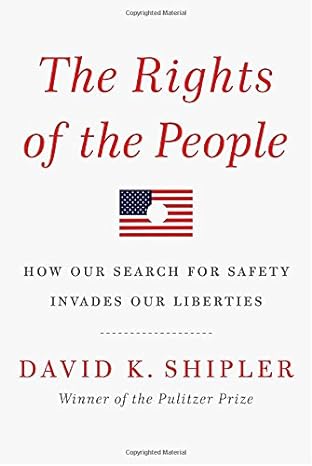
The Rights of the People: How Our Search for Safety Invades Our Liberties by David K. Shipler


An Important Book - for Liberals and Conservatives

Published by Alfred A. Knopf in 2011

Pulitzer Prize-winning author David K. Shipler takes a long hard look at the rights we have sacrificed in the era of the War on Drugs and the War on Terror, and lesser wars such as the War on Handgun Violence in The Rights of the People: How Our Search for Safety Invades Our Liberties. I picked this book up figuring that my Conservative sensibilities might get ruffled a bit by a New York Times reporter but I might learn a thing or two along the way.

I always tell people that the traditional left-right continuum used to describe someone's politics is so inaccurate as to be useless. Really, what is the difference between an aging hippie living on a hill somewhere raising some dope for personal use and telling the government to get out of his business and a Barry Goldwater-type conservative (like me) living by himself on a hill somewhere that tells the government to get its nose out of his business? Some dope. Otherwise, they are both determined advocates of civil liberties - keep out of my business if it is not hurting anyone else.

Mr. Shipler and I meet on that continuum at the spot I just described.

The Rights of the People starts with a history of civil rights in American history and there were a few things that surprised this American history addict (let's just say that the more I read about Woodrow Wilson, the less I like).  Shipler then moves into a chapter called "Another Country." This country is inner-city Washington, D.C., a place where the Fourth Ammendment (The right of the people to be secure in their persons, houses, papers, and effects, against unreasonable searches and seizures, shall not be violated, and no Warrants shall issue, but upon probable cause, supported by Oath or affirmation, and particularly describing the place to be searched, and the persons or things to be seized.) simply does not exist. Because Washington had very stringent anti-handgun laws, the police openly frisk people on the street, at family picnics, on their front steps, in their cars, in parked unlocked cars, just about anywhere - looking for guns. Temporary roadblocks are set up, drivers are pulled from their cars and frisked and their cars are searched without cause just to snag a pistol here or there (to be honest, I would not drive in some of those neighborhoods without a pistol, either.)


This is the kind of activity that I would not tolerate and I have lived next door to an armed drug dealer that I desperately wanted to have arrested. But, I did not want my entire neighborhood turned into a police state to achieve it. This section angered me, especially as I recognized a behavior described by Shipler that I have seen in some of my middle school students - young men pulling up their shirts to show that they are not carrying pistols in their waistbands. Some of my students do this when challenged by authority figures at school as well, which tells me they live in an America that does not have a Fourth Amendment.

Or, maybe the whole country is going that way. Shipler describes multiple cases of people's homes being searched with flimsy warrants, or none at all. Or, public school-based drug tests in order to participate in any extracurricular activities. At a school I used to work at I sponsored a Key Club (a volunteer organization). Every member of the club was subject to a urine test simply because they wanted to help out in a nursing home or collect the recycling during their study halls and be recognized for it during our meetings. How silly is that?

Shipler moves on to the Patriot Act and describes in histrionic-free language what it enables and what it has been used for. He describes in great detail how NSA data mining is used. To be honest, I was bothered by this as well, but not as much as I was by the first section, but only because the first section was much less abstract and more visceral, more real.

A chapter called "The Right to Be Let Alone" describes how all of the data we produce about ourselves every day can be used by private entities or employers. Some of his examples are a bit weak, including a police officer who was disciplined for using his department-issued pager to send personal sexual messages. He sent so many messages that he went over the contracted limit. Work tools are for work and the employer has a right to ensure that they are used for work, in my opinion.

He wraps up the book with a look at how counter-terrorism has eroded rights.

Of course, history continues to march along. Shipler released his book before the death of Osama Bin Laden and before the Supreme Court of Indiana ruled “In sum, we hold that [in] Indiana the right to reasonably resist an unlawful police entry into a home is no longer recognized under Indiana law.” Which means that, in Indiana, warrants are not technically not necessary at this time. Fun, huh?

Here is a link to Mr. Shipler's  second book called  Rights at Risk with other aspects of this topic.

I rate this book 5 stars out of 5. Highly recommended.

This book can be found on Amazon.com here: The Rights of the People.

Reviewed on July 12, 2011.

Crunchy Cons: The New Conservative Counterculture and Its Return to Roots by Rod Dreher


Neat idea but bad follow through

Published in 2006 by Three Rivers Press.

I grabbed Crunchy Cons: The New Conservative Counterculture and Its Return to Roots on impulse as I was leaving the local purveyor of books. You see, I am a "Crunchy Con" of sorts, being an avid recycler. But, this book really failed to reach me. In fact, I felt like I was being preached at with certain topics being outright hammered into my skull due to their repetitive re-occurrence.

Pluses:

-The book addresses the fact that the conservative movement is not monolithic and their are a variety of reasons for people to espouse conservatism.

-Embraces a belief in buying local - something I try to do when I go out to eat or shop whenever reasonably possible.

-Points out how silly it is to apply big business agricultural regulations to family farms.

Negatives:

-What the heck is "crunchy"? Search the internet and you may get a reference to "Crunchy granola", which basically means being hippie-like. Or, you may get a reference to this book, or you may get a reference to some sort of street drug.

-Dreher gets too preachy, too mystical about the virtues of organic farming and quaint old neighborhoods that time forgot in the inner city. Plus, he goes on and on for dozens of pages about these topics with multiple interviews that do little but reinforce the points already made.

-Dreher repeats the old worn line that we in the West should be more like the East: "...in the West, economics is built on philosophically materialist assumptions, but in the East, the whole person is taken into account." (p. 49) Really. The East, home to the Khmer Rouge, sex slavery, the caste system and foot binding. Besides, which "Eastern" philosophy are you going to follow? Confucianism? Daoism? Sikhism? Samurai Bushido? There really is no "Eastern" philosophy. Let's admit it - no society, East or West has all of the answers.

-Dreher's answer to the un-competitive nature of organic farming is a decidedly un-conservative one, have the power of the federal government choose in favor of the organic farmers "and encourage through tax incentives the development of small-scale, locally based agriculture." (p. 86) This is especially odd considering his prior exhortation: "We object to the idea that there's nothing wrong with our country that a new tax or a government program can't fix." (p. 10)

-Dreher waxes poetically about homeschooling. For page after page we hear about how his family does it and how others do as well. He drags up quotes from the 1800s and the 1920s about how the philosophical underpinnings of public schools are inherently anti-family. He offers only two choices: A) immoral public schools who are only out to indoctrinate your children (pp. 136-139) or B) perfect family homeschoolers. 

To be fair, you should know that I am a public school teacher that does not believe in the inherent goodness of public schools (or any other human institution, for that matter). I've seen families do homeschooling right (some of our family's best friends do it right), but I've also seen it done so poorly that when their kids finally come to school they are functionally illiterate.

While sympathetic to many of his points, the most I can say about this book is "disappointed."

I rate this book 2 stars out of 5.

This book can be found on Amazon.com here: Crunchy Cons: The New Conservative Counterculture and Its Return to Roots.

Reviewed on October 13, 2008.

Note: Rod Dreher has gone off the deep end politically since I have read this book. My 2/5 star review isn't much of an endorsement to begin with, but I wanted to make it clear that I do not agree with his embrace of Viktor Orban of Hungary.

Thank God for the Atom Bomb by Paul Fussell


The works of a brilliant essayist are a joy to read.

Originally published in 1988.

I admit, I was attracted to Thank God for the Atom Bomb because of the title. Our library had it featured on its web page with some excerpts and I was intrigued. I was not disappointed.

The title essay is simply brilliant. It is also caustic, blunt and nuanced. I'll refer to it before the next time I teach about World War II.

There are two more essays on World War II. I found the two essays on George Orwell to be most interesting. His commentary on the differences between tourism and travel reminded me of the Twain essays I've been reading lately. "Taking It All Off in the Balkans" is the account of his visit to a nudist resort in the former Yugoslavia - very funny and (I've got to say it) revealing.
Paul Fussell


Two essays were just not interesting to me, being mainly about poetry and I find myself unable to muster the interest to read poetry, let alone read extensive commentary on it. I skimmed those.

The essay on the 2nd Amendment ("A well regulated militia being necessary to the security of a free State, the right of the People to keep and bear arms shall not be infringed.") comes off as a poorly-researched rant as opposed to the well-researched arguments made in the Atom Bomb essays. It stands out in this collection for that reason.

The other oddball essay is my 2nd favorite (after the title essay). Fussell went to the Indy 500. Try to imagine an East Coast college professor who writes about poetry standing around Indy's infamous snakepit and the guys with the "Show us your t*ts" signs. Fussell's comments are quite observant and show that he really spent some time walking around the Indianapolis Motor Speedway and getting a feel for racing in general. Having just attended my 24th Indy 500 six days ago I was especially interested in his comments. I would be most interested in seeing Fussell's thoughts at having more racial diversity in the fields and 3 women in the race nowadays.

I rate this book 5 stars out of 5.

This collection can be found on Amazon.com here: Thank God for the Atom Bomb by Paul Fussell

Reviewed on May 29, 2009.

Featured Post

<b><i>BAN THIS BOOK (audiobook)</i></b> by Alan Gratz

Published in 2017 by Blackstone Audio, Inc. Read by Bahni Turpin. Duration: 5 hours, 17 minutes. Unabridged. My Synopsis Ban This Book is t...

Popular posts over the last 7 days