Showing posts with label cold war. Show all posts

SUPERMAN '78: THE METAL CURTAIN (graphic novel) Robert Venditti


Published by DC Comics in 2024.
Written by Robert Venditti.
Art by Gavin Guidry and Jordan Bellaire.

Synopsis

These are the further adventures of the Christopher Reeve Superman from the movie series that ran from the late 1970s into the 1980s. It has the feel of those movies in the simple and clear art style and the look of many of those characters. Interestingly, Superman looks nothing like Reeves and Clark Kent only looks like him from time to time.

The plot of Superman '78: The Metal Curtain is pretty simple. The Soviet Union has created a super soldier suit powered by a giant hunk if Kryptonite. The suit is pretty much an Iron Man suit (I know, wrong publisher) with the added benefit that it's fuel weakens the Man of Steel.


The Soviet Union is fearful of Superman. They perceive him as a weapon of the United States (because the events of Superman IV haven't happened yet) and plan to use the suit to defeat Superman and America...

My Review

I really liked the clean art style of this graphic novel. The plot is simple, direct, and the circumstances are dire. The only thing I did not like was the way Superman ended up winning - it was too simplistic and too short. It felt like a cheesy movie plot ending, which is exactly the vibe that they were going for. I guess that makes it a success.

I rate this graphic novel 4 stars out of 5. It can be found on Amazon.com here: Superman '78: The Metal Curtain.

EXIT STAGE LEFT: THE SNAGGLEPUSS CHRONICLES (graphic novel) Written by Mark Russell. Illustrated by Mike Feehan


Published by DC Comics in 2018.

Part of the Hannah-Barbera Beyond series.

2019 GLAAD Media Award winner for Outstanding Comic Book

Synopsis:

DC Comics and Hanna-Barbera set out to reimagine some of their late 1950s to 1970s Saturday morning television cartoons, including The Jetsons, The Flintstones, Scooby Doo, Wacky Races, and Space Ghost. Exit Stage Left: The Snagglepuss Chronicles is the last installment of the series.

The graphic novel is set in the Red Scare/McCarthyism era. Congressional subcommittees are looking for Communists in all fields, but they are particularly concerned about Communist entertainers who may be negatively influencing Americans.

Snagglepuss is a very successful New York City playwright. He lives in a world where humans and anthropomorphic animals interact as equals. He moved to New York from Mississippi years ago, but he still speaks in a Southern accent and often uses pithy folksy aphorisms. He is married to an actress, but that is a sham marriage. In reality, Snagglepuss is gay.

Snagglepuss has already appeared before the Congressional sub-committee and he did well. He defended the concept of Freedom of Speech and gave them a verbal tongue lashing that they will never forget. 

But, now the sub-committee is digging deeper into the personal lives of the people it questions, including looking into their sexual preferences. Getting outed could easily destroy the career of any actor, producer, or writer... 

Other Hanna-Barbera characters that appear in this graphic novel include Huckleberry Hound, Quick Draw McGraw, Augie Doggie, Peter Pottamus, and a very creepy-looking Squiddly Diddly.

My Review:

Imagining Snagglepuss as gay and working in the theatre does not take a lot of actual imagination. I had never really thought about it before I ran across this graphic novel, but it tracked pretty well.

There is a great quote in this graphic novel said by Snagglepuss:

"Sometimes we become so preoccupied with the plot of life that we forget - it's only the characters who matter."

The weakness in this graphic novel is that it tries way too hard to incorporate so much of the Cold War into the plot that it just got confusing. There are nuclear tests, Nixon and Kruschev debating, an Iowa farmer throwing ears of corn at Kruschev, and an ongoing debate about national security. 

I am not arguing that these things were not a part of the anti-gay movement in the 1950s, but it distracted from the main plotline too much. It was too far away from the story of Snagglepuss and Huckleberry Hound. To go back to the quote I thought was so great, the graphic novel got so preoccupied with the Cold War tie-in that it forgot about the characters.

If I were part of the discussion with how to make this an effective graphic novel, I would have dealt with more with the "morals" argument and less with the Cold War argument. It would have been more relevant to nowadays with all of the book bans and boycotts over LGBTQ+ issues.

The nice thing about this graphic novel is that it ties in to the actual Hanna-Barbera TV shows that feature these characters and makes sense, as if the readers that remembers those classic shows is a part of Snagglepuss's world.

I rate this graphic novel 4 stars out of 5. Interesting read, thought-provoking, but flawed. It can be found on Amazon.com here: Exit Stage Left: The Snagglepuss Chronicles.

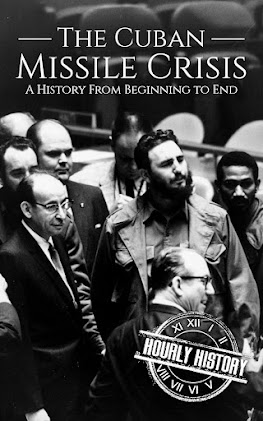
THE CUBAN MISSILE CRISIS: A HISTORY from BEGINNING to END (kindle) by Hourly History


Published in 2018 by Hourly History.

Hourly History is a publisher that specializes in short histories and biographies in e-book form that are designed to be read in about an hour.

Sometimes, an hour is not long enough to explain a topic, but in this case an hour is just about right.

Since the Cuban Missile Crisis is a pretty well known historical event, just let me say that this short e-book delivers a concise, well-paced history. It also manages to present a balanced history that spreads the blame for the crisis and somehow keep up a sense of tension even though the reader knows for a fact that the Cuban Missile Crisis did not actually cause a worldwide global thermonuclear war in 1962.

I rate this e-book 5 stars out of 5. It can be found on Amazon.com here: THE CUBAN MISSILE CRISIS: A HISTORY from BEGINNING to END (kindle) by Hourly History.

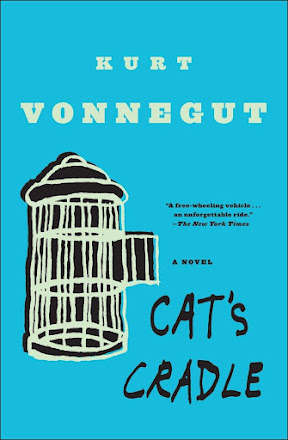
CAT'S CRADLE by Kurt Vonnegut


Originally published in 1963.

Synopsis:

Cat's Cradle
is Kurt Vonnegut's fourth novel. The narrator is a writer who wants to tell the story of the first atomic bombing by telling what various people did that day. One of the people he is interested in is one of the creators of the bomb, a researcher named Felix Hoennikker. 

Hoennikker has already passed away so the author reaches out to his three children and finds two of them. They describe a man with no real emotions. He is not a cruel man, he is utterly detached from everything except research. 

During his interviews with a colleagues at the laboratory he worked at in Ilium, New York (also the setting for his first novel Player Piano, but these books are clearly not in the same time line) the narrator discovers that Hoennikker may have invented a more dangerous weapon than the atomic bomb - a substance called "ice-nine."

Ice-nine was created as a simple thought experiment that came from an offhand comment from a general who had complained about how the U.S. Army kept getting bogged down in the mud. Ice-nine solidifies all of the water it contacts - freezes it at room temperature. And, it keeps spreading. Ice-nine creates more ice-nine as it freezes. Theoretically, if someone dropped it into a body of water it would just keep on going until it runs out of water to freeze. If you dropped it into a river it would just keep going until it got to an ocean and then keep going around the world.

That's when the narrator figures out that each of the three children possesses a chunk of ice-nine and one of them who was missing has just become the head of the military of a very backward third world country in the Caribbean...

My Review: 

Kurt Vonnegut (1922-2007)
This book, unlike the previously mentioned Player Piano, has the complete feel of a Vonnegut novel. There is a lot of dark humor that is barely trying to hide Vonnegut's commentary about the insanity of the Cold War and the concept of Mutual Assured Destruction. It fits in nicely with the 1964 movie Doctor Strangelove.

I found the first part of the book to be fairly slow and tedious (the part described in my synopsis), but the second half zips along pretty well and gets better and better as it gets more ridiculous, including the creation of an original religion.

Vonnegut has a habit of mentioning his native Indiana and/or Indianapolis in his books and this book features plenty of those mentions. 

At one point, Vonnegut gave all of his books a letter grade. He gave Cat's Cradle an A+. I think it was good, but not that good. I will give it a B.

I rate this book 4 out of 5 stars. It can be found on Amazon.com here: CAT'S CRADLE by Kurt Vonnegut.

SOVIET-AFGHAN WAR: A HISTORY from BEGINNING to END (The Cold War) (kindle) by Hourly History


Published in 2023 by Hourly History.

In 1979, the Soviet Union invaded Afghanistan in an effort to stabilize their neighbor. In theory, Afghanistan had a communist government and the USSR had a policy of not letting any communist government fall. 

Soviet troops leaving Afghanistan in 1989 via
a bridge that was special built for the purpose of
letting the USSR withdraw from Afghanistan
even quicker.
In 1989, the Soviet Union finished withdrawing its armed forces from Afghanistan. On paper they had negotiated a stable pro-Soviet government to lead Afghanistan after 10 years of frustrating fighting an elusive enemy that specialized in hitting the much better equipped Soviet army within guerilla hit-and-run tactics. 

Within 3 years both the government of Afghanistan and the government of the USSR had collapsed and Afghanistan became a haven for international Muslim terrorists like Osama bin Laden.

As I read about the difficulties that the Soviets had in fighting against the mujahedeen guerrilla fighters, it struck me that in many ways you could have removed the word Soviet and replaced it with the word American and have a fairly decent description of the American experience in Afghanistan from 2001 to 2021.  

This series is designed to give the reader a solid grasp of a topic in about an hour's worth of reading. Some topics are really too big for this self-imposed limit, but I thought this was a pretty good length for this topic. 

I rate this short e-book 5 stars out of 5. It can be found on Amazon.com here: SOVIET-AFGHAN WAR: A HISTORY from BEGINNING to END (The Cold War) (kindle) by Hourly History.

CHE: A REVOLUTIONARY LIFE (graphic novel) by Jon Lee Anderson (author) and Jose Hernandez (illustrator)


Before reading this massive 421 page graphic novel, I knew relatively little about Che Guevara (1928-1967.) I knew that he was from South America, he was famous for his part in the Cuban Revolution and that he died trying to lead a revolution in Bolivia. And, of course, I knew him from the famous picture.

This graphic novel filled in a lot of blanks for me. It is a friendly biography of Che but doesn't glorify him. When I got to the end I was struck by how much of a failure Che actually was after he left Cuba. He tried to replicate the success of the Cuban Revolution but he could not. It's hard to tell if counter-revolutionary measures from the governments he was trying to overthrow (and the U.S.) were simply more successful than Batista had been in Cuba or if they were missing an additional spark like the Castro brothers had provided.

The graphic novel was put together well. It had no confusing arrangements of comic panels (this is more common of a problem than one might think) and the story was told in a straightforward linear manner. 

Well done.

I rate this graphic novel 5 stars out of 5. 

FRANCISCO FRANCO: A LIFE from BEGINNING to END (kindle) by Hourly History


I am an avid reader of history, but I have areas of weakness that I am perfectly willing to shore up a bit, but I don't want to invest a ton of time in. Francisco Franco was one of those people for me. 

I came into this biography knowing only the barest of facts about the long-time dictator of Spain. Franco ruled from 1939 until his death in 1975. This biography spends little time on his early life and could have expanded on the Spanish Civil War that brought him to power. For example, the most famous image of the war is the painting Guernica

Guernica by Pablo Picasso (1937)
Guernica
is one of the most famous paintings of the 20th century. It depicts the chaos of an attack by the German air force on the city of Guernica. Guernica was holding out against Franco's forces and Franco enlisted German help to deal with the city. German and Italian bomber planes tried out the relatively new technology in real life. Pablo Picasso painted Guernica to protest the attack and had it displayed at the 1937 World's Fair in Paris. Because of that, perhaps the most famous artist in the world and perhaps the most famous citizen of Spain was not allowed to return to Spain because of Franco. Most likely, Picasso wouldn't have wanted to return anyway - because of Franco.

This is the problem with the series. Since each book is limited in length, the author has to pick and choose what to include. In this case, they skimped on how he came to power. I enjoyed the discussion of how he sorted out a third way between the Axis and the Allies during World War II (not that I thought he was a good man for having done so, but it was interesting) and continually sought to become an accepted member of the western alliance against the Soviets after the war. I wouldn't have cut a word from the coverage of World War II, but I would have cut some of the talk about how he ran things on a day-to-day basis.  Why? Going back to Picasso, what most of the world outside of Spain knows about Franco comes from that painting of the bombing and it should have been addressed.

Anyway, I confirmed what I had gleaned about Franco. I found it interesting how he picked a member of the royal family, Juan Carlos, to be his successor. Juan Carlos went on to lead his country to a democratic system of government.

This e-book is a good choice to fill in some blanks (what I did) or get an introduction to one of the longest-ruling dictators of the 20th century. But, it is not the complete story. 

I rate this e-book 3 stars out of 5. It can be found on Amazon.com here: 
FRANCISCO FRANCO: A LIFE from BEGINNING to END (kindle) by Hourly History.

ON FASCISM: 12 LESSONS from AMERICAN HISTORY (audiobook) by Matthew C. MacWilliams


Published in September of 2020 by Macmillan Audio.

Read by Kevin Stillwell.
Duration: 4 hours, 18 minutes.
Unabridged.


MacWilliams is a sociologist who studies authoritarianism. He has done a number of surveys over American attitudes towards the Constitution and the freedoms of their fellow citizens and there are areas of concern that he outlines in On Fascism.

For example, "31% of Americans agree that having a strong leader who does not have to bother with Congress and elections is a good way of governing the United States" and "30% of Americans agree with the statement 'I often find myself fearful of other people of other races.'"

Other stats of concern are:

"44% of Americans agree that increasing racial, religious and ethnic diversity represents a threat to the security of the United States"

When you break down the numbers about "18 percent of Americans are highly disposed to authoritarianism. Another 23 percent or so are attitudinally just one step below them on the authoritarian scale." He goes on to explain that people who are disposed to authoritarianism value "authority, obedience and uniformity over freedom, independence  and diversity" and when they grow fearful or are manipulated by an autocrat they will not defend the freedoms of the minority - the freedoms enshrined in the Constitution. 

MacWilliams argues that this is not a new phenomenon. There are some old surveys he can access but there is also the historical record, which is spotty. He didn't have to look very deep - most of these items are in every school child's American history book. For example, the Alien and Sedition Acts of 1798, the Trail of Tears, The Dred Scott decision, the Japanese Internment camps and the McCarthy hearings. 

Lesson 1: American Enlightened or Authoritarian?
Lesson 2: Fomenting Fear
Lesson 3: All Lies Matter
Lesson 4: Gagging the press, Quashing Dissent
Lesson 5: Taking What is Rightfully Ours
Lesson 6: Using Fear and Violence to Control and Subordinate Others
Lesson 7: The Driving Out
Lesson 8: Fear as a Path to Power
Lesson 9: Galvanizing Group Identity
Lesson 10: Silence of the Law
Lesson 11: Fear Breeds Repression; Repression Breeds Hate; Hate Menaces Stable Government
Lesson 12: The Surveillance Society and the Big Lie


I found this short audiobook to be engaging and thought-provoking. I just kept wondering what MacWilliams would have thought about everything from Election Day up to January 6.

Highly recommended.

I rate this audiobook 5 stars out of 5. It can be found on Amazon.com here: On Fascism: 12 Lessons from American History.

TALKING to STRANGERS: WHAT WE SHOULD KNOW ABOUT the PEOPLE WE DON'T KNOW (audiobook) by Malcolm Gladwell


Published in September of 2019 by Hachette Audio
Read by the author, Malcolm Gladwell

Duration: 8 hours, 42 minutes.
Unabridged


Malcolm Gladwell always writes an interesting book. When you listen to him as an audiobook, it can be frustrating as well because he throws so many ideas at you that you can't possibly write them all down (I couldn't if I wanted to anyway, I do a lot of my listening as I drive).

The general premise behind Talking to Strangers is that it is very hard for people to "read" other people - even people that we see every day. It is even harder for us to read strangers and even harder to read people from different cultures. The more different the culture, the harder to read.

Gladwell starts with the story of the death of Sandra Bland, an African American woman from Chicago who killed herself after a questionable arrest after a questionable traffic stop in Texas.

From there we wander far and wide - cold war espionage cases, policing strategies in Kansas City, Neville Chamberlin's meetings with Adolf Hitler, sociology experiments with participants trying to read facial expressions, judges who grant bail, Bernie Madoff, the affects of alcohol on judgment, famous authors who committed suicide...and more.
Eventually, Gladwell makes his point (some reviewers don't think he made it, but I think he did) - it just takes such a long, circuitous route to get there that, in the end, his final point is a bit underwhelming.

The audiobook was read by the author. He usually reads his audiobooks and does a good job. Lately, he has been doing a regular podcast and he brings the some of the techniques of podcasting to this audiobook. One of the best features is that he uses the actual recordings of people's voices as much as possible when quoting them. It is a great touch that I wish more authors used with their audiobooks.

Rating this audiobook is hard. I enjoyed almost all of it. It was very interesting, even compelling. But, the ending just was underwhelming as I already noted.

I rate this audiobook 4 stars out of 5. It can be found on Amazon.com here: TALKING to STRANGERS: WHAT WE SHOULD KNOW ABOUT the PEOPLE WE DON'T KNOW.


THE GENERALS: PATTON, MACARTHUR, MARSHALL and the WINNING of WORLD WAR II (audiobook) by Winston Groom


Published in November of 2015 by Blackstone Audio, Inc.
Read by Robertson Dean
Duration: 16 hours, 2 minutes
Unabridged

Winston Groom, forever associated with his iconic character Forrest Gump, has written an interesting and solid history of three equally iconic World War II generals: George Patton, Douglas MacArthur and George Marshall. 

Groom's triple biography format works quite well as all three of these men's life stories were on parallel tracks once they entered World War I and they all knew one another and had worked with one another in one capacity or another through the years (the story of Patton and MacArthur meeting up and working together on the front lines of World War I is a great one).

The histories of these men during peacetime only served to reinforce my impression that both of these men were eccentric, sometimes to the point of being bizarre - especially Patton. But, in wartime these men all shined, despite some controversies. I never had much of a positive opinion about MacArthur. He always seemed to me to more of a strutting peacock than he was a competent general - more good PR than real talent. But, this book has changed my opinion of the man's talents as a general. Still a strutting peacock, though...

This was an enjoyable and informative read. Winston Groom weaves the three biographies together in an interesting way, generally using their parallel lives to reinforce each other's stories. The reader, Robertson Dean, gave distinctive voices to each of the three generals and his reading enhanced an already strong text. 

I rate this audiobook 5 stars out of 5.

This audiobook can be found on Amazon.com here: The Generals: Patton, MacArthur, Marshall and the Winning of World War II

A THOUSAND MILES to FREEDOM: MY ESCAPE from NORTH KOREA by Eunsun Kim with Sebastien Falleti. Translated by David Tian


A Remarkable Tale


To be published in the United States on July 21, 2015. 
I received an "Advance Reading Copy" 


Eunsun Kim's tale of her escape from North Korea, along with her mother and her older sister is remarkably easy to read, remarkable engrossing and just a remarkable tale in general.

When Eunsun Kim was 11 years old her mother determined that they could no longer live in North Korea. Eunsun's grandparents were dead, her father was dead, almost everything in the house was sold for money to buy food but there was almost no food to be had because North Korea was in the middle of its Great Famine (1994-1998). Depending on whose statistics you use, the estimates range anywhere from 250,000 to 3,500,000 people starved to death or died from starvation-related causes. Of course, it is hard to say for sure because North Korea is such a closed off society.

Eunsun Kim and her family lived in the northernmost part of North Korea and they decided to cross the Tumen River into China and live as illegal aliens. They would have no promise of safety, no guarantee of work and risked being shot by the border guards on both sides of the border. But, at least they would have chance to eat.

She details several botched attempts at escape and I was pleased to see that at least one border guard was a decent human being. He could see they were starving and desperate and he took pity on them and let them go with a warning - twice! But, he couldn't feed them because there was no food to be had so this small family eventually makes it to China. The family tries to stay together but when Eunsun Kim's mother is sold into sexual slavery (she calls it an unofficial marriage, but the entire purpose of the marriage was to produce a son for her "husband" and no one recognized the marriage as legitimate) the family splits up. The daughters have a better time of it, but it is not easy.

As you can tell by the title, eventually Eunsun Kim makes it to freedom. Their last push to make it to South Korea is tension-filled and her story of how she adjusts to life in South Korea is interesting in and of itself. Now, she lives in South Korea and has lived and travelled all over the world studying (making up for lost years when she had to work to collect wood rather than go to school so they could get food) and promoting her book.

Ironically, A Thousand Miles to Freedom is late to be translated into English (it was published in French in 2012). I say ironically because the United States has had so much involvement with North and South Korea over the last 60+ years. This translation is very good (I teach Spanish and I know how hard it can be to make foreign text sound smooth in a different language). The text flows easily and makes it sound like Eunsun Kim is sitting with you telling her story in everyday, conversational language over a cup of tea.

Last two lines of the book: "The Kim dynasty has so successfully isolated my country that it would be easy for the rest of the world to forget about us. If my memoir can even play a small part in raising global awareness about our suffering and about the tragedies taking place at the hands of this regime, then all that I have endured will not have been in vain."

It can be purchased at Amazon here:  A Thousand Miles to Freedom: My Escape from North Korea

I rate this book 5 stars out of 5.

THE MEN WHO UNITED the STATES: AMERICA'S EXPLORERS, INVENTORS, ECCENTRICS and MAVERICKS and the CREATION of ONE NATION, INDIVISIBLE (audiobook) by Simon Winchester


Published in 2013 by Harper Audio
Read by the author, Simon Winchester
Duration: 13 hours, 33 minutes

Simon Winchester's sprawling book, The Men Who United the States, tells a history of the United States organized around five themes: Wood, Earth, Water, Fire and Metal. To be honest, I largely ignored the themes and just enjoyed listening to this magnificent, chaotic, rambling history.

Starting roughly with Lewis and Clark (Winchester backtracks a lot), the story of America is told through the tales of the people that made America a more perfect union through their explorations or their inventions. The reader (or listener if you are enjoying the audiobook) is told about Lewis and Clark and the Pony Express and the invention of the telegraph, the first transcontinental rail line, the exploration of the Grand Canyon, the role of New Harmony (Indiana) in the study of American geography,  a con game involving jewels, how George Washington toured the Frontier before he became president, the Erie Canal, the telephone, Edison vs. Tesla, the first plane to travel across America, television, radio, the internet, modern day nuclear silos, the path of the Mississippi River and so much more that I cannot possibly remember it all.


I listen to audiobooks as I drive and this book was like having a history professor just ramble along with the most interesting stories about American history and the interesting places he has been. Like in a conversation, the story meanders but it flows quite naturally almost all of the time as the author throws in lots of interesting anecdotes about his own experiences, the lives of related historical figures or just something that was odd.

The author, Simon Winchester, narrates his own audiobook. It always concerns me when I see that the author is the reader of his or her own audiobook. Frankly, most authors do not have the voice or the skill to pull it off. Winchester's voice is pleasant and he succeeds with his narration even though his English accent sometimes made for some interesting pronunciations and served to remind me that he is not an American by birth but by choice (he recently became a Naturalized citizen).

I rate this audiobook 5 stars out of 5.

This book can be found on Amazon.com here: The Men Who United the States

Reviewed on February 28, 2014

AMERICA'S PROPHET: MOSES and the AMERICAN STORY by Bruce Feiler


Published in 2009 by William Morrow (HarperCollins)

I love the premise of America's Prophet - that America has a special connection with the story of Moses beginning with the Puritans and going right up through Martin Luther King, Jr. He lays out the correlations with some skill but, in the end it just started to drag.

This review (and the book, to a lesser extent) is helped by a basic knowledge of the story of Moses. Feiler provides the necessary background on Moses and then proceeds to make comparisons. For example, the Puritans saw themselves as fleeing a domineering power (England) and taking refuge in the wilderness (New England) like the Children of Israel fled the Pharaoh and went into the Sinai. The Puritans took comfort in the story of Moses because they believed that they would also be led by God.

Martin Luther King, Jr. during the
"March on Washington"
A slight change in interpretation and Moses becomes an inspiring symbol for the Americans in the Revolutionary War, the Abolitionist movement, the Underground Railroad, both sides in the Civil War, immigrants, the Cold War and the Civil Rights Movement (with the oddly prophetic "mountaintop" speech given by King right before he was murdered). Of course, there is a long discussion about Charlton Heston's portrayal of Moses in the movie The Ten Commandments. Oddly, there is only a very brief mention of Brigham Young leading the Mormons to Salt Lake City, fleeing from the United States in search of religious freedom. I am not a Mormon, but that story has every bit as much correlation to the original story as any of the others do.

Sadly, the story drags in in the later parts of the book with the discussions of post-Civil War immigrants and Charlton Heston. Feiler's attempt to wrap it all up with a discussion of his family's Passover celebrations is well-intentioned but really slow, capping off a solid book with an ending that never seems to end.

I rate this book 3 stars out of 5 and it can be found on Amazon.com here: AMERICA'S PROPHET: MOSES and the AMERICAN STORY by Bruce Feiler.


Reviewed on November 12, 2013.

HEART of the HUNTER (audiobook) by Deon Meyer


Originally published in 2002.

English Audiobook version published in 2013 by HighBridge Audio

Read by Simon Vance

Duration: Approximately 11.5 hours

Deon Meyer's novel Heart of the Hunter features a very large black South African man named Thobela "Tiny" Mpayipheli who used to be part of the armed resistance movement to the South Africa's Apartheid government which collapsed in 1994. He was trained by the East German secret police and was part of multiple assassinations. He had a talent for violence. When the Apartheid regime ended he suddenly found himself on the outside, an anachronism. His skills were no longer needed and it would be better for the leadership if he just went away. So, he took his skill set to a drug lord but he soon realized there was no large sense of purpose, no lofty ideals in organized crime.

At that point Mpayipheli decided to bank his money, go straight and retire completely in South Africa. He met a woman with a young son, moved in and devoted himself to this new family they created. He took a job at a motorcycle repair place and everything seemed to be just about as perfect as anyone could make it.

That is until he gets word that a trusted old friend from the old days will die unless a hard drive is delivered to Lusaka, Zambia. He decides he has to go even though his wife begs him not to. When government officials stop him from boarding a plane to Zambia his old training kicks in and he escapes and goes on the run while trying to work his way to Zambia. He borrows a high-powered BMW motorcycle and finds that he is being pursued by government officials, the police and even a special forces unit. Meanwhile, South African officials want to know what is on the hard drive and everyone is scrambling to catch him and cover everything up before the truth gets out because someone has leaked the story to the media and now everyone is wondering who the mysterious big man on the BMW is and why he is running.

Deon Meyer. Photo by Krimidoedel
Deon Meyer is a South African writer who writes in the South African language Afrikaans. I only mention it because sometimes translated works are clunky, but this book is not. But, if you are not familiar with South Africa's Apartheid history and how South Africa's role in the larger Cold War between the U.S.S.R and NATO then I would imagine this book would be quite confusing.

The audiobook was read by the incomparable Simon Vance who covered a multitude of accents, male and female characters, children and old people (the old man who writes folk songs was particularly memorable) with ease. If Simon Vance were to read my grocery list it would sound important. When he reads (performs is a more accurate term) a book it is an experience.

While this was a good book, it was not a great one. The ending was too drawn out. Too many of the different threads of the story that were meticulously laid out in the first couple of hours never did really come together (the biker clubs that are sympathetic to the mysterious rider on the BMW are a great example. They are mentioned many times because they want to express some sort of biker solidarity but when they finally appear it is only for a few seconds and they just fade away).

I rate this audiobook 4 stars out of 5. It can be found on Amazon.com here: 

Reviewed on August 28, 2013

Note: I received a copy of this audiobook from the publisher in exchange for an honest review.

The 1940s: A Brief History [Kindle Edition] by Vook


Published in 2011 by Vook.

Vook is a publisher of e-books enhanced with video clips (Video + Book = Vook). This history is short (Amazon estimates it would be about 32 pages on paper) so it is unlikely to satisfy a history purist. It is very lightweight due to its short length but very readable.

The result is about the same as if you read the chapter on World War II and the 1940s in a standard high school world history book. The broadest of outlines are there but if this is all you knew about World War II and the beginnings of the Cold War you would be one un-educated person indeed. At best, this is an introduction to the topic. Considering how long of a shadow World War II and the Cold War have cast, this is too short and too shallow to be of much value.


The Chapter titles are:

-"The Greatest Generation"

-The Cold War
-Boom Times
-Making Military Technology Civil
-Hurray for Hollywood
-Breaking the Race Barrier
-40s Pop Culture
-Everyday People

I rate this kindle book 2 stars out of 5.


This e-book can be found online at Amazon.com here: The 1940s: A Brief History (Enhanced Version)


Reviewed on December 31, 2012.

The Lowdown: A Short History of the Origins of the Vietnam War (audiobook) by Dr. David Anderson


Delivers what it promises


Published by Creative Content Ltd in 2011.
Narrated by Lorelei King
Duration: 1 hour, 20 minutes

Creative Content has a whole series of short audiobooks and kindle books in its "The Lowdown" series. The main feature of the series is that they are short (a little more than an hour or about 35 "pages" on the Kindle) and give the reader a quick look at a topic.

In this case, the topic is the origin of the Vietnam War. Note, this is not a history of the entire war, but if you ever wondered just how the United States got involved in the Vietnam War, this nifty little history will do the job just fine.

President Lyndon Johnson signs the
Tonkin Gulf Resolution in August of 1964
Anderson roots his history in the aftermath of World War II. There are two major factors at play. The first is the desire of the French to re-establish their pre-war colonial empire and re-assert themselves as a major player on the world scene despite their being conquered by the Germans at the beginning of  World War II. The second factor is America's determination to contain Soviet Communism. Anderson traces these two movements and demonstrates that they led to a collision with Ho Chi Minh's anti-colonial communist movement in Vietnam. He follows them through the Truman, Eisenhower, Kennedy and Johnson administrations. He ends with the Tonkin Gulf Resolution that was widely interpreted to give Johnson permission to act in Vietnam as he saw fit.

This is an easy to digest history. I would recommend it to anyone who wants to know a little more about the Vietnam War or for use in any class that is looking for a relatively short reading (or listen) in a 20th Century American history class. The audiobook version is read by Lorelei King. King's reading is well done. She reads at the perfect pace - not so fast that you cannot absorb the new facts that she is presenting, not so slowly the listener's attention starts to lag. Nothing less than I would expect from a true audiobook pro.

Link to this audiobook at Amazon.com: The Lowdown: A Short History of the Vietnam War.

I rate this history 5 stars out of 5.

Reviewed on July 13, 2012.

Truman (audiobook) by David McCullough


Published by  Simon and Schuster Audio in 1992.

Read by David McCullough, the author

Includes parts of recordings of speeches by Harry S. Truman and Douglas MacArthur

Duration: approximately 6 hours

Abridged

The unabridged version won the 1993 Pulitzer Prize.

I am a history teacher, with my favorite times in American history being the Revolutionary War Era, the Civil War Era and an interest in the Frontier as it moved across the United States. While I knew a great deal about Truman before listening to this audiobook, I really felt that I needed to know more.

David McCullough's treatment of Truman is friendly, but not overly rosy. The audiobook version I listened to was abridged. I assume that the areas that were not focused upon in the abridged edition are more fleshed out in the unabridged edition. (Note: this abridgement was not sloppily done - I didn't even notice it was abridged until about 3/4 of the way through the book - it just seemed like he was glossing over the activities of the New Deal Congress rather quicker than normal)
Harry S. Truman (1884-1972)


Areas of particular focus in the abridged edition include Truman's family background and childhood. His World War I experiences, early political jobs, his association with Kansas City machine politics, Bess (of course!), his mother, how he was chosen to be Vice President, the decision to drop the atomic bombs, the Korean War, the decision to fire MacArthur and eulogies for Truman.

The printed version of this book includes pictures, I am sure, which is a disadvantage of the audio version. However, that deficiency is more than made up for by the inclusion of real audiotaped quotes from Truman himself when possible. It is one thing to see a picture of Harry Truman, it is quite another to hear sections of his speeches in Truman's own voice - the way most Americans did at the time when they were delivered. It gives you a different sense of the man. A section of MacArthur's "Old Soldiers Fade Away" speech is also included, to the detriment of MacArthur, in my opinion. He sounds very snobbish and patrician. When compared to Truman, it makes you root for the Man from Independence all the more.
David McCullough


A second strength of the audiobook is that it is read by the author himself. McCullough has a voice that I envy and enjoy to hear and he makes even the most slowest portions of the book flow by quickly and easily.

Bravo!

Find this edition at Amazon.com here: Truman.

I give this audiobook 5 stars out of 5.

Reviewed on February 3, 2007.

Note: This is a profound, but skillful abridgment - the original audiobook clocks in at 54 hours and this version lasts about 6 hours. I appreciate the way that they made an exhaustive biography something that everyday people would listen to.

The Politically Incorrect Guide to the Presidents from Wilson to Obama (P.I.G. Series) by Steven F. Hayward


An entertaining read and a great way to rate the presidents

Published in 2012 by Regnery Publishing, Inc.

First and foremost, the latest entry in the P.I.G. series is a great read. Steven Hayward is to be commended for making what could have been a very stale read into an entertaining read - he has a light touch.

Secondly, how sad is it that grading presidents by how well they "preserve, protect, and defend" the constitution is a unique idea?

Hayward begins The Politically Incorrect Guide to the Presidents with a look at what the founders wrote about the office of the president and compares that to the modern presidency. He then looks at the presidency in the 19th century and how most presidents took the restrictions of the Constitution very seriously.

As Hayward proceeds to grade the 17 presidents we have had from 1913 until the 2012 (from Wilson to Obama) on an A to F scale (just like in school) he gives a thumbnail sketch of each president with the major issues of the election and/or his time in office, where he diverged from the Constitution (or supported it) and how the Supreme Court justices he appointed fared by way of the Constitution as well.

Each president gets about 8-12 pages per term in office and the text includes sidebar boxes with recommended readings, great quotes and interesting factoids. The overall grade is presented on the first page of each president's particular chapter and the last page explains how it was arrived at.

Richard Nixon, president from 1969-1974
So, what did I think? I agreed with the great majority of the grades given, although there were some I would have been a little tougher on or a little easier on (a C+ vs. a C- type of thing). I very much disagreed with the C+ for Richard Nixon - and not because of Watergate (although Hayward largely excuses it with the "the other guys did it, too!" defense) . The growth of the regulatory bureaucracy under Nixon was incredible - according to a factoid on page 173 it grew by 121% under Nixon. Throw in federal wage and price controls and I don't see how you can give Nixon the C+ that Hayward does.

But, that is just one grade out of 17 (and even that chapter was interesting). This is a book that I am going to keep handy for those great online political debates. Nothing like a great Warren G. Harding quote like this one: "There is not a menace in the world today like that of growing public indebtedness and mounting public expenditure" to get a little discussion going in this election year, huh?

Note: I would love to see an expanded re-issue of this book with 2 co-authors. One co-author would be a presidential historian who would provide a lot of the heavy lifting for the section detailing the history of each president's administration. The third co-author would be someone from the left politically. This would be a much larger book, but also a much more comprehensive and accurate book. 

I rate this book 5 stars out of 5.

This book can be found on Amazon.com here: The Politically Incorrect Guide to the Presidents from Wilson to Obama.

Reviewed on March 23, 2012.

Featured Post

<b><i>BAN THIS BOOK (audiobook)</i></b> by Alan Gratz

Published in 2017 by Blackstone Audio, Inc. Read by Bahni Turpin. Duration: 5 hours, 17 minutes. Unabridged. My Synopsis Ban This Book is t...

Popular posts over the last 7 days