
Published in 2005 by Counterpoint.
Winner of the 2006 Alex Award from the American Library Association.Winner of the 2006 New Visions Nonfiction Book Award from the Quality Paperback Book Club.
Note: I read because it is on a list of books that MAGA Republicans have asked to be banned in one way or another. I call it the MAGA Censorship List. More about that down below.
Julia Scheeres grew up in around Lafayette, Indiana. She grew up in a fundamentalist household. When she begins this memoir, she has older brothers and sisters who have moved out of the house and lives with her parents and two adopted brothers out in the country outside of Lafayette. Her family is unique in that her two adopted brothers are black and the rest of the family is white.
Note: I read because it is on a list of books that MAGA Republicans have asked to be banned in one way or another. I call it the MAGA Censorship List. More about that down below.
Julia Scheeres grew up in around Lafayette, Indiana. She grew up in a fundamentalist household. When she begins this memoir, she has older brothers and sisters who have moved out of the house and lives with her parents and two adopted brothers out in the country outside of Lafayette. Her family is unique in that her two adopted brothers are black and the rest of the family is white.
The first part of Jesus Land: A Memoir deals with her horrible home and school life. At home, her father is mostly a distant figure. He returns home from work and dispenses discipline - often with great physical violence. These are not spankings - these are beatings with a 2x4.
Her mother is a distant woman - more concerned with expressing love and support to missionaries she has never met in distant lands than in her own children. Her older adopted brother sexually abuses her for years.
Her younger adopted brother, however, is the closest to her in age and in spirit. His name is David. They are best friends and truly brother and sister. They are almost inseparable.
I say almost inseparable because when they go to school, Julia finds the racist pressure too much and often separates from her brother at school just to protect herself.
Halfway through the book, Julia and her younger brother get into trouble and are shipped off to a Christian Academy in the Dominican Republic called Escuela Caribe. Escuela Caribe advertises that it will help students free themselves from the influences of popular culture and maintain their education.
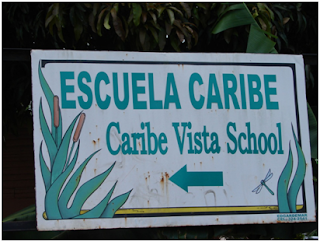 The school is really a lockdown facility. It is a reform school that is staffed with people with little or no training. All that is required of the staff is a high school diploma (or a GED) and faithful zeal.The students are in the Dominican Republic because it is on an island. They can't run away from the school because they don't know the language and the school holds their passports so they cannot go back to the United States.
The school is a model of brainwashing. Psychological abuse, cruelty, and even physical abuse runs rampant. Even straight out physical violence is used in an effort to show the campers the love of Jesus.
If that sounds wrong - well, that's because it is wrong. Very wrong.
I read this book because it was on a list of books that an angry parent group wanted to ban at a school corporation because it is anti-Christian and has sexual content (more on that later). I don't think of this book as "anti-Christian". All Scheeres did was point out that she and her brothers were physically beaten in their own homes by Christians and the violence continued at Escuela Caribe by Christians who hit them in the name of Jesus. My take as a lifelong Christian is that the book is not "anti-Christian". The behavior of the supposed Christians in this book is anti-Christian. Those "Christians" literally abused the author so much in the name of Jesus that she wants nothing to do with Jesus.
Is there sexual content? Yes.
Is it glorified? No.
It's actually pretty sad.
More about Escuela Caribe here in a Newsweek article. Escuela Caribe is now closed but it was bought out by a group with lots and lots of ties to Mike Pence. The new school kept some of the same employees as the old school and has the exact same qualifications to be a staff member.
This was a profound and disturbing memoir. I was not disturbed by the actions of a girl trying to find her way. I was disturbed by adult Christians who psychologically and physically abuse people so they can show them the love of Jesus. It angered me like few books have ever angered me.
I rate this memoir 5 stars out of 5. It can be found on Amazon.com here: Jesus Land: A Memoir by Julia Scheeres.
Her mother is a distant woman - more concerned with expressing love and support to missionaries she has never met in distant lands than in her own children. Her older adopted brother sexually abuses her for years.
Her younger adopted brother, however, is the closest to her in age and in spirit. His name is David. They are best friends and truly brother and sister. They are almost inseparable.
I say almost inseparable because when they go to school, Julia finds the racist pressure too much and often separates from her brother at school just to protect herself.
Halfway through the book, Julia and her younger brother get into trouble and are shipped off to a Christian Academy in the Dominican Republic called Escuela Caribe. Escuela Caribe advertises that it will help students free themselves from the influences of popular culture and maintain their education.
The school is a model of brainwashing. Psychological abuse, cruelty, and even physical abuse runs rampant. Even straight out physical violence is used in an effort to show the campers the love of Jesus.
If that sounds wrong - well, that's because it is wrong. Very wrong.
I read this book because it was on a list of books that an angry parent group wanted to ban at a school corporation because it is anti-Christian and has sexual content (more on that later). I don't think of this book as "anti-Christian". All Scheeres did was point out that she and her brothers were physically beaten in their own homes by Christians and the violence continued at Escuela Caribe by Christians who hit them in the name of Jesus. My take as a lifelong Christian is that the book is not "anti-Christian". The behavior of the supposed Christians in this book is anti-Christian. Those "Christians" literally abused the author so much in the name of Jesus that she wants nothing to do with Jesus.
Is there sexual content? Yes.
Is it glorified? No.
It's actually pretty sad.
More about Escuela Caribe here in a Newsweek article. Escuela Caribe is now closed but it was bought out by a group with lots and lots of ties to Mike Pence. The new school kept some of the same employees as the old school and has the exact same qualifications to be a staff member.
This was a profound and disturbing memoir. I was not disturbed by the actions of a girl trying to find her way. I was disturbed by adult Christians who psychologically and physically abuse people so they can show them the love of Jesus. It angered me like few books have ever angered me.
I rate this memoir 5 stars out of 5. It can be found on Amazon.com here: Jesus Land: A Memoir by Julia Scheeres.


 .
.


