Showing posts with label France. Show all posts

HARLEQUIN (Grail Quest 1) (audiobook) by Bernard Cornwell


Originally published in 2000.

Performed by Andrew Cullum.

Duration: 14 hours, 49 minutes.

Unabridged.

Also published under the alternate title "The Archer's Tale"

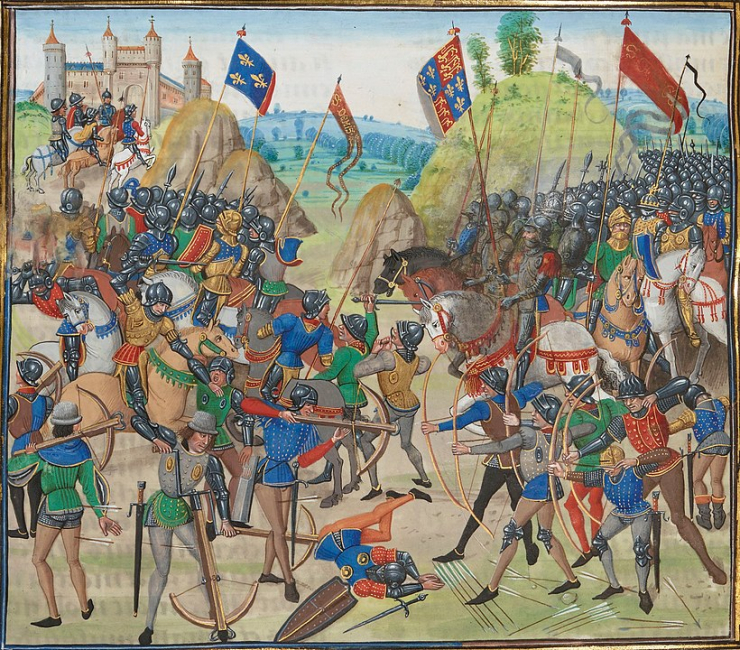
Harlequin is the tale of Thomas of Hookton during the early years of the Hundred Years' War. Hookton was a tiny English fishing village that was destroyed by French raiders from a ship. The raiders burn and loot the village, kidnap as many women they can, burn the village, and steal a religious relic - the famed lance that St. George used to kill the dragon.

Thomas heads off to join up as an English archer so he can get his revenge on the French noblemen that destroyed his hometown and get St. George's lance back. The bulk of the book is about his adventures in France in a series of battles in the Hundred Years' War serving as a harlequin.  A harlequin was the French term for an English long bow archer.

The battle scenes in this book are unbelievably well-told and Andrew Cullum's performance as the reader is fantastic - one of the best performances I have ever heard and this is my 799th audiobook review. 

But, I found the stuff in between the battles to be quite tedious. Normally, I am cool with all of the medieval rules and the posturing - but this was simply too much. This leaves me in the weird situation of praising a book, giving it a positive score (4 out of 5 stars) and choosing not to move on with the rest of the series.

This book can be found on Amazon.com here: Harlequin by Bernard Cornwell.

THE EARLY MIDDLE AGES (The Great Courses) (audiobook) by Philip Daileader


Published in 2013 by The Great Courses.
Lectures delivered by the author, Philip Daileader.
Duration: 12 hours, 32 minutes.
Unabridged.

The idea behind The Great Courses is that anybody can have access to high quality college instructors who are truly experts in their fields. In this course the focus is the Early Middle Ages (roughly 300 CE to 1000 CE). 

Daileader starts with the start of the decline of the Roman Empire, somewhere around the year 300 CE. He looks at the trends of the late Roman Empire and how they led to the fall of the Roman Empire in the West (Rome, not Constantinople) and how those trends led to the political and economic systems that typify the time period we know as the Middle Ages.

There is a heavy focus on what is now France, which is well-deserved since Charlemagne is one of the biggest historical figures of this era. But, other areas get a fair amount of attention, like Ireland, Spain, and the Islamic world. The sudden appearance of the Vikings contributed a lot as well. The Byzantine Empire

Church doctrine and politics play a prominent role throughout.

I found this series of half hour lectures to be interesting, but not riveting. The section on the political machinations that eventually led to the rise of Charlemagne's empire was slow - necessary but tedious until it finally pays off and you just sit and wonder how it all worked out the way it did. 

I rate this audiobook 4 stars out of 5. It can be found on Amazon.com here: The Early Middle Ages (The Great Courses) by Philip Daileader.  

YEAR WITHOUT SUMMER: A HISTORY from BEGINNING to END (kindle) by Hourly History


Published in July of 2024 by Hourly History.

In April of 1815, a volcano called Mount Tambora on an island in Indonesia erupted in a massive explosion. It was one of the largest explosions in human history. It obliterated most of the volcano, buried nearby villages and causes tsunamis. There were more eruptions that followed. It was a massive local problem, but the rest of the world had no idea it had even happened.

But, the rest of the world soon was affected by these explosions. Debris from the explosion got into the stratosphere and spread all around the world. There was so much ash in the upper atmosphere that 1816 became known as "The Year Without a Summer." 

This short e-book details some of the results, including snowfalls well into what are popularly regarded as summer months in regions of North America that rarely see snowfall after March. There were crop failures across North America, Europe, and Asia and political instability soon followed, especially in the Old World with its larger, more densely crowded populations. 

The cold conditions were less strong in North America the further one got from the Atlantic Ocean. It served as an inducement to to increase the population shifts towards the Western frontier (Ohio, Indiana, Illinois.)

I enjoyed this short history, even if I think it overplayed the long-term consequences, projecting them out decades afterwards in Europe. 

I rate this e-book 4 stars out of 5. It can be found on Amazon.com here: Year Without Summer: A History from Beginning to End by Hourly History.

THE HARLEM HELLFIGHTERS (graphic novel) by Max Brooks.


Published by Del Rey in 2014.

Illustrated by Caanan White.

Synopsis:

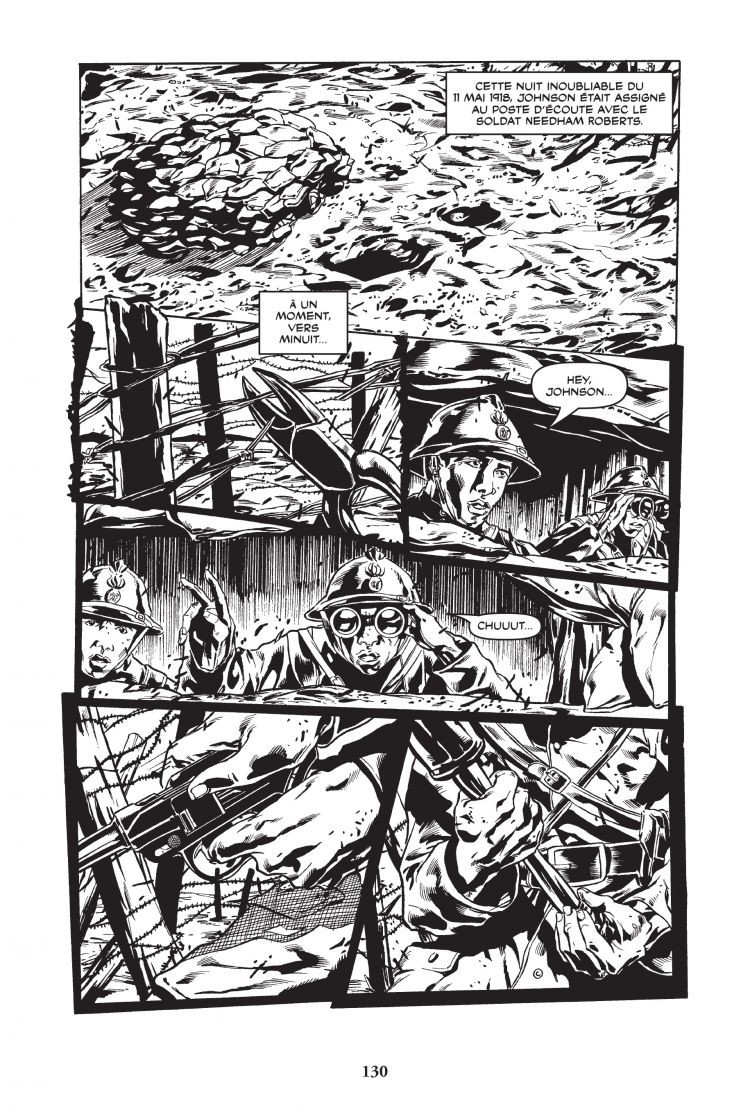
The Harlem Hellfighters is Max Brooks' history of an all African American unit (the 369th Infantry) that fought on the Western Front alongside French units. They mostly came from New York.

This unit was allowed to fight precisely because they were assigned to a mostly French army. The American army would not let African Americans fight and had originally used the 369th as laborers, alongside civilian laborers.

The French were in need of immediate manpower. French white soldiers already had experience fight alongside regiments of soldiers from their African colonies and were eager to bring American troops to the front, no matter their color.

The 369th spent more time than almost any other American unit on the front lines. They may have spent the most time on the front lines. They were the first Allied unit to reach the Rhine River. 

Legend has it that the nickname "The Harlem Hellfighters" was given to the unit by their German foes.

They were among the first units to return to the United States and were given the honor of marching in a tickertape parade in New York City.

My Review:

The story that Max Brooks tells in this graphic novel is a little herky jerky. He tells the story with plenty of emphasis on individual soldiers, the terrible conditions on the front, and the racism they experienced. But, the overall plot of the war is rather poorly told.


The biggest reason that I am giving this book a rating of 3 stars is the illustrations. I truly dislike the art style. I found it distracting and hard to follow. There were details that are included that just filled the page and often made it difficult for me to figure out what I was supposed to be looking at. I bought this graphic novel from an online source without having seen the art. I hated it so much that I didn't read this graphic novel for nearly 7 months. 

Note: The publisher says that this book is aimed at children 8-12 years old. I believe that all of those ages are too young. It has graphic depictions of the violence of trench warfare. There are bullets blasting though heads, spraying bloods and brains across the page. There is a depiction of a bayonet going into someone's mouth and coming out the back of his skull. 

To be clear, I DON'T have a problem with showing the war as it really was. I DO have a problem with showing an eight year old a soldier being vaporized by an artillery shell. I would give this book a PG-13 rating.

This graphic novel can be found on Amazon.com here: The Harlem Hellfighters by Max Brooks.

AGE of REVOLUTIONS: PROGRESS and BACKLASH from 1600 to the PRESENT (audiobook) by Fareed Zakaria


Published by Simon and Schuster Audio in 2024.

Read by the author, Fareed Zakaria
Duration: 13 hours, 2 minutes.
Unabridged.

Fareed Zakaria's Age of Revolutions: Progress and Backlash from 1600 to the Present is exactly what the title says it is.

Zakaria writes about the beginnings of capitalism, multi-cultural societies, globalism, democracy, the industrial revolution, the French Revolution, the Russian Revolution, Fascism, the failed Arab Spring, LGBTQ+ rights, and the rise illiberal democracy and the return on authoritarianism and the forces that pushed back (or overturned) them.

The author
Zakaria has clearly done his research and writes in such a way that it flows from one topic to another almost as if they entire book was just one big story (which it is, if you look at it as the story of humanity, especially The West.)

If you find yourself wondering how we got here, this is a good place to start. Zakaria breaks down complex movements and ideas and makes them understandable.

I rate this audiobook 4 stars out of 5. It can be found on Amazon.com here: Age of Revolutions: Progress and Backlash from 1600 to the Present by Fareed Zakaria

PRINCESS DIANA: A LIFE from BEGINNING to END(BIOGRAPHIES of BRITISH ROYALTY) (kindle) by Hourly History


Published in 2022 by Hourly History

This was a very odd choice for me to read for a couple of reasons:

1) I don't normally enjoy the gossip magazine type of stories.
2) I don't follow the modern English royal family - I find them to be annoying.
3) I don't really follow the English royal family in the history books, either.

Here's how we got here. Hourly History offers several free e-books every weekend and I picked up the book on Princess Diana for some unknown reason. And, six months later I accidentally picked the Princess Diana book with my fat thumb while using my e-reader app on my phone. I could have removed the download, but I decided to just go with it. Turns out, this was a happy accident.

I am not going to go over Diana's life story in this review. I will just say that this rather short biography (the publisher intends that its books take about an hour to read) was interesting and pleasant to read. A lot of it was information I remember just from being alive when all of this story was going on, but it was well-written.

I rate this e-book 4 stars out of 5. It can be found on Amazon.com here: PRINCESS DIANA: A LIFE from BEGINNING to END(BIOGRAPHIES of BRITISH ROYALTY) by Hourly History.

THE JOURNEY in BETWEEN: THRU-HIKING EL CAMINO de SANTIAGO (Thru-Hiking Adventures book 1) (kindle) by Keith Foskett


E-book Published by Amazon Digital Services in 2010.

I have a real soft spot for books about travel - especially travel in odd ways. I have read a book about a guy who backpacked across Europe, a man who hiked across Afghanistan in 2002, a man who biked from England to India, two women who biked from Turkey to China, a man who hiked from Mexico to the Darien Gap in Panama, the same man hiked the length of the Nile River, a man who found a little dog while in a hiking competition in the Gobi Desert, a man who hiked all 48 mountains in New Hampshire with his little schnauzer dog, and more.

One of these travel stories was by this author, Keith Foskett. Last year, I read the story of his trip up the Pacific Crest Trail - from Mexico to Canada and almost all in the mountains.

This hike was much more sedate and featured less extremes in the weather. The Camino de Santiago is a well-established route. It has been an pilgrimage route for more than 1,000 years and in the last 30 years or so France and Spain have really promoted this trail for tourists.

Foskett was determined to do this event properly so he began it at a traditional place to begin in France. That surprised me because I have always heard of this pilgrimage as being entirely in Spain but at least 25% of this book takes place in France.

Foskett is not taking this pilgrimage as a religious endeavor. Instead, he is looking for adventure and an escape from the workaday grind and this hike fits the bill perfectly.

As I noted, this is the 2nd hike I've done with Foskett (in spirit.) I enjoyed the book about the Pacific Crest Trail more, but this one was interesting. I learned a lot about the Camino de Santiago and Foskett makes for an unusual but lively travel companion. 

I rate this e-book 4 stars out of 5. It can be found on Amazon.com here: THE JOURNEY in BETWEEN: THRU-HIKING EL CAMINO de SANTIAGO (Thru-Hiking Adventures book 1) by Keith Foskett.

GALLIPOLI CAMPAIGN: A HISTORY from BEGINNING to END (kindle) by Hourly History


Published by Hourly History in December of 2022.

The short histories produced by Hourly History are designed to read in about an hour. In some cases the size limit makes for a very incomplete history. In this case, I thought that topic and the size limit matched up pretty well.

The Gallipoli Campaign was an unmitigated disaster during World War I. Winston Churchill (yes, the famous one from World War II) was the head of British navy and thought up a plan to do three things:

1) relieve the pressure on Russia from the Germans and the Ottomans;
2) possibly knock the Ottoman Empire out of the war;
3) encourage the Germans to divert more troops away from the French front to support the Ottoman Empire.

The plan Churchill came up with was to land thousands of soldiers from France, Britain, Australia and New Zealand on the Gallipoli Peninsula at the edge of the Aegean Sea in a quick and bold attack.

Troops from Australia and New Zealand landing at 
Gallipoli - April 25, 1915.
What actually happened was bold, but certainly not quick. The attack was disjointed and so poorly planned that the Ottomans were entirely prepared for the invasion...

Normally, I really don't care much for studying up on World War I - it was started for rather silly reasons in my opinion and the United States had little reason to get involved (Yes, I know that the Gallipoli campaign was before the U.S. got involved.) 

That being said, I was glad to learn more about the campaign that is always referred to in the histories I have read, but never explored in any sort of depth. This book gave me enough information to fill in this gap in my knowledge to my satisfaction.

I rate this book 4 stars out of 5. It can be found on Amazon.com here: GALLIPOLI CAMPAIGN: A HISTORY from BEGINNING to END (kindle) by Hourly History.


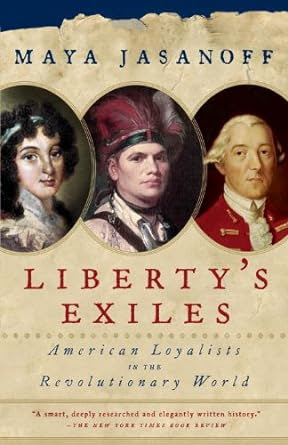
LIBERTY'S EXILES: AMERICAN LOYALISTS in the REVOLUTIONARY WORLD (audiobook) by Maya Jasanoff

Published by Recorded Books in 2012.
Read by L.J. Ganser.
Duration: 16 hours, 10 minutes.
Unabridged.


In 1783, at the end of the Revolutionary War, Loyalists (Americans who opposed the American Revolution and stayed loyal to Britain) had a choice to make - stay and ride out the anti-Loyalist bias in the United States or move somewhere else.

In the two years between the last major engagement (Yorktown) and the official end of the war and withdrawal of British troops the British decided to evacuate any Loyalists that wanted to go to other parts of the British Empire. One of the biggest advocates of this position was Guy Carleton, the British commander in America after Yorktown who later went on to become the Governor-in-Chief of Canada. He had more to do with what happened in this history than any other single person.

Guy Carleton (1724-1808)
The British government made an effort to make things right for these Loyalists. Not many Loyalists were completely reimbursed, but the fact that an effort was made was extraordinary for the day. In some cases, Loyalists were offered large grants of land, in other cases they were offered smaller grants of land and in other cases they were offered pensions and partial reimbursements for lost property. All of these offers were new innovations and a sign that the British government wished to honor the loyalty they had shown.

Some loyalists wanted nothing more than to start over, some looked to just work themselves up the British societal ladder, some wanted to get away from British society and some looked for a chance to get even with the Americans. 

There was a racial component to this as well. The British had offered freedom for any slaves that left their masters and joined their armed forces. The Americans pressured them to return the runaway slaves (including slaves from George Washington and Thomas Jefferson) but the British refused to go back on their deal with the former slaves as a point of honor. However, those former slaves oftentimes were given less money and less land than white Loyalists when they arrived at their new homes.

The British tried to honor the commitments shown by the Native American allies as well, but not nearly as much. 

Loyalists ended up going all over the empire but mostly to Canada. There were several families that went to Bermuda and Jamaica and back to England itself. Several families of African descent moved to Sierra Leone in Africa as part of an experimental colony. A few went even further to India. 

The section on the Canadian settlement was, at first, interesting but it soon got bogged down. It was all relevant detail, but just too much for me. In fact, that's pretty much my review of the entire book.

I rate this audiobook 3 stars out of 5. It can be found on Amazon.com here: LIBERTY'S EXILES: AMERICAN LOYALISTS in the REVOLUTIONARY WORLD (audiobook) by Maya Jasanoff.

CRIMEAN WAR: A HISTORY from BEGINNING to END (kindle) by Hourly History


E-book published by Hourly History in 2020.

Hourly History specializes in histories and biographies that take about an hour to read. In the case of the Crimean War (1853-1856), I think that's about right.

The war was the result of European alliance politics. Russia was looking to push into Ottoman territory. The Ottomans were considered to be pretty weak and certainly on the decline after centuries of being a major power. The Austrian Empire was a traditional ally to the Russians, but decided to stay neutral. The Prussians were just starting out so no one really cared what they did. Even though they had been traditional rivals for centuries, England and France decided that they had to intervene on behalf of the Ottoman Empire in order to stop Russia from becoming too powerful. 

The French and the English sent troops all of the way to the Ottoman Empire and then up into the Black Sea and landed troops on the Crimean Peninsula and the war was on.

The war itself is worthy of note for several reasons, including:

1) France and England worked together as allies. It was the beginning of what has mostly been the default position ever since;
2) Florence Nightingale's work as a nurse;
3) The Charge of the Light Brigade and the poem of the same name describing the futility of the attack and the by Alfred, Lord Tennyson featuring the line "Theirs not to reason why, Theirs but to do and die";
4) Exposed the weaknesses of Russia and the Ottoman Empire. Those weaknesses led to revolutions within 70 years;
5) It was demonstrated that rifled weapons were vastly superior to older style weapons;
6) Trench warfare was introduced. This pointed towards what would be the signature fighting style of World War I sixty years later;
7) The media of the day was able to relatively quickly send stories back from the front due to new technologies;
8) Photography brought realistic views of the war back to the English and French public.

This book does a good job of explaining the war, the causes, the military results and the short term and long term results. 

I rate this e-book 5 stars out of 5. It can be found on Amazon.com here: Crimean War: A History from Beginning to End

THE HUNDRED YEARS WAR: A HISTORY from BEGINNING to END (kindle) by Hourly History


E-book published in 2019 by Hourly History.

Hourly History is a series of histories and biographies that a reader can read in about an hour. Sometimes, that works out quite well. Sometimes, the topic is just too big to cover in an hour.

I think the Hundred Years War is one of those topics. 

Before I read this book I knew a few facts about the war: It was over dynastic struggles over the throne of France, the Battle of Agincourt, Joan of Arc.

Nothing in this book is incorrect, but I didn't really learn a lot more than I knew before. There is a parade of kings, royal family members and advisors - but there's rarely any detail that makes it interesting. For example, the book mentions an insane French king, but it does not mention that he believed that he was made out of glass and believed that he had to be careful that he would get bumped over and would smash to pieces. 


If you know literally nothing of the war, this is an adequate place to start.

I rate this audiobook 2 stars out of 5. It can be found on Amazon.com here:  
THE HUNDRED YEARS WAR: A HISTORY from BEGINNING to END (kindle) by Hourly History.

KING HENRY VII: A LIFE from BEGINNING to END (BIOGRAPHIES of BRITISH ROYALTY) by Hourly History


Hourly History is a series of histories and biographies that a reader can read in about an hour. Sometimes, that works out quite well. Sometimes, the topic is just too big to cover in an hour.

I am an avid reader of history, but I have areas of weakness that I am perfectly willing to shore up a bit, but I don't want to invest a ton of time. I want to know a bit more, not become an expert. The British Royal Family is just one of those areas for me. I know more than most people, but I can see the glaringly empty areas of my own ignorance.

King Henry VII of England (1457-1509)
Henry VII was the king that ended the a civil war between competing royal families - The War of the Roses. It was not a sure thing, though. It was a long shot for him to even survive, let alone make it to the throne. Normally, these complicated royal stories bore me, but this one had a lot of dramatic elements - murder of children, escapes, battles, betrayal, the death of a king on the battlefield, and more.

The length of this e-book was perfect. I rate this e-book 4 stars out of 5. It can be found on Amazon.com here: 
KING HENRY VII: A LIFE from BEGINNING to END (BIOGRAPHIES of BRITISH ROYALTY) by Hourly History.

PABLO PICASSO: A LIFE from BEGINNING to END (Biographies of Painters #5) by Hourly History


Published in 2020 by Hourly History.

Despite me having talked extensively about Pablo Picasso (1881-1973) in my recent review of an e-book about Francisco Franco, I am not an expert on Picasso, but I know way more than the average person. He has some paintings that I really like, but I am mostly not a fan. 

This short biography hit the spot in that it covered the details of his life without focusing too much on one particular part. This covered his 70+ year career in an even manner and included his personal life well.
Pablo Picasso in 1962

The real weakness of this e-book was the fact that they couldn't license his paintings and insert them into the book. But, since I read this on my cell phone it was pretty easy to switch to the browser and search the piece of art that was being discussed and take a look at it.

I wasn't much of a fan of Picasso as a person before I read this book and my impression was not changed one bit.

I rate this e-book 4 stars out of 5. It can be found on Amazon.com here: PABLO PICASSO: A LIFE from BEGINNING to END (Biographies of Painters #5) by Hourly History.

OUR FIRST CIVIL WAR: PATRIOTS and LOYALISTS in the AMERICAN REVOLUTION (audiobook) by H.W. Brand


Published by Random House Audio in November of 2021.
Read by Steve Hendrickson.
Duration: 16 hours, 31 minutes.
Unabridged.


When I read the title of this audiobook, OUR FIRST CIVIL WAR: PATRIOTS and LOYALISTS in the AMERICAN REVOLUTION, I was sure that I was going to be listening to an in-depth look at how the population of the young United States dealt with its neighbors and family that disagreed about the question of independence. The most famous example is Benjamin Franklin and his son William Franklin. William Franklin was the last royal governor of New Jersey and their relationship never recovered from the shock of the Revolutionary War. 

This book deals with more of these issues than most histories of the Revolutionary War era, but that is not particularly hard to do - most of them mention the Franklin family situation and use it as a stand-in for all families. But, it does not go in-depth into this concept of Loyalists vs. Patriots. For example, I learned more about this topic from this Wikipedia page than I did from this book. I should not learn more about the topic from 11 pages of text on a Wikipedia page then I did in a 16+ hour audiobook.

So what is this book, if not an in-depth study of how the American Revolution fractured families, cities and populations?
Benjamin Franklin (1706-1790) and William Franklin (1730-1813)


It's a very good political history of the Revolutionary Era that focuses especially on Benjamin Franklin, George Washington and, to a lesser extent, John Adams. The text hums right along and it was a very good listen. This is one of the few Revolutionary War histories that I've read that actually discusses the dilemma that slaves faced in the war and the offer of freedom that the British military offered for males slaves that were willing to leave their families and volunteer. He looked at the stories of two slaves - one who fought for the British and one who ending up fighting for both sides.

All of that being said, I am going to deduct one point from what would have been a 5 star review. This book does not adequately address what the title promises.

This book can be found on Amazon.com here: OUR FIRST CIVIL WAR: PATRIOTS and LOYALISTS in the AMERICAN REVOLUTION (audiobook) by H.W. Brand.

1914 by Jean Echenoz (translated by LInda Coverdale)


Published in 2014 by The New Press

Synopsis:

It is 1914 and World War I is starting. This story is about 5 young men who live in a small town in France leave together to join the fight. 

If you have studied this war, you know that this war was a meat grinder from one end of it to the other, but the beginning of any war is especially rough. The technologies have changed but the techniques have not kept up. Men die and get maimed out of ignorance. This war is no different.

My Review:

I have no problem with the depiction of anything in this book. But, I do have a problem with the book's lack of passion. No one is particularly excited about life before the war, during the war and definitely not after the war. Everything is stated matter of factly. I lnow it's a style thing but it served to push me away from the story rather than draw me in. If the characters can't muster enough interest to care, why should I?

I rate this book 2 stars out of 5. It can be found on Amazon.com here: 1914 by Jean Echenoz (translated by LInda Coverdale).

A HOBBIT, A WARDROBE and a GREAT WAR: HOW J.R.R. TOLKIEN and C.S. LEWIS REDISCOVERED FAITH, FRIENDSHIP and HEROISM in the CATACLYSM of 1914-1918 (audiobook) by Joseph Laconte


Published in 2015 by Thomas Nelson.
Read by Dave Hoffman.
Duration: 6 hours, 38 minutes.
Unabridged


A Hobbit, a Wardrobe and a Great War is a decent introductory history of World War I from the point of view of the common English soldier, a decent (but incomplete) look at the philosophical and religious trends of the West before and after World War I, decent introductory biographies of C.S. Lewis and J.R.R. Tolkien and really kind of a pleasant mess of a book.

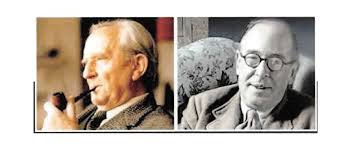
Tolkien (1892-1973) and Lewis (1898-1963)
All of these topics are thrown into the mix in a willy nilly. If that concept bugs you, this is not your book. I found it to be a pleasant enough listen, even if not particularly deep. 

I think the author makes his best points about the complete and utter waste and despair of a World War I battlefield when he compares it to the waste and desolation of Tolkien's Middle Earth battlefields and its heroes. The heroes are not generally the big leaders - they are flawed. They refuse to fight, have preconditions, are misinformed or are so full of their own agendas that the war becomes secondary.

Instead, the true heroes are people like Faramir, the younger brother of the "chosen one" hero whose pride and greed almost ruins the venture from the start. Or, it is 2 little hobbits who no one expects anything from. They literally have no power and yet they convince the very trees of the forest to stride out and destroy one of the enemies' strongholds. Of course, Sam Gamgee stands as the greatest hero of them all in my mind. He is the modeled from the stereotypical British World War I common foot soldier who heads off to fight in the war because it is his duty and keeps slogging all the way through to the end because his friends need him and it is simply the right thing to do. No pretense, just heart.

The connections with C.S. Lewis' fiction were a little less strong for me because I am not as familiar with his work. 

I rate this audiobook 4 stars out of 5. It can be found on Amazon.com here: A HOBBIT, A WARDROBE and a GREAT WAR: HOW J.R.R. TOLKIEN and C.S. LEWIS REDISCOVERED FAITH, FRIENDSHIP and HEROISM in the CATACLYSM of 1914-1918 by Joseph Laconte.

FOR LIBERTY and GLORY: WASHINGTON, LAFAYETTE, and THEIR REVOLUTIONS by James R. Gaines


Published in 2007 by W.W. Norton and Company.

First a bit of traditional blogging. I was going through some old receipts because I had plenty of time on my hands thanks to the Coronavirus lockdowns. This pile of receipts was 12 years old. It included some golden oldies like a Blockbuster receipt. I also found a receipt for this book. I had gotten a great deal on For Liberty and Glory - and it sat in my To-Be-Read pile for 12 years.

I had no idea it was in that pile for that long. If you had asked me before I found the receipt, I would guess it had been 4 or 5 years at most. At that moment, this book moved to the top of my To-Be-Read pile. I should have read it long before now - it was an excellent read.

Originally, I picked up this book because I simply didn't know much about Lafayette. I've read plenty of biographies of Washington and histories of the American Revolution. Lafayette always comes into the story somewhere in the middle. There's always a build up, with the Stamp Act, the Boston Massacre, Paul Revere and Patrick Henry and so on and then this kid from France comes over. He and Washington bond, Lafayette makes a good showing and he helps bring the French military in to help fight the English. And, at some point Lafayette goes away and doesn't come back until 1824.

I knew Lafayette was involved with the French Revolution, but my interest in the French Revolution is not strong (to me, it's a story that starts out well and then, all of a sudden, mobs are carrying heads and body parts around screaming for more blood and ends with a dictator that attacks every country in Europe, parts of Africa and even Haiti). So, I simply lost track of him. I asked someone who was a French Revolution buff what happened to Lafayette and the short answer was: "It didn't go well for him" with no elaboration.

So, this book looked like it would answer that question. It is a double biography of Washington and Lafayette as well as a double history of the American Revolution and the French Revolution. It is certainly not the definitive biography of either man or the definitive history of either revolution. But, it is immensely readable. I enjoyed it.

Turns out that I learned a lot about Lafayette. For example, his first name is Gilbert. Yeah, that seems trivial, but I've never heard him referred to as anything but Lafayette or the Marquis de Lafayette (almost like "Marquis" was his first name).

Lafayette was in love with the concept of the American Revolution from the

moment he heard of it. This teenager was so excited by the prospect of assisting in the war that he came here against the orders of the King's advisors - they had ordered all of the potential volunteers to stay in France. But, Lafayette and a few others crossed the border to Spain. Lafayette bought his own ship, sailed to South Carolina and eventually became an American hero - a Founding Father of sorts with more than 400 towns named after him. In my own state (Indiana) we have two cities and one county named after him.

Lafayette returned to France and was caught up in the French Revolution. The phrase "caught up" makes it sound like he was passive. Hardly. He co-wrote the most famous document of the French Revolution - the Declaration of the Rights of Man and of the Citizen. He created the modern French flag by combining the flag of Paris with the flag of the King of France. He helped save Louis XVI's life at one point and ended up languishing in a foreign prison for five years because of his role in the Revolution. He was offered the chance to be dictator at one point, and like his friend and hero George Washington, he turned it down. Bonaparte would not turn it down when he was offered that chance. But, Lafayette had a hand in Bonaparte's political demise in 1815 (after Waterloo). The luster of his name helped to carry the day.

Speaking of Bonaparte, Lafayette knew him personally. He knew so many big names in his life - George Washington, Victor Hugo, Marie Antoinette, Thomas Jefferson, Benjamin Franklin, John Adams, Victor Hugo, Louis XVI, Andrew Jackson, Alexis de Tocqueville, James Monroe, James Madison, Alexander Hamilton, and more.

I rate this book 5 stars out of 5. A must read if you are a student of the American Revolution and the early years of America's independence. Gaines has made this very approachable and writes in a lively manner.

It can be found on Amazon.com here: FOR LIBERTY and GLORY: WASHINGTON, LAFAYETTE, and THEIR REVOLUTIONS by James R. Gaines.

SERGEANT STUBBY: HOW a STRAY DOG and HIS BEST FRIEND HELP WIN WORLD WAR I and STOLE the HEART of a NATION (audiobook) by Ann Bausum


Published in 2014 by Blackstone Audio.
Read by Pam Ward.
Duration: 5 hours, 12 minutes.
Unabridged.


Sgt. Stubby wearing his medal vest (left), marching in a parade
(upper right) and wearing his special gas mask (lower right).
During the quick basic training for American forces heading for France in World War I, a stray dog found its way into a Connecticut National Guard training camp at Yale University. The unit was sprawled all over the campus and this Boston Terrier mix wandered around making friends all over. His friendly nature guaranteed a lot of table scraps. He marched with the men, learned the commands and blended in as well as a dog can. Somewhere along the way, someone taught him how to salute and hold the salute until it was returned.

When it came time to board a ship and head to France, the soldier that he spent the most time with, Corporal James Robert Conroy, hid him under his coat as others provided a distraction. Once aboard, Stubby ensured he got to stay with his friends by saluting any superior officer that questioned his presence and all resistance melted away.

Stubby stayed with his friends in France. He served several months in the trenches, participated in 17 battles, was wounded by a German hand grenade, was wounded by German poison gas, helped locate wounded soldiers in the "no man's land" between the trenches, single-handedly captured a German spy (he grabbed his pants with his mouth and made a ruckus until human soldiers came) and won admirers everywhere he went.

The title of this book exaggerates the importance of Sgt. Stubby to the war effort. He was immensely important to Conroy and their circle of friends, but the title makes it sound like Sgt. Stubby turned the tide of the war or something.

The book is equal parts a biography of Sgt. Stubby and a history of the era in which he lived. It's also a pretty serviceable history of World War I and includes discussions of movements in American history like the suffragette movement, the anti-alcohol campaigns that resulted in Prohibition and the rise of the FBI.

The audiobook was extremely well read by Pam Ward. I hope to come across other audiobooks read by her.

I rate this audiobook 5 stars out of 5. It can be found on Amazon.com here: SERGEANT STUBBY: HOW a STRAY DOG and HIS BEST FRIEND HELP WIN WORLD WAR I and STOLE the HEART of a NATION.

THE JOURNEY that SAVED CURIOUS GEORGE: THE TRUE WARTIME ESCAPE of MARGARET and H.A. REY by Louise Borden


Originally Published in 2005.

Published in 2016 by HMH Books for Young Readers.

This book is really three stories all wrapped up in one.

#1) It is the early biography of two authors and how they got started.

#2) It is also the story of how Curious George, the iconic children's book character came to be.

#3) And, most importantly, it is the story of how these authors and this character were almost snuffed out at the beginning of World War II because of their religion.

This edition of the book is designed to be used in a classroom. Not only is is wonderfully illustrated with both photographs and original drawings reminiscent of H.A. Rey's work, it also includes assignments and discussion questions at the end of the book.

I rate this book 4 stars out of 5. It can be found on Amazon.com here: The Journey that Saved Curious George.


SHOTS FIRED: STORIES from JOE PICKETT COUNTRY by C.J. Box


Published in 2014

Normally, I am not much of a fan of short stories. For me, by the time I figure out what's going on in the story it's over and then I have to go through the whole process again in the next story. The exception to this has always been Stephen King - he creates characters that the reader can buy into very quickly in a story.

I will add C.J. Box to that list with Stephen King. Throughout Shots Fired Box quickly establishes the parameters of the story and then delivers 10 good short stories. Four of them feature his previously established characters joe Pickett or Nate Romanowski. Nine of them take place in modern times. Nine take place in Wyoming.

The one that does not take place in Wyoming features members of the Sioux nation who are working at Euro-Disney in France. It is one of my favorites in the collection.

A quote from the book: "Giving alcohol to an alcoholic makes him happy, but it doesn't help him. Buying stuff for people who won't work makes you popular, but it doesn't get them a job or any self-respect." (p. 174)

I rate this collection 4 stars out of 5. 

This book can be found on Amazon.com here: Shots Fired: Stories from Joe Pickett Country

Featured Post

<b><i>BAN THIS BOOK (audiobook)</i></b> by Alan Gratz

Published in 2017 by Blackstone Audio, Inc. Read by Bahni Turpin. Duration: 5 hours, 17 minutes. Unabridged. My Synopsis Ban This Book is t...

Popular posts over the last 7 days