Indigo Slam (Elvis Cole #7) (audiobook) by Robert Crais


Published in 2008 by Brilliance Audio.
Read by David Stuart.
Duration: 8 hours, 27 minutes.
Unabridged.

While not as action-packed as The Last Detective (which follows Indigo Slam in the series, but I've not read a single one of them in order so why start now?), this is a strong book. Lots of smart comments, action and twists and turns, although the very last twist was so obvious that only the clinically brain dead couldn't see it coming. But, that didn't lessen the overall value of the book for me.

Elvis is hired by a group of children who have been living on their own for a while to find their missing father. As the investigation progresses, Cole and his enigmatic partner Joe Pike get caught up in the Witness Protection Program, a counterfeiting ring, a crime syndicate and all sorts of other incidents of violence and mayhem. Cole's deep down soft heart and his smart mouth are, of course, an enjoyable part of the story.

The audiobook is read by David Stuart who captures the voice of Elvis Cole perfectly.

I rate this audiobook 5 stars out of 5.

This audiobook can be found on Amazon.com here: Indigo Slam (Elvis Cole/Joe Pike Series).

Reviewed on April 24, 2008.

Jack Arute's Tales from Indy 500 by Jack Arute with Jenna Fryer


Published in 2006 by Sports Publishing

Jack Arute's first Indy 500 was in 1969 as an 18-year-old spectator. His family owns a track in the Northeast and racing is in his blood. His dad passed down a love for the Indy 500 in particular. Arute turned that love into a long career covering racing. 


In Jack Arute's Tales from Indy 500, Arute only tells stories from 1969 to the present (2004 in the hardback version, 2005 in the paperback version). Nothing too complicated and a real fun read, especially if you want to re-live some of the more exciting, interesting and sad moments from the last 35 years or so.

Jack Arute (center) 
joking with Tony Kanaan
I'd recommend the paperback version over the hardback since it has been expanded to include the 2005 race - the race where Danica Patrick became a household name.


This is a quick read - I finished it in just one evening, but to be fair, I did read into the wee hours of the morning because the stories were that much fun.

I rate this book 4 stars out of 5.

This book can be found on Amazon.com here: Jack Arute's Tales from the Indy 500

Reviewed on May 2, 2008.

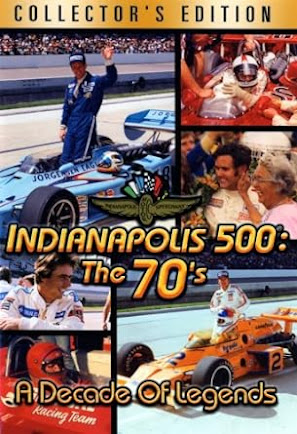
Indianapolis 500: The 70's A decade Of Legends (Collectors Edition) DVD


A must for Indy 500 fans

Part of a series of DVDs produced by the Indianapolis Motor Speedway, this collection reviews all of the races from 1970-1979, including A.J. Foyt's famed and unprecedented fourth win.

The collection features original TV & radio commentary, sound and video and lots of interviews with the drivers. Some of the interviews are from the 1970s and some are from nowadays looking back.
Janet Guthrie


Indianapolis 500: (The 70's A decade Of Legends) Collectors Edition is more than mindless promotion of the race - the lowlights (1973) are exposed along with the controversy associated with the arrival of Janet Guthrie, the first female participant in the 500. Changes with racing technology is highlighted throughout.

DVD features include collecting all of the bits and pieces of interviews with several drivers and some owners and adding a few bonus bits. Rick Mears and Roger Penske are especially strong interviews.

Well done.

5 stars out of 5.

This DVD can be found on Amazon.com here: Indianapolis 500: the 70's.

Reviewed on May 2, 2008.

Liberal Fascism: The Secret History of the American Left, From Mussolini to the Politics of Meaning by Jonah Goldberg


An Impressive Amount of Research


Published in 2208.

According to Goldberg, the traditional left-right concept of political beliefs is incorrect. Understanding this is key to understanding Goldberg's thesis that modern liberalism is the intellectual heir to Rousseau's ideas, the French Revolution and is, at the very least, the intellectual cousin to both fascism (especially Italian Fascism) and Soviet Communism.

To fully understand this you have to understand that measuring political philosophy with a one-dimensional left-right line lack the depth to measure both social and economic political philosophies. A quadrant map used to measure political beliefs will more accurately show depth of support for government involvement in economic issues, political rights and social issues. Anarchists lie at the edge of one quadrant, Libertarians a little more toward the center of that same quadrant but totalitarians lie in the opposite corner. Search the web to discover more about the grid concept for yourself.

Knowing this and actually knowing the stated goals of the fascist states (not including the racial discrimination of the Nazis), one can easily see that those goals are more in line with those of modern liberals and not with those of the Right, despite the popular belief that Fascists are nothing more than extreme Conservatives.

On the political grid, one can see that Fascists and Communists are really nearly the same thing, or at the very least political cousins of one another. They are both Totalitarians. Totalitarianism it the opposite of the Enlightenment philosophies that America was founded upon (see John Locke) and they are the opposite of the views of Classical Liberals.

Goldberg's thesis in Liberal Fascism: The Secret History of the American Left, From Mussolini to the Politics of Meaning is that modern liberals are not Adolph Hitler death camp fascists. Rather, they are akin to Mussolini's pre-World War II vision of fascism. Goldberg likens Mussolini's fascism to being very masculine and he likens modern liberalism to being more of an "eat your vegetables" nanny-state style of fascism, a more feminine model, if you will. Not classic Totalitarianism, but with clear Totalitarian features. The government is getting more and more involved in your daily life. The government tells you cannot smoke in your own business (Indianapolis), the type of grease you can cook with (New York City) and what types of grocery bags you can use (San Francisco).

None of those things belongs in the realm of government in the view of Classical Liberalism, which is more concerned about protecting you from government intervention, not in protecting you from yourself. While a nanny state is clearly not a Totalitarian state, it also is clearly closer to fascism on the quadrant grid than it is to classical liberalism.

Goldberg uses an impressive array of quotes and sources to back up his arguments. Goldberg is not afraid to go after Republicans as well. He's not happy with Karl Rove or George W. Bush for their own fascist tendencies. Mind you, his complaints are not those that the hyperbolic bloggers on the Left obsess over. He is bothered by the faith-based initiatives and the tremendous reach of No Child Left Behind into areas that were once left to local and state government.

Liberal Fascism is often dense reading, more like a political science textbook than the typical political stuff put out by partisans like Michael Moore, Ann Coulter and Sean Hannity. A strong working knowledge of political philosophy and political science vocabulary is a must with this book.

Goldberg provided tons of endnotes to document his work which is a strength and indicative of the quality of work that he has created. It was also quite annoying. Not the notes themselves, but the fact that they were endnotes with commentary requiring the reader to constantly flip back and forth to the end of the book and to keep two sets of bookmarks- one for the text and one for the endnotes. If a writer plans to write additional commentary in his or her notes common decency would suggest that footnotes are better for the reader. The continuity and flow of the main text is not broken by constant flipping to the back of the book. Shelby Foote did this to great effect in his gigantic 3 volume Civil War series. Tom Holland uses both in his book "Rubicon" - notes at the end, additional commentary at the bottom of the text.

I rate this book 5 stars out of 5.

This book can be found on Amazon.com here: Liberal Fascism.

Reviewed on May 2, 2008.

America Alone: The End of the World as We Know It by Mark Steyn


Important information but not well-presented


Published in 2006

I am a genuine fan of Mark Steyn. I am a frequent reader of National Review and his "Happy Warrior" column is what I read first. I picked this book up as a result of listening to a half-hour interview with him on my local radio station. I picked it up less than 4 hours after hearing him.

The information in America Alone The End of the World as We Know It is important, but the presentation is lacking. Steyn repeats himself so often that, if properly edited, this book would only have about 50 pages. Steyn writes brilliant columns. This book reads like a series of columns that overlap information, commentary and theme and was not up to the standards that I expected.

Steyn has done a lot of research, includes dozens and dozens of quotes and paraphrasing. However, he includes absolutely no endnotes, no footnotes, heck, he doesn't even include a bibliography! C'mon, Mark, I expect my tenth grade students to show their sources. You should do the same.

An interesting side note: A Canadian court tried to ban this book, Mark Steyn and the magazine that printed excerpts from this book due to some sort of 30 year old politically correct hate crimes law (can't write items critical of ethnic groups, etc.). While I'm not fond of the way this book is written, I can't stand the idea of banning a book for PC reasons. Steyn's book describing the trial is Lights Out: Islam, Free Speech and the Twilight of the West. Click here for my review of that book.

This book can be found on Amazon.com here: America Alone: The End of the World As We Know It

I rate this book 3 stars out of 5.

Reviewed on May 2, 2008.

Talking God (audiobook) by Tony Hillerman


Originally published in 1989.
Read by John MacDonald
Duration: 6 hours, 35 minutes
Unabridged

Talking God is good, but not the typical Tony Hillerman book. Rather than being based in the Four Corners area, this one mostly takes place in Washington, D.C.

Navajo Tribal Police Lt. Joe Leaphorn and Jim Chee investigate a body found in Gallup, New Mex
Tony Hillerman
(1925-2008)
ico. Some digging into the case discovers a trail that leads to the Smithsonian in Washington, D.C. and Navajo artifacts that are on display there.

It is interesting to see D.C. through Navajo eyes, but we do spend a lot of time in the mind of the bad guy as well, which is to the detriment of the story in my mind.

Chee's personal life features prominently as he re-connects with his on again-off again love interest Janet Pete, who is now an attorney in D.C. Leaphorn's painful loneliness and a general feeling of loss pervades throughout the book.

I would have rated the book as four stars, but I am reviewing the audiobook. My audiobook was read by John MacDonald and I cannot think of a worse pairing than MacDonald's voice and Hillerman's writing. It's not that MacDonald isn't clear - he's easy to understand. But, his voice sounds like Eastern establishment, not Western. This audiobook lasted about 6 hours and 35 minutes.

I rate this audiobook 3 stars out of 5.

Reviewed on May 2, 2008.

Note:  a new audiobook version of Talking God has been released with a different reader. I have not listened to the new version, but this book deserved another chance. This link leads to the new audiobook on Amazon.com because I cannot find a link to the edition that I listened to. 

Indianapolis 500: The 80's - A Decade for The Ages DVD


A must for Indy 500 fans

Released in 2005.

Part of a series of DVDs produced by the Indianapolis Motor Speedway, this collection reviews all of the races from 1980-1989.

The collection features original TV & radio commentary, sound and video and lots of interviews with the drivers and owners. Some of the interviews are from the 1980s and some are from nowadays looking back.

1988 Indy 500: all Penske front row
(Mears, Sullivan, Big Al)
Indianapolis 500: The 80's -  A decade for The Ages is more than mindless promotion of the race - the lowlights (1981 and the ridiculous court case that determined the winner) are exposed as well. Changes with racing technology is highlighted throughout.

DVD features include collecting all of the bits and pieces of interviews with several drivers and some owners and adding a few bonus bits. Rick Mears, Roger Penske and Tom Sneva are especially strong interviews.

Another nice feature is the inclusion of an uninterrupted highlight reel of great duels from the 1980s on the track, such as Mears-Johncock, Danny Sullivan's "Spin and Win" with Mario Andretti and Sneva vs. both Little Al and Big Al.

Well done.

I rate this DVD 5 stars out of 5.

This DVD can be found on Amazon.com here: Indianapolis 500: The 80's.

Reviewed on May 2, 2008.

They Call Him Cale: The Life and Career of NASCAR Legend Cale Yarborough by Joe McGinnis


A NASCAR legend deserves better


Published in 2008 by Triumph Books.

Cale Yarborough is a living symbol of NASCAR from its beginnings to the very creation of the dizzying heights that it has achieved nowadays. Sadly, most of the Johnny-Come-Lately fans have no idea, or at best, only a very dim idea who he is.

Sadly, this biography of Cale Yarborough, They Call Him Cale: The Life and Career of NASCAR Legend Cale Yarborough, only covers half of his career. Indeed, most of the book covers his life before NASCAR. There are only 203 pages in this biography and he joins NASCAR full-time on page 169. Considering that the last 11 pages discusses his retirement years, that leaves 23 pages to discuss his amazing run of 3 championships in a row, the famous fistfight at the 1979 Daytona 500, his decision to run a partial schedule for more than 7 years and his 11 year stint as team owner (just 5 pages for that).

The book could have been tremendously improved if the author had bothered to interview a few people. After all, his stable of drivers include a bevy of current and recently-retired drivers, including Dale Jarrett and John Andretti (his only win as a car owner came with Andretti). All of these drivers are media friendly. I've heard Andretti speak about Yarborough with nothing but praise.
Cale Yarborough's famed 28 car in the 1980s


The author should have included commentary about how Yarborough was able to field competitive cars running a partial schedule (nearly impossible to do today). How about Yarborough's willingness to have in-car cameras when most did not want them? How about Yarborough's involvement in a group that tried to set up an alternative to NASCAR after he sold his race team? Nope. None of that.

The lack of depth is not too surprising, really. The author's notes (p. 261) say that he got "many" of the stories in his book from Cale's autobiography and most of the rest came from 7 internet sites.

A nice feature of the book is the inclusion of more than 50 pages of tables that detail Yarborough's NASCAR and IROC career and his Indy 500 runs.

A disturbing feature is the naming of each of his children, grandchildren and the little towns in which they live in South Carolina. Jeez. There are weirdos out there, McGinnis. Why give out this sort of detailed info?

I give it two stars. The pre-NASCAR part of the book is interesting. It's just too bad the rest of the book couldn't follow up.

I rate this book 2 stars out of 5. It can be found on Amazon.com here: They Call Him Cale: The Life and Career of NASCAR Legend Cale Yarborough.

Reviewed on May 9, 2008.

What Dragons Prefer (kindle) by Dayle A. Dermatis


A very short short story


Published in 2011.

Dayle A. Dermatis' What Dragons Prefer is a Kindle "freebie"from Amazon.com, at least it is at the time of this review. If it were printed in book form it would be 5 pages or less, I am sure.

The plot revolves around a "dragonseeker," a woman who was brought to a small town to deal with a dragon that lives nearby. The dragonseeker knows how to get rid of a dragon, if necessary, but her expertise is really knowing about dragons - how often they eat, what they eat and what they really like.

The mayor of the town is a horrible, lecherous man and once his boorish ways get to be too much for the dragonseeker, she turns the tables.

The story in and of itself is quite easy to read but it telegraphs its punch line early on. It's satisfying, but not overly so. I rate this story 3 stars out of 5.

This short story can be found on Amazon.com here: What Dragons Prefer.

Reviewed on July 29, 2011.

LT's Theory of Pets (audiobook) by Stephen King


Funny story with a grisly ending.


Read by the author, Stephen King
Duration: 1 hour.

Read by Stephen King at a live performance in the UK, LT's Theory of Pets is an entertaining short story about a couple with two pets - a cat and a dog - and what the fact that family pets tend to actually prefer one member of the family over the others.

LT is a friend of the narrator of the story - they work at the same packing plant in Iowa. LT's wife left him nearly a year before and LT has become quite adept at telling the story of how his wife left him and why she took their dog with her and left the cat with him.

LT's telling of the story is quite funny. His wife's "Dear John" note she left him on the refrigerator the night she left him has to be the funniest Dear John note ever written. LT's observations about pets and married life are quite funny.

The end of the story has a hurried feel to it. King prefaces the story with a short introduction in which he notes that this story started out completely humorous but veered into scary, like a lot of his stories do. Personally, I think King did not know how to end the story so he headed for his familiar territory of the gruesome and the macabre.
Stephen King


Nonetheless, this is an entertaining listen. Stephen King reads his story very well and the funny parts of the story really shine. His distinctive Maine accent make it an even more interesting listen to this Midwesterner.

I rate this audiobook 5 stars out of 5.

This audiobook can be found on Amazon.com here: LT's Theory of Pets.

Reviewed on July 28, 2011.

Young Abe Lincoln: His Teenage Years in Indiana by W. Fred Conway


While it does not feature any factual errors, you start to wonder...

...is this a book that really had to be written?

Published in 1992 by Squire Boone Village

I know that the top-rated, best-selling history authors depend a lot on writers like W. Fred Conway in order to get the more popular, wider-audience histories written. Why? Because Conway is a fan of Indiana history and he has done a lot of research that people like James McPherson would never have time to do simply out of a love for his local area. This is one of the many books he has written about Indiana, Kentucky and/or Ohio and life along the Ohio River. Conway knows his stuff but...
Boyhood of Lincoln
by Eastman Johnson, 1868

Well, I am also a proud son of the Hoosier state and I found Young Abe Lincoln: His Teenage Years in Indiana to be more than a little pointless. The important facts could have been written in about 10 pages, maybe less. A little more than 5% of the book is the hopeful reminiscings of women that Lincoln may or may not have dated and their wishings that they could have married Lincoln (at the time they were interviewed he was the assassinated former President) if only they had really wanted to.

Out of 130 pages of text (Including Appendices showing Indiana state parks that have a Lincoln connection), I would estimate at least 40 pages of the text consists of pictures. Conway likes to include whole poems that Lincoln wrote about his boyhood in Indiana - page after page of poems. One whole page is filled with the creeds of the church that Lincoln attended but never joined. Trivia, not history.

So, I give this one 2 stars out of 5. Too many pictures and too much inane detail. I felt like someone had tried to pump up a large pamphlet into a book. It is not a one star rating because at least the facts he has presented are correct, which is saying something.

Do not buy unless you are a serious Lincoln collector.

This book can be found on Amazon.com here: 
Young Abe Lincoln: His Teenage Years in Indiana by W. Fred Conway.

Reviewed on August 2, 2006.

No Promises in the Wind by Irene Hunt


Reviewed by a history teacher seeking reading material for his classes


Originally published in 1970.
Winner of the Charles W. Follet Award.

I picked up No Promises in the Wind without much in the way of expectations since I am not that big of fan of Irene Hunt's most famous novel for the younger set, Across Five Aprils.

However, I am pleased to say that this is a much better book. No Promises In The Wind is about two brothers who leave home during the Great Depression simply because there is not enough money at home to buy enough food to feed everyone. They head off from Chicago with no plan except to try to survive as best as they can.

A soup line during the Great Depression
As a teacher, what I like best about this book is its portrayal of the complete and utter economic collapse that the Great Depression entailed. Most students have no conception as to the breadth and depth of the Great Depression. By looking at this small family, readers gain an inkling as to what went on. Modern readers might question why this family didn't apply for welfare or food stamps, so it could lead to a great discussion about the beginnings of such programs. The book addresses, in passing, the inability of private charities to keep up with the massive need.

When I asked my grandmother about the Depression, her experience as a young woman in the country mirrored what these boys do in this book. My grandmother spoke about young and old men alike coming up to their house and begging for food. Usually, they offered to do a bit of yard work in exchange for the food and the promise to keep moving on. This book echoed that experience wonderfully.

No Promises In The Wind would make a great introduction to the Great Depression as a topic in class. While, in the end, it is not nearly as powerful as more famous books, such as The Grapes of Wrath, it is much more accessible to young people and thus more useful.

Since the book ends just a few weeks after FDR takes office, follow up topics would naturally include the WPA and the CCC as well as Roosevelt's calculated strategies to appear as though he had things in hand in order to provide a bit of hope.

I rate this book 5 stars out of 5.

This book can be found on Amazon.com here: No Promises in the Wind.

Reviewed on August 2, 2006.

Lincoln Laughed: The Wit and Humor of Abraham Lincoln (audiobook)

A different look at our most written-about  president

Duration: 42 minutes
Produced by Teaberry Tapes

Everyone knows the facts about Lincoln - the 16th president, the Civil War, the Emancipation Proclamation, the Gettysburg Address, his assassination. But, do you really know Lincoln?  This CD offers a completely different look at the myth that the man has become by offering a look at his humorous side.

Lincoln was a master storyteller and he often told his stories to prove a larger point. There are plenty of those types of stories on this CD.  Sometimes he just told stories to disarm an audience - the editor of this collection notes that Stephen Douglas feared the ability of Lincoln's homespun humor to win a crowd more than his arguments. Lincoln's stories were known to persuade juries and sometimes they were just for fun. His wife noted that Lincoln's sense of humor - his quick smile and laughing eyes were never present in his photographs - he always looked so solemn, serious and even sad. This CD goes a long way to presenting the Lincoln that his friends and colleagues knew.

This CD is available is only available online from the company that produced the CD, a company called Tellens (link here) although I have found references to this CD being sold at Lincoln-related historical sites. Mine was purchased at the Indiana State Museum.

Note: there are two small historical errors in the presentation. There was no Lincoln-Douglas debate in Bloomington, Indiana. Instead, the reference would be to a Bloomington, Illinois. But, there was no Lincoln-Douglas debate there, either. Instead, Douglas spoke and Lincoln came from the crowd with a series of prepared questions and comments to challenge Douglas in an effort to set up more formal debates later on - those later debates were the Lincoln-Douglas debates. The second mistake involves mixing up the general who noted that all of his dispatches came from his "Headquarters in the Saddle." The narrator claims it was Joe Hooker, but it was John Pope. Lincoln joked, "General Pope has his Headquarters, where his Hindquarters ought to be."

110 People Who Are Screwing Up America (And Al Franken Is #37) by Bernard Goldberg


Goldberg takes aim - both left and right (but mostly at the left)

Published in 2005.

Just so you know, I was officially tired of the Coulter / Moore slamfest format about two years ago and I went cold turkey for quite a while. Mostly, they end up being long lists of high crimes and misdemeanors committed by the other side and while that is interesting it also starts to get silly after a while. Does either party or any party have a perfect record? No. Both have loudmouths and losers that shoot off their mouths and write insane things. I'm a Republican and there are Republicans that I would just as soon sit down and shut their mouths - they've said enough idiotic things to last a lifetime - let someone else have a chance!
Bernard Goldberg

Now, Goldberg is in a different class (mostly) from the partisan bashers. He avoids the acid comments (a la Coulter, Savage, Franken, Moore) and he really knows how to write. Bias and Arrogance are the reason I picked this one up - they are well-written and not shrill.

110 People Who Are Screwing Up America (And Al Franken Is #37) usually avoids shrillness (about 100 of the 110 are shrill-free) and Goldberg takes shots at both Conservatives and Liberals - which is a nice change of pace from most books of this genre. While I would have a different list of 110, I can't really disagree with the reasoning of any of his choices.

I give this one 5 stars out of 5. Well-written, interesting read. I shot through it in no time at all because it was compelling.

This book can be found on Amazon.com here: 110 People Who Are Screwing Up America.

Reviewed on July 30, 2006.

Lord of the Dead: The Secret History of Byron (abridged audiobook) by Tom Holland


Lord Byron as a vampire


Originally published in 1996 by Simon and Schuster.
Performed by Richard E. Grant

Duration: 3 hours, 3 minutes.
Abridged.

I picked up this audiobook version of Lord of the Dead: The Secret History of Byron because I very much enjoyed Holland's non-fiction book about the end of the Roman Republic, Rubicon: The Last Years of the Roman Republic. I am not particularly a fan of vampire books nor of Lord Byron (who I can believe was a vampire, considering the level of his debauchery and self-absorption) but I decided to give Tom Holland another try and trust that he would make it interesting.

Lord Byron (1788-1824)
The abridgment of the book contributed to my enjoyment, I am sure. There were many long stretches that were so bloated by flowery speeches, especially in the first hour or so of the audiobook, that I probably would have bailed on an unabridged version of the book. However, the last two hours were so interesting and so well-performed by Richard E. Grant that I had to bump the score up to 4 stars.


The running time of the abridged audiobook is about 3 hours and it can be found on Amazon.com here: Lord of the Dead: The Secret History of Byron.

I rate this audiobook 4 stars out of 5.

Reviewed on May 9, 2008.

Indianapolis 500: A Decade of Drama: The 90's - Collector's Edition DVD


"There's nothing as mighty as this in the world." - Nigel Mansell, F1 champion, Indy 500 driver


Published in 2005.

Part of a series of DVDs produced by the Indianapolis Motor Speedway, Indianapolis 500: The 90's - Collector's Edition reviews all of the races from 1990-1999.


The collection features original TV & radio commentary, sound and video and lots of interviews with the drivers. Some of the interviews are from the 1990s and some are from nowadays looking back.

The video is more than mindless promotion of the race - the lowlights (poor officiating in several races, for example) are exposed along with the controversy associated with the infamous CART-IRL split.
The DVD features include collecting all of the bits and pieces of interviews with several individual drivers and some owners that were in the feature and showing them in a longer format and adding a few bonus bits. The interviews highlighting many of the family connections are especially strong, although leaving the Andrettis out of it was odd, although they are highlighted in the review of the 1991 race. The feature on Scott Brayton who died in 1996 while practicing for the Indy 500 is touching.

The 1991 and 1992 races are especially well covered. Rick Mears makes a disparaging comment about Mario Andretti and Mears' comments about his reasons for retiring are not only enlightening, they are funny.

Well done. This is an enjoyable series. A must for an Indy 500 fan.

I rate this DVD 5 stars out of 5 and it can be purchased on Amazon.com here: Indianapolis 500: The 90's - Collector's Edition.

Reviewed on May 9, 2008.

The Fallen Man by Tony Hillerman


Good, but not great Hillerman. 

The Shiprock formation in New Mexico
Originally published in 1996.

Joe Leaphorn has just retired and Jim Chee continues his exploration into cross-cultural dating (and difficulties). Officer Bernadette Manuelito becomes a full-fledged character in the series. In fact, this may be the best characterization of her in the series.

There are actually two mysteries in The Fallen Man. One is a cattle-rustling caper. The other is the long-dead body of a climber that is found on Shiprock (Rock With Wings). If you ask, "What's a shiprock?" than you haven't been to the Four Corners area since this giant exposed interior of a volcano dominates its local landscape like some sort of gothic tower created in the imagination of Stephen King.

This is not Hillerman's best work, but it is enjoyable for any fans of Hillerman. This would not be a good one to start with if you have not read any of the series.

I rate this book 4 stars out of 5.

This book can be found on Amazon.com here: The Fallen Man by Tony Hillerman.

Reviewed on May 29, 2008.

Blockade Billy (audiobook) by Stephen King


Two short stories about the dark side of human nature

Published in 2010 by Simon and Schuster Audio. 
Read by Craig Wasson and Mare Winningham

Duration: 2 hours, 40 minutes
Unabridged

This audiobook is actually two short stories. The first and longest story is called "Blockade Billy" read by Craig Wasson, the second is "Morality" read by Mare Winningham.

****

"Blockade Billy" is the reminiscences of a retired coach of the fictional New Jersey Titans, an American League baseball team. The coach is being interviewed by a man named "Mr. King." We never hear what Mr. King asks, only the story of a former player named "Blockade Billy" as told by this old coach who lives in a retirement home.

Stephen King is at his descriptive best in this story as he re-creates the world of 1957, when baseball ruled the sports pages. At times, it is like listening to Bob Costas or George Will, both writers who can wax on eloquently about this golden age of baseball (George Will actually gets a not very kind mention by the coach) which is much to King's credit. Due to his reputation as a producer of gore and horror stories, it is easy to forget that King can be a powerful, first rate author.
Stephen King


Blockade Billy is actually Billy Blakely, a catcher that was called up from the Iowa Cornhuskers, the Double A farm team of the New Jersey Titans on an emergency basis. No one expects much from Billy except that he not mess up too bad. Talking with him for even a couple of minutes and you realize that something is not right - no one can figure out of he is simple minded or maybe even crazy. However, when Billy takes the field everyone knows that kid can do it all - he hits, he fields and he even calms the high strung star pitcher - and he does it with confidence. He quickly earns the nickname "Blockade Billy" - the catcher who won't let any player get by him when there is a play at the plate.

But, the head coach starts to believe that Billy is sucking the luck out of the team and when they discover Billy's true story the coach is more correct than he thought...

****
"Morality" has a less detailed plot but it is a detailed study in guilt and what it does to people.

Chad and Nora Callahan are a married couple living in New York City. He is a teacher but can find nothing by substitute teaching work. He is also working on a book about his experiences being a substitute that seems to have some promise. His wife is a nurse who is working with a retired minister named George Winston who has had a stroke. It is steady work but their combined salaries are not quite enough and they are slowly going bankrupt. They are pinning their hopes on Chad's book, if he can find the time to get it done before their finances fail them.

One day Reverend Winston makes a proposition to Nora. He has never committed a major sin and now he is physically unable to do so. He is not interested in a sexual act, but he wonders if she would commit some sort of violent act (nothing permanent - it is a physical assault on a child in a park) on his behalf for $200,000? He figures that this act of "sin by proxy" will actually be doubly sinful since he has corrupted her as well. He preys on her fears of financial loss and on the promise of her husband's book, if he just had the time that the money will provide to finish it.

She decides to do it and discovers that this one act has major, life-changing implications.

I rate the combined set of stories 4 stars out of 5. It can be found on Amazon.com here: Blockade Billy by Stephen King.

Reviewed on July 23, 2011.

Note: This book was banned by a school district in Florida during the 2023-2024 school year. Here is a link to the extensive list of banned books. 

Quitters, Inc. (audiobook) by Stephen King


My Favorite Stephen King Story

Published by Phoenix Books in 2206
Read by Eric Roberts
Duration: 45 minutes.


It is true that with all of Stephen King's lengthy tales, my favorites are usually the shorter ones and Quitters, Inc. is probably Stephen King's shortest story. It was originally part of his book of short stories Night Shift and was one of three stories in the 1985 movie Cat's Eye.

Stephen King
The premise of the story is really cleverly simple. What if you went to a non-smoking clinic that was run by the mafia? Dick Morrison meets an old friend who has kicked the smoking habit who tells him that if he visits Quitters, Inc. they will get him off cigarettes and change his life for the better. Morrison laughs off the suggestion but eventually does go for an initial consultation out of curiosity about their methods.

I cannot divulge any more about this very short story without introducing spoilers except to say that their methods are anything but AMA approved, but they do work.

The story is read by Academy award nominated actor Eric Roberts. Roberts gives an understated performance, like a man telling a story at the end of a bar after a long night. But, it works perfectly with the characterization of the mobster counselor at Quitters, Inc.

I rate this short story audiobook 5 stars out of 5.

This audiobook can be found at Amazon.com here: Quitters, Inc.

Reviewed on July 23, 2011.

South Park Conservatives: The Revolt Against Liberal Media Bias by Brian C. Anderson


An up and down work

Published in 2005.

I will admit, the title of South Park Conservatives: The Revolt Against Liberal Media Bias got my attention and it was the reason that I picked it up. For the record, I am not a big fan of South Park, but I could see where he might go with it based on my limited exposure to the series (I've seen maybe 10 episodes of the show).

I was not disappointed with the "South Park" section of the book. However, that is only a small section of the book. The first 1/3 or so is your traditional "Look how they are slandering us in the media!" finger-pointing exercise that both Liberals and Conservatives use in their books. While useful for setting up the rest of his book, I could have done without it. I've been there, done that and, frankly, I am tired of it.

The middle part, the part concerning Conservative comedy, such as South Park, Dennis Miller and Colin Quinn was very good. Anderson sets up the jokes so that they usually read as funny as they were when spoken. Actually, Quinn is funnier in the written word (perhaps he should write a book) and Miller is harder to follow because of his offbeat delivery style, but it was still enjoyable.

The last section about conservative students on campus was enjoyable but I kept wondering what this had to do with the revolt against Liberal MEDIA Bias when he kept on referring to the bias of Liberal Professors?


My copy had multiple spelling errors and one mathematical error (he refers to a book written in 1984 that influenced Clinton's signing Welfare Reform into law 22 years later - that makes Clinton President in 2006 - a scary thought indeed!)

Anderson also incorrectly refers to Limbaugh's dittoheads as people who are "ditto-ing" what Limbaugh said. In other words, just agreeing with him. Limbaugh points out in a nearly weekly basis that this is not the origin of the word. It came from the early days of the show when people would call in and say something like, "Wow! I love your show! Where has this been all of my life! Conservative ideas on the radio!" and than the next caller would say the same thing. Eventually, someone got the bright idea to say, "Ditto what the last caller said." The phrase stuck. Knowing the true origin of the word would have made Anderson's thesis all the stronger, since it implies that there were Conservatives waiting for someone to speak to their issues before the "Fairness" doctrine was overturned.

I give this one 3 stars out of 5. Very easy to read, at times very, very funny. Too much re-visiting of old wounds, not enough exploring of new territory.

This book can be found on Amazon.com here: South Park Conservatives.

Reviewed on July 28, 2006.

Featured Post

<b><i>BAN THIS BOOK (audiobook)</i></b> by Alan Gratz

Published in 2017 by Blackstone Audio, Inc. Read by Bahni Turpin. Duration: 5 hours, 17 minutes. Unabridged. My Synopsis Ban This Book is t...

Popular posts over the last 7 days