Showing posts with label illegal immigration. Show all posts

WELCOMING the STRANGER: JUSTICE, COMPASSION, and TRUTH in the IMMIGRATION DEBATE by Matthew Soerens and Jenny Yang


Published in 2018 by IVP.

A few years ago I was determined to learn a lot about immigration in the United States. I bought Welcoming the Stranger during that time, but I put it aside because the other books I had read were, to put it simply, not good. 

So, this book went into the dreaded to-be-read pile, and it might have stayed there forever except for the reelection of President Trump. His actions to fight immigration of just about any sort prompted me to pick up this book and learn a little more about the immigration system.

Even though this book was written in 2018, just 7 years ago, some parts of it felt hopelessly out of date thanks to Trump's relentless push against so many norms, rules, and laws in 2025 when it comes to immigration. 

The basics are there, however, so the book does have value as a primer on immigration. But, the book is more than that - it is a Christian look at this issue because the authors work for World Relief, a Christian organization that works with refugees around the world and helps immigrants seeking asylum in the United States. Their budget was decimated when the DOGE cuts came after USAID funding in January of 2025.

Even though this book was written long before that, its look at what the Bible teaches about how to deal with foreign people living among God's people. The book is actually designed to be used as a small group Bible study - there are discussion questions included in the back.

I rate this book 4 stars out of 5. It can be found on Amazon.com here: Welcoming the Stranger: Justice, Compassion, and Truth in the Immigration Debate.

SIN MIEDO: LECCIONES de REBELDES (en español) by Jorge Ramos)


Published by Celebra in 2016.


In Sin Miedo: Lecciones de Rebeldes, Jorge Ramos brings us stories of people that he has interviewed over the years that he considers to be rebels with lessons to offer to all of us.

The title can be translated as Fearless: Lessons from Rebels. Some really are literal rebels, some are rebels that became dictators (he has 4 of these), and some are people that really aren't rebels, but are very successful in areas where people like them are not normally successful.

If you don't know who Jorge Ramos is, you probably don't watch Univision TV very much. Univision is a Spanish language channel based in Miami and Ramos is their most recognizable news anchor. 

The interviewees range all over the place, including Barack Obama, Bill Gates, Fidel Castro, Barbara Walters, George W. Bush, Daniel Ortega, former Presidents of Mexico, two Venezuelan dictators, a Mexican revolutionary leader, Spike Lee, and Richard Branson.

Some of the interviews are pretty compelling with lots of details. Some are skimpy, but fleshed out with some background research (you couldn't really corner Fidel Castro and pressure him to give you a long interview so you make do with the time you were given.)

The result was a mixed bag. I was touched by the patriotism of Venezuelan refugees that kept on fighting the Chavez/Maduro dictatorships in the face of overwhelming obstacles, but the interview with Bill Gates was standard boiler plate profile of his admirable work to fight disease in the Third World.

I skipped the dual interviews with Israeli Prime Minister Benjamin Netanyahu and a Palestine Authority leader, figuring that anything said in that interview was superseded by the October 7 Attack and the Gaza War that followed.

The edition I read was in Spanish. It's been a few years since I read a book in Spanish. The last one was also a Jorge Ramos book. I enjoy his clear, concise style. I guess that makes Ramos my favorite Spanish language author! The English translation of this book is called Take a Stand: Lessons from Rebels.

I rate this collection of interviews 3 stars out of 5. It can be found on Amazon.com here: Sin Miedo Lecciones de Rebeldes by Jorge Ramos.

ILLEGAL (graphic novel) Written by Eoin Colfer and Andrew Donkin. Illustrated by Giovanni Rigano.


Published in 2018 by Sourcebooks Young Readers.

Illegal is the fictional story of two young brothers from Ghana: Ebo and Kwame. While it is fictional, it is based on lots and lots of true stories.

Most Americans are very aware that immigrants/refugees are fleeing from their native countries and arriving at the border of the United States and are not aware that a similar thing is happening in Europe. 

Europe has a similar refugee/immigrant situation. People are fleeing from the wars in Syria, Sudan, and Yemen. There are also refugees fleeing the brutal poverty and political situations in sub-Saharan Africa. Like in the United States, these immigrants/refugees depend on very shady people to move them closer to their goals.

In this story, two young brothers named Ebo and Kwame live in a village in Ghana. They are orphaned and living with a useless, drunken uncle. They have an older sister that has already crossed the Sahara Desert and the Mediterranean Sea to look for work but they don't know anything about where she ended up or how it is going. 

Kwame is the older brother and he has decided to sneak away and try to get to Europe. He doesn't want to bring along his little brother because he is concerned about his safety, it will cost twice as much if they both go, and there is a superstition that says only one family member should make the trip at a time because it is so dangerous that it just seems all the more likely that there will be a loss in the family.

Ebo will have none of this. He immediately sets off to find his brother at his first stop - Agadez, Niger. Agadez is a city of a little more than 100,000 and serves as the launch point to try to cross the Sahara Desert.

The Sahara is too big to cross on foot so migrants trying to cross it have to have money to pay unscrupulous smugglers (much like Mexico's infamous coyotes.) This is not cheap.

If a migrant is lucky enough not to be robbed and dumped in the desert they arrive in Libya and pay smugglers for a boat ride across the Mediterranean Sea and try to land in Italy or Sicily. This is also not cheap.

Ebo and Kwame work various menial, under the table manual labor jobs while living on the streets and avoiding the police. Life is cheap, hard, brutal, and dirty - yet no one talks about turning back.

My review:

This is an excellent graphic novel. The parallels with the American refugee crisis are striking and equally heartbreaking. I learned a lot and I enjoyed the easy to follow art work as well.

I rate this graphic novel 5 stars out of 5. It can be found on Amazon.com here: ILLEGAL - Written by Eoin Colfer and Andrew Donkin. Illustrated by Giovanni Rigano.

ESPERANZA RISING (audiobook) by Pam Muñoz Ryan


Duration: 4 hours, 42 minutes.
Unabridged.


Synopsis:

Esperanza is the main character in a fictionalized version of the author's grandmother's adolescence. 

In Mexico, Esperanza is the daughter of a wealthy landowner in Aguascalientes. On this ranch, life is wonderful. She has servants and attends a private school. But, life in Mexico in 1930 is fraught with danger. It is only 10 years after the 10 year long Mexican Revolution and armed bands still roam the countryside. One of these groups kills Esperanza's father and her conniving uncles take the ranch and burn the house down to make sure they keep the land. 

The author, Pam Muñoz Ryan
Esperanza and her mother join a family of their servants (the ranch manager, the household manager, and their son) and flee to America (California) with false paperwork. They hope to work on American farms and re-establish themselves.
However, America is in the beginnings of the Great Depression...

My Review:

The book has a slow start (probably the first 1/3), but once the family makes it to the American border the book truly gets steadily better as it goes along. The migrant labor camps in this book tie in very well with a much older book that is set a little later in the Great Depression in California, The Grapes of Wrath. By the end of the book, I was pretty invested in seeing how it turned out.

For all of the people that act as though the immigration crisis at the border is a new thing that one political candidate discovered just a few years ago, this book feels like it could be easily updated to 2023 with a few technological changes. It is set 93 years in the past, but it involves criminal violence forcing people north to America, migrant camps, illegal border crossings, forged paperwork, low wages, border patrol agents, homelessness, families separated by the border, racial prejudice, and more.

I rate this book 4 stars out of 5. It can be found on Amazon.com here: ESPERANZA RISING by Pam Muñoz Ryan.

AMERICAN REBOOT: AN IDEALIST'S GUIDE TO GETTING BIG THINGS DONE (audiobook) by Will Hurd


Published in March of 2022 by Simon and Schuster Audio.
Read by the author, Will Hurd.
Duration: 8 hours, 47 minutes.
Unabridged.


Will Hurd has done a lot of things in his 45 years. He has been an operations analyst for the CIA (working in Pakistan, India, and Afghanistan), he was worked in high-tech (including cyber-security and artificial intelligence), has served 6 years as a member of the House of Representatives from Texas, and is now a Republican candidate for President in 2024.

This book was undoubtedly an attempt to introduce Will Hurd to a larger audience. I follow politics pretty well and I had never heard of Will Hurd until he announced his campaign for President in June of 2023 (to be fair, there are 535 members of Congress and most are not well known outside of their districts.) I heard about this book in a political podcast and, lo and behold, it turns out that my library had it.

Just to let you know where I am coming from as I review this book, I am a Never Trump Republican and have been since 2015. I am anti-MAGA. Hurd got my attention because he says a lot of the same things.

That being said, his audiobook was a mixed bag for me. It has real moments of clarity and inspiration but it also has sections that are kind of boring (discussions of old political fights and debates, for example.) I am going to end up giving the book 3 stars our of 5 because it was not a bad listen, but also not an amazing listen.

What it all comes down to is this - while this is not the most exciting book, listening to him speak about a wide variety of topics for almost 9 hours did help me decide to look into Will Hurd more seriously (
The author. I freely admit that I 
stole this picture from
 his campaign website.
here is his campaign website
) and at this time he is my choice in the GOP primary. What does that mean? Probably nothing - I was a Ted Cruz man in 2015 and I've been nothing but disappointed in him since 2016. But, it's good to know that I have an option in the Republican Party after feeling 100% left out since the summer of 2016.

The book demonstrated that you can have Conservative principles and not be MAGA in today's GOP. You can argue and not be unpleasant and demeaning. You can argue and learn new things and change your mind. You can have friends in the other party because they're not evil - they just see the world differently than you. Also, you don't have to participate in the culture wars to win. 

INSURGENCY: HOW REPUBLICANS LOST THEIR PARTY and GOT EVERYTHING THEY EVER WANTED (audiobook) by Jeremy W. Peters


Published in February of 2022 by Random House Publishing.
Read by the author, Jeremy W. Peters.
Duration: 13 hours, 46 minutes.
Unabridged.


Sorry that this will be a herky-jerky post. It deserves a better one, but that would have to be a much longer post, perhaps 3 or 4 times longer. That would be so lengthy that no one would bother to read it.

Peters' book details how the GOP went from the party of Eisenhower and Reagan to the party of MAGA and Trump.

The old GOP advocated Free Trade, welcomed immigrants, valued the NATO alliance and wanted to overturn Roe v. Wade. The MAGA party flirts with the idea of leaving NATO, denounces Free Trade agreements, openly despises illegal immigrants and openly discusses the idea that all immigrants (legal and illegal) are being brought into the U.S. to replace white people with more compliant people of color. As Tucker Carlson, the number one cable news voice of the MAGA movement, stated in April 2021, "the Democratic Party is trying to replace the current electorate — the voters now casting ballots — with new people, more obedient voters from the Third World." This view was applauded by David Duke, a former leader of the KKK. Carlson has re-stated those comments many times since.

What they have in common is the desire to overturn Roe v. Wade. Peters contends that the party that Reagan built morphed into something unrecognizable because of that one goal (the "everything they ever wanted" in the title). 

Peters looks at the political threads that began the movement and starts with the John Birch Society - a group that saw everything as a plot advanced by International Communism. The Birchers were denounced by mainstream Conservatives like William F. Buckley as being crackpots who  built the intellectual arguments used by Reagan to become president. Reagan used to be the standard all Conservatives were judged by. Conservative radio host Rush Limbaugh used to refer to him as Ronaldus Magnus as a sign of his stature in the party. He was uncriticizable, much like FDR was to Democrats in the post-WWII years. 

The MAGA movement never criticizes Reagan, but it undoes most everything Reagan stood for. Ironically, Rush received a Presidential Medal of Freedom from the man who did more to undermine more of Reagan's foreign policy and free trade policies than any other president.

Peters follows those John Birch threads to Patrick Buchanan and his multiple failed attempts to run for president in the late 20th and early 21st centuries and finds another man who also ran and flirted with running at the same time, often saying similar things - Donald J. Trump.

Peters identifies the nomination of Sarah Palin as the Vice Presidential candidate in 2008 and the rise of alternate internet-based media like InfoWars and Breitbart along with social media and its emphasis on conspiracy (QAnon, Great Replacement, 5G towers spreading Covid-19, etc.) as major contributors to the MAGA movement.

This was a fascinating audiobook and read very well by the author. The more the Bircher tendencies showed up in the GOP and it became the party dominated by conspiracy theories, the more I wanted out.  After being a consistent GOP voter since 1996, I ran away and became politically homeless in 2016. (note: the Dems have their own set of conspiracy theories, but they don't tend to dominate the entirety of their political discussions as MAGA's conspiracy theories dominate the GOP) .

I rate this audiobook 5 stars out of 5. Highly recommended. This book can be found on Amazon.com here: INSURGENCY: HOW REPUBLICANS LOST THEIR PARTY and GOT EVERYTHING THEY EVER WANTED by Jeremy W. Peters.

THE GOD WHO SEES: IMMIGRANTS, the BIBLE, and the JOURNEY to BELONG (audiobook) by Karen Gonzalez


Published by Tantor Audio in November of 2020.
Read by Joana Garcia.
Duration: 5 hours, 25 minutes.
Unabridged.


This is the second time in less than a month that I am reviewing and audiobook that covers the topic of immigration written by an Hispanic immigrant. In both cases, I came to the book highly prepared to like it and in both cases I was disappointed.

The author, Karen Gonzalez
I have no problem at all with the points that Gonzalez makes in The God Who Sees. As a Christian, I think many Christians have been on the wrong side of this issue for decades (including me, for a while).

However, this book just doesn't seal the deal. It says a lot of the right things, but it doesn't do the trick.

Issues:

1) There are pieces of sloppy research, or maybe just sloppy writing or editing.

For example, when the author asserts that the concept of borders came around with the end of the Thirty Years War and the series of treaties known as the Peace of Westphalia in 1648. I think she was referring to immigration and borders (which would be stretch), but the way it came out is that there were no defined borders. I found that to be quite ridiculous - all the more ridiculous considering the audiobook I am currently listening to discusses the peace treaty between Ramses II and the King of the Hittites which laid out clearly defined borders and led to peace between the two empires for more than 100 years. Not to mention the Great Wall of China - some of it has been in place for more than 2,700 years. 

Another example is when the author argues that "chain migration" is different than commonly understood (in very short terms, family members of current American residents are given priority when it comes to legal immigration). She uses her own family as an example, but her example is pretty much a version of chain migration.

2) The audiobook reader is Joana Garcia. Her reading was so slow that I had to change the setting on my app and play it at 120% of the normal speed. This is my 602nd audiobook review (no kidding), this is only the 3rd time I have had to adjust the speed.

Garcia reads a lot of Spanish in this audiobook, including a long passage from Psalms. The problem is, in this Spanish teacher's opinion, Garcia is not particularly proficient at Spanish. She sounds like one of my more advanced high school students, not a native speaker. I found a listing for her as an audiobook reader online and they only mention skills in reading English. Why would they hire a reader to read a lot of Spanish who really can't read Spanish?

I rate this audiobook 2 stars out of 5. It can be found on Amazon.com here: THE GOD WHO SEES: IMMIGRANTS, the BIBLE, and the JOURNEY to BELONG by Karen Gonzalez.

THE UNDOCUMENTED AMERICANS (audiobook) by Karla Cornejo Villavicencio


Published in 2020 by Random House Audio.
Read by the author, Karla Cornejo Villavicencio.
Duration: 4 hours, 53 minutes.
Unabridged.

Villavicencio is a "Dreamer", also known as a DACA kid. DACA is the program started by President Obama to deal with immigrants who came to the United States illegally as children. Generally speaking, the only country they've ever known is the United States and they had no say in immigrating to the United States. Congress refused to deal with this situation so President Obama created a program through executive orders. This meant that when President Trump came to office he was able to undo a lot of this plan with another executive order. 

Villavicencio's very personal look at the DACA program and the general mess of our immigration policy in The Undocumented Americans was inspired by the election of Donald Trump, but it was not what I was hoping for when I started listening to this audiobook. I was really hoping for policy analysis with a healthy bit of personal stories and interviews tossed in. 

Instead, this book is very much the reverse of the book that I was looking for. It was more of an extended highly personal rant about several immigration-related topics. Many of the (somewhat fictionalized, according to the author) stories she tells have compelling features, but I found the author's style to be too personal, as though the entire screwed-up immigration system was designed just to make her miserable, like most things in life. 
The author

Villavicencio is such a large part of this book that you literally cannot separate the author from the message or the stories she tells. I found her to be so annoying and almost intentionally unhappy that I was forcing myself to read the book, like it was some sort of assigned text. This was especially annoying because I really did agree with her at least 80-90% of the time. 

I rate this audiobook 2 stars out of 5.

It can be found on Amazon.com here: THE UNDOCUMENTED AMERICANS (audiobook) by Karla Cornejo Villavicencio.

SUPERMAN: DAWNBREAKER: DC ICONS (audiobook) by Matt de la Peña


Published by Listening Library in 2019.
Read by Andrew Elden.
Duration: 7 hours, 28 minutes.
Unabridged.

Set in modern America, Matt de la Peña's Superman: Dawnbreaker: DC Icons delivers a traditional Superman origin story with a little bit of a twist. This book follows along the line of the Smallville TV show, with Metropolis being within driving distance of Superman's Kansas hometown instead of basically being a stand-in for New York City.

Big things are going on in Smallville. A tech firm has moved in, bringing in lots of jobs and a new corporate headquarters. They also are buying up farm land. And, a new smaller company has come in as well. Also, LexCorp is sniffing around. Smallville is considering passing a law requiring people suspected of being illegal immigrants (there is a burgeoning Hispanic population who serve as farm workers and work in a meat processing plant) to produce papers on sight and Hispanic men are disappearing.


Clark Kent has always been amazingly strong, but that could be passed off because we all know people that seem to be freakishly strong. But, Clark noticed something was radically different when he played on his Freshman football team. He dominated with an unprecedented number of touchdowns, but decided to quit football when he severely injured a teammate during a practice. 

When this book begins, Clark has no idea that he is not from Earth. His powers are starting to manifest now that he is getting older, often to his dismay, but they are intermittent. So, unlike in most Superman stories, those formidable powers are not dependable - and things are coming to a head in Smallville...

I really liked this audiobook. Matt de la Peña is an experienced YA author and you can tell. DC made a great choice when they chose to hire an experienced author to tell a coming of age story of their most iconic superhero. The story would be a good story if you removed all of the Superhero elements, which is a great place to start.

Andrew Elden did a good job as reader with the voices and the few accents that would be found in Smallville, Kansas.

I rate this audiobook 5 stars out of 5. It can be found on Amazon.com here: 
SUPERMAN: DAWNBREAKER: DC ICONS by Matt de la Peña.

STRANGER: EL DESAFÍO de un INMIGRANTE LATINO en la ERA de TRUMP (en español) by Jorge Ramos


Published by Vintage Español in 2018.

If you are not a viewer of Univision, you may be unfamiliar with Jorge Ramos. He is a news anchor/reporter for the network. I knew Ramos for one reason - he was literally thrown out of a major press conference during the Iowa Caucus season for asking then-candidate Donald J. Trump too many pointed questions about the centerpiece of his campaign - the wall. 

Ramos (on the left with no tie) trying to ask
then-Candidate Trump a few tough questions
during that Iowa press conference.
 
Ramos was born and raised in Mexico City, but moved to America for additional journalistic training and in search of the opportunity to be more free in his journalistic practice. He kind of lucked into broadcast journalism but he has run with it and done quite well for himself. He has become an American citizen as well.

Ramos addresses the press conference story right away. It's not as dramatic as it looked on TV, because the future President did let him come back into the press conference and did a private interview with Ramos afterwards. This moment set a couple of precedents, however. Trump and the press have had a rocky relationship, to put it mildly. Also, Ramos brought up a great number of statistics to the candidate and he ignored the facts, preferring to go with his gut. 


Another precedent was set as well. While Ramos was cooling his heels outside of the press conference, a Trump supporter, complete with a red "Make America Great Again" hat, told Ramos: "Get out of my country!" Ramos informed him that he was an American citizen, only to be told: "Whatever!" For the first time in years, Ramos felt like he truly was a stranger in his adopted country, thus the title of the book.

Ramos builds on this last incident for a while, discussing how the President's behavior and commentary has emboldened many to act out, sensing a change in the political climate. He also discusses Civil Rights inequities for Hispanics, his own mostly positive experiences and how the current political climate is disorienting for a man that has lived more than half of his life in America and thought that he knew it well. Personally, I think he was living in a Blue State bubble, working out of Miami and New York City and California, but I live in a Red State that was one of the very first to be called for Mr. Trump on election night.

Ramos also talks about how he lives in two worlds - holding dual American and Mexican citizenship. He frequently covers Mexico for his network and spends entire days speaking only Spanish or only English. Most of his family is in Mexico, but his children were born and raised in the United States. Ramos also includes several essays that he has written for other publications on this theme. For those that think Ramos is only critical of President Trump and nothing else, he is just as critical of the (now) outgoing President of Mexico.

Ramos includes an extensive set of endnotes.


The edition I read was in Spanish. It's been a while since I read a book in Spanish, but Ramos writes in a clear style that I had no problem reading. There is an English translation of this book available as well.

I rate this book 4 stars out of 5 and it can be found on Amazon.com here: STRANGER: EL DESAFÍO de un INMIGRANTE LATINO en la ERA de TRUMP (en español) by Jorge Ramos.

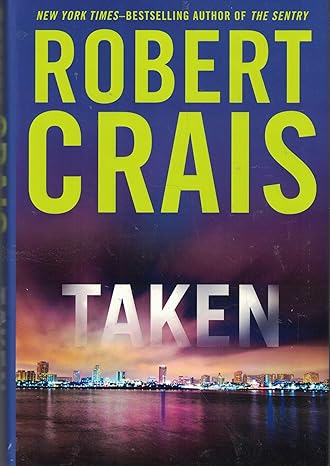
Taken (Elvis Cole #15) (Joe Pike #4) by Robert Crais


Published in 2012 by G.P. Putnam's Sons

I've been reading a lot of "assigned" reading lately. By assigned reading I mean books I agreed to review for publishers/authors or books that I read just to shrink my dreaded 4-milk-crates-full "to be read" pile. They were mostly good books, (some were great, even) but when I was at the local purveyor of books I saw this Elvis Cole novel. I had to to read it just for me simply because it was my idea in the first place. Also, I am a big fan of the series.

In Taken Elvis Cole is hired to find a missing college student. A widowed mother has received a call for a few hundred dollar ransom but she believes her daughter has ran off with "that boy" and is trying to scam her for money to go off and get married in Las Vegas.

Sadly, Cole proves her wrong. The girl and "that boy" have been kidnapped by bajadores - bad guys that kidnap illegal aliens coming into the United States in order to squeeze out a small ransom (or multiple small ransoms) from terrified family members who would be afraid to call the police. Sometimes the victims are released, sometimes they are killed when the money dries up.

Cole brings in his partner Joe Pike and soon enough they discover that this is going to get even more complicated and a lot more dangerous before it is over...
Robert Crais


Robert Crais has organized this Elvis Cole book a bit differently. Usually he follows a straightforward timeline, but in this book he flashes back and forth, including characters and talking about events that have happened as though the reader already knows all about it. It was designed to whet the appetite of the reader. For example, on page 39 we find out that Elvis Cole will go missing and Joe Pike and a friend are searching for him in Pike's typical thorough and abrupt (and violent) manner. I didn't have a problem with this way of organizing the book, but if that kind of thing bugs you, then you will absolutely hate this book.

There is an ongoing theme in this book about Joe and Elvis and what they mean to one another. There are precious few words spoken on the topic, but there is something there. At one point Joe is looking for help to find Elvis and he calls a special forces-type associate. His friend insults Cole and then asks, "Why do you waste your time with that guy?"

Joe ignores the insult and the question and secures the help and does everything he can to rescue his friend. Elvis knows Joe will be coming, but will it be in time? The absolute faith in one another and the devotion to one another are clear but what does Joe Pike, who is like an island onto himself, get out of it?

I am of the opinion that Elvis Cole is Pike's link to the real world, such as it is. Cole is tough like Pike but he is different. Cole's world is a world with a pet cat (sort of), cartoon characters and a dirty car (because absolutely everything does not have to be stowed away perfectly. Really, it doesn't) and that difference is salve for Pike's soul in some sort of way.

This is not the best of the Elvis Cole novels (I would put L.A. Requiem and Hostage on that particular pedestal) , but I feel like I should grade them on a curve because there isn't a dud in the bunch that I have read so far.. This one is not an A+, merely an A. An excellent read.

I rate this book 5 stars out of 5.


This book can be found on Amazon.com here: Taken by Robert Crais.

Reviewed on July 17, 2013

Rights at Risk: The Limits of Liberty in America by David K. Shipler


Highly Recommended


Published by Alfred A. Knopf in 2012

Last summer I read David K.Shipler's first book on this topic, The Rights of the People: How Our Search for Safety Invades Our Liberties (see my review by clicking here) and I found it to be the most profound book I read that summer and maybe all year. I began my review of that book with this thought:

"I always tell people that the traditional left-right continuum used to describe someone's politics is so inaccurate as to be useless. Really, what is the difference between an aging hippie living on a hill somewhere  raising some dope for personal use and telling the government to get out of his business and a Barry Goldwater-type conservative (like me) living by himself on a hill somewhere that tells the government to get its nose out of his business? Some dope. Otherwise, they are both determined advocates of civil liberties - keep out of my business if it is not hurting anyone else."

When I read the first book I was expecting to get a snoot full of political commentary that I disagreed with from a New York Times reporter with a left-wing agenda. To be blunt, I was expecting one of those political attack books that Al Franken, Michael Moore, Ann Coulter and David Limbaugh produce with regularity (Well, Al Franken is busy being a Senator now so I suppose he has stopped). Instead, I found the book to be politically balanced and quite remarkable. This book is just as remarkable, if a little less balanced by the inclusion of a half-dozen snide comments that should have been edited out, in my opinion.


Rights at Risk focuses on multiple topics but here are the chapter titles (with descriptions): Torture and Torment (being abused while being investigated), Confessing Falsely (how some people, especially young people and the mentally impaired, are tricked into confessions), The Assistance of Counsel (the defense side of the trial), The Tilted Playing Field (the prosecution side of the trial), Below the Law (the lack of rights of immigrants, legal and illegal), Silence and Its Opposite (freedom of speech in turbulent times), A Redress of Grievances (spying on protesters, "free speech zones") and Inside the Schoolhouse Gate (freedoms of students and teachers).

Torture and Torment includes a discussion of jailhouse torture such as physically abusing suspects and CIA torture. It demonstrates that the famed water-boarding sessions have poisoned several other cases. The good news in the cases of the police abuse is that the system, in the cases Shipler cited, mostly worked to flush out the bad cops. Mostly, but not always. A weaker part of Shipler's argument comes from the discussion of people wanted for trial in America but arrested in foreign countries. He argues, correctly, that many countries do not offer any protection for defendants. But, his arguments are not as tight here and led me to the inevitable conclusion that anyone who confesses to a crime in a foreign country can just claim that they were tortured into confessing and the confession should be dropped. Arrested in Luxembourg? Claim torture and post-traumatic stress disorder.
The chapter entitled Confessing Falsely is quite interesting. Shipler discusses the various training methods police learn on how to question suspects and how those very methods can lead to false arrest and false trials and leave the real criminals out on the streets. He also writes about instances in which the rights of the accused were short-circuited in order to facilitate a confession. He includes a recommendations for how to address these problems, including the videotaping of all interrogations and prohibiting the questioning of children without the presence of his or lawyer or a parent.

You know the old adage, "You get what you pay for?" Well, the chapter The Assistance of Counsel was disturbing because it proves it. Public defenders in areas that have professional public defender offices are overwhelmed. In states and locales that have court-appointed public defenders from the general ranks of area defense attorneys there are serious issues of quality. Shipler encountered judges that admit to appointing certain defense attorneys over and over because they don't fuss much in court. Others appoint lots and lots of cases to their political contributors. Those attorneys make a good living on the sheer volume of these cases. But, appointing cases based on these criteria is not a solid foundation for justice. On top of that, court-appointed defenders have almost no budget for experts and in most cases, there are no funds available for appeals. It really is stacked against poor defendants.

The Tilted Playing Field looks at all of the tools the government has to coerce cooperation, including threats of deportation, violation of probation, plea bargaining and asset forfeiture. I was disturbed by the practice of sentencing based on parts of the case that were dismissed. For example, if you have a gun illegally and are brought up on charges of trafficking drugs and are found not guilty of the drug charge, some courts will still sentence you more severely for the gun charge because of the drug charge, that you were acquitted of.

Below the Law discusses the status of legal and illegal immigrants in the justice system. To be blunt, they don't have much status. I was especially disturbed to discover that a great number of immigration judges have no particular experience in immigration law except for a single short class with an online quiz taken the next day (page 144). This makes for poor justice when the judge is not an expert. Would you go to probate court with a judge who know next to nothing about wills? The case of the political refugee who was arrested for not having his papers and was on the deportation list is especially disturbing. Luckily, the refugee learned from other detainees that he did not need papers as a refugee. He told his attorney who educated both the prosecutor and the judge on this legal point. They were directed to a page on their own website that explained the law. (pages 184-5)

The chapter Redress of Grievances demonstrates that we spend an awful lot of time spying on groups that exercise their right to protest. While most of these groups would be silly to spy on, Shipler seems that there would never be a need to look at any of these groups at all. I don't know where the line is, but it is clear that some law enforcement groups are over-zealous and act spitefully towards protesters. For example, the Maryland State Police surveilled an anti-death penalty group and listed some of its members in an anti-terrorism database despite having no evidence of a crime. (page 229) In at least one case, Shipler does hurt his own argument. He notes the famed WTO riots in Seattle in 1999 (nicknamed the "Battle in Seattle" by some) one page and argues that the Washington, D.C, police had no reason to be worried about planned demonstrations against World Bank and the IMF meetings six months later. (pages 234-236) Shipler ends the chapter with a long discussion on flag-burning, which has been ruled legal for a long time and is still news to some and the Westboro Baptist Church protesters.

Inside the Schoolhouse Gate was the most interesting chapter for me because I am a teacher. It is a maxim that students have the right to express political opinions. But, since attendance at school is compulsory, it is also a maxim that you have the right to attend school and not be harassed. For example, is a Malcolm X t-shirt a threat to white students? Is a Hank Williams, Jr. t-shirt with a Confederate flag on it a threat to black students? Are both, or neither, disruptive to school so that teaching becomes difficult? Can high school newspapers be censored by their schools? (page 274, 278-9) Even worse, in my mind are the speech codes  at universities and designated "free speech zones," especially on public university campuses. Silly me, I thought the entire country was a free speech zone. I suppose we don't want students to discover new and different thoughts while being educated...

Shipler concludes with this thought: "If every American school taught the Bill of Rights in a clear and compelling way, if every child knew the fundamental rules that guide the relationships between the individual and the state, then every citizen would eventually feel the reflexive need to resist every violation. We had better begin now, for rights that are not invoked are eventually abandoned."

As a social studies teacher, I wholeheartedly agree and I worry because we are cutting those very classes across the country in order to make sure we pass the math and English standardized tests. The school I taught in last year cut 20% of the social studies classes in the third 9 weeks in order to provide more time for  English practice (language arts stuff, not English for non-English speakers) with a prescribed, decidedly non-social studies curriculum. I wonder what was cut?


I rate this book 5 stars out of 5.

This book can be found on Amazon.com here: Rights at Risk.

Reviewed on July 13, 2012.

Days of Obligation: An Argument With My Mexican Father (audiobook) by Richard Rodriguez


Rodriguez writes a rambling, insightful and interesting work


Published by Blackstone Audio in 2008.
Read by Michael Anthony.
Duration: 8 hours, 14 minutes.
Unabridged.

I first learned of Richard Rodriguez on C-Span's Booknotes program. He was an invited guest of First Lady Laura Bush to speak at an author's fair that she started hosting in Texas while she was the First Lady of Texas. Rodriguez was promoting his book Brown at the the time and I thought his observations were wonderful.

Days of Obligations is in a similar vein, but not nearly as focused. He does (primarily) focus on the differences between Mexico and the United States Two interesting observations from Mexicans about America include: 1) "America is 'Organized'. Passive voice. Rodriguez notes that there seems to be no connection that actual Americans do the organizing. Rather it's almost like it is fate that America is organized. 2) Americans have too much freedom.

Rodriguez digresses from his Mexico/America discussion for an interesting (but off topic) discussion about the gay lifestyle in San Francisco. Perhaps it was meant to be a comparison between Mexicans moving into California and San Francisco's transformation into a beacon for homosexuals. If so, it was poorly correlated, although interesting nonetheless.

Richard Rodriguez
His observations on multiculturalism are very interesting. Rodriguez is a hard man to pin down politically. He is a walking dichotomy. Gay. Devoted Catholic. Mexican, but barely speaks Spanish. American, but feels that he is different. 

He looks at school to be the ultimate "de-individualizer" in American society, and that is not entirely bad. He believes that there needs to be a common understanding in society - we all have a common culture if we live in the United States, even if we prefer to ignore it. For example, he stresses the importance of the studying the Founding Fathers: "These were the men that shaped the country that shaped my life." He stresses that point off and on throughout the book - the United States shaped his life, Mexico shaped his parents' lives, and even though they brought Mexico with them in their hearts, he did not buy into it - he was shaped much more by America.

Rodriguez's observations on multiculturalism in the Catholic church and Protestant vs. Catholic (in attitude, worship style, individual vs. communal, even musical themes) take up nearly an hour of the audio edition - but it may be the most interesting hour of all.

Rodriguez is a skilled and experienced public speaker (regular duty on PBS plus book tours) so I have to wonder why he did not read his own book. The reader, Michael Anthony, did a great job with accents (primarily Irish and Mexican) and the spoken Spanish was solid so I have no complaints, but still...I enjoyed hearing Rodriguez speak for himself when I first heard of him at that book fair on C-Span that I could not help but be a bit disappointed.

I give this one 5 stars out of 5. Well worth a read, or in my case, a listen while driving to work. Lots of thoughts about immigration, Mexico, religion - and true to Rodriguez's form, no real answers. But, the discussion is worth the time and Rodriguez can turn a phrase quite nicely.

This book can be found on Amazon.com here: Days of Obligation.

After America: Get Ready for Armeggedon by Mark Steyn


"If something cannot go on forever, it will stop"

Published in 2011 by Regnery.

The above quote is from the economist Herbert Stein. Besides being a clever little bit of the obvious, a Yogi Berra-type quote, it is also part of a scary thought about America itself that Mark Steyn points out in After America - America cannot keep doing what it is doing forever and hope to lead the world - it will stop. It cannot keep  borrow 40% of its budget forever and hope to keep its economy afloat or offer its children a decent future. America cannot hope that a post-America world will be pleasant - as Steyn notes on page 14 "...it's not hard to figure out how it's going to end."


After America: Get Ready for Armageddon is really the sequel to America Alone: The End of the World As We Know It a book that details how low birth rates, a general cultural malaise and a nanny state stupor threatens to overwhelm the same countries that once led the world in political, military and cultural might. Now, he warns of the same sorts of danger happening to America itself - we will not be "America Alone" but something different - different culturally, maybe more than one country, maybe nothing but a hazy memory.

Mark Steyn
Mark Steyn is truly one of the wittiest writers I have ever read. I have always enjoyed his columns, but in a larger format Steyn truly shines. He builds on what he has already written about so well that it almost becomes like an extended conversation with the man. He almost seamlessly ties together point after point. Steyn makes you laugh at the absurdity of the situation and then, while in mid-chuckle you stop and think, "Wait! That's not really funny at all. That's outrageous (or sad, or scary)." This is simultaneously the funniest and the scariest book that I have read this year.

What are his points? Steyn starts with commentary about the national debt that seems as fresh as if it were a column written today thanks to the government's extended wrangling over the debt ceiling this summer. He also comments about how politically correct thought, excessive regulation and years upon years of erosion of free speech rights and property rights are changing this country from a can-do country to an entitlement country.

Steyn changes his style a bit in a chapter called After: A Letter from the Post-American World. This is a sobering, even depressing chapter As the title suggests, this is a letter from the future and it shows how when the West hamstrings itself, the whole world suffers and it does not become a place you would want your children to live in. Or your Jewish friends. Or your gay friends. Or perhaps even your Christian friends. It's not like we aren't being warned about this possibility now - Steyn points out headline after headline, trend after trend that should be screaming to us. But, we have Facebook to play with and Jersey Shore to watch. Plus, who are we to judge? So, Steyn predicts on page 306: "...incremental preemptive concession was the easiest option. To do anything else would have been asking too much."

This is not a perfect book. Not all of Steyn's arguments hold water, in my opinion. But, most of them do and this is a must-read book for anyone interested in big picture history. In this entertaining and sobering book Steyn predicts that we are at one of those hinges of history moments and we are not going to succeed.

Sadly, I can't say that I disagree with him on that point at all.

****

On a separate note, I criticized America Alone because it had no footnotes or end notes. It didn't even have a bibliography. This book has extensive end notes with bibliographical reference and is meticulously indexed so the reader can easily find this information and articles for him(her)self and inform others.

This book can be found on Amazon.com here: After America: Get Ready for Armageddonhttps://www.amazon.com/gp/product/1596983272?ie=UTF8&linkCode=ll1&tag=dwsre-20&linkId=2eab2c08509115bf6ec1ce9a430d6ff4&language=en_US&ref_=as_li_ss_tl.

Be the People: A Call to Reclaim America's Faith and Promise by Carol M. Swain, PhD


Sometimes incredibly strong, sometimes deeply flawed.

Published in 2011 by Thomas Nelson, Inc.

Carol M. Swain's Be the People: A Call to Reclaim America's Faith and Promise is a look at several broad areas of concern in American policy, including the high divorce rate, abortion, gay marriage, illegal immigration, race relations in America, HIV, school prayer, and the high unemployment among those with lower levels of education.

First, the positives:

-Swain's personal story is inspirational and she shares it as she writes about these issues.
-Swain provides a humane 15 point plan to deal with illegal immigration.

-Her commentary on race and racism are quite interesting and well thought out. I teach in a multi-racial school with a near even mix of whites and blacks and a great number of Hispanics as well. It can be tricky and Swain accurately describes many of the issues that I have encountered.

-Swain's section on abortion is also rock solid. There are profound arguments for why it is immoral and should be illegal from a number of sources, including from babies that survived and grew up, mothers that regret the decision (Swain is one of those mothers), medical evidence for increased cancer rates and solid philosophical and legal arguments.

Weaknesses:

-There are times when the text is confusing, almost like it was not proofread, merely spell-checked. For example, on page 123 she paraphrases a CDC report "....estimated that as many as one-third of black men were HIV positive..." but two sentences later notes that Washington, D.C. has the "highest rate of infections in the country, with an estimated...7 percent of its black men infected." Which is it, 33% or 7%? 

Another example: on page 134 she is discussing the National Council of La Raza and claims that La Raza is Latin for "the race." It is Spanish, not Latin - a fact that she gets correct in her end notes on page 289. On page 42 she is upset that the Obama administration correctly followed American flag protocol by allowing the Chinese flag ("signaling to the world that China was on equal footing with the United States") to fly alongside the American flag at a state dinner. The American flag flies higher than state flags, but at the same level as those of other countries. This is not an insult to America, it is international flag protocol.

-Sometimes it seems as though she is mystified that people who move here do not completely abandon their religious beliefs and immediately become Christians upon entering the country. On page 168, she notes that the Sabbath rules in Israel apply to the whole country, not just to the Jews. She then laments that newcomers to America sue to have their customs respected. My first thought was that Islam's Sabbath day is Friday and every Muslim student I have had came to school on their Sabbath and only one has made a stink about wanting time out of class to pray at the proscribed time.

-She wants prayer returned to school  (pgs 34-35). I teach in a public school and I am a devout Christian - I only miss services 2 or 3 times per year. I have taught Sunday school, worked with the youth group, worked in more Vacation Bible Schools than I care to remember, have been a member of a small group Bible study for more than 15 years and I come from a line of Lutherans that probably knew Martin Luther (the man who started The Reformation) personally. I do not want prayers in public school. 

Why not? 

Whose prayers do we use? A generic multi-faith prayer that means nothing? A rotating prayer that includes some Hindu prayer, some Muslim prayers, some Christian prayers, some Wiccan prayers and so on? I have taught with Muslim, Hindu and Jewish teachers. Are they going to be forced to recite a Christian prayer? Would I want to be forced to recite a prayer from outside of my faith by my employer?

It is my understanding that Swain is a frequent guest on the Sean Hannity show. The parts of the book that I disliked were exactly the parts that appeal to the scream and yell "debate" with outrage gotcha type shows, like Hannity's. The other parts were well thought out - too bad the other stuff was not equally well considered and argued.

I received this book for free from Thomas Nelson's Booksneeze review program. They made no demands on the type of review I wrote, but I am forced to disclose this arrangement due to federal regulations.

I rate this book 2 stars out of 5.

This book can be found on Amazon.com here: Be the People: A Call to Reclaim America's Faith and Promise.

Reviewed on June 15, 2011.

Featured Post

<b><i>BAN THIS BOOK (audiobook)</i></b> by Alan Gratz

Published in 2017 by Blackstone Audio, Inc. Read by Bahni Turpin. Duration: 5 hours, 17 minutes. Unabridged. My Synopsis Ban This Book is t...

Popular posts over the last 7 days