Showing posts with label Edward L. Ayers. Show all posts

THE CIVIL WAR REMEMBERED: OFFICIAL NATIONAL PARK SERVICE HANDBOOK by various authors


Originally published in 2011 by Eastern National

Eastern National is the publisher of the official books published by the National Park Service. Their books are on display in National Park gift shops in visitor centers across the country. Most are pretty good - I've bought more than my share of them because they are compact volumes, full of great, pertinent illustrations printed on glossy paper and their information is solid. The problem is that the writing is always solid, if not particularly engrossing. 

The Civil War Remembered is an exception that pattern because the authors are historians who are also name brand Civil War authors - some are authors that have hit the top of the non-fiction best seller lists and you don't do that if you write dense prose.
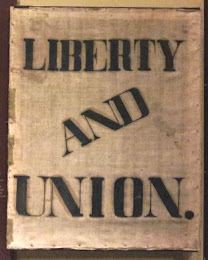
There are 16 essays in this 175 page book. Each one covers a specific topic that makes for a rough narrative telling of the history by exploring themes such as America before the Civil War, what it is was like to serve in the military in the Civil War, how the war changed from a war to only preserve the Union to a war to end slavery in order to preserve the Union, industry in the Civil War, the West in the Civil War and Reconstruction. Some of the big names include James McPherson, Edward L. Ayers and Eric Foner

This book would serve as a great introduction to the Civil War for anyone. I was very pleased to see a review on Amazon that said that their college professor used this in class. This volume is that good. 

Highly recommended.

I rate this book 5 stars out of 5. It can be found on Amazon.com here: THE CIVIL WAR REMEMBERED: OFFICIAL NATIONAL PARK SERVICE HANDBOOK.

WHAT CAUSED the CIVIL WAR: REFLECTIONS on the SOUTH and SOUTHERN HISTORY by Edward L. Ayers


Published in 2005 by W.W. Norton and Company

This wonderful set of nine essays is just about as complete of a discussion of the South, the Civil War, Reconstruction, family, home, historical research and some practical applications of the lessons of the Civil War for us today as I have read.

It seems to me that most of these essays have been published somewhere else first. That being said, Ayers has arranged the essays in What Caused the Civil War in a rough chronological order based not on the historical topic of the essay but on Ayers's own life. He starts with his own childhood in Eastern Tennessee and Western North Carolina and his own growing understand of what it means to be a Southerner. As the essays go along, Ayers goes to college, travels the world a bit and eventually returns to the South to do research and eventually teach at the University of Virginia. 

As Ayers moves through his education and his career he develops a perspective on the Civil War and that perspective changes as he grows in his research.

The best essay was the title essay. Ayers has a surprisingly simple yet nuanced tale of the causes of the war. I have read plenty of books on the war (easily 100 non-fiction books and at least 20 fiction books) and Ayers provided a thoughtful look at this topic. 

In short, he argues that it was slavery, of course, and a complete failure of the politics of the day to deal with changing public attitudes. The Whigs, one of the two major political parties, died by fracturing over slavery in 1840s and 1850s. The reactionary anti-immigrant Know-Nothings and the Republicans replaced the Whigs. The Know-Nothings caused a lot of noise and chaos but had no staying power. The Republicans adopted a mild anti-slavery platform (basically, no new slave states) and this caused the Democrats to fracture into multiple parties. 

Basically, slavery went from being an unhappy but back-burner issue to being
The Issue - the one that could not be compromised on, either way in just a few short years. The fact of the Civil War and its consequences, such as the destruction of the Southern political system and  Emancipation happened in such a short time that the political system simply could not figure out how to respond fast enough.

In our modern culture, gay rights has had a similar evolution and it might serve as a useful comparison. In the 1990's it was considered to be a giant leap forward to let gay soldiers serve under the Clinton's "Don't Ask, Don't Tell" policy. Now, Gay Marriage, a topic that wasn't even on anyone's radar in the 1990's, is a reality in most states and one political party is struggling to deal with this new reality. Churches are split and ugly insults go back and forth across social media as people try to re-work things in their own minds.


I enjoyed the essay on Reconstruction a lot as well. "Exporting Reconstruction" pointed out something obvious that I had never noticed before. Reconstruction was America's first attempt at nation-building- and it was not very successful. The parallels with our experiences in Iraq and Afghanistan are striking. 

I did not enjoy "A Digital Civil War". This essay spoke of Ayers's attempt to coordinate a massive amount of data in the early days of personal computing and how he helped pioneer some new techniques. At first it was kind of fun to remember those "good old days" of small memory and primitive software but it grew wearisome soon enough.

I rate this book 5 stars out of 5. It can be found on Amazon.com here: WHAT CAUSED the CIVIL WAR: REFLECTIONS on the SOUTH and SOUTHERN HISTORY by Edward L. Ayers.

Reviewed on February 13, 2015.

Featured Post

<b><i>BAN THIS BOOK (audiobook)</i></b> by Alan Gratz

Published in 2017 by Blackstone Audio, Inc. Read by Bahni Turpin. Duration: 5 hours, 17 minutes. Unabridged. My Synopsis Ban This Book is t...

Popular posts over the last 7 days