Showing posts with label frontier. Show all posts

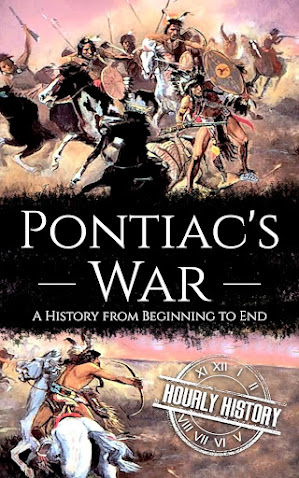
PONTIAC'S WAR: A HISTORY from BEGINNING to END (kindle) by Hourly History


Published by Hourly History in 2021.

Hourly History publishes histories and biographies that you can read in about an hour. That can be a tough job for larger topics in history like "The Industrial Revolution" or "The Roman Empire" but it works out about right for this short war (1763-1766.)

The war arose directly from unaddressed issues as a consequence of the French and Indian War (1754-1763.) In the French and Indian War, the American frontier became a battlefield. American settlements were wiped out, Native American villages were destroyed. French and English soldiers participated and ultimately agreed to a settlement that ignored the realities of the vast borderlands between the colonies and the Native Americans.

The biggest issue was constant push westward from European (American) settlers into areas that were already inhabited by Native Americans. The colonies were all for this westward push, even if the British government was ambivalent or even against the idea. 

Pontiac was an Ottawa. They were centered in the Great Lakes in and around Michigan. Pontiac wanted the French government to resume control of the area - something that simply was not going to happen.

Pontiac was sick of the English colonies moving westward. He encouraged all of the Native American groups to join together to overwhelm the British forts in Michigan, Indiana, Ohio, Pennsylvania and upstate New York. He led an attack against Fort Detroit that failed, but a number of smaller forts fell, including Fort Ouiatenon near modern-day Lafayette, Indiana. I only mention Fort Ouitatenon because I live in Indiana, have been to the fort, and this is the only time I have ever seen the fort mentioned in a history book.

Once the British figured out that it was a united push against their forts and settlements they slowly pushed more troops into the area. They began with only 500 soldiers to hold an area that comprises all or parts of upstate New York, western Pennsylvania, Ohio, Indiana, Michigan, part of Illinois and nearby areas of southern Canada.  Transportation was horribly slow and more than once the united Native Americans attacked, blocked or diverted attempts to reinforce forts. 

It isn't quite clear how big a part Pontiac had in this war. The British considered him to be one of the big leaders - big enough that they called the war Pontiac's Rebellion. But, seeing the number of other critical errors and misunderstandings they committed during the war, it is entirely possible that they imagined him to be THE leader when he was actually one of a number of leaders.

The agreements in this war didn't last for long and did not resolve the underlying issues. There were three other wars and countless skirmishes in this area with the exact same issues in the 50 years that followed. 

I rate this short e-book 5 stars out of 5. It can be found on Amazon.com here: PONTIAC'S WAR: A HISTORY from BEGINNING to END by Hourly History.

FOR the COMMON DEFENSE: A MILITARY HISTORY of the UNITED STATES of AMERICA by Allan R. Millett and Peter Maslowski


Originally published in 1984 by The Free Press.

Note: This is a review of the original version of this book, published in 1984 and ending with the first Reagan administration. It has been expanded and updated to include events up to 2012.

Way back in my undergrad days at Indiana University I took a class called American Military History. It was taught by a visiting professor from West Point and FOR the COMMON DEFENSE: A MILITARY HISTORY of the UNITED STATES of AMERICA was an excellent choice for the text for the class.

For 30+ years I have carried this book around with me - through 5 different moves and who knows how many book shelves this book was the anchor of my history section because it is quite beefy. But, I decided it was time to clear out some books. Technically, this book was a re-read but I didn't really remember anything from all of those years ago so...

The book starts with colonial defense and moves along with the same format up through the early 1980's. There is a chapter about a war or conflict followed by a chapter on the interwar years followed by a chapter on the next war or conflict. 
Soldiers in the Korean War in 1950.
Each chapter is about 30 pages with a bibliography, with the exception of World War II and the Civil War - they are each covered by two chapters. 

Generally speaking, the war chapters are more interesting than the interwar chapters. The interwar chapters can get bogged down in detailed discussion of the upper level command structure of the military (Joint Chiefs of Staff, the role of the Secretary of War/Defense, etc.) , but I found the interwar chapter that covered Reconstruction and the Gilded Age to be one of the best in the book. 


It is striking to read how American defense policy changed radically after World War II and the book provides little discussion of those changes, it just notes that they happened.

I rate this book 4 stars out of 5. It can be found on Amazon.com here: FOR the COMMON DEFENSE: A MILITARY HISTORY of the UNITED STATES of AMERICA by Allan R. Millett and Peter Maslowski.

AMERICAN HERITAGE: GREAT MINDS of HISTORY interviews by Roger Mudd


Published in 1999 by Wiley and Sons.

Roger Mudd, formerly of CBS and NBC news, interviewed five historians about their special topics of expertise. They are all solid interviews that allow the historians to tell why their topics are important. Mudd does a great job of letting the interviews flow along a natural conversational path, but he does interrupt with questions that ask for clarification or challenge a point.

The historians are: Gordon Wood discussing the American Revolution; James McPherson discussing the Civil War; Richard White discussing Westward Expansion; David McCullough discussing the Industrial Era; and Stephen Ambrose discussing World War II/Eisenhower/Nixon.

This was a lot like sitting down with a talented professor in a coffee shop and letting him/her go on about their favorite topic. They weren't lectures, but more like a conversation. I know the work of four of these five historians and have read quite a bit of McCullough, Ambrose and McPherson.

McPherson is my favorite of these three since he and I share a deep interest in the Civil War. I was surprised to learn that he came to study the Civil War later than I thought. McCullough's interview is interesting because of his wide-ranging interests. He discussed the Industrial Era, but he has done a lot of work outside of that time as well, including a great biography of Truman and a history of just the year 1776 during the American Revolution. Ambrose's interview very much felt like my previous impressions of Ambrose - great historian, occasionally a prickly personality.

I rate this book 5 stars out of 5. Very enjoyable read. It can be found on Amazon.com here: AMERICAN HERITAGE: GREAT MINDS of HISTORY interviews by Roger Mudd.

ROANOKE: THE MYSTERY of the LOST COLONY by Lee Miller


Published in 2007 by Scholastic Nonfiction.
Suggested for readers grades 9-12
.

I've read my fair share of articles about the lost colony of Roanoke. They all have a similar story line. They tell the story from the colonists' point of view. And why wouldn't you tell it that way? It's a compelling story when it is told that way. Roanoke: The Mystery of the Lost Colony comes at this story differently - it incorporates the court politics back in England and the mixed motivations for creating the coloy in the first place.

If you are not familiar with the story. Roanoke was England's first serious attempt to put a colony in the New World. It originally had a duel purpose. The first was simple enough. Sir Walter Raleigh had legal claim to the land as part of an inheritance, but only if he could establish a permanent colony on it by 1591. It was an immense piece of property, if he could keep it. It would have included all of the North American coast north of Spanish Florida and south of Newfoundland.

The second purpose of the colony was to provide a protected port to allow English ships to attack Spanish galleons full of gold, silver and other riches. The barrier islands of North Carolina looked like a perfect fit.

But, Raleigh was not allowed to supervise the colony because he was required to stay in the Queen's court, at her request (or demand - she was a queen, after all). So, he sent out a military-type expedition in 1585. It failed, but it did offer some valuable information for the next attempt in 1587. 

A painting by John White. 

John White participated in the 1585 venture as the expedition's artist. His paintings and maps fill this book and most are quite beautiful. in 1587, White led the second attempt to start a colony. If you have studied the original English colonies, you will recognize the familiar pattern - the colony struggles with the local environment and the local people, sends for more supplies and more people and will go on to grow and prosper.

Except that Roanoke sent for more supplies and more people but none were sent out to reinforce the colony...

As I alluded to above, most stories of Roanoke spend a lot of time looking at where the missing colonists might have gone but gloss over why the English never sent more supplies and more people. Lee Miller focuses on the intrigue in the Elizabethan Court and how Raleigh was prohibited from sending out relief supplies. I thought this was a fascinating take on the story. It becomes a story of backroom deals, spies, betrayal and desperation.

John White was convinced to leave behind his family in late 1587, including an infant granddaughter, to personally ensure that the relief supplies were delivered and he was stymied at every turn. By the time he returned almost three years later the colony was gone with only a couple of mysterious clues as to where they may have gone. They were never found and England didn't successfully plant a colony until 1607.

I rate this book 5 stars out of 5. It can be found on Amazon.com here: ROANOKE: THE MYSTERY of the LOST COLONY by Lee Miller.

YOU WOULDN'T WANT to BE AN AMERICAN PIONEER! A WILDERNESS YOU'D RATHER NOT TAME by Jacqueline Morley


Illustrations by David Antram.

Published in 2002.

As a history teacher, I think just about all of history is fascinating - the cultural tidbits, the technology, the religious beliefs, the wars, the governments. It's all fascinating! But...convincing my students is another matter entirely. 

This series does an excellent job of looking at history from an interesting point of view and showing why it was tough. The art is accessible and just cartoonish enough to not be one of those boring illustrations that fill history books and plenty realistic enough that to clearly see and understand what is going on.


This series has dozens and dozens of books. This book is about the Oregon Trail and tells all about the trials and tribulations that a pioneer might have come across - everything from river crossings, weather, Pawnees, high priced supplies, the death of the oxen and more.

Fantastic for a classroom library. Great for budding history buffs.


I rate this book 4 stars out of 5. It can be found on Amazon.com here: YOU WOULDN'T WANT to BE AN AMERICAN PIONEER! A WILDERNESS YOU'D RATHER NOT TAME.

FOLLOW the RIVER (audiobook) by James Alexander Thom


Published by Tantor Audio in 2010.

Book originally published in 1981 by Ballantine Books.
Read by David Drummond.
Duration: 16 hours, 10 minutes.
Unabridged.


As the American frontier pushed ever-Westward during the Colonial Era, there were multiple major conflicts between the new White settlers and the various Indian groups. The last, and the biggest, was the war that Americans know as the French and Indian War (1754-1763). It was truly a global war involving not only France and England, but also a variety of countries around the world such as Prussia, Austria, Sweden, Spain, Portugal, Russia and the Mughal Empire in India.

The war began as a power struggle between French and English colonists along with their Native American allies. Technically, a young Virginia militia leader named George Washington started the war when he tried to remove French Canadians who were building a trading post in what is now western Pennsylvania. The entire frontier was soon at war and little settlements on the extreme frontier, like Drapers Meadows, Virginia, were exposed - even if they had only the faintest idea there was a war going on.

In 1755, a group of Shawnee warriors attacked Drapers Meadows, a settlement of just a few families and killed or kidnapped about half of the inhabitants and took them to a large Shawnee town near the Ohio River in what is now northeastern Kentucky. One of the victims was Mary Draper Ingles (pronounced Ingalls) and this novel is the fictionalized story of her capture (along with her children), her life among the Shawnee and her escape with a fellow female captive who spoke mostly German. Mary had watched as she was taken to the Shawnee village and she realized that all she had to do was simply follow the river system back to her home. If only it were that simple. It turned into a 42 day walk back to an English frontier cabin across some of the roughest terrain in the Appalachians. They left in mid-October and arrived on December 1, 1755.

Photo by DWD
Their escape covered more than 500 miles and crossed an estimated 145 rivers or creeks, with little or no food. Oftentimes, they had to get soaked in water, climb cliffs or rockfalls and starved as they walked and the temperatures dropped. This terrain is difficult nowadays with modern equipment. Their accomplishment is astonishing when you consider their physical condition and almost complete lack of tools, equipment, nutrition and warm clothing. This book was thoroughly researched by the author who walked as much as their route as he possibly could. You can tell - the landscape is as much a character in the book as any single character.

Follow the River is an amazing book. It is not a happy book - how can it be when it is full of suffering, violence, death and tragedy? But, James Alexander Thom told the story so well that I felt like I was along for the whole tragic trip. It is sobering and compelling. It is all the more tragic when you consider that she left her children behind with the Shawnee because there was no way that they could survive this extremely difficult trek.

The audiobook was read by David Drummond. He does an excellent job with the accents throughout the book (the area was quite international considering how hard it was to get there) and the rest of the book overall. I do think it was a bit odd to chose a man to read the book considering that most of the dialogue of the book is spoken by women. A great deal of the book also deals with the internal thoughts of Mary.

This was a re-read for me, although it had been 26 years between readings. I remembered it as an excellent book and I am pleased to say that I still think it is excellent.

I rate this audiobook 5 stars out of 5. It can be found on Amazon.com here: Follow the River by James Alexander Thom

MAYFLOWER: A STORY of COURAGE, COMMUNITY and WAR (abridged audiobook) by Nathaniel Philbrick


Published in 2006 by Penguin Audio
Read by Edward Herrmann
Duration: 5 hours, 57 minutes
Abridged


Everybody knows the story of the Mayflower and the Pilgrims and the first Thanksgiving. Or, they think they do, anyway.

Nathaniel Philbrick's re-telling of this oft-misunderstood story in Mayflower A Story of Courage, Community, and War is a very approachable for the average reader. He begins with an explanation of the religious differences between the Puritans and the Church of England and how the politics of the day exacerbated the situation. 

Philbrick's re-telling of how the Pilgrims moved from England to Holland and eventually to the New World was very well done, as was the story of the first few seasons of Plymouth Plantation (Plymouth colony), starting in 1620. In fact, the book flowed very well throughout, even though it was abridged. Oftentimes, abridged books are clunky, but this one was not.

The story finishes with King Philip's War (1675-1676). This was a sad war. Wars are all sad, but this one was particularly brutal, complete with decapitations, mutilations, mass murder, and forced deportations into enslavement. On a per capita basis, it was the most devastating war in American history.

Veteran actor Edward Herrmann's (1943-2014) voice is perfect for reading history. He gives it a bit of gravitas but he is not too pompous. 

I rate this audiobook 5 stars out of 5.

This abridged audiobook can be found on Amazon.com here: Mayflower: A Story of Courage, Community and War.

JIM BECKWOURTH: NEGRO MOUNTAIN MAN by Harold W. Felton


Originally printed in 1966


As you can tell by the title, Jim Beckwourth: Negro Mountain Man has a hopelessly out-of-date title. When it was written in 1966, the term "negro" was still considered to be acceptable, of course.

Jim Beckwourth (1798-1866) was born in Virginia and moved out to the frontier, roughly in the St. Louis area, before he moved out on his own. He apprenticed as a blacksmith but didn't really pursue that career. Instead, he set off as part of larger expeditions and quickly earned a reputation for being tough, fair and honest. And, perhaps most important, he was considered to be dependable in an environment where almost nothing was dependable.

Beckwourth's skin color did not seem to hurt him any as he trapped beaver, scouted for military expeditions and explored the American West. He even served in the Second Seminole War in Florida. It seems that real talent was valued a lot more than a man's race.


But, the bulk of this book deals with Beckwourth's time with the Crow Indians. He claimed that he became a chief and told many tales of his adventures among the Crow. 
Jim Beckwourth


Felton goes out of his way to be fair to Beckwourth in a time when the idea of racial equality and African-American heroes could be controversial. This makes Felton's running commentary on Native Americans all the more jarring. He calls them "redskins" (p. 36), "squaws" (p. 43), "thieving and murderous Indians" (p.55) and more. Once again, this book is a product of its time and cannot be judged by modern standards of acceptable speech, but it was jarring. Be prepared if you read the book.

This book can be found on Amazon.com here: Jim Beckwourth: Negro Mountain Man.

 I rate this book 4 stars out of 5 while issuing no judgment on the racial commentary for reasons listed above.

MARTHA WASHINGTON: GIRL of OLD VIRGINIA (Childhood of Famous Americans Series) by Jean Brown Wagoner


Originally published in 1947.


In the 1930's, the "Childhood of Famous Americans" series was started with a simple biography of Abraham Lincoln's childhood. Eventually, there were dozens of books in this series. In my childhood I remember my small town library had a shelf full of these books and I read them all. Nowadays, this series has been picked up by Simon and Schuster.

This book focuses on the childhood of Martha Washington (1731-1802), or Martha Dandridge, nicknamed Patsy. There is not really an over-arching story here. Rather, this is mostly a series of scenes from her childhood including having a bear cub as a pet, posing for a portrait and learning to ride a pony. There are also visits from local Native tribes. This book could be read not just as a biography of Martha Washington but also as a sample of what life on a plantation would be like for the family that owns the plantation.

That being said, it doesn't really address the issue of slavery, preferring to call the family slaves "servants" instead and never discussing how the "servants" rate in the big scheme of things.

I liked the book all right. I would rate it 3 out of 5 stars, noting that it is very easy to read and fairly interesting. However, my ten-year-old daughter read it twice in the last couple of months and she enjoyed it both times. She would give it 5 stars out of 5.

So, in the spirit of compromise, that would make an average of 4 stars out of 5.


This book can be found on Amazon.com here: Martha Washington: Girl Of Old Virginia

ALONE: THE JOURNEY of the BOY SIMS by Alan K. Garinger


Published in 2008 by The Indiana Historical Society Press


In the great state of Indiana 4th grade is the year that the social studies classes focus on Indiana history. My youngest daughter is in 4th grade and her entire class read Alone: The Journey of the Boy Sims.

The book is set in 1833 and even though it has been a state since 1816, in many ways Indiana is still a wild frontier, especially in northern Indiana (the Ohio River was often the route that settlers took to Indiana in the early days and it forms the southern border of the state). Road crews are working on building Michigan Road - a roughly built "road" that will connect the Ohio River to Lake Michigan, a distance of more than 250 miles.

While somewhere in the vicinity of what will eventually be Logansport, Indiana a thirteen year old member of the crew is sent to Detroit all by himself for more ink to draw out the maps and keep track of the surveys that the crews were taking. This trip is well more than 200 miles one way and it is already late October...

Photo by DWD
I found the book to be interesting but loosely constructed. Sometimes the plot generated lots more questions than it answered and the book was desperately in need of lots and lots of maps. The author wanted to make the book a learning experience for Hoosier children but the number of people that Sims meets on his trip and their symbolic (or actual) significance to history got a bit tedious to me. The parade of runaway slaves, slave catchers, soldiers, Indians avoiding the soldiers, and even a cameo by Johnny Appleseed (he was a real person and is literally buried in Fort Wayne) made the story move into the range of impossibility.  If I were rating the book as an adult I would give it 3 stars out of 5.

But, this is not a book aimed at adults and my daughter thought it was very interesting. She would recite any number of things that Joshua Sims encountered on his trip as she rode home from school. She would give it 5 stars out of 5. This is a book that is designed to introduce frontier Indiana to school children and it does that quite well.


So, let's split the difference and call it 4 stars out of 5.

This book can be found on Amazon here:  Alone: The Journey of the Boy Sims.

OLD NATHAN by David Drake


Originally published in 1991 by Baen Books

David Drake, a science fiction author who usually specializes in tales of high-tech fighting told from the grunt's point of view changes pace with Old Nathan, a tale of backwoods folk magic. 

Set in the the 1830s in rural Tennessee, this book features Old Nathan, often called the "cunning man". Old Nathan suffered a life-changing injury during the battle of Kings Mountain in the Revolutionary War. As he recovered, he discovered that he had been gifted with some magical powers, including the ability to talk with animals. 

Fifty years later, he is living in Tennessee and serves as the local area's potion-maker and a resolver of problems of last resort. He also can cast some spells. He does not understand the powers, but he understands that the spells he cast do not always resolve the problems the way that his clients hope.
Photo by DWD


The book consists of five interrelated short stories. The best story by far is the last one but you really cannot understand it without reading the other four and they are pretty boring. The stories are long on descriptions of Old Nathan traveling by donkey and dire warnings about using magic but I just never really bought into the characters. Nathan was intentionally stand-offish and mysterious and difficult to relate to. The locals all around him were rubes or just difficult to like or even be interested in.

This book can be found here on Amazon.com: Old Nathan.

I rate this book 2 stars out of 5.

THE LOST KINGDOM (audiobook) by Matthew J. Kirby


Published by Scholastic Audio in 2013.
Read by Charlie McWade
Duration: 8 hours, 41 minutes

The Lost Kingdom is an alternate history set in a world in which mastodons still roam North America in great herds and are hunted by giant predators called bearwolves. The story is set just before the French and Indian War and the situation is easily recognizable for anyone familiar with that time period. The English colonies arranged along the Eastern Seaboard but the interior is largely controlled by the French and their numerous Indian allies through a vast trading network. As the English move farther inland they encounter more and more resistance and everyone knows that it will lead to open warfare, probably sooner rather than later.


In a bold move to secure a new set of allies in the interior, the American Philosophical Society, a group of intellectuals led by Benjamin Franklin, have decided to send an expedition in search of a fabled Welsh kingdom built around the legendary tale of Madoc, the Welsh prince who is supposed to have landed in the America's centuries before Columbus. This really is a legend in our world, so I found that to be quite interesting.

The intellectuals are joined by the son of their botanist, a young teen named Billy Bartram. They are not traveling by boat or by foot but in a sort of steampunk airship powered by balloons of some kind. The ship is an actual ship and it flies much like a blimp. They fly out to the new fort at what will be Pittsburgh in the distant future (barely escaping French spies as they leave Philadelphia). A sneak attack by French Marines and an encounter with a bearwolf throw the entire expedition off track. Throw in the suspicion that there is a spy in their midst and things have really gone wrong for Billy and this crew of geniuses...

****Spoiler alert****

So, here's the thing for me and this book. I do not mind the steampunk ship or the mastodons or even the legend of the Welsh. I think those made the book fun. But, I have a problem when the book violates its own internal rules and here are three gigantic errors that just don't make sense.

1) The expedition sets off without a single weapon in a time period when people of the frontier did not step out of the house to feed their chickens without a gun at hand. They did this out of fear of Indians and also fear of animal attack. To borrow from another story, imagine if in The Hobbit the expedition set out without a single sword because they knew that swords would be useless against the dragon. Well, that would be silly considering how often they had to fight everything else along the way. In a similar way, the lack of weapons means they cannot defend themselves from animals. Also, they cannot hunt to supplement their food which is a massive mistake in and of itself. This mistake compounds itself

2) The expedition has no weapons because they claim they are a science expedition, not a military one. But, in reality, they are out to find out if the legend of the Welsh is true and make a military alliance with them. That makes them a military expedition.

3) The expedition is attacked by a bearwolf just outside of Pittsburgh. The bearwolf chases the very fast-moving ship on land, somehow tracking it over mountains, across rivers and streams through the little sliver of what is now West Virginia, all along the bottom of Ohio, Indiana, across the Wabash river into Illinois and even across the Mississippi River in some crazed single-minded pursuit of this group so it can attack them for reasons that are never stated. But, really, what animal chases a group of people for hundreds and hundreds of miles?

****End spoilers****

I rate this audiobook 2 stars out of 5. I couldn't get past the internal contradictions. It can be found on Amazon here: The Lost Kingdom.

NARCISSA WHITMAN: PIONEER GIRL by Ann Spence Werner


Published in 1953 and 1959 by The Bobbs-Merrill Company, Inc
Intended for mid to upper elementary students.

Thirty-five years ago books like Narcissa Whitman: Pioneer Girl filled my library's book shelves in Hope, Indiana and I went through them like a hot knife through butter. I am sure they are a big reason why I enjoy history so much today. I remember enthusiastically reading about the adventures of young Daniel Boone, Abraham Lincoln and even about Martha Washington and other "yucky" girls as I worked my way down the shelf.

I have next to my computer a 1959 hardback copy of Narcissa Whitman: Pioneer Girl, part of the Childhood of Famous Americans series

This book focuses on Narcissa Prentiss (who later in the book marries and becomes Narcissa Whitman), a young pioneer girl on the frontier in western New York in the early 1800s. As of the title of the series implies, most of the book deals with her childhood, including helping neighbors with emergency health issues, siblings who wander off, the difficulties of cooking over an open fire, bears wandering through your homestead and the excitement that comes with the visit of a travelling peddler.
Narcissa Whitman.jpg
Narcissa Whitman
(1808-1847)


Later on in life Narcissa Prentiss married a Methodist missionary candidate named Marcus Whitman. They trained and then headed on the Oregon trail, settling in the area around modern-day Walla Walla, Washington. She was one of the first women to travel the Oregon trail, arriving before the United States and England had settled their dispute over the territory. 

Marcus and Narcissa Whitman were killed by members of the Cayuse nation during the Cayuse War (1847-1855). This biography does a very poor job of explaining why the war started and why the Whitmans died, it only mentions that they were killed by Native Americans. 

On the whole, when the book discusses Native Americans it is factual, but biased. It says that there were misunderstandings between the settlers and the Indians but does not tell what they were or how they developed. It also gives the distinct impression that the Indians were dished out retribution and only the settlers were victims. If the book were used in a classroom, I would supplement it with additional discussion and readings. My 3rd grade daughter is getting this book once I am done writing this review and I plan to preface her reading with a simple two minute discussion about why the settlers and the Indians would have problems with one another.

I rate this book 4 stars out of 5. It is out of print but you can get it at Amazon.com here: Narcissa Whitman, pioneer girl (Childhood of famous Americans). It costs $11.99 plus shipping at the time this review was written.

Reviewed on December 28, 2014.

THE MEN WHO UNITED the STATES: AMERICA'S EXPLORERS, INVENTORS, ECCENTRICS and MAVERICKS and the CREATION of ONE NATION, INDIVISIBLE (audiobook) by Simon Winchester


Published in 2013 by Harper Audio
Read by the author, Simon Winchester
Duration: 13 hours, 33 minutes

Simon Winchester's sprawling book, The Men Who United the States, tells a history of the United States organized around five themes: Wood, Earth, Water, Fire and Metal. To be honest, I largely ignored the themes and just enjoyed listening to this magnificent, chaotic, rambling history.

Starting roughly with Lewis and Clark (Winchester backtracks a lot), the story of America is told through the tales of the people that made America a more perfect union through their explorations or their inventions. The reader (or listener if you are enjoying the audiobook) is told about Lewis and Clark and the Pony Express and the invention of the telegraph, the first transcontinental rail line, the exploration of the Grand Canyon, the role of New Harmony (Indiana) in the study of American geography,  a con game involving jewels, how George Washington toured the Frontier before he became president, the Erie Canal, the telephone, Edison vs. Tesla, the first plane to travel across America, television, radio, the internet, modern day nuclear silos, the path of the Mississippi River and so much more that I cannot possibly remember it all.


I listen to audiobooks as I drive and this book was like having a history professor just ramble along with the most interesting stories about American history and the interesting places he has been. Like in a conversation, the story meanders but it flows quite naturally almost all of the time as the author throws in lots of interesting anecdotes about his own experiences, the lives of related historical figures or just something that was odd.

The author, Simon Winchester, narrates his own audiobook. It always concerns me when I see that the author is the reader of his or her own audiobook. Frankly, most authors do not have the voice or the skill to pull it off. Winchester's voice is pleasant and he succeeds with his narration even though his English accent sometimes made for some interesting pronunciations and served to remind me that he is not an American by birth but by choice (he recently became a Naturalized citizen).

I rate this audiobook 5 stars out of 5.

This book can be found on Amazon.com here: The Men Who United the States

Reviewed on February 28, 2014

The First Frontier: The Forgotten History of Struggle, Savagery, and Endurance in Early America by Scott Weidensaul


Published in 2012 by Houghton Miffllin Harcourt Publishing Company


I have had Scott Weidensaul's The First Frontier for longer than a year, buried in my legendary pile of books (actually, I am more organized than that, they are all in 4 milk crates) but when I heard an interview with Weidensaul on the John Batchelor radio show I was reminded to dig it out.

Weidensaul is to be commended for a very thorough job of researching the history of the relationship between the natives and the European colonists. The records are scant, the spelling is haphazard and so much of it is buried in myth and politics.

He starts with the disposition of the American Indian population prior to the arrival of Europeans. The limited history of pre-Colombian contact is discussed (with the Vikings and various fishing fleets) and the discussion of the similarities of differences of the various American Indians arrayed along the Atlantic coastline is quite interesting.

But, as Weidensaul's narrative continues and the colonies become established the book becomes quite repetitive and I found that I had to force myself to plow through what seemed to be an endless list of atrocities from both sides up and down the coast from Maine to Connecticut. There would be a misunderstanding, one side would strike back with violence, the other would escalate and then the European colonists would obliterate a native village, burn their corn and then there would be quotes with atrocious spelling and then it would start again in a new village.

Hannah Duston/Dustin statue in
Haverhill, Massachusetts
 
Now, please understand what I am saying. First, what am I not saying? I am not saying that these struggles were unimportant or that these deaths were not tragic. I am not saying that this history is unimportant or that these people do not count. I am saying that the way this was presented made the whole thing a blur of violence and misunderstanding with precious little analysis. Rather than tell every sad story (with its related  quotes and back stories) up and down the New England coast for nearly one hundred dreary pages these could have been summarized with the highlights being told.

The exception in those stories was the extraordinary and gruesome tale of Hannah Duston/Dustin and her retribution against the group that kidnapped her and killed her baby - she killed and scalped them all so that she could turn in the scalps for the reward. Weidensaul's discussion of Duston/Dustin and what she has meant and what she means now is quite good.

The section on the Carolinas was better as it was told as more of a cohesive narrative but the section that ended the book with the beginnings of the occupation of western Pennsylvania was too long for a re-hash of the trends that had been happening since the early 1600s. I think the focus of the book was too much on catching all of the individual events and less on catching the trends and making the story something that was more friendly to the reader. This reader, who loves history, teaches history and talks about history all of the time found this book to be a well-researched but not very well-written. It was something that I had to slog through, which is too bad.

I received this book from the publisher at no charge through the Amazon Vine program in exchange for an honest review.

I rate this book 2 stars out of 5.

This book can be found on Amazon here: The First Frontier: The Forgotten History of Struggle, Savagery, and Endurance in Early America.

However, I do recommend this book instead: Struggle for a Continent: The Wars of Early America


Reviewed on April 4, 2013.

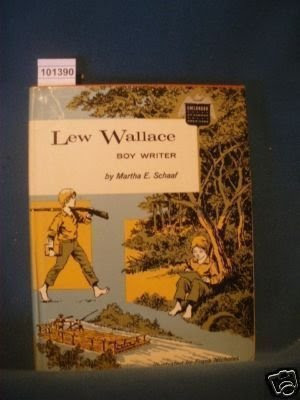
Lew Wallace: Boy Writer by Martha E. Schaaf


A Trip Down Memory Lane

Published in 1961 by The Bobbs-Merrill Company, Inc
Intended for upper elementary students.

Thirty-five years ago books like Lew Wallace: Boy Writer filled my library's book shelves in Hope, Indiana and I went through them like a hot knife through butter. I am sure they are a big reason why I enjoy history so much today. I remember enthusiastically reading about the adventures of young Daniel Boone, Abraham Lincoln and even about Martha Washington and other "yucky" girls as I worked my way down the shelf.

Union Major General Lew Wallace
(1827-1905)
I have next to my computer a 1961 hardback copy of Lew Wallace: Boy Writer, part of the Childhood of Famous Americans series

As suggested by the series title Lew Wallace: Boy Writer focuses on the childhood of future the Civil War general, territorial governor of New Mexico (during the days of Billy the Kid and the Lincoln County War) and author of Ben-Hur: A Tale of Christ. It features young Lew Wallace who hates school but loves to read and explore. His father was the sixth governor of Indiana.  Young Lew Wallace had access to the state's library and quickly fell in love with books.

The details of Wallace's adult life are not left out or just glossed over as an afterthought, but the main focus is on Wallace's childhood. This is a very simple read and for me, an enjoyable reminder of my own childhood.

Lew Wallace: Boy Writer can be found on Amazon.com here.

I rate this book 4 out of 5 stars.

Reviewed on August 2, 2012.

Jackson: The Iron-Willed Commander (The Generals Series) by Paul Vickery


A Nifty Little Biography


Published by Thomas Nelson in 2012.

Jackson: The Iron-Willed Commander is a welcome addition to a larger series called The Generals that offers relatively short biographies (about 200 pages) of America's better-known generals. This book is by no means the definitive biography of Andrew Jackson, but it is great introduction to this controversial man.

Andrew Jackson lived most of his life on the American frontier. His most famous battle was, of course, the Battle of New Orleans in the last moments of the War of 1812 (technically, it took place after the treaty was signed) but by that time Jackson was a veteran of many battles. He had already fought the British in two wars, skirmished with the Spanish several times and was involved in multiple frontier wars with Native Americans. Throw in Jackson's willingness to duel and one quickly realizes that Jackson thrived on action and danger. A great deal of his life seems to be consumed by organizing for a campaign, going out on a military campaign, recovering from injury sustained in a battle or a duel or recovering from an illness he contracted while on a campaign. His wife, Rachel, must have been a very patient woman.

Rather than go into the details of Jackson's life, I will comment on the presentation of Jackson's more controversial decisions in the book. Jackson is reviled in many Native American communities for his policy of  forcing Native Americans out of their traditional land and making them settle across the Mississippi, including villages and communities that sided with him during the wars and including groups that decided to live like white society. Vickery is to be commended for doing what so many biographers would not do - he explains why Jackson did this. Many writers would scold Jackson, but Vickery explains Jackson's reasoning without excusing him. It makes for a better biography if one can understand the thinking of the time.

Andrew Jackson (1767-1845)
Since it is a part of a series about generals, most of the book focuses on Jackson's long and varied military career. Jackson's presidency merits a few pages as does his personal life. This is a nifty little biography and I recommend it as a great place to start a study of Andrew Jackson or the frontier times of the South.

I received this book as a part of Thomas Nelson's Booksneeze program in exchange for an honest review.

Reviewed on July 24, 2012.

This book can be found on Amazon.com here: Jackson: The Iron-Willed Commander

I rate this book 5 stars out of 5.

The Significance of the Frontier in American History by Frederick Jackson Turner


Four Classic Essays By a Noted Historian


Collection published by Penguin Classics in 2008.

The Significance of the Frontier in American History is a collection of four essays written by noted historian Frederick Jackson Turner from 1893 to 1910. Penguin Classics has re-issued these essays as part of its Great Ideas series.

Frederick Jackson Turner is featured in just about every U.S. History textbook for his essay The Significance of the Frontier in American History, written in 1893. I am embarrassed to note that I had never read this classic essay until I read this collection, although I was familiar with its basic thesis. In this essay Turner notes that the 1890 census determined that as of 1890 there was no longer a definable "frontier." He asserts that this is the beginning of something new for the United States as it has always been defined by its (usually) westward boundary.

Turner notes that the Western settlers came from all parts of the eastern seaboard but created a new culture, and in some ways the definitive American culture, when these diverse groups of settlers brought their old ways of doing and thinking and mingled them with one another to make something new. These settlers are known for their rugged individualism, a more egalitarian mindset (the frontier states were the first ones to lift property requirements to vote and, later, to let women vote) and a demand for government intervention in curtailing the power of corporations (at the time of the essay the Granger movement was quite active). Turner is quite clear that the presence of "free" land waiting for settlement was a major reason for the "self-made" man of the frontier and openly wondered about opportunities for economic advancement in a future with no frontier.

Frederick Jackson Turner
(1861-1932)
The second essay is The Problem of the West, written in 1896. It describes the dissonance between the original states on the east coast and the states that came were settled later. In many ways, this continues on to this day - just take a look at one of the political red state/blue state maps. He points to the Old Northwest territory states as being the linchpin that tie the Union together. States like Illinois, Michigan and Indiana are a little bit Western and also have strong ties to the east coast.

The Significance of the Mississippi Valley in American History, written in 1909 and 1910, discusses how the Mississippi River system, including the Ohio and Missouri Rivers, were the key to the exploration and settlement of a great chunk of the country. Not only did the settlers follow the rivers, but those rivers were their lifeline to the larger world of trade.

The last essay is the weakest, in my opinion. It was written in 1910 and is entitled Social Forces in American History. In many ways, it is the bookend for the title essay. Turner describes changes that he has seen in American society since the closing of the frontier, including the growth of corporations and those that get fabulously wealthy from industry and the beginnings of activist government.

I rate this collection of essays 5 stars out of 5.

This book can be found on Amazon.com here: The Significance of the Frontier in American History by Frederick Jackson Turner.

Reviewed on July 24, 2012.

Featured Post

<b><i>BAN THIS BOOK (audiobook)</i></b> by Alan Gratz

Published in 2017 by Blackstone Audio, Inc. Read by Bahni Turpin. Duration: 5 hours, 17 minutes. Unabridged. My Synopsis Ban This Book is t...

Popular posts over the last 7 days