
Published in 2011 by Random House Audio
Read by the author, Tom Brokaw
Duration: 7 hours, 8 minutes
Unabridged
I picked up the audiobook of The Time of Our Lives in the hopes that former NBC News anchor Tom Brokaw would be offering some in-depth analysis on a wide range of issues. After all, the cover promises to look at "Who we are, where we've been and where we need to go now to recapture the American Dream."
Instead, we get a lot of amiable reminiscing about Brokaw's family, his early career, and a bit of of a slanted history lesson with every chapter with some half-hearted advice that is based on discussion with industry leaders.

That is the essence of the problem Brokaw is a top-level journalist. He is a journalist emeritus - respected and admired for what he used to do but he is not doing the gritty stuff any more. He hobnobs and socializes with elites. If he wants to talk about some new trend in computers he can literally call Bill Gates and get his take.
But, here's the problem. Gates is no longer street-level. He's up in the clouds and he doesn't see everything any more. To make a comparison to a war situation, Brokaw is talking to the officers in their cushy offices far from the front and not talking to the people in the trenches. His sources are important people but they no longer know the realities of the daily grind. Brokaw is quoting CEOs about what is going on and not talking to the people doing the actual work.
It was most glaringly obvious in his discussions about education. He comes back to the topic time after time and his all sorts of "insights" that tell me he is talking to school corporation superintendents and not to actual classroom teachers (like me - this is my 27th year in the classroom).
For example, he refers to "charter schools" as a help to public schools. Almost no public school teacher or leader sees them that way. They see schools that are allowed to pick and choose who can attend, avoid rules that hamstring public schools (couldn't we help the public schools by removing those rules for everybody?) and hire unlicensed staff who get to become teachers with just a couple of weeks of training. A head of a school system might say that he welcomes the competition, but that's just a politician talking.
At one point Brokaw muses that maybe public schools would be better if they could use the methods that the Marines use in basic training to teach students. Sure, Tom, that would be great. Only take in the ones that make the cut (there are no physically disabled or mentally disabled Marines) and throw out anyone that won't get with the program. Tom - those are the methods that the most egregious charter schools use.
My least favorite quote from the book - I literally pulled over to write this one down because I was listening while driving: "Business is the consumer of the product that schools produce and academics have lost the sense of that." No, Tom. students are the consumer of the product that schools produce. Students are educated. Schools serve the students. Students are not boxed up and shipped out to corporations like so many gears. Students choose their own lives and a well-rounded education helps that process.
Brokaw's breathless announcement to teachers that students can use their cell phones to cheat on tests was too much for me. He was in the midst of a mini-rant about the uses of technology in the classroom and sounded like he just discovered something that we've all been missing. I laughed out loud and the gall of a man to tell professional educators something that we have been fighting on a daily basis for more than 5 years by the time this book was written. It's like he's the only one that figured this out.
But, what is really the most unforgivable thing about this book is that it has no zip. It is the audio version of an oatmeal breakfast with a few interesting stories sprinkled in. Hearing Tom Brokaw talk about bad traffic in Los Angeles and how his old house has been bought and re-modeled is not interesting listening. I was expecting something with some real analysis and some novel suggestions. What we ended up with is sweet family stories, advice to eat at home more instead of at a restaurant so you can save your money for a rainy day and the perspectives of other people who are not longer in the day-to-day grind of trying to "recapture the American Dream."
I rate this audiobook 2 stars out of 5. I was so glad to be done with it.
The Time of Our Lives can be found on Amazon.com at this link.
Read by the author, Tom Brokaw
Duration: 7 hours, 8 minutes
Unabridged
I picked up the audiobook of The Time of Our Lives in the hopes that former NBC News anchor Tom Brokaw would be offering some in-depth analysis on a wide range of issues. After all, the cover promises to look at "Who we are, where we've been and where we need to go now to recapture the American Dream."
Instead, we get a lot of amiable reminiscing about Brokaw's family, his early career, and a bit of of a slanted history lesson with every chapter with some half-hearted advice that is based on discussion with industry leaders.
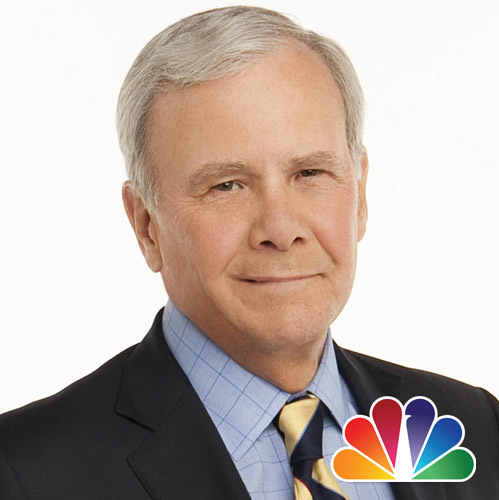
That is the essence of the problem Brokaw is a top-level journalist. He is a journalist emeritus - respected and admired for what he used to do but he is not doing the gritty stuff any more. He hobnobs and socializes with elites. If he wants to talk about some new trend in computers he can literally call Bill Gates and get his take.
But, here's the problem. Gates is no longer street-level. He's up in the clouds and he doesn't see everything any more. To make a comparison to a war situation, Brokaw is talking to the officers in their cushy offices far from the front and not talking to the people in the trenches. His sources are important people but they no longer know the realities of the daily grind. Brokaw is quoting CEOs about what is going on and not talking to the people doing the actual work.
It was most glaringly obvious in his discussions about education. He comes back to the topic time after time and his all sorts of "insights" that tell me he is talking to school corporation superintendents and not to actual classroom teachers (like me - this is my 27th year in the classroom).
For example, he refers to "charter schools" as a help to public schools. Almost no public school teacher or leader sees them that way. They see schools that are allowed to pick and choose who can attend, avoid rules that hamstring public schools (couldn't we help the public schools by removing those rules for everybody?) and hire unlicensed staff who get to become teachers with just a couple of weeks of training. A head of a school system might say that he welcomes the competition, but that's just a politician talking.
At one point Brokaw muses that maybe public schools would be better if they could use the methods that the Marines use in basic training to teach students. Sure, Tom, that would be great. Only take in the ones that make the cut (there are no physically disabled or mentally disabled Marines) and throw out anyone that won't get with the program. Tom - those are the methods that the most egregious charter schools use.
My least favorite quote from the book - I literally pulled over to write this one down because I was listening while driving: "Business is the consumer of the product that schools produce and academics have lost the sense of that." No, Tom. students are the consumer of the product that schools produce. Students are educated. Schools serve the students. Students are not boxed up and shipped out to corporations like so many gears. Students choose their own lives and a well-rounded education helps that process.
Brokaw's breathless announcement to teachers that students can use their cell phones to cheat on tests was too much for me. He was in the midst of a mini-rant about the uses of technology in the classroom and sounded like he just discovered something that we've all been missing. I laughed out loud and the gall of a man to tell professional educators something that we have been fighting on a daily basis for more than 5 years by the time this book was written. It's like he's the only one that figured this out.
But, what is really the most unforgivable thing about this book is that it has no zip. It is the audio version of an oatmeal breakfast with a few interesting stories sprinkled in. Hearing Tom Brokaw talk about bad traffic in Los Angeles and how his old house has been bought and re-modeled is not interesting listening. I was expecting something with some real analysis and some novel suggestions. What we ended up with is sweet family stories, advice to eat at home more instead of at a restaurant so you can save your money for a rainy day and the perspectives of other people who are not longer in the day-to-day grind of trying to "recapture the American Dream."
I rate this audiobook 2 stars out of 5. I was so glad to be done with it.
The Time of Our Lives can be found on Amazon.com at this link.


