Showing posts with label Boston. Show all posts

SPENSER: A MYSTERIOUS PROFILE (Mysterious Profile Series) (Kindle) by Robert B. Parker


The Mysterious Profile series' title pretty much sums up what the series is all about. They are short profiles of famous lead characters in mystery series in the words of the authors themselves. Sometimes they are interviews in which the authors tell about the inspiration for the characters. Other times, they are scenes in which the characters explain themselves.

This profile is of the wisecracking detective Spenser created by Robert B. Parker. Parker (1933-2010) wrote 40 novels featuring wisecracking private detective Spenser and literally had a heart attack and died at his desk writing the 41st novel.

The Spenser books are the mold of any modern book series featuring a principled and competent investigator with a tough, mostly silent friend of dubious morality to back him up. This model is followed in the current-day book series of Elvis Cole by Robert Crais and Joe Pickett by C.J. Box

The problem of having Parker provide a profile of Spenser is that Parker has been dead for a dozen years. This profile is taken from another book, a collection of essays called In Pursuit of Spenser: Mystery Writers on Robert B. Parker and the Creation of an American Hero. Parker wrote a scene where Spenser is interviewed by a Harvard psychology professor (Spenser's love interest is a colleague of this professor) about manliness, love and what makes him tick.

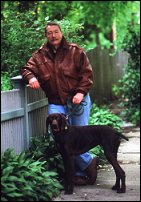
The author, Robert P. Parker
(1933-2010)
If you have read a Spenser novel, you know that half of them have a scene very much like this. Parker was big on having Spenser express a great deal of self-awareness and openly discussing it with his girlfriend Susan Silverman while sitting around the dinner table. I usually found those scenes something to be skimmed over, especially when you've read something similar a dozen times or more.

When I found out about this book, I was hoping it was the type of profile that discussed the creation of the Spenser character. However, I was happy to indulge in a bit of nostalgia and read this "interview."

Note: the formatting in this e-book has issues. It makes the conversation hard to follow until you get the hang of it. 

I rate this e-book 3 stars out of 5. It can be found on Amazon.com here: SPENSER: A MYSTERIOUS PROFILE (Mysterious Profile Series) (Kindle) by Robert B. Parker.


THE FIXER (audiobook) by Joseph Finder


Published in 2015 by Penguin Audio.

Read by Steven Kearney.
Duration: 9 hours, 33 minutes.
Unabridged.


The Fixer features Rick Hoffman, who used to be one of the biggest journalists in Boston. But, the magazine he worked for downsized and he lost his job. He also lost his girlfriend (undoubtedly related) and he had to move out. He is forced to move into his father's abandoned house. His father had a stroke years ago and Hoffman let his house fall into disrepair. It's been vandalized and it's pretty obvious that squatters have lived in it in the past. Basically, Hoffman is camping in the house.

His neighbor is a childhood acquaintance. The neighbor heads up a construction crew and offers to work with Hoffman to rehab the house with a sweat equity investment. As they are looking through the house Hoffman climbs into a secret attic room and finds a giant pile of cash - millions of dollars. He realizes two things: 1) this house is not a secure place and 2) he really doesn't know his neighbor that well and he's not sure how much of the money he saw and if can even trust him. 

Hoffman now has to use the skills he honed as a reporter to figure out where the money came from and what his incapacitated father was doing to amass a pile of cash. Soon enough, he discovers that someone with friends in powerful places wants their money back...

The premise of this audiobook is strong. The follow-through was not. There is a long scene at a very upscale men's store that goes into excessive detail when Hoffman uses some of the found money to buy a fancy set of clothes. It goes on and on and on and does very little to add to the story. It could have been handled in a single paragraph. It made me wonder if this was a real-life store in Boston and Finder was giving a friend some free advertising. The same thing happens just a few minutes later in the audiobook with a fancy restaurant. Editing these scenes could have cut at least a half an hour from the book and would have only helped it.

But, there were bigger issues. There are plot lines that dramatically start and then drop without explanation - specifically the interactions between Hoffman and the construction crew. It felt like someone suggested edits to Finder and he made them very sloppily, leaving plot threads everywhere.

This book could have been cleaned up, tightened up and perhaps clocked in at 7 hours and been a very good thriller. Instead, I am rating this audiobook 2 stars out of 5. This book can be found on Amazon.com here: THE FIXER by Joseph Finder


BUNKER HILL: A CITY, A SIEGE, A REVOLUTION (audiobook) by Nathaniel Philbrick


Published in 2013 by Penguin Audio
Read by Chris Sorensen
Duration: 12 hours, 58 minutes
Unabridged

Nathaniel Philbrick's Bunker Hill: A City, A Siege, A Revolution is misnamed. While the battle is in the book, it is only a part of the story. In reality, this book is a history of Boston from the 1750s and 1760s right up to the Declaration of Independence.

In a lot of ways this book is much more of a biography of Dr. Joseph Warren, one of the leaders of the Sons of Liberty movement, along with Samuel Adams, John Adams and John Hancock. Warren is often overlooked nowadays because he died at Bunker Hill (which was really mostly fought on Breed's Hill). The excessive focus on Warren was, in my mind, one of the great weaknesses of the book. Philbrick spent too much time worrying over Warren's alleged personal failures and not enough time getting on with the story. It just bogged things down.
Philbrick does not gloss over the warts of our Founding Fathers, noting that some had mixed motives and some profited from the independence movement. There is plenty of emphasis on the British side of things, something I admire about the book.  

The arrival of Washington in Boston, sent by the Continental Congress to take command and in effect nationalize the militias that surrounded the British troops in Boston, is not explained well. Philbrick does not go much into the goings on of the Continental Congress besides noting that certain people left Boston to attend. Because of this, Washington's arrival comes with very little explanation (much like it may have seemed to some of the militiamen). As the narrative continues, Philbrick does not give Washington much credit for anything around Boston but bad ideas, impatience, a negative attitude and lucky timing.

Chris Sorenson's reading of the audiobook was excellent. 

In short, while there are things to admire about this book, there are problems as well - not problems with the research but problems with choices about what was included (excessive focus on Warren's personal life) and what was left out (the Continental Congress).

I rate this audiobook 3 stars out of 5.

This audiobook can be found on Amazon.com here: Bunker Hill: A City, A Siege, A Revolution.

MORTAL STAKES (Spenser #3) by Robert B. Parker


Originally Published in 1975

If you have not read a Spenser detective novel and you love the detective genre, pick one up and start reading. There are 40 original novels and they all follow a basic premise: Spenser gets a case. Spenser noses around, makes a lot of wisecracks, irritates people who certainly deserve to be irritated, and then he sees if there is a reaction to his nosing around. Usually, that is someone trying to warn him off or, perhaps, trying to kill him outright. From there, Spenser knows who is after him and can figure out why and he knows where to proceed and solve the case.

Sounds simple, doesn't it?

Of course, it is. And, the finest of wines are really just grape squeezings. Simple - but yet there is something else there.

The Spenser series is one of the few series that I am willing to re-read. In this case, I undoubtedly read Mortal Stakes nearly 20 years ago and I mis-remembered it more than I remembered it, so it made for a good re-read. 

In Spenser's third outing he is hired by the Boston Red Sox manager to check out their star pitcher. He is the best in the league but there is some reason to believe that he may have thrown a couple of games, or at least shaved some points (made the score closer than it would have to help out gamblers who bet it would be a close game).

So, Spenser pretends he is an author of an upcoming book about baseball so he can freely nose about the ballpark and talk to everyone who will talk to him. Soon enough, he roots out the truth but now he has another problem - does he really want the truth to come out?


I rate this book 4 stars out of 5.

This book can be found on Amazon.com here: Mortal Stakes

The Suns of Liberty: Revolution: A Superhero Novel (Volume One) (kindle) by Michael Ivan Lowell


Published in March of 2013 as an e-book.

The Suns of Liberty series is set in a future America that has undergone a second Great Depression. This economic crisis resulted in a takeover of the American government by a coalition of businesses. These businesses have veto power over the government and through that power have de facto control of everything. They have brought America back from the brink of chaos but at the cost of most civil liberties. They have even outlawed the American flag because it symbolizes a time when freedoms led to chaos.

A mysterious armored superhero named Revolution works in Boston, fighting crime and corruption. Sometimes he hacks into communication system and airs "commercials" that remind people of the way things used to be and the rights they used to have. No one knows anything about him, but he has inspired others to fight back as well. Some fight against the crime that has gone out of control in some areas, some push back against the government.

This story is mostly told through Paul Ward, a scientist who lost his child to street violence and, then, his wife to suicide. Ward quit his teaching job at Harvard to develop his own armored suit and fight crime. He has a connection inside the government that gives him inside information.

Paul Ward meets Revolution and eventually becomes an insider in his organization as Boston once again becomes the focus of an oppressive government and an angry citizenry that wants their freedom and is willing to fight to get it back...

I really enjoyed the political aspects of this book and I was enthralled until the half way point - the point where Paul Ward is introduced to Revolution's support system. It was too involved (it would make Bruce Wayne's and Tony Stark's organizations look pathetic in comparison). For me, that damaged the American Revolution theme that was being built. Rather than a true people's movement it seemed to be a technology-heavy movement of elites that was rarely helped by regular folks. To me, it undercut the first half of the book.

That being said, it was still quite entertaining and if you like stories where morality matters and, in the end, when it is all on the line the hero does what is right (even if he compromised himself earlier) no matter the cost and inspires others to stand up, well, this one is recommended for you.

I rate this book 4 stars out of 5.

This book can be found on Amazon.com here: The Suns of Liberty: Revolution.

Reviewed on July 7, 2013

Looking for Rachel Wallace (Spenser #6) (audiobook) by Robert B. Parker


Published in 1989 by Books on Tape, Inc.

Read by Michael Prichard
Duration: 4 hours, 45 minutes.
Unabridged.

I read Looking for Rachel Wallace years ago, but I don't have a great memory for all of the plot details so I am re-enjoying the Spenser books as audiobooks. In this case, Spenser and Rachel Wallace kept me company while I wrapped presents and fed my one-year old. And they were quite good company.

Rachel Wallace is a lesbian feminist activist who lives to shock and provoke the sensibilities of middle America in the late 1970s. Her activism has made her the recipient of several threats so Spenser is hired to protect her. If Rachel Wallace is anything, she is an ultra-feminist and no ultra-feminist (at least not in this book) is going to run to a big strong man for protection. Rachel Wallace realizes this and fires Spenser.

But, soon enough, Rachel Wallace is actually kidnapped and Spenser goes on the hunt for her out of a sense of personal obligation. The climax of the book is one of the more memorable scenes in this long and venerable series.

Robert B. Parker
(1932-2010)
My audiobook was read by Michael Prichard who does a decent Spenser but does a great near-humorless Rachel Wallace.

What can I say about the Spenser books that has not already been said. They're a bit formulaic (wisecracks, meet Susan for some snuggling, fistfights, cooking, etc.) but I love the formula so I enjoyed this one thoroughly. I consider it to be one of the stronger books, despite the fact that the protestations against feminism and lesbianism seem outdated in the year 2006. It almost makes it seem like a period piece. Interesting how the world changes, isn't it?

I rate this book 5 stars out of 5.


This audiobook can be found on Amazon.com here: Looking for Rachel Wallace: A Spenser Novel

Reviewed on December 25, 2006. Updated in 2010.

The Godwulf Manuscript (Spenser #1) (audiobook) by Robert B. Parker


Going back for a second read - this time as an audiobook


Published in 1988 by Books on Tape
Read by Michael Prichard
Duration: 5 hours, 12 minutes (unabridged)

I've long since read all of the Spenser novels but I am enjoying a second time around with the older ones as audiobooks - I listen while commuting.

The Godwulf Manuscript is the first in a very long line of Spenser novels. The most essential parts of Spenser are here - wisecracks, details about cooking, his mostly unused office and a healthy interest in the opposite sex, Lt. Quirk (I'd forgotten he was Spenser's first "buddy" in a long line of buddies) and Spenser's self-deprecating inner voice.

The Godwulf Manuscript is a much more "noire" style book than most of the rest of them - but then again it's not much of a surprise really - authors change over time.

Spenser, however, does not change. The book is set in 1973 and Spenser is 37 years old. He makes more references to feeling the effects of age in this book than I ever remember throughout the rest of the series.Yet, Spenser remains ageless, like James Bond, which is good - otherwise the last Spenser book would have featured a 70 year old Spenser. While it might have been interesting, I like the ageless (or very slowly aging) Spenser better.
Robert B. Parker 
(1932-2010)


The audiobook was well-read. Michael Prichard's interpretation of Spenser is always interesting. He read several of the early Spenser audiobooks. He delivers everything very "matter of fact" - no matter how funny Spenser's comment is, no matter how many punches are thrown. Sort of like a faster version of Jack Webb in Dragnet. He makes the story go very quickly.

I give The Godwulf Manuscript 5 stars out of 5.

This book can be found on Amazon.com here: The Godwulf Manuscript.

Reviewed on January 5, 2007 (edited June 27, 2012).

God Save the Child (audiobook) (Spenser #2) by Robert B. Parker


Good Early Spenser novel


Published August 1st 1988 by Books on Tape, Inc.
Read by Michael Prichard
Duration: 5 hours, 4 minutes
Unabridged

Robert B. Parker and Tony Hillerman are the two authors I most consistently check when I go to a library or a bookstore. When it is a great day, one of the two has a new book. When it is a tremendous day, they both have a new one out and I have to decide which to read first!

In the meantime, I am making do by going back over their collected works as audiobooks. I have a long drive to work every day and Spenser makes a very good ride-along companion. I have long-since read all of the older Spenser books, but the beautiful thing about a faulty memory is that the plot lines get a bit hazy over time and now I can enjoy them all over again!

Besides, it is always interesting to see how the reader interprets Spenser and the gang. One of the best to capture Spenser smart-aleck comments was Burt Reynolds, although his interpretation of Hawk was pleasurable, but questionable in terms of accent.

The reader for God Save the Child was a Michael Prichard. His interpretation of Spenser was neither here nor there, neither good nor bad. However, his reading of the character Mrs. Bartlett was right on the money. Here's the scoop on Mrs. Bartlett: She and her husband hire Spenser to find her son. He is missing and a note has been sent to the Bartletts asking for $50,000 for his safe return. This book was written in 1974 when $50,000 was a whole lot of money. Mrs. Bartlett is an insipid, vapid twit of the first order. A woman more concerned with fashion than her child's safety. She hosts a dinner party in her house on the same day that a man is killed in it and during the time her son is missing. She is a woman who believes herself to be an artist because it gives her an excuse for her bad behavior. Prichard nails her voice so dead on that you wish you could reach through the radio speakers and smack her upside the head on at least half a dozen occasions.

Robert B. Parker
So, how's the plot? Good thriller, although you could see the ending coming as soon as you hear the details of the missing boy's case. Of course, that could be some latent memories from when I read the book 10 years ago...

We meet Susan Silverman.

We meet Healey of the State Police (Prichard nails him too - I never noticed before that Healey was funny, but Prichard reads him as Spenser's straight man foil and I laughed out loud a couple of times).

There's plenty of Spenser's dogged style of detecting and plenty of smart comments.

This listener was struck as to how old Spenser really is - there is a lot of descriptive detail about clothing from the 1970s that reinforce that fact. Luckily, Spenser is forever middle aged but tough enough to take on the world and Susan Silverman is forever ageless and beautiful, no matter the decade.

I rate this audiobook 5 stars out of 5.

This book can be found on Amazon.com here: God Save the Child by Robert B. Parker.

Originally reviewed on November 23, 2006.

Now and Then (Spenser #35) by Robert B. Parker


Parker and Spenser go over old ground, but it's still a lot of fun


Published in 2007.

Spenser is on the case again in Now and Then. This time, a simple "check and see if my wife is cheating on me" case becomes a double murder and takes Spenser back onto a college campus investigating yet another campus radical.

It is not terribly surprising that Parker is going over old ground - this is his 35th Spenser book. Hawk and others are brought in to help, as happens in most all of the newer Spenser books. However, the interplay between Spenser and the others is one of the best features of a Spenser book so that is not disappointing. All in all, this is one of the better Spenser offerings in years.

I enjoyed this book and was well on the way to giving it a 5 star rating until I got to the end. It was just too pat.

Still, it's a solid addition to the series and a must-read for fans.

I rate this book 4 out of 5 stars and it can be found on Amazon.com here: Now and Then by Robert B. Parker

Reviewed on November 16, 2007.


Liberty's Children: Stories of Eleven Revolutionary War Children by Scotti Cohn


It just didn't work for me


Published in 2004 by Globe Pequot

Liberty's Children is a collection of stories about the experiences of eleven children during the Revolutionary War (although one is 20 years old, which was definitely not a child in a time when many were married with children at age 16).

The book is well-researched and accurate. I have no complaints with that or the ample bibliography that is sorted by the individual children. But, I just felt like I had to slog through parts of it and I love to read history.

I questioned some of the choices as well. Five of the eleven went off to sea, one of them was 20 years old and one was just a baby. I found myself wondering about the decision not to include the most famous child that served in the Revolutionary War, Andrew Jackson. He served as a courier and had his face slashed by a British soldier for refusing to clean his boots. Or, how about John Quincy Adams, who accompanied his father to Europe during the war to secure supplies and allies and eventually travelled all of the way to Russia. At least Sybil Luddington, the 16 year-old female "Paul Revere" for Connecticut who is featured on Connecticut's quarter coin could have been included rather than another story about a boy gone off to sea.

Not that all of the stories were a chore to read, mind you. I enjoyed the stories of Frances Slocum, James Forten and Sally Wister in particular. If you have read this book and want to know more about Frances Slocum I enthusiastically recommend the novel The Red Heart by James Alexander Thom.

I rate this collection 3 stars out of 5.

This book can be found on Amazon.com here: Liberty's Children.

Reviewed on August 23, 2008.

Widow's Walk (A Spenser Novel)(audiobook) by Robert B. Parker


"Mr. Spenser, you are a little man in a big arena. You simply don't matter." 

Published by Books on Tape
Read by Joe Mantegna
Duration: 5 hours, 41 minutes.
Unabridged

With that comment fans of Spenser know that in Widow's Walk he's going to be digging in his heels and pull even harder at all of the loose ends until he finds something he can use. That is both the beauty and the weakness of the Spenser novels - they are formulaic. Spenser has a routine and this one touches all points: 

Help from Hawk with a tail? Check. 

Vinny Morris brought in to back up Hawk? Check. 

Bounce his case off of Susan for a new perspective? Check. 

Witty commentary? Check. 

Both the cops and the bad guys irritated with Spenser? Check. 

It's predictable but quite enjoyable. 

The case is interesting and goes all over the place. The only real problem I had with this audiobook presentation is Joe Mantegna as the reader. Mantegna does a solid job of reading - his diction is impeccable, he can deliver a smart-aleck comment pretty well but his range of different voices is limited and his Susan Silverman voice sounded like Carey Grant to me. A four-star book is reduced to a total of three stars by the narration.

I rate this audiobook 3 stars out of 5.

This audiobook can be found on Amazon.com here: Widow's Walk by Robert B. Parker.

Reviewed on November 9, 2008.

Rough Weather (Spenser mystery) by Robert B. Parker


Strong start. Best Spenser novel in a while.


Published in 2008 by Putnam Adult.

By my count Rough Weather may be the 35th Spenser novel. As others have noted, the traditional elements of a Spenser novel are here - Susan and Spenser's deep discussions about Spenser's code of honor, Spenser and Hawk trading witty banter, Spenser pulling at the loose ends of the case until someone tries to kill him. It's a formula, but I like the formula.

The book starts out differently and with much more action than is normal in a Spenser book and I'd give the first half 5 stars. But it eventually slows down to the point that I'd give the last half a mere 3 stars. Thus, the average score is the final score - 4 stars.

Interestingly, Rough Weather is the only Spenser book that I can remember that actually mentions time passing as the series progresses. Spenser notes to Rita Fiore that she's been pursuing him for 20 years. Hawk and Susan also make some sort of comments as well. Will Spenser ever age? No, I'm sure not. One of the early novels mentions that Spenser was at the Battle of Chosin Reservoir in the Korean War (1950). That makes Spenser at least 76 years old in Rough Weather. Good thing he doesn't age - how sad would that fistfight be?
Robert B. Parker 
(1932-2010)


Spenser notes that he reads the newspaper every morning: "Every year there were more stories about shoes, and celebrities, and hot restaurants, so every year I read less." Amen to that.

I rate this book 4 stars out of 5.

This book can be found on Amazon.com here: Rough Weather.

Reviewed on January 15, 2009.

Sixkill (Spenser #39) by Robert B. Parker


A fitting end to a series


Published in 2011 by G.P Putnam's Sons.

With the publication of Sixkill, Robert B. Parker's last completed Spenser novel is on the shelves and Spenser's tale is done. It is tempting to make this review a review of the entire series, and I may fall into that temptation a little bit because Spenser and Parker have been part of my life for the better part of twenty years. But, most importantly, Sixkill is Robert B. Parker ending the series on a high note.

As any fan of the series knows, half of any Spenser book is already written - witty back and forth of a non-PC nature, annoying psycho-babble with Susan talking about why Spenser does what he does ("And, I suspect, if you didn't do what you do, you'd become someone else..."- p. 191), a rundown of all of the people that Spenser could contact to help, if needed (because Hawk is not in this one - he is still off in Central Asia), and eventually Spenser annoys enough people with his nosing around that they send someone to get rid of him and he tracks down the bad guy by figuring out who sent someone to kill him. But, we love this stuff or we wouldn't be reading the 39th Spenser novel.

Robert B. Parker 
(1932-2010)
In Sixkill a comic actor with a very creepy off-stage personality named Jumbo Nelson is accused of raping and murdering a local girl while filming a movie on location in Boston. Spenser's police friend Quirk thinks that Jumbo may actually not be guilty of anything more than being in the room while a combination of sex games, drugs and alcohol resulted in an accidental death and asks Spenser to look into it. Spenser gets into a one-sided fistfight with Jumbo Nelson's bodyguard, a twenty-something Cree Indian named Zebulon Sixkill, causes Sixkill to lose his job and eventually agrees to train Sixkill. It turns out Sixkill is a lost soul looking for a mentor and Spenser fits the bill (and also fill the role of Hawk when it comes to adolescent, but amusing, good-natured racial commentary).

The inside cover notes that Sixkill is "The last Spenser novel completed by Robert B. Parker" which means the reality of Parker's death comes home at last for this reviewer. I can only assume by the wording that Parker had partially completed manuscripts and storylines and those will be completed by someone else, much like Parker did with Raymond Chandler's Poodle Springs and Perchance to Dream. I would suggest going with another established author (like they did for Raymond Chandler) who likes wisecracking private detectives and asking Robert Crais to finish them up and then letting the series rest.

I rate this book 5 stars out of 5.

Reviewed on June 17, 2011.

This book can be found on Amazon.com here: Sixkill by Robert B. Parker.

Small Vices (Spenser #24) by Robert B. Parker


One of the best books in the Spenser series.


Originally published in 1997.

This is my second reading of Small Vices. I'd read it before, years ago, and all I remembered was that this is the one in which Spenser gets himself shot and very nearly killed. (The beauty, I guess, of having so many Spenser novels is that it is hard to keep them all straight so I can go back and re-read them like they're like new every few years).

If you are familiar with Spenser, most of your favorite characters see some action in this outing. If you are not familiar with Spenser, this may be a good one to start with, although I would recommend some of the older ones to begin.

The never-aging Spenser lives through an entire year of his life in this one, but don't worry, he still doesn't age. Neither do Hawk or Susan. They're like James Bond in that respect. It used to bug me but I know that I don't want to read about Hawk and Spenser's adventures in a nursing home.

I rate this book 5 stars out of 5.

This book can be found on Amazon.com here: Small Vices.

Reviewed on December 8, 2005.

School Days by Robert B. Parker


A throwback to the early days of 'Spenser'

Published by Putnam Adult in 2005

This edition of Spenser reminded me of the early days of the series - the days before Spenser would assemble a gigantic posse of bad guys and policemen (ie, Potshot) in order to get the job done. Thankfully, this one is also basically Susan Silverman-free (not that I mind Susan, it's all of the repeated conversations about their relationship - it just gets old!)

Unfortunately, School Days is also Hawk-free, so the experienced reader of Spenser books will definitely miss the witty banter the two often share. However, Spenser manages to get in a few good lines without the extra help and he does get a bit of outside help from some unusual sources from the past.

I rate this book 4 stars out of 5.

This book can be found on Amazon here: School Days (Spenser)

Reviewed October 9, 2005.

Cold Service by Robert B. Parker


Reading a Spenser novel is better than not reading one but..


Published in 2005.

...this one doesn't make me want to run out and get another one, either.

I've read every Spenser novel and just about everything else Parker has produced and Cold Service just felt tired.

This book started out so well - the action was moving, the lines were crisp. I laughed out loud and I couldn't wait to open the book back up.

Then, the psychobabble began. There was way, way, way too much relationship study between Spenser and Susan about Spenser and Hawk. Enough already! We know that they'd do anything for each other - not out of debt but out of male-bonded love! We got that during the last book and the other 15 or so that have had this exact same conversation (except in shorter form!)!!

Too bad, because Parker's last Jesse Stone novel was the best of the series and his Jackie Robinson book Double Play was very, very good. This one was not up to those high standards
 
I rate this book 3 stars out of 5.

This book can be found on Amazon.com here: Cold Service by Robert B. Parker.
 
Reviewed May 14, 2005.

Chance by Robert B. Parker


Check out the audiobook - it is worth it


Published by Phoenix Books
Read by Burt Reynolds
Duration: 6 hours, 52 minutes
Unabridged

I avoided this audiobook performance of Chance because its read by Burt Reynolds and I figured that if anybody has a chance to ruin a Spenser novel it would be Burt Reynolds. Not that Burt is a bad actor, but he tends to do what he wants to do rather than what he's told to do.

Boy, was I wrong.

Despite his talent for finding bad movies, Reynolds is, underneath it all, a real actor. He finds the voice for the wise-cracking Spenser and hits it dead on. Spenser's observations and one-liners are read perfectly. Not only that, but he covers the voices of all of the mob leaders and his characterization of Shirley Meeker/Ventura gives the reader a great deal of sympathy for how truly pathetic and harmless she was as she got herself caught up in events beyond her control.
Burt Reynolds


Reynold's portrayal of Hawke was different (more southern, but just as tough) because in my mind I always picture Avery Brooks and his precise delivery of lines. But, once I got used to it, it was very good.

Robert B. Parker
(1932-2010)
Now, on to the book. Typical Spenser - wise-cracks, a little violence and a lot of people irritated about him sticking his nose in their business. In this case, Spenser spends a lot of time in Vegas and he isn't very fond of the strip. Susan isn't prominent in this book, but she does her level best to drag down every scene she's in with her incessant discussions about Spenser's character as a man.

Normally, I would give this audiobook 4 stars, but the reading by Reynolds was strong enough that I had to bump it up to 5 stars.

This book can be found on Amazon.com here: Chance by Robert B. Parker.

Reviewed on March 23, 2005.

The Revolutionary Paul Revere by Joel J. Miller


Very approachable history


Published in 2010 by Thomas Nelson.

The Revolutionary Paul Revere is a great history for newbies to the Revolutionary War's history as well as a solid history for those that are more well read.

Joel J. Miller begins his history with Paul Revere's father, Apollos Rivoire, a French Huguenot who fled to Boston for religious freedom as an indentured servant. Miller follows the family and weaves into the narrative the complex and often tense relationship between England and its American colonies.

Despite the very informal tone of the book, this is a fairly detailed biography of America's most famous messenger, who was also a founding member of the Sons of Liberty and who personally knew John Adams, Sam Adams and John Hancock. Most people know that Revere was a silversmith, participated in the Boston Tea Party and of course the famed "Midnight Ride of Paul Revere." But, what happened after that? For most of us, Paul fades away from the history and disappears.

Paul Revere
Miller's biography follows Revere in an orderly mostly year-by-year format in which we learn about his successes and setbacks in business (mostly successes), his family life, his very active social and political life and even his less than stellar attempts to be a soldier. It turns out Revere was very successful as a military contractor, but not much of a soldier, despite his bravery under fire.

Truly the best feature of the book is the way that Miller weaves in the larger social and political events of the day and includes Revere's reactions to them, including demonstrating how British taxes and policies affected the bottom line of his business. The very informal tone may be a turn off for some, but for others it will be a breath of fresh air.

I rate this biography 5 stars out of 5.

This book can be found on Amazon.com here: The Revolutionary Paul Revere.

Reviewed on December 17, 2010.

Painted Ladies by Robert B. Parker


Published in 2010.

Painted Ladies is Robert B. Parker's latest offering in the long-running Spenser series. Parker died in January 2010 and this book was already in the pipeline waiting to be published (he has one more coming out called Sixkill). According to my count, this is number 37 in the Spenser series.

Painted Ladies is a solid novel. It is nowhere near as good as the best of the series (in my opinion, that would be Looking for Rachel Wallace and the ones created at about the same time in the late 1970s and early 1980s) but it is not an embarrassment like Potshot, either.

The plot revolves around the theft of a piece of art called Lady with a Finch. Someone has called with an offer to return the painting for a ransom and Spenser is hired to protect Ashton Prince, the art expert who will deliver the ransom to the kidnappers during the exchange. Spenser ultimately fails as a bodyguard as the painting is booby-trapped with a bomb and Ashton Prince is vaporized right in front of Spenser as he waits in their car on page 13.

The bulk of the book is about Spenser and his decision to find out who killed Prince and why. No one from Prince's side of things is particularly interested in his offer to investigate, although, for a change, the police are. All of Spenser's police friends  (Quirk, Belson, Healy, etc.) are in this, but Hawk is not (he is purported to be in Central Asia working for the government).

Robert B. Parker
The story itself unfolds the way most Spenser novels do - Spenser starts pulling at loose threads in the investigation until he angers someone and they lash out at him and then he figures he's onto something and has a new course of investigation.

It is an enjoyable book - Spenser is slowing down a bit but the investigation is still interesting. There's at least one more book coming out - hopefully it's as solid as this one. While not as great as his best, it is solid and nothing to be ashamed of.

I rate this book 4 stars out of 5 and it can be found here: Painted Ladies by Robert B. Parker.

Reviewed on October 22, 2010.

Promised Land by Robert B. Parker


A pivotal moment in the history of the series and an artifact of the 1970s


Published by Random House Audio.
Read by Michael Prichard.

Duration: 5 hours, 27 minutes.
Unabridged.

Over the years I've read all of the Spenser novels, but since I do not have a photographic memory I'm going back and listening to them as audiobooks during my commute.

Promised Land is a pivotal moment in the series because this is the moment in which we meet Hawk - Spenser's erstwhile partner in anti-crime in so many books in the series. Hawk is in his full glory here - a bad man who kills, roughs people up, and intimidates, but still lives by his own code that Spenser somehow senses and respects.

It is also a pivotal moment because there is an incredible amount of conversational psychoanalysis throughout the book, a trait that most Spenser books feature (often to their detriment, in my opinion). Spenser's personality is discussed, male/female relationships, what it means to be a man or a woman, responsibility and more. Out of these discussions come the foundation for the ongoing relationship between Spenser and Susan Silverman that continues throughout the series. Sometimes this is interesting but towards the end I wearied of it and it hurt the flow of the book and my enjoyment of it.

Robert B. Parker
Promised Land is a wonderful artifact of the truly revolutionary nature of the 1970s (For years I've contended that the 1970s were more of a decade of change than the 1960s were). We meet revolutionaries who arm themselves to overthrow "phallic power", we see the changing nature of husband/wife relationships. 

I rate this audiobook 3 stars out of 5. It can be found on Amazon.com here: Promised Land by Robert B. Parker.

Reviewed on August 26, 2009.

Featured Post

<b><i>BAN THIS BOOK (audiobook)</i></b> by Alan Gratz

Published in 2017 by Blackstone Audio, Inc. Read by Bahni Turpin. Duration: 5 hours, 17 minutes. Unabridged. My Synopsis Ban This Book is t...

Popular posts over the last 7 days