Showing posts with label sports. Show all posts

ATTUCKS! OSCAR ROBERTSON and the BASKETBALL TEAM THAT AWAKENED A CITY by Phillip Hoose


Published in 2018 by Farrar, Straus and Giroux (BYR)

NOTE: Also published under the title UNBEATABLE!

Attucks! appears to be just a story about a 1950's era basketball team, but it is much more than that.

it is the story of Jim Crow style racism in a northern state. It is the story of an underdog school getting its chance to compete at the highest level. It is the story of one amazing player, a great coach, and Indiana's famous single class basketball system.

First - the single class basketball system. Back in the 1900's, Indiana had a single class basketball system. This means that every team was in the same playoff system together - no matter how big or how small. This was highlighted in the based-on-a-true-story movie Hoosiers. The true story had Milan High School (161 students) beating Muncie Central (1600+ students) in 1954. Usually, it wasn't that dramatic of a disparity, but small town schools did very well from 1911-1954. The biggest city in the state, Indianapolis, won zero championships during that time.

This is where the story of Crispus Attucks High School comes in. Attucks was an all African-American segregated high school smack dab in the middle of the city of Indianapolis. Indianapolis was a late arrival to the Jim Crow practice of segregated education (Attucks opened in 1927.) The school was named for the Crispus Attucks, an African-American and the first person to die in the Boston Massacre and possibly the American Revolution.

Attucks vs. Tech - a massive rivalry. Attucks is wearing the darker jerseys.

Attucks was prohibited from playing in the high school tournament until 1942 because...well, there really was no legal reason so we can just chalk that up to racism.

The book focuses on the development of the Attucks basketball program until it became a powerhouse in the 1950's. It's not just that though. This was the first really good team to come out of Indianapolis. It was all African-American in a highly segregated city. It had style, class, and pride in its underdog status. It had perhaps the best player to come out of Indianapolis ever - Oscar Robertson (no kidding - he was astoundingly good.) They won 45 games in a row and won back-to-back state championships in 1955 and 1956. 

How good was this team? The author tells the story of a game that Attucks won 123-59. A player on the losing team was crying after the embarrassing loss. His father told him, "You might as well stop that crying. Because can't nobody beat them. You ought to be glad you ever played against them." (p. 152)

I rate this book 5 stars out of 5. It is very readable and told the human side of the story very well. It can be found on Amazon.com here: ATTUCKS! OSCAR ROBERTSON and the BASKETBALL TEAM THAT AWAKENED A CITY by Phillip Hoose.


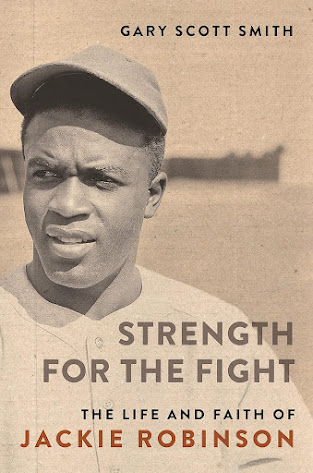
STRENGTH for the FIGHT: THE LIFE and FAITH of JACKIE ROBINSON (Library of Religious Biography) (audiobook) by Gary Scott Smith


Jackie Robinson. 

He is an icon of sports. And politics. And American history.

All fans of baseball know at least the broad strokes of the story of Jackie Robinson (1919-1972) and how he integrated baseball. This book offers a detailed re-telling of that story with a twist - a look at how Jackie Robinson's faith led him to this path and helped sustain him.

Robinson's early life, his time in service during World War II and his college sports career and his relationship with his wife are all covered. The biggest single part of the book is, appropriately, the story of how he and Branch Rickey (the head of the Brooklyn Dodgers) worked together to integrate Major League Baseball in 1947. The book also looks at how Rickey's faith led him to act to make the world a more just place by acting in such a symbolic manner.


Jackie Robinson stealing home.
I am not going to go through all of the details of Robinson's life - that's what the book is for. This book covers it all pretty thoroughly right up until his death in 1972. Sometimes, it was a little slow and repetitive about how Robinson demonstrated his faith. On the whole, though, it was a good listen.

The audiobook was read by Shamaan Casey. He had a perfect voice deep solemn voice for narrating this book. The only complaint I had was that he mispronounced several people's names, including singer/civil rights activist Harry Belafonte and baseball players Orel Hershiser and Derek Jeter. I don't look at this as necessarily the fault of the reader - if you don't know the name, you don't know the name. In my mind, the producer or director of the audiobook should have caught and corrected the mistakes. 

I rate this audiobook 4 stars out of 5. It can be found on Amazon.com here: STRENGTH for the FIGHT: THE LIFE and FAITH of JACKIE ROBINSON (Library of Religious Biography) (audiobook) by Gary Scott Smith.

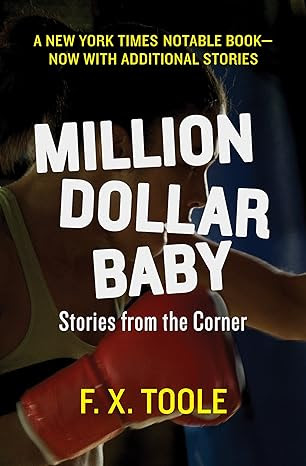
MILLION DOLLAR BABY: STORIES from the CORNER by F.X. Toole


F.X. Toole (1930-2002) worked as a trainer and as a corner man in support of boxers for decades.  Think of the character Mickey in the Rocky movies and you have an idea of what he did.

But, unlike the barely literate Mickey, Toole was a powerful writer of boxing short stories. All I know about boxing comes from having watched all of the Rocky and Creed movies, so I freely admit that I know almost nothing about boxing. But, that did not matter because Toole made these short stories compelling, even if they were full of boxing jargon and practices that I was unfamiliar with. 

There are six stories, most are very good. The story that the Clint Eastwood movie Million Dollar Baby was adapted from is extraordinarily powerful and haunting. The story that was original title story for this collection, Rope Burns, started out very strong, but the ending was so over the top that it ended up being the worst story of the collection. 

I rate this collection 4 stars out of 5. It can be found on Amazon.com here: 

MIRACLE on the 17th GREEN by James Patterson and Peter de Jonge


Originally published in 1996 by Little, Brown and Company.

The high school I teach at is in the midst of library book purge. I have no idea why Miracle on the 17th Green was ever in a high school library because it is aimed at adults. I don't mean that it has "adult themes" like a movie might label them (drugs, sex, violence, etc.), I mean that it has adult themes like questioning whether you have made the right choices in life, which comes first - family or career? Is it okay to put your family at risk just to achieve your personal goals, especially when they are a long shot?

I really enjoyed this book despite never having played even one hole of real golf (I have played plenty of putt-putt golf, but that doesn't really apply, does it?). It didn't really matter - the story was compelling and I faked my way through the golf stuff.

James Patterson has a long history of co-writing books. I always figure he's lending his name to up and coming authors in exchange for a little bit of co-writing, a lot of advising and a paycheck. This book was his first co-writing venture and Patterson and de Jonge have co-written 5 books in total.

I rate this book 5 stars out of 5. It can be found on Amazon.com here: 
MIRACLE on the 17th GREEN  by James Patterson and Peter de Jonge.

Note: there are 2 sequels that were added to this book to make a trilogy in 2105 and 2019. I am not going to read them because this book ended at a good place.

THE HOUSE of DANIEL: A NOVEL of WILD MAGIC, the GREAT DEPRESSION, and SEMIPRO BALL by Harry Turtledove


Published in 2016 by Tom Doherty Associates (A Tor Book)

Harry Turtledove specializes in alternate histories. Usually, he has a big twist - what if the South won the Civil War? What if Atlantis were a real continent? What if the Colonies lost the Revolutionary War? What if MacArthur actually dropped atomic bombs during the Korean War?

The House of Daniel is a different kind of story, with a twist.

To be perfectly honest, I read the description of this book, with its references to The Great Depression, baseball, "hotshot wizards" and zombies and missed the fact that it was actually referring to actual wizards and zombies, not metaphorical wizards (the whiz kid experts that FDR hired) and zombies (the unemployed masses who are desperate for work). I really thought that Turtledove had just written a straight book about semipro baseball in the Great Depression.

And, basically he has. 85% of this story is about baseball.

Jack Spivey does odd jobs, plays semipro baseball for a few bucks a game and a little muscle work for a local mobster-type named Big Stu in Enid, Oklahoma. He is contracted to go to a neighboring town to give a beating to the sibling of a client that is behind on his payments. When the sibling turns out to be a beautiful young woman, Jack can't do it. Instead, he takes a position with a traveling semipro baseball team called "The House of Daniel" and hits the road.

If you don't like baseball, this book will bore you to tears. Jack tells about his life on the road and about dozens of baseball games - sometimes in great detail, with play by play and even pitch by pitch descriptions. 

But, the world that they live in is a little off from our world. Major League Baseball exists, but none of the names are recognizable. Magic exists - regular magic, dark magic and even religious magic. So do vampires. And zombies. And magic carpets. And mystery creatures like chupacabras. 

I really enjoyed this book, despite my original confusion. 

I rate this book 5 stars out of 5. It can be found on Amazon.com here: THE HOUSE of DANIEL: A NOVEL of WILD MAGIC, the GREAT DEPRESSION, and SEMIPRO BALL by Harry Turtledove.


THE HERITAGE: BLACK ATHLETES, a DIVIDED AMERICA and the POLITICS of PATRIOTISM (audiobook) by Howard Bryant


Published by Beacon Press in May of 2018.
Read by Ron Butler.
Duration: 11 hours, 17 minutes.

Unabridged.

Howard Bryant's The Heritage: Black Athletes, a Divided America and the Politics of Patriotism takes a hard look at athletes, particularly African-American athletes, using their position to make commentary of social issues. Bryant brings a wealth of experience as a sports writer for ESPN.com, ESPN the Magazine and NPR. 

Tommie Smith and John Carlos in the 1968 Olympics 
Bryant does not come at this topic as a person critical of athletes taking political stances. Rather, he is very much in favor of it since athletes have a very large soapbox that they can climb upon and shout from, if they chose to do so. Some have. Bryant speaks in great detail about Jackie Robinson, Kareem Abdul-Jabbar, Tommie Smith, John Carlos and especially Muhammad Ali.

Bryant starts, oddly in my mind, with someone who was an athlete (played 15 games in the NFL in the 1920's for teams that no longer exist) but is almost entirely remembered for his singing and acting - Paul Robeson. Robeson was very outspoken (he spoke out so often that he was blacklisted by Hollywood and was investigated by the House Un-American Activities Committee), which fits the model of person that this book profiles, but he hardly fits the model of a professional athlete that the book is focusing on.

Nonetheless, this is an interesting and thought-provoking book. Bryant's thesis is that the norm has been for Black athletes to stand up for other African Americans, either symbolically like early boxers who literally fought against white men, or by speaking up. This is what Bryant calls "The Heritage".


Colin Kaepernick
For about 25 years, more or less, "The Heritage" went away - from roughly the 1970's through the early 2000's. Bryant insists that it starts with O.J. Simpson and follows right through Michael Jordan. The model is "go along and get rich". Keep the controversies quiet and make as much money as possible. I am sure it is more complicated than that. For example, the large legislative pieces were already passed by the time Simpson made it to the NFL so there were few "official" government policies to protest any longer - at least not like before when there were a smorgasbord of racist policies to protest. But, he makes his point well - where was Michael Jordan, the most famous African American of all (except for Michael Jackson) when the Rodney King beating, for example, took place? Or when a host of other similar racial incidents happened? Nowhere.

This brings us up to Colin Kaepernick. This is, without a doubt, the strongest part of the book. Bryant takes us back through the trauma of 9/11 and reminds the readers that lived through it how shocking it was for all of us and how so many police officers and firefighters died in that attack. He reminds us how sporting events became a way for everyone to share in the loss and honor those that died on that day through flag ceremonies and special songs (Yankee Stadium performs "God Bless America" during the 7th Inning Stretch, for example).

But, soon enough, those special healing moments became part of the routine - a routine paid for by the U.S. military. Those honor guards that present the flag? Paid for by the military 
with taxpayer money (they pay the teams to let them do it). Those special, tearjerker reunion moments where a soldier comes home and his or her child is surprised on the field? Paid for by the military with taxpayer money. Those "shout outs" on the Jumbotron from soldiers in the field that are rooting for the home team? Paid for by the military with taxpayer money. Special "honor the troops" days where dozens of soldiers have seats together at the game and the camera focuses on them a few times and they all wave and say, "Hi Mom!"? Paid for by the military with taxpayer money (it costs more for more camera shots).

These combined to give sporting events a hyper-patriotic, even nationalistic feel that was not there before.

Personal note: I have attended every Indy 500 since 1986. The hyper-patriotic feel has been there throughout that time because the Indy 500 has always been scheduled on Memorial Day Weekend. They have incorporated a playing of Taps, a flyover (they were one of the first to feature a flyover) at least two patriotic songs and had a group of soldiers there representing all of the branches of the military every year. But, when I went to the August 2017 NASCAR Bristol "night" race, it was just as patriotic, including going so far as to feature a recitation of the Pledge of Allegiance. Now, the NFL games are just as reverent as the Indy 500, so much so that the Indy 500 pre-race activities are not nearly as distinctive as they used to be.


So, when Colin Kaepernick decided to protest - in a much less divisive way than Ali (who talked non-stop and even went to jail when he refused to serve in Vietnam, but was publicly mourned when he died) he was excoriated.

Specific criticisms: Bryant strays from sports into popular entertainment from time to time - but not consistent enough to make it a comparison of how African American athletes, musicians and actors approached race-related controversies, with the exception of Paul Robeson (noted above) but enough to muddy the waters. He even brought up the movie Rocky as being racist because it features a white boxer as the protagonist and a black boxer as the bad guy. There are two problems with this: 1) Apollo Creed is not really a bad guy in any meaningful sense. He is overconfident and symbolizes the establishment, while Rocky symbolizes the "little guy". But, he is remarkable for even giving Rocky the chance to fight in the first place and 2) Rocky was inspired by real-life the story of Chuck Wepner, a journeyman boxer who fought for the title Ali in 1975. When you hear Apollo Creed talk about himself he is clearly imitating Ali's style. Stallone saw the fight and then wrote the screenplay (he even settled a lawsuit with Wepner over using his story).

But, despite those criticisms, this was a remarkable book. Not always a fun book, but remarkable nonetheless and certainly an excellent ending to a solid year of reading.

The book was read by Ron Butler. His voice had a sense of authority and his pacing was excellent. He did a great job, even if he could not pronounce the name of the former baseball Commissioner Bud Selig's name correctly.

I rate this audiobook 5 stars out of 5. It can be found on Amazon.com here: THE HERITAGE: BLACK ATHLETES, a DIVIDED AMERICA and the POLITICS of PATRIOTISM by Howard Bryant.

ONE SUMMER: AMERICA, 1927 (audiobook) by Bill Bryson


Published by Random House Audio in 2013.
Read by the author, Bill Bryson.
Duration: 17 hours, 3 minutes.

Unabridged.

Bill Bryson's One Summer: America, 1927 is an immensely interesting book, as would any book that featured Charles Lindbergh, Calvin Coolidge, Herbert Hoover, Babe Ruth, Lou Gehrig, Sacco and Vanzetti, Jack Dempsey, Gutzon Borglum, Charles Ponzi, Al Capone, Al Jolson, Zane Grey, Edgar Rice Burroughs, Henry Ford, several Hollywood stars and more.

Boxing champ Jack Dempsey (1895-1983)
The book starts out with the story of Charles Lindbergh and the other flyers that were attempting to cross the Atlantic in a non-stop flight to claim the $25,000 Orteig Prize.

Bryson moves on to tell the stories of the other people I named above - often cleverly lacing them together with the story of Charles Lindbergh. We learn about baseball, boxing, Hollywood (there's a hilarious story about Jack Dempsey with a starlet), the beginnings of "talkies" and the movie palaces, the rise of radio networks, the first experiments with television, the beginnings of America's fascination with the automobile, Prohibition and Al Capone's brief career. There were a lot of bombings in the 1920's and Sacco and Vanzetti may have participated in some of them.

About those bombings - I have a theory that certain horrific crimes become "trendy" - they become the thing to do when you want to make some sort of "statement." School shootings are that statement nowadays. In the late 1980's and early 1990's there were a rash of workplace shootings by postal workers, thus the term "going postal." In the 1920's it was bombings. Some were politically motivated, some were motivated by family stresses, such as the worst school piece of school violence ever - the Bath Township elementary school bombing in 1927.

As he tells the story of the summer of 1927, the reader realizes that America was being introduced to a lot of new things in the 1920's that are a normal part of everyday life in modern America such as consumer culture (paying by way of installment plans was a new concept), big time sports, radio networks (paving the way for TV and other media networks), presidential trips and even gang violence over banned drugs (in this case it was alcohol, but the same lessons apply with other drugs nowadays).

Bryson is not fond of any of the Presidents in the 1920's and he justifies that disdain pretty well. Herbert Hoover comes off as a first-rate pompous self-promoter, even if he was very effective at feeding millions of people after World War I. Calvin Coolidge was treated a little too roughly, in my opinion. The more I hear about Warren G. Harding, the more I am amazed at his staggering incompetence and crudity.

The audiobook was read by the author. I warmed up to his reading style after an hour or so, mostly because I kept trying to place his accent. Bryson grew up in Iowa but has lived most of his adult life in the U.K. This has left him with an ambiguous accent not unlike that of Cary Grant or Katharine Hepburn.

This was one of my favorite books of the summer and I heartily recommend it.

This book can be found on Amazon.com here: One Summer: America, 1927


ALL the DREAMS WE'VE DREAMED: A STORY of HOOPS and HANDGUNS on CHICAGO'S WEST SIDE (audiobook) by Rus Bradburd


Published in 2018 by Blackstone Audio.
Read by Donald Corren.
Duration: 8 hours, 38 minutes.
Unabridged.


Rus Bradburd's All the Dreams We've Dreamed is both a complicated story and a simple story of two Chicago men whose lives have revolved around the game of basketball. It's a story of a coach and a player. It's a story of connections between people and also a story of bureaucratic neglect. It's a story of remorse and shame and a story of pride of place and love for one's teammates and players. It's a story of love and a story of catastrophic violence. Mostly, because it is set in the free fire gun zone of Chicago's West Side, it is a tragedy.

The book centers on Marshall High School and its basketball program. Perhaps you have heard about the wave of gun violence that has swept through Chicago's South and West sides, earning it the nickname "Chi-raq" because it is reminiscent of Iraq during the bad old days of The Surge at the end of the Bush Administration. Marshall lies in that violent zone.

Marshall is an old school, well over 100 years old. It prides itself on being a family and its basketball programs, even with declining enrollments. Shawn Harrington exemplifies that sense of family. He is a graduate of the school, he went away for school and came back with his degree to be an aide in the special education department and to help with the boys basketball team. By all accounts, he was great at both things. He connected with his students and his players and went above and beyond for them because he believed in the power of the "Marshall Family".

Until one fateful day when Shawn Harrington was shot in a case of mistaken identity - another casualty in the ongoing tragedy. He leaned across the body of his daughter to protect her and in the process was shot in the back and left paralyzed.

This is where the author, Rus Bradburd comes in. Years before, Bradburd was an assistant basketball coach at New Mexico State University but he used to scout high school teams in Chicago. He recruited Harrington to play at New Mexico State and Harrington was successful - until he had a knee injury. Bradburd agreed to cut Harrington from the program - something he is not proud of. But, Harrington went to a smaller school, played ball and, most importantly, graduated.

Nevertheless, Bradburd felt bad about the way Harrington left New Mexico State and saw this as an opportunity to do the right thing and make amends. He began to call, to write, to cajole and talk to anyone about Shawn and his amazing spirit and his desire to continue his work with the kids at Marshall. Ironically, he couldn't continue as a special education aide because Marshall was not retrofitted with an elevator or ramps to get to the upper floors - a basic requirement of the Americans with Disability Act. No one at Chicago Public Schools sees this oversight as a problem so Harrington is left to fend for himself and maybe figure out what else he can do.

Harrington gets stuck in the bureaucratic maze of the Chicago Public Schools and the healthcare system (how do you get physical therapy that you need to go back to work when you have no money to pay for it because you don't have a job because you need to get to the physical therapy so you can go back to work?) and Bradburd does what he can to help. He bothers so many writers to write about Harrington that eventually one of them tells him to write the story himself - the genesis of this book.

But, the book becomes more than just Harrington's story. Harrington is not an isolated case in a city that had more than 4,000 shooting victims in 2016. That violence strikes Marshall again and again. Bradburd tells the stories of other players who were struck down. Over and over the mantra is for young people to get out of Chicago so they can have a chance. Harrington left - but he came back to help his Marshall Family and he paid the price.

Ultimately, the book is a tragedy. You know that the bureaucracy will eventually close Marshall. You know that the violence will continue. But, there is comfort knowing that good men like Shawn Harrington are out there, providing a powerful example and refusing to give up. And, if they can bring in enough friends like Rus Bradburd, maybe...

I was struck by this audiobook because I teach in an urban high school in Indianapolis. While our situation is not nearly as bad as Chicago's, we have our moments. For example, a year ago a former student of mine was paralyzed by a bullet shot at another student from my school. It is very common for my students to wear R.I.P. t-shirts with a picture of a young person who was killed. I think Bradburd did a solid job of describing how these neighborhoods have been weakened and how the charter school movement and foolish decisions by the Chicago Public Schools helped. It's not a pretty picture.

The audiobook was read by Donald Corren. He did a great job and I plowed through this audiobook in just four days. It was an excellent book and I rate it 5 stars out of 5. It can be found on Amazon.com here: ALL the DREAMS WE'VE DREAMED: A STORY of HOOPS and HANDGUNS on CHICAGO'S WEST SIDE by Rus Bradburd.

Please check out this book as well: 
AN AMERICAN SUMMER: LOVE and DEATH in CHICAGO by Alex Kotlowitz.

DAVID and GOLIATH: UNDERDOGS, MISFITS, and the ART of BATTLING GIANTS (audiobook) by Malcolm Gladwell


Published by Hachette Audio in October of 2013.
Read by the author, Malcolm Gladwell.

Duration: 7 hours
Unabridged

Malcolm Gladwell has made his reputation by writing insightful articles in which you thoroughly learn about one thing but also how it applies to a larger concept.  Usually, there's a little light science involved and, if nothing else, the reader (or in my case, the listener) feels like he or she learned a little bit and heard an interesting story.

In this case, the premise is that in the David vs. Goliath stories, the underdog is not always as much of an underdog as it seems. He starts with the original David vs. Goliath story - the one in the Old Testament of the Bible and explains that Goliath clearly had size and strength going for him but those weren't all-pervading advantages. Goliath was strong and large but his strength made him reliant on the sword and close-in fighting. If an enemy got close to him and if Goliath got hold of him, Goliath would win. But, David was quick, small and used a sling. One commentator he quotes compares a skilled sling-user to a person using a pistol. David stands back, takes his shot, knocks down Goliath and then Goliath's strengths are all weaknesses. His size and armor makes it hard for him to get up. David rushes in and finishes Goliath.

Malcolm Gladwell in 2014.
Photo by Kris Krug.
In David and Goliath: Underdogs, Misfits and the Art of Battling Giants, Gladwell takes the lessons of the original story ("There is an important lesson in that for battles with all kinds of giants. The powerful and the strong are not always what they seem.") and applies them to other situations. Some of them are natural fits (the entertaining and inspiring story of the girl's basketball team with not a lot of talent but a whole lot of grit and the willingness to play full court defense), some not so much (education, learning disabilities, family tragedies).

But, even if the theme is imperfect throughout the book, the book itself is interesting throughout. His commentary on education and class size was interesting to this public school teacher. The conventional wisdom is that smaller is better, and it is to the point of diminishing returns. But, there is a competing conventional wisdom that says "class size does not matter." In my school system one of our assistant superintendents was fond of quoting that "fact" as she advocated for ever larger class sizes as a way to save money. It turns out they are both right. Too small (maybe 10 or 12) and the class dynamic gets weird, something I already knew from experience. Too large and the class gets unwieldy and the class dynamic changes from interactivity to college large class lecture format (near 40). I have had classes that large as well. They are tiring and the grading gets overwhelming. Plus, no one gets any sort of attention except for the troublemakers.


There's a lot of ground covered in just 7 hours and I found the whole book very entertaining. He talks about everything from the London Blitz to serial killers to the Civil Rights struggles in Birmingham in the 1960s to Leukemia. It's all interesting and I felt as though I were listening to a knowledgeable friend ramble on about vaguely related but highly interesting topics. Gladwell does a great job at narration.

The commentary about the perceived legitimacy of police forces in comparison with the British in Northern Ireland and the NYPD in a troubled neighborhood makes that section a must-read when thinking about the Black Lives Matter movement in the United States right now. 


Highly recommended.

I rate this audiobook 5 stars out of 5. It can be found here on Amazon.com here: 
David and Goliath: Underdogs, Misfits and the Art of Battling Giants,

THE EASTERN STARS: HOW BASEBALL CHANGED the DOMINICAN TOWN of SAN PEDRO de MACORIS by Mark Kurlansky


Published in 2010 by Riverhead Books

The Eastern Stars is more a history of the Dominican Republic than a baseball book, but as author Mark Kurlansky clearly demonstrates, for the last 40 years or so the history of the Dominican Republic has clearly been molded and in some ways defined by its love of baseball. It is also a clear sign of the unhealthy state of economic affairs in a country when so many young people see no hope in moving up in the world except for playing professional baseball in America.

Kurlansky takes his readers through a meandering history of the Dominican Republic, moving backwards and forwards through time detailing a number of interesting stories about this Caribbean country but always coming back to the present to touch base and remind the readers that this is a baseball book, too. 

The Dominican Republic has had a long love affair with baseball thanks to American economic and military excursions into the country. It also has been so poorly managed by it various governments that for decades many young men have sacrificed everything in order to make it on to an American Major League Baseball team roster. Who can blame them - in 2006 ten percent of all major leaguers were from the Dominican Republic (p. 75). So many young men hope to win a contract, play for a few years and then return to the Dominican Republic and live like kings in their gated communities back in their hometowns.

Scouts prowl dusty sandlots looking for some spark of talent, even of the players are using balls made out socks and gloves made out of cardboard, the talent shines through. Or, at least they hope that it does.  Top prospects are enrolled in one of many "schools" that teach a lot of baseball and English and some math and science. In return, these schools get a cut of their contracts for helping to develop their talent. Even the Japanese teams have started sending scouts to the Dominican Republic.

As the title states, the real focus is the small fishing town of San Pedro de Macoris. It is unremarkable in every way except that it keeps producing major league baseball players. 

Why?

Kurlansky never comes out and says it, but after reading so many pages about the Dominican Republic and its sad history the reader just knows that it is because there really isn't anything else. It's either fishing in ever-more-depleted waters for less and less fish for more and more work or its baseball. Meanwhile, you can watch the SUVs of retired major leaguers pick their way around the potholes of roads that haven't been repaired in years and probably won't be anytime soon and know that the only rational choice is to put all of your effort into baseball and only baseball. Everything else is a sucker bet.

Note: many other reviewers have been critical of Kurlansky's detailing of some of the facts about the careers of some of the Dominican players the he describes, getting batting averages wrong and some of the dates wrong. No sport generates factoids like baseball and it is disappointing that Kurlansky has so many errors. But, read the book for what it was intended to be - a history of the Dominican Republic detailing how it became a sort of incubator for major league baseball players.

This book can be found on Amazon here: The Eastern Stars: How Baseball Changed the Dominican Town of San Pedro de Macoris.

I rate this book 4 stars out of 5.

You Know Me Al: A Busher's Letters (audiobook) by Ring Lardner


Keefe's "voice" captured perfectly on this version of the audiobook
 
Read by Barry Kraft
Duration: 3 hours.
Publisher: Book of the Road (August 1990)

You Know Me Al: A Busher's Letters consists of a series of rather detailed letters written by a bush-league ballplayer named Jack Keefe. Keefe has been called up from the Terre Haute team to join the Chicago White Sox. He is writing to one of his former bush-league teammates in Bedford, Indiana.

Ring Lardner (1885-1933)
Keefe is truly a country bumpkin, a rube, a bumbling fool who does not understand the more sophisticated world of the major leagues, but who still succeeds based on the strength of his pitching arm. The reader gets a kick out of seeing the world through his eyes but really understanding the situations he is in, similar to Forrest Gump, except that Jack does not have a disability - he is just ignorant.


The audio version I heard (Book of the Road's version) is wonderfully performed by veteran Shakespearean actor Barry Kraft. Kraft captures his self-confidence, Hoosier country-boy accent and innocence perfectly. To me, he will forever be the voice of Jack Keefe.

I rate this audiobook 4 stars out of 5. It can be found on Amazon.com here: You Know Me Al: A Busher's Letters.

Reviewed on September 5, 2006.

Blockade Billy (audiobook) by Stephen King


Two short stories about the dark side of human nature

Published in 2010 by Simon and Schuster Audio. 
Read by Craig Wasson and Mare Winningham

Duration: 2 hours, 40 minutes
Unabridged

This audiobook is actually two short stories. The first and longest story is called "Blockade Billy" read by Craig Wasson, the second is "Morality" read by Mare Winningham.

****

"Blockade Billy" is the reminiscences of a retired coach of the fictional New Jersey Titans, an American League baseball team. The coach is being interviewed by a man named "Mr. King." We never hear what Mr. King asks, only the story of a former player named "Blockade Billy" as told by this old coach who lives in a retirement home.

Stephen King is at his descriptive best in this story as he re-creates the world of 1957, when baseball ruled the sports pages. At times, it is like listening to Bob Costas or George Will, both writers who can wax on eloquently about this golden age of baseball (George Will actually gets a not very kind mention by the coach) which is much to King's credit. Due to his reputation as a producer of gore and horror stories, it is easy to forget that King can be a powerful, first rate author.
Stephen King


Blockade Billy is actually Billy Blakely, a catcher that was called up from the Iowa Cornhuskers, the Double A farm team of the New Jersey Titans on an emergency basis. No one expects much from Billy except that he not mess up too bad. Talking with him for even a couple of minutes and you realize that something is not right - no one can figure out of he is simple minded or maybe even crazy. However, when Billy takes the field everyone knows that kid can do it all - he hits, he fields and he even calms the high strung star pitcher - and he does it with confidence. He quickly earns the nickname "Blockade Billy" - the catcher who won't let any player get by him when there is a play at the plate.

But, the head coach starts to believe that Billy is sucking the luck out of the team and when they discover Billy's true story the coach is more correct than he thought...

****
"Morality" has a less detailed plot but it is a detailed study in guilt and what it does to people.

Chad and Nora Callahan are a married couple living in New York City. He is a teacher but can find nothing by substitute teaching work. He is also working on a book about his experiences being a substitute that seems to have some promise. His wife is a nurse who is working with a retired minister named George Winston who has had a stroke. It is steady work but their combined salaries are not quite enough and they are slowly going bankrupt. They are pinning their hopes on Chad's book, if he can find the time to get it done before their finances fail them.

One day Reverend Winston makes a proposition to Nora. He has never committed a major sin and now he is physically unable to do so. He is not interested in a sexual act, but he wonders if she would commit some sort of violent act (nothing permanent - it is a physical assault on a child in a park) on his behalf for $200,000? He figures that this act of "sin by proxy" will actually be doubly sinful since he has corrupted her as well. He preys on her fears of financial loss and on the promise of her husband's book, if he just had the time that the money will provide to finish it.

She decides to do it and discovers that this one act has major, life-changing implications.

I rate the combined set of stories 4 stars out of 5. It can be found on Amazon.com here: Blockade Billy by Stephen King.

Reviewed on July 23, 2011.

Note: This book was banned by a school district in Florida during the 2023-2024 school year. Here is a link to the extensive list of banned books. 

Forced Out: A Novel by Stephen W. Frey


This book had such potential and then...


Published in 2008.

I really liked the premise behind Forced Out: a young baseball player hides from the New York mob by playing single A ball in Florida but he is discovered by a former Yankees talent scout. Soon enough, the mob is on the hunt again.

But... (WARNING: Spoilers, sort of...)

The book gets increasingly complicated (which is fine, life is complicated) and the only way Frey resolves anything with any character in this book is by having someone killed off. I expected lots of people to die (it is about the mafia, after all) but this story gets ridiculous. The book ends up feeling like Frey was either: a) under a tight deadline; or b) unable to figure out how to end this complicated book in a reasonable way so he just started killing everyone off.

Either way, it was a very unsatisfying ending. In good conscience, I cannot recommend this book to all but the most ardent of Stephen Frey fans.


I rate this book 2 stars out of 5 and it can be found on Amazon.com here: Forced Out by Stephen W. Frey. 

Reviewed on September 5, 2008.

Bleachers (audiobook) by John Grisham


Change of pace for Grisham

Published by Random House Audio in 2003.
Read by the author, John Grisham
4 hours, 22 minutes
Unabridged.

I, for one, am not especially enamored of Grisham's legal thrillers but I do enjoy Grisham's foray into non-legal fiction.

Bleachers was read by the author. Grisham's southern accent and good ol' boy style are sometimes helpful but his occasional odd emphasis and flat read can be distracting.

The book features a Bobby Knight/Woody Hayes type of small-town high school football coach. He is cruel, petty and completely breaks his players as he builds them into his mold and makes them successful teams year after year after year. His teams have won 13 Texas state championships.

The coach is dying of cancer now and his players are returning home to honor him and await his funeral. They meet several times on the bleachers of the field they played on and discuss their memories of school, football and of course the coach. Thus, the title.

We see the reunion of players through the eyes of Neeley, a former All-American quarterback who suffered a career-ending injury in college and never reached his full potential as a player. Although Neeley is our window to this world, he is not the true focus of the book - it is the coach and the love/hate relationship his players and the town have with him.

An interesting book. This Indiana University graduate couldn't help but wonder if the alumni of Bobby Knight's basketball program have had similar discussions about him.

I rate this audiobook 4 stars out of 5.

This book can be found on Amazon.com here: Bleachers by John Grisham.

Reviewed on October 7, 2008.

Chameleon: The March Madness Murders by Matthew J. O'Brien


Strong start for a first novel


Published in 1997.

This surprisingly strong first novel concerns a group of 5 high school friends who are being killed off nearly 20 years after graduation. Four members of this group are extremely successful (Congressman, Olympic medal winner, Big-time college basketball coach, billionaire entrepreneur) and the FBI believes the unsuccessful one is killing his former buddies in a fit of jealous, psychotic cold-blooded, calculating rage.

The story mostly concerns the last two surviving friends (coach and billionaire) and the extraordinary steps the FBI takes to protect them while the coach's team is progressing through the NCAA Men's Basketball Tournament field. If you like basketball, then the well-described basketball action is a nice addition to the mystery.

Most of the action is set in and around the fictional University of Northern Indiana, which is located in West Lafayette, Indiana. For those familiar with Indiana, you know that that is the home for Purdue University. I have no idea why he didn't make the coach character Purdue's coach, especially when he refers to former Purdue standout Glenn Robinson in one of the scenes.

The story works pretty well, although at times the conversations get a bit repetitive and the romance blossoms from nothing into a tight bond way too quickly. But, as a mystery goes, it was above average. I was fooled until I was supposed to know the truth, although I think the author tells us too soon - he could've kept the truth hidden a bit longer and made the story that much better.
 
I rate this book 4 stars out of 5 and it can be found on Amazon.com here: Chameleon: The March Madness Murders by Matthew J. O'Brien.
 
Reviewed on February 10, 2005.

From Peanuts to the Pressbox: Insider Sports Stories from a Life Behind the Mic by Eli Gold


An enjoyable read from one of the true nice guys in American sports broadcasting

Published in 2009 by Thomas Nelson Inc.

I've listened to Eli Gold for years as one of the radio (and from time to time TV) voices of NASCAR. He's always come across as a nice guy and a straight shooter who is not out to grind any axes.

From Peanuts to the Pressbox: Insider Sports Stories from a Life Behind the Mic is Eli Gold's story of how he went from being a peanut vendor at Madison Square Garden to being a nationally known sports announcer. Eli tells it in an entertaining, light-hearted style and keeps it classy by not airing anyone's dirty laundry.

He does include lots of funny and interesting stories, including his tale of the day that he went to the airport with David Pearson, Bobby Allison's distinctive ritual when he flew his plane home after a win and the strangest thing Richard Petty ever signed (a duck!). The revelation that Supreme Court Justice Clarence Thomas is a big NASCAR fan who attends in his own RV was a bit surprising.

A good gift for the NASCAR (or Alabama or hockey) fan that has everything.

4 stars out of 5.

This book can be found on Amazon.com here: From Peanuts to the Pressbox: Insider Sports Stories from a Life Behind the Mic by Eli Gold.


Reviewed on December 15, 2009.

The Yogi Book by Yogi Berra


What's not to like?

Published in 1999 by Workman Publishing Company.

The Yogi Book is a short book but worth your time to read. Yogi explains the origin of his famous timeless expressions and includes lots of fun pictures to boot. It won't take you long to read but you'll read it more than once.

I rate this book 5 stars out of 5 stars. It can be found on Amazon.com here: The Yogi Book

Reviewed July 10, 2010

Featured Post

<b><i>BAN THIS BOOK (audiobook)</i></b> by Alan Gratz

Published in 2017 by Blackstone Audio, Inc. Read by Bahni Turpin. Duration: 5 hours, 17 minutes. Unabridged. My Synopsis Ban This Book is t...

Popular posts over the last 7 days