Showing posts with label Robert A. Heinlein. Show all posts

STARMAN JONES (audiobook) by Robert A. Heinlein


Originally published in 1953.

Digital Audiobook version published in 2008 by Blackstone Audio, Inc.
Read by Paul Michael Garcia.
Duration: 8 hours, 29 minutes.
Unabridged.

Legendary science fiction author Robert A. Heinlein (1907-1988) wrote a set of novels for the Scribner's publishing house early in his career as a novelist starting in 1947. Scribner's published 12 of them. One of his most famous works, Starship Troopers, was rejected as a volume in this series, but it was fully intended to be a part of it.  A 14th and final book featuring a female lead character was also rejected.  They all share a theme of space exploration moving roughly from humanity's first steps away from Earth to contact with massive alien empires in far and distant places.
Robert A. Heinlein (1907-1988)

Starman Jones falls right in the middle. It is the seventh novel in the series and humanity can travel to far and distant places and has met alien species, but it is exceedingly tricky. 

Max Jones is a teenager in the Ozarks on a future Earth. Times are tough and people with pull, connections or money are moving off-planet. Max has no pull, maybe has a connection and certainly has no money. When his widowed step-mother marries the neighborhood bully and lets him sell the family farm without warning Max runs away from home to find his own way.

As you can tell by the title, Max eventually makes it to space. The problem is that Heinlein spends a lot of time explaining the bureaucracy of the various space guilds (every profession has its own guild and its own obscure rules) and then goes on to explain in excruciating detail the formal and informal rules of a ship - how the galley works, how discipline is maintained, how to run an illegal still on board, how the crew relates to the passengers, how the crew relates to the officers, how the officers relate to the passengers, how the bridge officers relate to the other officers, how the bridge officers relate to each other and how the captain can help or hinder the ship's morale. It reminded me quite a bit of the extended descriptions of military life in Starship Troopers

If all of the "explaining" were edited out, or at least cut back, this book would probably come in 3 hours shorter and be all the better. 

I rate this audiobook 3 stars out of 5. It can be found on Amazon.com here: Starman Jones by Robert A. Heinlein

STARSHIP TROOPERS (audiobook) by Robert A. Heinlein


Originally published in 1959.
Audiobook published in 1998 by Blackstone Audio.
Read by Lloyd James.
Duration: 9 hours, 52 minutes.
Unabridged.

Winner of the Hugo Award for best sci-fi novel of 1960.


Way back when - when I was in high school and Ronald Reagan was President, I used to read a lot of Robert A. Heinlein. Now, as an adult, I find myself all over the place with my ratings of Heinlein, mostly average. With this book, I will have two 5 star ratings, two 3 star ratings and two 2 star ratings. That makes a very mediocre rating of 3.333 out of 5. That would be a C+ on a grading scale and I agree with that assessment.

This book marks the transition in Heinlein's professional career from writing science fiction for kids and young adults to writing for adults. This book was originally supposed to be for kids but the original publisher rejected it so Heinlein shopped it around, found a new publisher and never wrote for kids again.

The book Starship Troopers is a rare book in my opinion. It is a book where the movie is absolutely better than the book, even though the movie is clearly only loosely inspired by the movie. Some sources say the movie was written and the title of the book was attached to it after the fact, and even if that is true, the movie is still better than this book.
Robert A. Heinlein

What's wrong with the book?

-The ratio of literal fascist political lecture by classroom teachers to actual battle action in a book called Starship Troopers is about 2:1. It could just as easily have been called Starship Fascist Lectures.  The lectures go on and on about how democracy was a doomed system and the only way to lead a people was by a system led by people who had served in the military. Throw in a half hour discussion of the proper way to raise children with the threat of a good old fashioned public flogging and you've got the makings of a real disappointment. 

-More than one-third of the book is about basic training. How far they ran, what they ate, where they slept and more for several hours. Sadly, two of the better characters in the book are Johnny Rico's drills sergeant and his captain.

-There was nearly as much in the book about the how the officer's dining room worked on ship as there was actual military action. Just so you know, the army sits on one end of the table, the navy on the other and they sit by descending order with the most junior officers meeting in the middle. Don't give a crap? Neither did I, but Heinlein goes on and on about it like it's extremely important. Maybe it should have been called Starship Dinners.

The audibook was read by Lloyd James. He was fine, but the audio production was sometimes clumsily edited. There were times when you could hear the recording equipment being turned on and off and there were clunky edits where the Lloyd James had gone back and re-read part but it was much quieter and not as crisp sounding as the rest of the book.

I rate this audiobook 2 stars out of 5. The final (and very short) fight scene saves it from being a complete 1 star fiasco. This book can be found on Amazon.com here: Starship Troopers by Robert A. Heinlein.

The Cat Who Walks Through Walls (audiobook) (abridged) by Robert A. Heinlein


Easy to love and easy to hate


Published by Simon and Schuster Audioworks in 1987.
Performed by Robert Vaughn
Duration: 3 hours
Abridged

Note: The 2007 re-release of The Cat Who Walks Through Walls clocks in at just over 13.5 hours, so this  3-hour-long 1987 abridgment is undoubtedly heavily abridged, even considering that acclaimed actor Robert Vaughn is a relatively quick reader.

Books like The Cat Who Walks Through Walls are hard to describe and easy to love and hate. This is a soaring piece of fiction that takes the listener into a fully-developed world that has enough internal coherence and relationship to our current world that the reader can feel comfortable (there are Volvo vehicles, they stop at a Sears store, etc.) On the other hand, the action is frenetic to the point of chaos (this may be due to the abridgment, but upon reading an online summary, it may not) and the interaction of the characters is often witty but unrealistic to the point of being laughable. For example, when the main character finds out that his new wife (he has only known her for 3 days or so) wants him to marry her granddaughter as well in a group marriage he doesn't question the arrangement for more than about 3 seconds.

The premise of the story is that Colonel Colin Campbell and his new wife named Gwen Novak are on the run, framed for a murder they did not commit. The story is told from Campbell's point of view and he soon discovers that his new wife can travel through time, is much older than she says she is and is a member of a quasi-military unit called the Time Corps. She has been sent to recruit Campbell to help with a mission and has fallen in love with him.

Robert A. Heinlein (1907-1988)
Heinlein throws a great number of ideas around in this book, which is actually loosely tied into a number of his books. Heinlein continues his long string of books featuring women that are hyper-sexual, independent and yet often subservient to strong men. He explores time travel paradoxes and his idea of "World as Myth." World as Myth asserts that the multiverse is all fictional and that exceptionally good storytellers make their own universes and the rules of those universes. Members of the Time Corps have visited L. Frank Baum's Oz and Alice's Wonderland universes and John Carter of Mars makes a silent appearance in a dramatic scene towards the end.

Throw in talking space ships, smart-talking air traffic controllers and truly fun banter you have the making of a good book. Unfortunately, Heinlein's silly sexual politics, tendency to have long lecture scenes and his decision to keep the reader in the dark as long as possible hurt the book.

Robert Vaughn
A gigantic bright spot in this audiobook is Robert Vaughn. I have never heard Robert Vaughn read an audiobook before and I was uncertain as to what to expect. Vaughn has a very distinct speaking voice (he played Lee, the black-gloved gunman in The Magnificent Seven and Napoleon Solo in The Man from U.N.C.L.E.) and I was not sure how that would work. I am totally convinced that all of Heinlein's later books should have been read by Robert Vaughn (maybe they still could be, I am not sure how much Vaughn works nowadays). Vaughn's unique voice is able to pull off the pretentious and confident nature of Heinlein's prose and he is able to create any number of distinctive voices, both male and female. Truly a performance, not just a reading.

I rate this book 3 stars out of 5. It can be found on Amazon.com here: The Cat Who Walks Through Walls by Robert A. Heinlein.

Reviewed on July 28. 2012.

Friday (audiobook) by Robert A. Heinlein


Published by Dh Audio in 1982.
Read by Samantha Eggar
Duration: approximately 3 hours.
Abridged

Many years ago, in the early 80s, I was a devoted reader of all things Heinlein. Somewhere along the way I guess I lost interest (I don't remember), but I found this audiobook version of Friday and thought I'd re-live the old days a bit.

From the product description on the back of the box I did not remember having read the book, but soon enough, I vaguely remembered the plot a bit. So, how was it re-visiting Heinlein? It was okay. The story line was not nearly as interesting as the backdrop (a fragmented United States - how I'd love to see a short history of this vision of earth plus a short description of the technology - Heinlein accurately describes the internet - not bad for 1982).

Friday is a genetically modified human being created from bits and pieces from all around the world. She lives in a remarkably open society that openly discriminates against such Artificial People (APs). Heinlein builds the book on the themes of wanting to belong and being rejected for things that you cannot control.
Robert A. Heinlein 
(1907-1988)

Heinlein's free love world (nearly sex-crazed) is, in my mind, a bit of wishful thinking on the part of Heinlein. However, I'll give him his due - the multiple-partner marriages are a controversial idea to toss out there - and part of the job of a good sci-fi writer is to toss out new ideas and cause some discussion.

Overall, I was not over-impressed with my audiobook version of Friday. Part of it has to do with the fact that it is heavily abridged (the unabridged version of the book lasts 13 hours, this one is a mere 3 hours). The story suffered from the abridgment. Secondly, the choice of reader was disconcerting. She was very British and she never shook that accent, no matter where the action was taking place. Sometimes that worked out well, but usually it was jarring to hear residents of New Zealand, Winnipeg, Southern California and Vicksburg, Mississippi speaking with any number of British accents (sometimes Cockney, even!).

I give this audiobook version of Friday 3 stars out of 5.

This book can be found on Amazon.com here: Friday by Robert A. Heinlein.


Reviewed on January 9, 2007.

NOTE: In the 2023-2024 school year this book was challenged in a school district in Indiana. I do not know the district, but this is a list compiled and published by the Indianapolis Star.

The Unpleasant Profession of Jonathan Hoag by Robert A. Heinlein


Creepy Change of Pace for Heinlein


Originally published in 1942 in "Unknown Worlds" magazine.
Published by Blackstone Audio in 2009.
Read by Tom Weiner
Duration: 3 hours, 54 minutes.
Unabridged

Multiple Hugo Award winning author Robert A. Heinlein (1907-1988) changes his tone with the novella The Unpleasant Profession of Jonathan Hoag.

This audiobook seems much more like a Philip K. Dick story than a Heinlein story since it features none of the themes that Heinlein is well known for, like space travel, alien contact or time travel. Instead, we get an extra helping of creepy with a surprise ending that truly demonstrates Heinlein’s ability to master a variety of styles.

First published under a pseudonym in the now-defunct magazine Unknown Worlds in 1942, The Unpleasant Profession of Jonathan Hoag features Ted and Cynthia Randall, a husband and wife private detective team based in Chicago. They are approached by a fastidious little man with a topcoat and silk gloves named Jonathan Hoag. He has an odd proposition – he offers them a preposterously large retainer to help him figure out what he does for a living. Mr. Hoag knows that he has a well-paying job that pays him cash, but he does not have the faintest idea what that job is. The crisis began while he was at a dinner party and another guest commented on the reddish stains under his fingernails and asked what he did for a living to leave such a residue behind. He was very bothered to find that he did not know.

Ted and Cynthia agree to help him and find that this may not be as easy as they thought.  They find that everything about Mr. Hoag seems to be a mystery and the more they interact with him, the more they doubt their own eyes and ears. Soon enough they discover that “the whole world might be just a fraud and an illusion.”

Robert A. Heinlein (1907-1988)
The story suffers a bit from age, which is to be expected. After all, this story is nearly 70 years old. Some of the expressions that are used may have been very hip and stylish in 1942 but they sound a bit clunky to the ear nowadays. Also, some aspects of the story such as elevator operators and doctors making house calls may be totally foreign concepts to some listeners. That being said, the underlying story overcomes all of that window dressing. Rumor has it that a movie version of this story is in the works as well.

Award-winning narrator Tom Weiner skillfully handles a variety of different voices throughout. He voices Mr. Hoag perfectly, catching his prissy, fussy nature throughout, but adding a different tone once we discover his true profession. His characterization of the story’s bad guys (I am intentionally not describing them so as not to ruin their scenes) has the perfect amount of menace and mystery.

I rate this book 5 stars out of 5.

This audiobook can be found on Amazon.com here: The Unpleasant Profession of Jonathan Hoag.


Note: I received a free copy of this audiobook from the publisher in exchange for an honest review.

Reviewed on September 3, 2011.


Farnham's Freehold (audiobook) by Robert A. Heinlein


Often frustrating. Sometimes shocking. Never boring.


Read by Tom Weiner
Duration: 10 hours, 24 minutes.
Blackstone Audio
Unabridged.

Robert A. Heinlein was recognized many times over as a master of the science fiction tale – he is a multiple winner of the Hugo award and the first recipient of the Grand Master Award for lifetime achievement. Heinlein is one of those golden age writers that moved science fiction from being stories strictly for kids to a separate and recognized literary genre for adults, too.

Farnham’s Freehold is, at best, a difficult book. Perhaps books like this were a requirement when moving science fiction from a kid’s genre to an adult genre. It seems that Heinlein the iconoclast was out to irritate as many sensibilities as possible in an attempt to question some of society’s long held ideas about race, sex and the male-female relationships, even if it caused the story to suffer at the expense of all of that questioning.

The story first appeared as a magazine serial in 1964 and has some superficial similarities to Pierre Boulle’s 1963 novel Planet of the Apes. The story features Hugh Farnham, a building contractor, and his family. They live in a suburban Colorado neighborhood during an undefined time, most likely the mid to late 1960s at the height of the Cold War. The Soviet Union and the United States have maintained a Cuban Missile Crisis state of readiness and it is clearly getting worse.

Hugh Farnham is prepared for nuclear war, however. As already noted, he is a contractor and he has designed, built and stocked a fallout shelter. Nuclear war begins while the entire Farnham clan (and a visitor) are home so Hugh quickly moves his wife, college-aged daughter, her sorority sister, his lawyer son and their house servant Joseph into the shelter. The Farnham family is white while Joseph is African American. They all survive the attack and emerge in a world that is not destroyed, but actually a lush forest with wildlife and no radiation and no sign of the nuclear war that occurred.
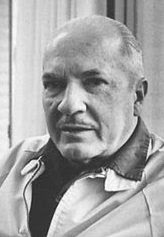
Robert A. Heinlein 
(1907-1988)

The Farnham family just may be the most dysfunctional family in all of science fiction. Mrs. Farnham is so chemically dependent that in literally every scene she is either passed out, drunk, high or looking to get drunk or high. Her daughter openly considers incest with her father or her brother. The brother Duke gets into two fistfights with his father, fawns over his mother and openly hates Joseph because of his race. Hugh advocates eugenics, seriously threatens to kill his son several times, orders everyone to take sleeping pills and alcohol or other drugs on a regular basis, openly leers at his daughter’s naked body, insists that everyone walk around naked in multiple scenes and conceives a child with his daughter’s best friend during the nuclear attack while his wife sleeps in the next room after he has drugged her.

This creepy cast of characters and their fallout shelter are actually thrown about 2,000 years into the future – that is the reason for the lush landscape rather than a nuclear wasteland – Colorado has had time to recover. They set out to build a little settlement in the wilderness and Heinlein goes to great lengths to describe everything that Farnham included in the shelter and the difficulties that modern people would have in going back to a log cabin lifestyle.

Hugh assumed that they were in some sort of Eden and makes plans to re-populate the Earth.  One day, however, flying ships arrive and the Farnham’s discover that the world is a very different place than they had assumed. The lush wilderness actually belongs to a feudal type lord who is part of a worldwide, very high tech culture based on countries that were not part of the American-Russian nuclear war – Africa, India, the Arab world and some parts of Latin America, but especially Africa and India. Race becomes an issue, and the ruling ethnic groups are a complete reversal from the situation that the Farnhams knew back home.

Skin color is still important but whites are the enslaved and the ruling class is entirely made up of people with darker skins tones. White females are primarily used for sexual entertainment (they are called “sluts” – a word that Heinlein must use a hundred times in the second half of the book) and white males are used for all sorts of labor. Hugh wants to escape with Barbara, his daughter’s best friend, because their sexual encounter during the nuclear attack has resulted in twin sons. Hugh is particularly motivated to act quickly once he discovers that the ruling class is fond of eating white people and he fears that one of his sons or Barbara will be a victim of cannibalism. Farnham’s plans to escape and possibly return to his own time take up the last quarter of the book. As Farnham puts it, “We go on…no matter what happens.”

As I listened to Farnham’s Freehold I questioned Heinlein’s motives throughout. I had to wonder why Heinlein included such things as the open and positive discussion of incest and why he made every female character weak and dependent - their entire world revolves around men – they attach themselves to them and have little else in their lives but their approval or their scorn. His continual reference to them as “sluts” in the last half of the book only reinforces that thought. The choice to make the African rulers of the world some 2,000 years from now cannibals is, for me, the most confusing aspect of the book. What seemed a neat trick to show the folly of racism by having the positions reversed instead becomes a reinforcement of the most pathetic of racial stereotypes from the days when Africa was known as the “dark continent.”

The only conclusion I can come to is that Heinlein was just writing in what interested him and really did not care if it went down smoothly with his readers – he was in full iconoclast mode. In that case, he achieved his goal. At best, this is an uncomfortable book with some good points mixed in with the bad, like an elderly relative that can give good advice and in the next breath go off on some racist or sexist rant. At worst, Farnham’s Freehold is an anti-minority, anti-woman survivalist rant. It is oftentimes frustrating. It is sometimes shocking. It is never boring.

Tom Weiner read the book. He did an exceptionally good job with the voices of Hugh Farnham and Joseph. His female voices were not as good, but they were also hampered by Heinlein’s oftentimes-stilted female dialogue.

I rate this audiobook 2 stars out of 5 and it can be found on Amazon.com here: Farnham's Freehold by Robert A. Heinlein.

Reviewed on July 8, 2011.

Time for the Stars (audiobook) by Robert A. Heinlein


Originally published in 1956.
Published by Blackstone Audio in 2012.

Duration: 6 hours, 36 minutes
Narrated by Barrett Whitener
Unabridged

Robert A. Heinlein’s Time for the Stars is a true bit of science fiction history and, in a way, embodies all of the “cool” stuff that made me such a fan – a bit of physics, adventure, young people off to explore unseen worlds, and some newfangled technology.

Heinlein (1907-1988) first published Time for the Stars in 1956, during a time period when he had a contract with Scribner’s to produce books that were young people friendly. They were aimed at young adults, although I enjoyed it as well. It is the memoir of the space travels of Tom Bartlett, who is also one half of a very talented set of twins.

The premise of the book is simple enough. The Earth is too crowded and a research corporation called the Long Range Foundation has invested in several ships to seek out new planets that humans can inhabit. There are already colonies throughout the solar system but they are too expensive and can only hold a limited number of colonists. The Long Range Foundation’s specialty is making investments in things that no corporation or government will invest in because the pay-off will be too long in coming to justify the investment. In this case, these spaceships will explore for decades and may not find anything useful.

Robert A. Heinlein 
(1907-1988)
The trick with all of these ships will be communication. The ships and their radio waves will travel slower than the speed of light and the process of finding a new planet, describing its location and the requirements to colonize it will take entirely too long. Instead, the Long Range Foundation has found that some very few people, especially twins, are actually telepathic and can be trained to speak to one another with their minds. They have also discovered that this telepathy is instantaneous – it is faster than the speed of light and the communication problem has been solved.

Pat and Tom Bartlett have this telepathic ability and are chosen to participate. One twin gets to go and one has to stay behind to relay the messages to the Long Range Foundation here on Earth. Several ships, all named for famous explorers, are outfitted with crews of about 200, including several telepaths. Tom Bartlett’s ship is the Lewis and Clark.  What happens is the classic physics discussion question in which one twin travels at near light speed while the other remains on Earth. Time travels much for slowly for the twin in the spaceship (in this case, the ratio can get as extreme as 250 days on Earth is equal to one day on board the space ship).

Of course, as the twin on Earth ages technology and culture on earth keeps on changing. One of the best things about the book is Tom Bartlett’s growing frustration with the change of language on Earth, especially slang, as he travels. The book itself is 55 years old. The language and style of Heinlein was probably very current, but now it is, in and of itself, a bit of a time traveler. This actually helps the storyline because Tom sounds a bit anachronistic with his banter and his conversational style, his ideas about fashion and his attitudes towards the proper roles of women – it reinforces the fact that at the end of the story, Tom Bartlett has indeed become a man outside of his own time.

There is plenty of low complexity discussion of physics, adventure, the nature of duty, danger, an acknowledgement of the value of scientific research for the sake of research and a fact that no amount of research will replace the actual men and women who have and will continue to put themselves at risk for the sake of exploration.

Veteran narrator Barrett Whitener does a great job of creating a voice for Tom Bartlett – a young, naïve-sounding voice that captures Bartlett’s enthusiasm, lack of self-confidence and wonder. There are a variety of accents involved in the story and they are handled well. Most interestingly, Whitener is able to make the identical voices of the identical twins sound just a bit different by changing their attitudes and pacing.

I rate this book 5 stars out of 5.

This book can be found on Amazon.com here: Time for the Stars.

Reviewed on March 23, 2011.

Featured Post

<b><i>BAN THIS BOOK (audiobook)</i></b> by Alan Gratz

Published in 2017 by Blackstone Audio, Inc. Read by Bahni Turpin. Duration: 5 hours, 17 minutes. Unabridged. My Synopsis Ban This Book is t...

Popular posts over the last 7 days