Showing posts with label iran. Show all posts

LIFE AFTER POWER: SEVEN PRESIDENTS and THEIR SEARCH for PURPOSE BEYOND the WHITE HOUSE (audiobook) by Jared Cohen


Published by Simon and Schuster Audio in 2024.
Read by Kevin R. Free.
Duration: 14 hours, 4 minutes.
Unabridged.

In Life After Power Presidential historian Jared Cohen looks into the post-Presidential lives of seven Presidents and their quests for some sort of meaning after having one of the most important jobs you can have.

Some Presidents fade away due to health reasons, like Reagan. Others are eager to resume their former lives, like Washington. But, others still feel like they have something more to offer or have unfulfilled goals.

The seven Presidents he looked at are: Thomas Jefferson, John Quincy Adams, Grover Cleveland, William Howard Taft, Herbert Hoover, Jimmy Carter, and George W. Bush.

I have enjoyed hearing about John Quincy Adams' post-Presidential life ever since I first read John F. Kennedy's Profiles in Courage 30+ years ago. I've read more than one book about him and this re-telling is quite good. 

A photo of John Quincy Adams 
taken in 1844.
Jimmy Carter's lengthy post-Presidency is remarkable for how amazingly hard-headed he has been. Carter follows his conscience and lets the political consequences be damned. Cohen notes that Carter did not actually found Habitat for Humanity - he just joined it early on and is easily its most famous and perhaps longest term volunteer.

George W. Bush has done almost the opposite. He lived a very public life for years and has since retreated into more solitary pursuits such as painting. He has said almost nothing about politics in the almost 16 years since he left office.

Each of these men had a different reaction to leaving office. Some left after 2 successful terms, some after experiencing disappointment and 4 of them were defeated after just one term (this is what inspired Cleveland's determination to run again - and win.) I found some to be more interesting than others but, taken a whole, this is a solid set of mini-biographies.

I rate this book 4 stars out of 5. It can be found on Amazon.com here: LIFE AFTER POWER: SEVEN PRESIDENTS and THEIR SEARCH for PURPOSE BEYOND the WHITE HOUSE by Jared Cohen.


DESTINY DISRUPTED: A HISTORY of the WORLD through ISLAMIC EYES (audiobook) by Tamim Ansary


Published in 2009 by Blackstone Audio.
Read by the author, Tamim Ansary
Duration: 17 hours, 28 minutes.
Unabridged.


Tamim Ansary has done something that is very hard to do - he has written a long history of a complicated topic without making it boring and after more than 17 hours of discussion, he left me wishing that it was even longer.

Ansary makes the observation that most histories that people in the West (Western Europe and the Americas) read are written from a Western perspective. That makes sense. But, the history of the world is not just the history of Western Civilization. There are multiple civilizations on the planet. Mesoamerica (the Mayas, Aztecs, Toltecs, etc.) is a separate civilization. China is the historic center of another civilization. So is India. And between the West and India and China is another one. Westerners usually refer to it as the Middle East. This book is a history of that civilization from the beginning of recorded history (empires like Bablyon) to 9/11 and the fallout from that terrorist act.

The strength of this book is that it lets the reader see history from another perspective. For example, the Crusades loom large in European history, but they were mostly an irritant to Muslims of the day since Ghenghis Khan was threatening them from Central Asia at the same time. Compared to Ghenghis Khan, the Crusaders were not an existential threat to their civilization. To make an analogy from American history, the Battle of Lexington and Concord looms large in American history textbooks as "The Short Heard 'Round the World", but most English school children have never heard of it.

The audiobook is read by the author and he does a great job. The book is written in approachable, every day language, literally designed to be an introduction to the history of this civilization. He reminds readers of key concepts throughout, showing how older ways of doing things applied to new situations and were adapted. Ansary's reading is excellent.

I rate this audiobook 5 stars out of 5. I highly recommended this audiobook. It can be found on Amazon.com here: DESTINY DISRUPTED: A HISTORY of the WORLD through ISLAMIC EYES by Tamim Ansary.

JOSEPH ANTON: A MEMOIR (audiobook) by Salman Rushdie


Published in 2012 by Random House Audio

Duration: 26 hours, 59 minutes
Read by Sam Dastor
Unabridged

For most people, Salman Rushdie is, and will always be, that author that the Iranians tried to have killed all of those years ago. I freely admit that this is an accurate description of me. Although I am an avid reader, this is the first Salman Rushdie book that I have even contemplated reading. 

Rushdie narrates this autobiography in the third person, which is a little weird and gave me the impression that he is trying to distance himself a bit from his own story.

The biggest chunk of Joseph Anton: A Memoir tells about how Rushdie dealt with the fatwa, or ruling against him and his book The Satanic Verses by the leader of the Iranian Revolution himself, the Ayatollah Khomeini. Khomeini ruled that the author, the publishers and the editors of the book should die for blasphemy and that anyone who died in an attempt to kill them would be considered a martyr. This caused Rushdie to go into hiding and be officially under police protection provided by the British government. Joseph Anton became his code name.

Rushdie the "icon" - the man who came to symbolize the intolerance of government-sponsored religion and offered a real-life preview to the dangers of radical Islam - and Rushdie the actual man are quite different people. I admire iconic Rushdie, but everyday life Rushdie is hard to like sometimes. Rushdie is often brutally honest about his friends and colleagues and their shortcomings - as he saw them. I can only imagine that many of his friends read this book and were horrified at how they were portrayed.

The book ends with a moving account of the 9/11 attacks on New York City, his adopted hometown. It makes a elegant bookend to a book that basically is about Islamic terror aimed at one person that morphs into terror aimed at an entire city.

The reader, Sam Dastor, was excellent. Interestingly, he is also the reader of the audiobook version of The Satanic Verses.

I rate this audiobook 3 stars out of 5. Way too long and too many uncomfortable comments about the author's supposed friends.

This audiobook can be found on Amazon.com here: Joseph Anton: A Memoir by Salman Rushdie. 

THE WALK-IN by Gary Berntsen and Ralph Pezzulo


Published in 2008 by Crown Publishing


Matt Freed is summoned on very short notice to Bucharest to interview a member of Iran's intelligence community. He was unrecruited, meaning that he is a "walk-in" - literally someone who walked into the embassy and offered information that the American government would want.

Freed has been asked to talk to this man because he is an expert on Iranian politics and he speaks the language. He is also an extremely capable intelligence operative. The interview yields valuable and very scary information. Freed starts to act on it and soon discovers that there may be more to this situation than he has been led to believe. He starts his own investigation and becomes convinced that this may be a double cross. His superiors disagree and it becomes a race against time with Freed working against foreign governments and his own...


This is a middle-of-the-road spy novel. The action was good but sometimes the narration needed to be made more clear as the action moved from person to person. The supporting characters were never really fleshed out so they always seemed to be fairly arbitrary in their actions because they were faceless uniforms or suits, depending on the bureaucracies they served. This is a book that would have been much better if it had been expanded.

I rate this novel 3 stars out of 5.

This novel can be found on Amazon.com here: The Walk-In.

THREE CENTS a MILE (audibook) by Mark Mooney


Published in October of 2016 by Mark Mooney
Read by the author, Mark Mooney
Duration: 5 hours, 57 minutes
Unabridged

CNN Money editor Mark Mooney's Three Cents a Mile tells the story of his 2 year trek across the world as a vagabond traveler more than 35 years ago. He left New York City and headed east, visiting Ireland, England, France, North Africa, Greece, Turkey, Iran, Pakistan, India, Thailand and even more destinations with nothing more than a few dollars in his pocket and a typewriter and a notebook to compose travelogue articles that he sold to newspapers back in America.

Along the way he met playwrights, authors, poets, star-crossed lovers, thieves, hippies, drug burnouts, farmers, beggars, mystics, and he turned down the chance to meet Mother Theresa. He slept on beaches, in flophouses, on buses, above a bookstore with other aspiring writers, in an apartment building filled with strippers/prostitutes and in a barn. He traveled by plane, by ferry, by bicycle, by bus and, of course, by foot and barely made it out of Iran before Ayatollah Khomeini's revolution took completely took hold of the country. His story of the buses having to carry the right picture (the Shah or his opponent the Ayatollah) in order to be granted safe passage was both scary and funny.

Interspersed with the travel adventures are remembrances of a troubles childhood, especially his relationship with his father, a difficult man. This tense relationship is most likely the reason why Mooney took off on his world-spanning trek in the first place.

I listened to this story as an audiobook. It is read by the author, Mark Mooney, who does not have the typical voice of an audiobook reader. At first I was turned off by his reading style and the fact that I could hear papers rustling from time to time. It was clear to me that he did not put as much into the audio production as the books that I generally listen to. But, his personal style grew on me and there are times when the reader can hear that he is genuinely moved by having to actually speak the words of difficult passages and that adds to the story in a way that a professional reader could not.

I rate this audiobook 4 stars out of 5.

Note: I was sent a copy of this audiobook for free in exchange for an honest review.

This audiobook can be found on Amazon.com here: Three Cents a Mile.

A VISION of FIRE: A NOVEL (Earthend Saga #1) (audiobook) by Gillian Anderson and Jeff Rovin


Published in 2014 by Simon and Schuster

Read by one of the authors, Gillian Anderson

Duration: 9 hours, 34 minutes

Unabridged


A Vision of Fire is a mix of political thriller with sci-fi and a heavy dose of the occult thrown in as well. The book starts out with top-level negotiations taking place at the United Nations between India and Pakistan over the disputed region of Kashmir. Both countries are nuclear powers and both countries are sending troops to the border. An Indian ambassador is trusted by both sides and he is trying to broker a peace between them before a nuclear war starts.

But, after dropping off his daughter Maanik at her school mysterious assassins make an unsuccessful attempt on his life. He reassures his daughter that he is fine and proceeds to the negotiating table. But, his daughter starts to have some sort of break down and starts clawing at her arms.  She is rushed home and heavily sedated because she is hurting herself.

The translator for the ambassador has a close friend who is a child psychologist named Caitlin O'Hara who also works at the United Nations. He calls O'Hara in because he knows that she is discrete. She immediately drops the medication and tries to calm the girl with hypnosis. It seems successful at first but the symptoms start coming back with more and more intensity. To make matters worse, other cases that are similar start to pop up in young people around the world...

Meanwhile, a secret group of explorers based in New York City is assembling an exotic collection of treasures from antiquities - and this latest piece is doing some very strange things...

Okay - this sounds like it could be a very good book, doesn't it? 

Sadly, I was very disappointed on multiple levels. 

This book just drags and drags as the child psychologist struggles with Maanik and her symptoms. Even worse, as O'Hara starts to grasp that there is a paranormal side to this case the paranormal stuff is so loosely connected and presented in such a sporadic manner that it was just boring. I grew tired of trying to make a connection as I listened and I felt like it was something to be endured rather than something to be enjoyed. 

When I finally get to the end I realize that most of this book was not needed to prepare the reader for part two of the series. In movie terms, it was like watching Star Wars Episode 1 - only about five minutes of the movie is really needed to prepare you for Episode 2. The rest is just extra stuff and you had to watch Jar Jar Binks for most of the movie!

The book was read by Gillian Anderson. I really like her in the X-Files - she is my favorite character on the show. But, this is the second time I have heard her read an audiobook and I can honestly attest to this - I am not a fan. It took me a while to figure out who she was reminding me of as I listened and then it hit me - she sound like Madeline Kahn singing "I'm Tired" in Blazing Saddles . Anderson is so weary-sounding, her voice is so flat that it sounds like she was going to fall asleep as she was reading her own book!


So, I cannot recommend this book. It is not entirely without merits. The premise is interesting, the interaction between O'Hara and the translator was rewarding. But, I will not be moving on to part two.

I rate this audiobook 2 stars out of 5.

This book can be found on Amazon here: A Vision of Fire

SNIPER ELITE: ONE WAY TRIP (audiobook) by Scott McEwen with Thomas Kolonair


Published by Simon and Schuster Audio in 2013.

Read by Brian Hutchinson.
Duration: 10 hours, 8 minutes.
Unabridged.

Author Scott McEwen co-wrote American Sniper, the autobiography of famed SEAL Chris Kyle and from those contacts and the stories he heard he was inspired to write this fictional story of American special forces in Iran and Afghanistan.

Sniper Elite: One Way Trip is about three separate operations deftly told as three separate stories with overlapping characters and a little overlap when they get back to base. The first operation is the insertion of a lone operative into Iran to kill a weapons designer. McEwen uses this fairly straightforward story to introduce the weapons and other equipment that will be used throughout the book.

The second and third operations deal with a captured American female helicopter pilot in Afghanistan. She is part of a unit that inserts and extracts special forces all of the time so the men feel a real connection to her. When a video is released showing her being raped by one of her captors the men of multiple special forces units decided to act, even when their orders tell them to stand down and let the diplomats try to free her.
The insignia of the Navy SEALs


The action is first rate, although I can honestly say that I have no idea how realistic it was at all. Nonetheless, it was very entertaining. There were interesting questions raised but not dealt with very well, such as the uniquely weird position of the Afghani translators - they are forever between their own people and a foreign military - part of both at the same time.

If you are easily offended by curse words I suggest skipping this book because men in combat tend to curse and F$@% is used at least one hundred times in the first couple of hours. After that, it was just part of the story.

Brian Hutchinson read this story and did a great job with different accents and depicting the men in different situations. This book was not read, it was performed as he whispered, shouted, threatened and made smart-aleck comments as the characters died in the middle of a firefight - all without making it seem hokey (this book had that potential if read incorrectly).

Very enjoyable.

NOTE: This book was provided to me at no charge by the publisher in exchange for an honest review.

I rate this audiobook 5 stars out of 5 and it can be found on Amazon.com here: SNIPER ELITE: ONE WAY TRIP.

Reviewed on October 13, 2013.


The Prince of the Marshes: And Other Occupational Hazards of a Year in Iraq by Rory Stewart


An informative book without an ax to grind from someone who was really there (who also knows how to write well!)


Published in 2006.

If the Iraq war interests you in any way, even if you are a partisan of the pro-war or anti-war persuasion, read The Prince of the Marshes: And Other Occupational Hazards of a Year in Iraq.

Rory Stewart was a member of the CPA (Coalition Provisional Authority.) He functioned as governor of Amara province in Southern Iraq - a semi-swampland where the Tigris and Euphrates come together. His tale is a tale of success, failure, friendship, war, violence, trust and betrayal. In other words, his is a story of real people in a very difficult situation with the compounded challenges of religious, language and cultural barriers.

Here's what you learn from this book:

-Success in Iraq is best measured on a relative scale and will ultimately have to be determined by the Iraqis themselves - on their terms with their leaders.
Rory Stewart


-Iran is definitely active in Iraq, as current news from the Bush administration suggests. If Rory Stewart says Iran was involved in his province's politics, I believe him.

-Lots of money was wasted in Iraq, buts lots of projects were completed.

-The Italian armed forces perform under fire according to their international reputation (not worth much since the fall of Rome in 476 AD), as do the Brits (professional.)

-The CPA did not seem to have a great game plan going in, which is a real disappointment to me since the war was planned well in advance. The CPA upper echelons seemed pretty well removed from the realities of day to day operations, even to the point of denying that Stewart and his officials were being shelled when he called his superiors to ask for help. It reminded me of some of the insanity of some of the early episodes of the TV show M*A*S*H.

-There was no clear command structure between the CPA military and the CPA civilian leadership.

I rate this book 5 stars out of 5.

This book can be found on Amazon.com here: The Prince of the Marshes: And Other Occupational Hazards of a Year in Iraq by Rory Stewart.

Reviewed on February 21, 2007.

Spycatcher by Matthew Dunn


Ridiculous but entertaining.


Published in 2011 by William Morrow.

Usually I have a low tolerance for over the top nonsense in my thriller novels. I tend to not like the stories with the unstoppable good guy whose training takes over and causes him to wipe out legions of his opponents. But, this one hit the spot for some reason.

The premise of Spycatcher is really quite simple: Will Cochrane is a member of MI6 - the British version of the CIA. He is their super-spy, code-named Spartan. He is nearly unstoppable and pretty much has carte blanche to do whatever he wants to defend the UK.

A new intelligence leak from Iran has discovered the existence of a similar type of super spy in Iran and he is planning a very big hit against the West. Cochrane is dispatched to stop him.

The chase runs through Eastern Europe and America and of course ends in a dramatic, utterly unrealistic confrontation after sniper fights, special forces commando raids and lots of high level meetings in which Cochrane convinces everyone that he is doing the right thing despite the rising body count.

Is it silly?

Absolutely.

Does it smack of the realism the cover promises?

Nope. Not one bit.

Did I like it?

Surprisingly, I did.

I rate this book 4 stars out of 5. It can be found on Amazon.com here: Spycatcher by Matthew Dunn.

Reviewed on May 7, 2011.

The Middle East: A Brief History of the Last 2,000 years by Bernard Lewis


2000 years in 387 pages - A great effort but somewhat unsatisfying.

Published in 1997.

Don't get me wrong - I am came to The Middle East: A Brief History of the Last 2,000 Years as a true fan of Bernard Lewis. His book The Crisis of Islam: Holy War and Unholy Terror was one of the more thought-provoking books I read last year. However, this book is quite different than 'Crisis'. It's scope is massive, and it is a history book rather than a work of examination and informed conjecture.

Lewis addresses these shortcomings in his introduction and admits that it will be a difficult undertaking to do it well. He acknowledges that whatever format he chooses to cover this history, it will be unsatisfying for some. I give him credit for doing it well, but not as great as the other books and articles of his that I've read.

Bernard Lewis
The book is broken up into three general sections. The first is a general overview of the Middle East over the last 2,000 years. It is a bit overwhelming and frustrating. Overwhelming because the empires, dynasties and civilizations rise and fall so quickly that I felt like I was watching a time-elapsed movie. It was frustrating because there were some new areas (for me) that I really wished he would explore, such as the link between the Persians and the Jews of the Roman Era. I was also intrigued by the Coptic Christians, but learned little more than I already knew. Lewis is fairly skimpy with the life of Mohammed and the early spread of Islam as well. I give this section 3 stars.

The second section is called 'Cross sections' and it deals with specific topics throughout the 2,000 years of history, such as the military or agriculture. I give this section 4 stars.

The last section goes into the struggles the Middle East has experienced since Europe and the West have become such a vital part of the world since the European Renaissance. This is Lewis' strongest area and by far the most interesting to read. I give this section 5 stars.

So, the average of the 3 sections is 4 stars - my final score for this book.

This book can be found on Amazon.com here: The Middle East: A Brief History of the Last 2,000 Years.

Reviewed on August 2, 2005. 

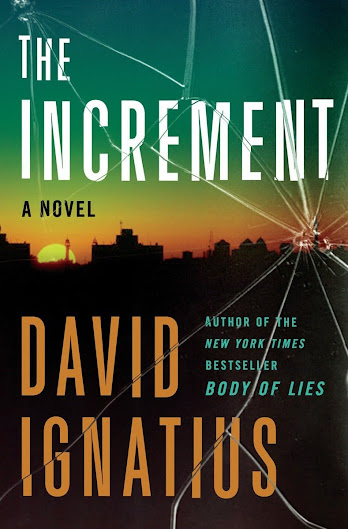
The Increment: A Novel by David Ignatius


It started out so strong but...


Published in 2009.

The Increment started out so strong, the characters were so strong, the plot was crisp and the whole thing just felt right.

The plot centers around two characters. One is an Iranian nuclear scientist that is disillusioned with the Iranian regime. The other character is a veteran CIA chief - the head of the Iranian desk.

Like I said, the book starts out very strong. I was intrigued by the characters, the situation and the back story of the two main characters.

By the end of the first page I was convinced I was reading a 5 star book.

But, the characters started to change. They started acting differently. For example, the head of the CIA is a retired Admiral. He comes off as a principled, with-it kind of leader who is just out of his element when he's not commanding a ship. Fine. Later on, he has multiple scenes in which he just plays with toy ships rather than making decisions. He goes from being a leader to being a little boy. Other characters make similar shifts.

So, for the 2nd 100 pages I had determined that this was probably a 4 star book. Good, but not great.

Throw in the goofy technology (you cannot realistically power an electronic device through radio waves, folks, if we could your cell phone would never run out of power. This book has a device being powered by a hand held device hidden under a robe beaming signals through the walls of a hardened nuclear facility - fun stuff but more sci-fi than reality), the satellite system that literally takes dozens of photos of ALL of Iran, including dumpy little towns that aren't even on the map (we photograph every square inch all day long and we don't know what's going on?), and the skimpy treatment of the special unit that the book is named after and...

well, the book degenerated to a 3 star piece of pulp fiction. Nothing special. It's a good airplane ride read. It can be found on Amazon.com here: The Increment: A Novel by David Ignatius.

Reviewed on May 20, 2009.

Featured Post

<b><i>BAN THIS BOOK (audiobook)</i></b> by Alan Gratz

Published in 2017 by Blackstone Audio, Inc. Read by Bahni Turpin. Duration: 5 hours, 17 minutes. Unabridged. My Synopsis Ban This Book is t...

Popular posts over the last 7 days