Greeks & Romans Bearing Gifts: How the Ancients Inspired the Founding Fathers by Carl J. Richard


Great book even though it was not quite what I thought it was.

Published in 2008.

So, if it was not quite what I thought it was, what is it?

Greeks and Romans Bearing Gifts: How the Ancients Inspired the Founding Fathers is a very succinct, well-written and entertaining history of the Ancient Greeks and the Romans with a little commentary at the end of each section about how these histories influenced the Founding Fathers. For example, he has seven pages on a history of the Spartans (probably the best short explanation of the Spartans I have ever read) and two pages about the lessons learned. There are 13 pages on the Persian Wars and just one page about the lesson learned.

This book does fill a serious gap in our education nowadays. Unfortunately, in the world of education, it is not uncommon to think of Western history as not important to our lives ("Hey! Ho! Western culture's got to go!" - Stanford protesters in 1988). But, this book demonstrates that the Greek and Romans histories were the foundational documents for the American experiment in self-government. They provided the examples of what worked, what did not work and the pitfalls and dangers of the operation of a republic. Sadly, you will find much more in modern textbooks about the supposedly extensive influence of the Iroquois Confederacy on the Founding Fathers than you will find about the extensive and pervasive influences of Cicero, Cato, the experiences of Athens and the Roman Republic.

The author notes in his last sentence: "Perhaps it is time to learn whatever lessons the ancients can teach the twenty-first century." (p. 181)

Amen to that.

This quick and delightful read is highly recommended.

I rate this book 5 stars out of 5.

This book can be found on Amazon.com here: Greeks and Romans Bearing Gifts: How the Ancients Inspired the Founding Fathers.

Reviewed on March 10, 2009.

Don't Look Twice: A Novel (Ty Hauck #2) by Andrew Gross


Much like his mentor, Gross provides a readable, entertaining read


Published in 2009.

Much like his mentor James Patterson, Andrew Gross has written a readable crime novel with plenty of twists and turns, lots of personal stuff thrown in and written in a pleasant, accessible style.

Don't Look Twice: A Novel is the second in a series about Ty Hauck but you do not have to have read the first to follow what's going on in this installment. The story is chock full of short chapters and the trail is complicated, but not impossibly so.

My one pet peeve is the Spanish in the book. It only appears on two pages in my Advance Reader's Edition but it is awful. "Victor no es aqui" is not proper or even remotely adequate Spanish. This is Spanish One material. It sounds like something from a poorly used translator website. C'mon now, Mr. Gross. There are millions of native speakers throughout the country. Find one and have him or her vet your Spanish in the future. It should have been "Victor no está aquí."

I rate this book 4 stars out of 5.

This book can be found on Amazon.com here: Don't Look Twice.

Reviewed on March 10, 2009.

Creed (mp3 track) by Rich Mullins


One of the most beautiful songs, let alone Christian songs, I've ever heard


Released in 1993.

Creed is a simple re-tooling of the Apostle's Creed by Rich Mullins into a song. The changes to the creed are minor.

What makes the song so beautiful is Mullins' use of the hammer dulcimer, a wonderful stringed percussion instrument. The music comes out as both wonderfully delicate yet as powerful as any strong drum introduction to any '80s Hair Band metal hit.

Rich Mullins (1955-1997)
I am not a big fan of Contemporary Christian music as a whole. I do not dislike it, but there's precious little that I've heard that is worth my hearing a second time. This song has stayed with me for a long time.

The lyrics as I stated, are based on the Apostle's Creed but the chorus is his and states a powerful concept that struck me as profound when I heard it a decade ago and still strikes me today:

And I believe what I believe
Is what makes me what I am
I did not make it, no it is making me
It is the very truth of God and not
The invention of any man


"I did not make it, no it is making me." Isn't that how all of us should be as we travel through this world on our journey of faith?

I rate this mp3 track 5 stars out of 5. I can be found on Amazon.com here: Creed by Rich Mullins.

Reviewed on March 14, 2009.

Journal of a UFO Investigator (audiobook) by David Halperin


If this were baseball, Halperin would be swinging for the fence, but coming up short.


Published by Blackstone Audio in 2011.
Read by Sean Runnette.
Duration: 10 hours, 36 minutes.

Unabridged.

David Halperin's Journal of a UFO Investigator is a semi-autobiographical novel. It ties together UFOs, death, growing up, family dynamics and religion in general (and Judaism in particular) in the story of Daniel Shapiro, a schoolboy growing up in the 60s in far suburban Philadelphia. Halperin is a former professor of religious studies at the University of North Carolina, Chapel Hill with a special focus on Judaism and what he calls "religious traditions of heavenly ascent." Already an established author of non-fictional academic works, this is Halperin's first novel. 

Danny Shapiro's world is crashing down around him. His mother is slowly dying from heart disease. His father does not understand him. He is Jewish in the heavily Christian suburbs and, as he gets older, this is becoming much more of an issue. He cannot date the girl he wants to date because she is not Jewish and it would crush his already weak mother. His family is Jewish but does not attend services so Danny does not feel the comfort of ancient traditions. Danny is alienated, to say the least. His one and only outlet is his journal of his experiences with UFOs and UFO research. 


Danny's journal is not necessarily written in chronological order and the reader will suffer quite a bit of early confusion in trying to figure out what stories are journal entries and what stories are taking place outside of the journal. We also find out that Danny's journal is not necessarily factual -- Danny is using it as an escape from the pain and confusion of his real life. He blends his fantasies and his reality together so well that they are hard for the reader to distinguish. 


Halperin also blends together traditional UFO stories with religious imagery from several religious traditions, although mostly from Judaism. We have traditional UFO stories such as flying discs, the Men in Black and probings from aliens. Halperin blends them together, with references to so many other authors and religious traditions that I often felt like I was being left out unless I scribbled down some notes and went to do some research. 


The audiobook was read by Sean Runnette. Runnette has a soothing, clear voice. However, there are many times when the voices are not differentiated enough and I had a tough time figuring out who was supposed to be speaking unless it specifically said who was saying each line. 


The most obvious comparison that I can make with this book is the classic Kurt Vonnegut book, Slaughterhouse-Five. It shares many themes, the same sort of loose structure, especially the nonlinear style. But Vonnegut is the master of dark humor. His tension and dark mood are often punctuated by tension-releasing humor, which allows the tension to build anew. Halperin just hits the same note throughout: "We pick our demons and build our own worlds around them." We limit ourselves, it does not matter if it is by race, class, religion or with conspiracies and UFOs -- we all do it. It is a worthy point but the follow through comes up short. 


I rate this audiobook 2 stars out of 5.

This audiobook can be found on Amazon.com here: Journal of a UFO Investigator.

Note: I was sent a free sample of this audiobook to review in exchange for an honest review.


Reviewed on May 7, 2011.

Lincoln and Chief Justice Taney: Slavery, Secession and the President's War Powers by James F. Simon


An interesting head-to-head biography about two gentlemen who went head-to-head quite often during the Civil War.

Published in 2006 by Simon and Schuster.

James F. Simon's Lincoln and Chief Justice Taney shines an interesting light on two overlooked aspects of 19th century American history.

The first overlooked aspect is the Supreme Court, specifically the person of Roger Taney (pronounced Tawney), the Chief Justice most famous for what may be known for all time as his single worst legal opinion, and one of the most controversial and ill-considered opinions of all time - Dred Scott.


Roger Taney  
(1777-1864)
Simon tells the story of Taney's life, including his surprisingly liberal views on slavery and his legal defense of blacks who were seized illegally to be sold into slavery, the fact that he freed most of his family's slaves and even provided a modest pension for the elderly ones. Taney even defended an the rights of an abolitionist preacher to preach his message in Maryland. However, it seems that those opinions all changed once slavery became THE issue of the 1840s and 1850s. His views seem to have hardened in response to outside pressure on the institution of slavery.

Abraham Lincoln 
(1809-1865)
I must admit that I was not well-informed about Taney - for me he was the man who is most famous for the line about African-Americans in which he says that they were "so far inferior that they had no rights which the white man was bound to respect."  Of course, it turns out that Taney's political life was much more than just that one line that appears in all of the history books and I did learn a lot about Taney's life and the intricate politics of the era - more than a reader normally gets: Jackson, Calhoun, Webster, Clay and finally Lincoln. Taney bridges all of these figures, was seen as a moderating presence for most of that time and really gets the short-shrift historically due to the abusive excesses of the Dred Scott decision.

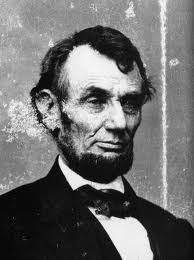
Lincoln, on the other hand, is, seemingly, the subject of a new biography every week. What has not been written about Lincoln? In this case, there is nothing new, but the focus on his administration's interactions with the Taney Court is interesting and thought-provoking.


This is a good, small dual biography of two of the towering political figures of their time. Not so much detail that the general history reader is bored, not so little that the serious reader of history is turned off.


I rate this biography 4 stars out of 5.

This book can be found on Amazon.com here: Lincoln and Chief Justice Taney.


Reviewed on May 15, 2011.

Dove and Sword: A Novel of Joan of Arc by Nancy Garden


Published in 1997.

I am always in a quest to find a sizable number of historical fiction titles to use in my class. I bought Dove and Sword in the hope of adding it to my classroom collection, and I will do just that. However, I also was hoping to be able to enthusiastically recommend it, as I have been able to do for many other titles. That I cannot do.

I have no problem with the historical details of the book. Rather, I was unimpressed with the writing. It tended to drag and be a bit repetitive. Reluctant readers will be turned off.

I was also expecting more about Joan of Arc. Instead, we are treated to a fictional female friend named Gabrielle who wants to be a midwife and doctor that follows Joan to the battlefield (the Dove, to Joan's sword - thus the title).

So, it joins my collection, but I will only be recommending it to those specifically interested in Joan of Arc, rather than as a general recommendation.

I rate this book 3 stars out of 5.

This book can be found on Amazon.com here: Dove and Sword: A Novel of Joan of Arc.


Reviewed on January 11, 2006.

Spectator Sport by James Alexander Thom


One of James Alexander Thom's first published books - shows his potential and rookie problems.


Originally published in 1978.

James Alexander Thom is one of my favorite authors. In my classroom I have had two of his books on my shelves - when kids come to me looking for something to read I recommend those books first due to the power of the storytelling. Those that accept my recommendations concerning his books are never disappointed. Great stuff!

While most of his books concern the frontier days of America's old Northwest Territory (Indiana, Michigan, Illinois, etc.), Spectator Sport concerns itself with the rain-shortened and deadly 1973 Indy 500. The race took part over the course of 3 days and was finally called after a little more than 300 miles due to rain and the fact that only 9 of the 33 starters were still on the track. Thom was at the race and the events inspired him to write this book and explore the motivations of race fans, violence on television and the news and voyeurism of all sorts.

This book however does not qualify as great - it is too up and down and inconsistent.

First - what is done well:

-Thom accurately portrays the way the 'Snake Pit' of the Indy 500 used to be - the dirt, the beer, the hedonism.
James Alexander Thom


-Thom accurately captures the feel of the 500 just before the race starts. The tension, the anticipation, the pomp and ritual.

-Thom's descriptions of the Speedway and its environs are dead-on. Especially the traffic and the insanity of the some of the police who are directing it.

What does not work so well:

-Too many characters - especially the boy from Kokomo who has to see the race no matter what. The girls who break out from the Indiana Girls' School (Indiana's prison for teenaged girls) and party in the infield are interesting but also fail to advance the story.

-Thom's theme is that sex, violence and power are all inter-related. The fighter pilot war hero and the soft-porn movie starlet, and the 500 festival princess who poses naked for the camera are all supposed to tie in with the race and the mayhem that occurred on the track, in the stands (debris and fuel were sprayed all over one section of the stands) and in the infield. However, I thought that Thom failed to connect all of these dots and the story gets too off-target. Too many themes means that he hits none of them well. It would have been better to have made two books - one exploring the violence of auto racing and the motivations of the racers and the fans, the other exploring sexuality, power and fidelity.

Fans of the 500 will appreciate:

-Transcripts of the race thrown into the text to tell the reader how far along the race is. These are actually transcribed from "The Voice of the 500" Sid Collins' personal tapes and include ads, Sid Collins and other local (Indy area) broadcasters such as Mike Ahern.

-Local sites such as the Indiana Girls' School, The Coke Lot, The Snake Pit and a local west side bakery that just has to be Long's Bakery.

Bottom line: The book has lots of faults, shows his great promise as an author but really does not quite deliver. Hardcore fans of the Indy 500 will certainly appreciate it.

**On a different note, why do they use a modern era Indy Car on the cover photo on the October 2000 reprint rather than a car from the 1973 race?

I rate this book 3 stars out of 5.

This book can be found on Amazon.com here: Spectator Sport

Reviewed on January 4, 2006.

Featured Post

<b><i>BAN THIS BOOK (audiobook)</i></b> by Alan Gratz

Published in 2017 by Blackstone Audio, Inc. Read by Bahni Turpin. Duration: 5 hours, 17 minutes. Unabridged. My Synopsis Ban This Book is t...

Popular posts over the last 7 days