FOR BLACK GIRLS LIKE ME (audiobook) by Mariama J. Lockington


Published by Listening Library in 2019.
Read by Imani Parks.
Duration: 6 hours, 35 minutes.
Unabridged.


Winner of more than 15 awards, including "A 2020 ALA Notable Middle-Grade Novel" and "A Bank Street Best Book of the Year"

Makeda and her family are moving from Maryland to New Mexico. Her father got a position in a symphony in New Mexico. Her mother doesn't have a job right now, but she used to tour the world playing the violin before she had a family.

The author, Mariama J. Lockington
Makeda is loved by her mother, her father and her older sister, but she is different. They are white and she is black. Her family never makes her doubt their love, but strangers make her keenly aware of the differences when they ask where her parents are in stores or when they stare at her getting out of the car with the rest of the family until they finally figure out their relationship with one another. The older she gets, the more she wonders about her own roots.

While the family tries to set down roots in New Mexico, Makeda is struggling. She left her best friend behind in Maryland - a girl with a similar background. She has failed to make new friends in New Mexico - twice falling victim to the age old story of being the new girl that everyone bands up against because they feel she is an interloper.

Makeda wants her differences to be recognized and appreciated for what they are, not necessarily pushed to the side for the sake of family unity. For example, there is an extended discussion about Makeda going to get her hair done by a beautician that specializes in African American hair. The mother sees this as a rejection of her efforts as a mother. Makeda sees her mother's reaction as a denial of her.

If you read this book, you should be aware that the mother has a serious case of bipolar disorder. When Makeda's father goes on an international tour with the orchestra, it gets worse. 

******spoiler warning********

Makeda's mother becomes more and more erratic as the book goes along, careening back and forth between crippling depression that won't let her get out of bed to a manic state that builds to a fever until she finally tries to kill herself when her daughters are out of the home.

The story ends up with the mother getting appropriate treatment and the family dealing with , but I know that some families and some readers have a special sensitivity to depictions of suicide. 

**************

My review:

I don't normally read YA novels aimed at middle school girls, but I decided to read this one when I found an article about how the Attorney General of Oklahoma was looking into a list of 51 books that were submitted to his office for being "pornographic" by groups like Moms for Liberty.

I found nothing remotely pornographic in this book. Moms for Liberty is pretty active in referring books to be banned at schools with racial content out of critical race theory concerns (see their linked articles on their website here and here). For example, last month I reviewed this book about the little girl that desegregated schools in New Orleans - Ruby Bridges. Moms for Liberty had complained about it in Tennessee.

This book was good, but I am not the target audience. For example, as a 53 year old adult, I found the father to be frustrating because he left an obviously mentally ill woman alone to take care of the family while he went on an extended, multiple week work trip to play with his orchestra. Clearly, she was not up to this task. However, most kids probably wouldn't even see that angle to the story.

I rate this audiobook 4 stars out of 5. It can be found on Amazon.com here: For Black Girls Like Me by Mariama Lockington.

HERNÁN CORTÉS: A LIFE from BEGINNING to END (kindle) by Hourly History


Published by Hourly History in 2020.

I am an avid reader of history, but I have areas of weakness that I am perfectly willing to shore up a bit, but I don't want to invest a ton of time. I want to know a bit more, not become an expert. The history of the Spanish conquest of the New World is just one of those areas for me. I know more than most people, but I can see the glaringly empty areas of my own ignorance.

Cortés is, of course, the Spanish conquistador that pretty much invented the idea of being a Spanish conquistador. Conquistador means "conqueror" in Spanish and Cortés pretty much perfected the concept when he conquered the Aztec Empire from 1519-1521.

I am not going to attempt a defense of Cortés' motives or techniques, but it was literally one of the most amazing conquests in history. 

What this history does well is give a brief synopsis of the conquests in a straight narrative history. There's not a lot of analysis and certainly not much information on the native Mexican groups - not even the Aztecs themselves. 

This is exactly the sort of biography that someone who hates history might pick to read because it is not an intimidating length and it is not written in highfalutin language. 

There is nothing in this biography that is inaccurate, just a matter of what the Hourly History people decided to highlight and emphasize.

I rate this kindle book 3 stars out of 5. Not bad, for what it is. Nowhere near a complete biography, but a solid place to start. This book can be found on Amazon.com here:  HERNÁN CORTÉS: A LIFE from BEGINNING to END (kindle) by Hourly History.


BLIND JUSTICE (Blake Justice Series Book 1)(kindle) by Mark Anthony Taylor


Published by Mount Shasta
Publishing (2nd edition) in 2021.
Blake Justice is a detective in the Avon Police Department. Avon is a suburb on the west side of Indianapolis. 

Blake is a massive physical specimen of muscle and no-nonsense serious intentions. He always wears his bullet-proof vest (even in church) and never goes anywhere without two pistols (once again, even in church). 

Detective Justice is hunting down a group of thieves that are robbing local businesses. He is also on the lookout for a big-time drug dealer who is said to be moving operations into Avon. Meanwhile, Detective Justice has a new partner...

*********

I bought this book because I saw an ad on Facebook. I live very close to Avon and am in Avon quite often and I am very familiar with the town and when I saw that the book was set in Avon I spent 99 cents and bought it. You can't go wrong at that price, can you?

Turns out that you can go wrong with this book no matter the price.

Some of the problems:

1) I was more than 10% of the way into this book before I decided that it was probably not a parody book. The problem is, the book feels like it is trying to be serious, but everything about the book screams parody.

2) No matter what connections bad guys have, they are not released from custody with no consequences if they fire pistols at police officers during a police chase and leave bullet holes all over the interior of the car.

3) Avon is a town of 18,000 residents. The geographic area that the author describes includes most of the western half of Indianapolis, a city of nearly 1,000,000. I'm okay with exaggerating, but this is ridiculous. 

4) Blake Justice has a personal armory in the trunk of his car, including multiple Kevlar vests, multiple pistols and hand grenades! I am talking real hand grenades, not the flash-bang ones. And, he has them in the trunk because he actually intends to use them as a police officer. You can see why I wasn't sure if it was a parody or not.
A Desert Eagle

5) Blake Justice's partner keeps calling the pistols that Justice keeps in the trunk of his car Dessert Eagles. They are actually Desert Eagles - one of the world's heaviest and most powerful handguns. I can't tell if it was a failed attempt at humor or a series of typos.

*********

The action scenes were well-written and the final fight scene is pretty good, but everything else is over the top and a parody, even if it wasn't intended to be.

I rate this e-book 2 stars out of 5. It can be found on Amazon.com here: BLIND JUSTICE (Blake Justice Series Book 1) by Mark Anthony Taylor.


HOW to HIDE an EMPIRE: A HISTORY of the GREATER UNITED STATES (audiobook) by Daniel Immerwahr


Published in 2019 by Recorded Books.
Read by Luis Moreno.
Duration: 17 hours, 25 minutes.
Unabridged.

If I asked you to think of a map of the United States you would almost certainly imagine the contiguous 48 states and maybe imagine the little inset maps of Alaska and Hawaii. 

But, you probably would not imagine other areas like American Samoa being a part of that map. How about Guam or the U.S. Virgin Islands even though the people who live there are American citizens? How about Puerto Rico? Puerto Ricans are citizens and Puerto Rico has a population bigger than at least 15 states.

How to Hide an Empire is about how America has maintained an empire of sorts from the very beginning. At first, it was by continually moving out of the official states into Indian territory, Mexico, Spanish territory and English territory. The United States took several strategic "guano" islands that were not claimed by anyone in the late 1800s. The United States has held a traditional empire since the Spanish-American War in 1898 when it took the Philippines, Guam, Puerto Rico and Cuba. It went on the acquire other properties by trading and conquering during the World Wars (the World War II section of this book is excellent).

Nowadays, the United States maintains a hybrid empire. It has kept some territories and turned others into states (Hawaii and Alaska) but it has also tried something new. 

The United States seems to have learned a lesson with its experience in the Philippines. The United States spent a lot of time, treasure and blood pacifying the Philippines only to have it become a liability during World War II - the Japanese attacked it within hours of the attack on Pearl Harbor. The U.S. quickly granted the Philippines its independence and changed its "business model".

Rather than conquer and hold other countries, the United States has maintained an immense series of bases and installations across the world. The most famous is probably Guantanamo Bay in Cuba, but others include Ramstein Air Base in Germany with 53,000 people.

On the other end of the spectrum there are also tiny little properties that house radio listening stations or broadcasting stations.   According to this article by the Libertarian think tank the Cato Institute, the United States has about 750 foreign military installations around the world - 
 three times as many installations as all other countries combined. Note the article is an opinion piece and the Cato Institute is generally of the opinion that the U.S. military should pull back. They always write with a political point in mind, but I don't usually find the Cato Institute to be untruthful.

This was an interesting look at American history. Some of it is shameful - such as the medical experimentation that has done on unsuspecting Puerto Ricans. Some of it is amazing - such as the immense supply chain that the U.S. used to supply Chinese forces and help keep the Japanese bogged down in China throughout the war. The supply line flew through 4 continents, over two oceans, the world's largest desert and over the world's tallest mountain range. It supplied the model for the base system the United States uses now. 

I rate this book 5 stars out of 5. It can be found on Amazon.com here: HOW to HIDE an EMPIRE: A HISTORY of the GREATER UNITED STATES by Daniel Immerwahr

INSURGENCY: HOW REPUBLICANS LOST THEIR PARTY and GOT EVERYTHING THEY EVER WANTED (audiobook) by Jeremy W. Peters


Published in February of 2022 by Random House Publishing.
Read by the author, Jeremy W. Peters.
Duration: 13 hours, 46 minutes.
Unabridged.


Sorry that this will be a herky-jerky post. It deserves a better one, but that would have to be a much longer post, perhaps 3 or 4 times longer. That would be so lengthy that no one would bother to read it.

Peters' book details how the GOP went from the party of Eisenhower and Reagan to the party of MAGA and Trump.

The old GOP advocated Free Trade, welcomed immigrants, valued the NATO alliance and wanted to overturn Roe v. Wade. The MAGA party flirts with the idea of leaving NATO, denounces Free Trade agreements, openly despises illegal immigrants and openly discusses the idea that all immigrants (legal and illegal) are being brought into the U.S. to replace white people with more compliant people of color. As Tucker Carlson, the number one cable news voice of the MAGA movement, stated in April 2021, "the Democratic Party is trying to replace the current electorate — the voters now casting ballots — with new people, more obedient voters from the Third World." This view was applauded by David Duke, a former leader of the KKK. Carlson has re-stated those comments many times since.

What they have in common is the desire to overturn Roe v. Wade. Peters contends that the party that Reagan built morphed into something unrecognizable because of that one goal (the "everything they ever wanted" in the title). 

Peters looks at the political threads that began the movement and starts with the John Birch Society - a group that saw everything as a plot advanced by International Communism. The Birchers were denounced by mainstream Conservatives like William F. Buckley as being crackpots who  built the intellectual arguments used by Reagan to become president. Reagan used to be the standard all Conservatives were judged by. Conservative radio host Rush Limbaugh used to refer to him as Ronaldus Magnus as a sign of his stature in the party. He was uncriticizable, much like FDR was to Democrats in the post-WWII years. 

The MAGA movement never criticizes Reagan, but it undoes most everything Reagan stood for. Ironically, Rush received a Presidential Medal of Freedom from the man who did more to undermine more of Reagan's foreign policy and free trade policies than any other president.

Peters follows those John Birch threads to Patrick Buchanan and his multiple failed attempts to run for president in the late 20th and early 21st centuries and finds another man who also ran and flirted with running at the same time, often saying similar things - Donald J. Trump.

Peters identifies the nomination of Sarah Palin as the Vice Presidential candidate in 2008 and the rise of alternate internet-based media like InfoWars and Breitbart along with social media and its emphasis on conspiracy (QAnon, Great Replacement, 5G towers spreading Covid-19, etc.) as major contributors to the MAGA movement.

This was a fascinating audiobook and read very well by the author. The more the Bircher tendencies showed up in the GOP and it became the party dominated by conspiracy theories, the more I wanted out.  After being a consistent GOP voter since 1996, I ran away and became politically homeless in 2016. (note: the Dems have their own set of conspiracy theories, but they don't tend to dominate the entirety of their political discussions as MAGA's conspiracy theories dominate the GOP) .

I rate this audiobook 5 stars out of 5. Highly recommended. This book can be found on Amazon.com here: INSURGENCY: HOW REPUBLICANS LOST THEIR PARTY and GOT EVERYTHING THEY EVER WANTED by Jeremy W. Peters.

RUBY BRIDGES GOES to SCHOOL: MY TRUE STORY by Ruby Bridges


Originally published in 2009.

In 1960, a six year old little girl named Ruby Bridges was to be the first African-American student to integrate an elementary school in Louisiana. To say it did not go well would be an understatement.

Parents pulled their children out. So many pulled their children out that Ruby was in a class by herself at first. There were so screaming, protesting mobs of parents. There were threats of violence. It was so bad that federal marshals were sent in to ensure her safety and to ensure that the desegregation order was enforced.

**********

This book was written by Ruby Bridges and is published by Scholastic as a Level 2 early reader. That is pretty early for a student to read about this topic - Ruby Bridges was the same age as the children who would be reading this book.

I normally don't review books for little children, but I decided to review this one when I saw that a group called Moms for Liberty called for it to be removed from a a school system in Tennessee. They were worried about its emphasis on racial strife. To that I would say two things: 

1) Based on my experiences as a teacher, (more than 20 years in urban schools) I am of the opinion that a great majority of African-American students are already aware of the racial divisions in this country - maybe the white students should be more aware as well. 

2) These events were not that long ago. Ruby Bridges was born in 1954. She is younger than my parents by roughly a decade. My youngest daughter (high school age) is well aware of Ruby Bridges thanks to the movie and a permanent exhibit at the Children's Museum of Indianapolis. It blew her mind to find out Ruby Bridges is younger than her grandparents. 

So, what do I think?

This is a great book. It shows the difficulties she faced but ends on a positive note (the Moms for Liberty disagree, but I disagree with them on a lot of things, so what's new). 

I rate this book 5 stars out of 5. It can be found on Amazon.com here: RUBY BRIDGES GOES to SCHOOL: MY TRUE STORY by Ruby Bridges


SIRENS of TITAN by Kurt Vonnegut


Originally published in 1959.
Finalist for the 1960 Hugo Award.


The Sirens of Titan is the second published novel by Kurt Vonnegut (1922-2007). I decided to do a systematic reading of Vonnegut's books and I started with this one. Why did I start with his second bookbecause it mentioned the fictional planet of Tralfamadore and I know that Tralfamadore figures into several other Vonnegut books later on.

I must admit that I am a huge fan of Vonnegut's essay collections, but I have found some of his books to be...a bit too chaotic. That's funny, because I love that about his essays.

This book features a couple of very rich men. One had become a space explorer because of a phenomenon called the chrono-synclastic infundibulum that exists in a spiral in the solar system. Earth governments have stopped sending people on exploration missions because they could just disappear. Winston Niles Rumfoord built a private, luxury space ship and he and his dog headed directly for the chrono-synclastic infundibulum and disappeared.

Rumfoord now reappears on Earth every 59 days for one hour. On one of those days, he requested to meet the world's richest man - Malachi Constant because he has a message for him. What follows is a series of predictions that all come true.

************

This book is full of all sorts of themes, including the ideas that organized religion is bunk, no one is really totally in control of their lives and God does not intervene in our lives which are simply the product of random chance. 

A mural of Kurt Vonnegut in his hometown -
Indianapolis, Indiana. Photo by DWD.
The beginning of this book and the ending were interesting to me. The whole middle part about the Martian invasion and a detour to Mercury was tedious for me. 

In one of his essays, Vonnegut gave an A-F grade to a bunch of his novels. He gave Sirens of Titan an A. I am going to disagree and give it 3 stars out of 5 - my equivalent of a C.  

Quotes I liked:

"...a purpose of human life, no matter who is controlling it, is to love whoever is around to be loved."

"Indianapolis, Indiana...is the first place in the United States of America where a white man was hanged for the murder of an Indian. The kind of people who'll hang a white man for murdering an Indian...that's the kind of people for me."
(Note: this is pretty much true - it happened near a suburb of Indianapolis - Anderson)

This book can be found on Amazon.com here: THE SIRENS of TITAN by Kurt Vonnegut.

OUR FIRST CIVIL WAR: PATRIOTS and LOYALISTS in the AMERICAN REVOLUTION (audiobook) by H.W. Brand


Published by Random House Audio in November of 2021.
Read by Steve Hendrickson.
Duration: 16 hours, 31 minutes.
Unabridged.


When I read the title of this audiobook, OUR FIRST CIVIL WAR: PATRIOTS and LOYALISTS in the AMERICAN REVOLUTION, I was sure that I was going to be listening to an in-depth look at how the population of the young United States dealt with its neighbors and family that disagreed about the question of independence. The most famous example is Benjamin Franklin and his son William Franklin. William Franklin was the last royal governor of New Jersey and their relationship never recovered from the shock of the Revolutionary War. 

This book deals with more of these issues than most histories of the Revolutionary War era, but that is not particularly hard to do - most of them mention the Franklin family situation and use it as a stand-in for all families. But, it does not go in-depth into this concept of Loyalists vs. Patriots. For example, I learned more about this topic from this Wikipedia page than I did from this book. I should not learn more about the topic from 11 pages of text on a Wikipedia page then I did in a 16+ hour audiobook.

So what is this book, if not an in-depth study of how the American Revolution fractured families, cities and populations?
Benjamin Franklin (1706-1790) and William Franklin (1730-1813)


It's a very good political history of the Revolutionary Era that focuses especially on Benjamin Franklin, George Washington and, to a lesser extent, John Adams. The text hums right along and it was a very good listen. This is one of the few Revolutionary War histories that I've read that actually discusses the dilemma that slaves faced in the war and the offer of freedom that the British military offered for males slaves that were willing to leave their families and volunteer. He looked at the stories of two slaves - one who fought for the British and one who ending up fighting for both sides.

All of that being said, I am going to deduct one point from what would have been a 5 star review. This book does not adequately address what the title promises.

This book can be found on Amazon.com here: OUR FIRST CIVIL WAR: PATRIOTS and LOYALISTS in the AMERICAN REVOLUTION (audiobook) by H.W. Brand.

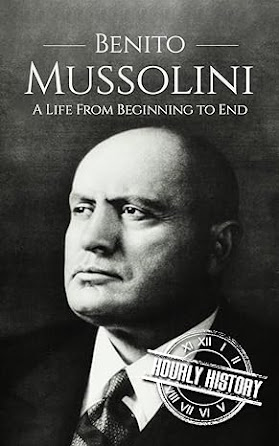
BENITO MUSSOLINI: A LIFE from BEGINNING to END (World War 2 Biographies) (kindle) by Hourly History


Published by Hourly History in 2017.

Mussolini and Hitler in 1937.
Nowadays, Benito Mussolini is best known as Hitler's far lesser partner in the Pact of Steel (signed in 1939), the formal treaty of the Axis Powers. He is often seen as the weaker partner that may very well have drug the entire alliance down due to incompetence. 

But, back when Mussolini took power in Italy in 1922, he was seen, by some, as the vanguard of the future of political organization in Europe - a movement called fascism. He was at least begrudgingly admired by people all around the world. 

This is, perhaps, the most balanced of all of the Hourly History biographies. I was mostly interested in a brief look at how Mussolini came to power and what he did once in power. The biography was a little skimpy on Mussolini's years in power before World War II and it won't please students of the war to see how little they discuss of his wartime policies and decisions. That being said, I thought this was a pretty solid short biography. 

I rate this kindle e-book 4 stars out of 5. It can be found on Amazon here: BENITO MUSSOLINI: A LIFE from BEGINNING to END by Hourly History.

THE RANGER (Quinn Colson #1) (audiobook) by Ace Atkins


Originally published in 2011.
Audiobook version published in 2022 by Recorded Books.
Read by MacLeod Andrews.
Duration: 8 hours, 36 minutes.
Unabridged.


Synopsis:

Quinn Colson is an Army Ranger at the end of his "storming the castle" days. He is in the process of transitioning to a role as a trainer of Army Rangers at Fort Benning, Georgia when he finds out that his Uncle has committed suicide.

So, Colson goes to Northern Mississippi for the funeral.

His uncle was the country sheriff and one of the deputies (a high school friend) tells Colson that she believes that it was a murder staged to look like a suicide. Colson doubts it. 

Meanwhile, word gets out that Colson will inherit all of his father's land, his house, and everything else. Colson starts to believe the deputy's theory of murder vs. suicide once he starts getting major pressure to dump the property as soon as possible to a shady county board member with a reputation of putting together shady deals.

So, Colson decides to stay a few more days to try to figure out what is going on. The more he digs, the worse it gets...

My Review:

First, the negatives:

*Colson knows EVERYBODY in this small county (except for the outsider bad guys). Like this character, I grew up in a rural area and left due to work. I have met literally hundreds of new people and I have tended to forget the ones that I left behind because I didn't see them any longer. Colson has been on active military duty in war zones for the majority of the 9 years and has met lots and lots of people and he still remembers every detail about everyone he knew. He must've been the most well-connected 18 year old in the county because he knows everyone. Someone will say something like, "Do you remember Jimmy?" and he will say sure - and ask if he still dyes his hair, works the morning shift at the gas station, likes ketchup on his scrambled eggs and drives a blue ford 4x4 with a white passenger door. C'mon. Also, yes, Jimmy still does all of these things 9 years later.

*The situation that caused Colson to come back to town would have worked out for the bad guys if they had just stayed patient for a few more days. It's weird that they didn't because they had spent years working on it.

*The first third of the book worked so hard to set a Southern Gothic mood that I almost quit at the 1 hour mark and the 2 hour mark. It was as if the author went down a checklist and tried to squeeze as many things in as soon as possible:

-Broken down homes? Check.

-People with eccentric hobbies or obsessions? Check.

-Grotesque characters? Check.

-Decayed surroundings? Check.

-The weight of the past upon the present? Check.

-Sinister events related to or stemming from poverty, alienation, crime or violence? Check, check, check and check. This is the plot of the book.

Positives: 

-In some books, when a person gets hit or shot it's no big deal and they get up and fight again even though they have a broken jaw or a punctured lung or their spine was severed. Not in this book. When someone gets shot or punched hard that injury stays with them.

-The conspiracy, when it is finally uncovered, makes a lot of sense and rings true.

-The reader of this book is excellent. He doesn't just read the book - he performs it. 

So, three really annoying things and three really good things. That's why I am rating this book 3 stars out of 5. It can be found on Amazon.com here: The Ranger (Quinn Colson #1) by Ace Atkins.

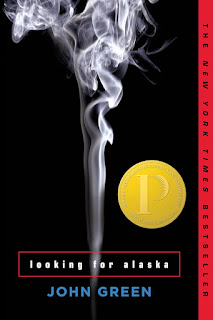
LOOKING for ALASKA (audiobook) by John Green


Originally published in 2005.
Audible audiobook edition published in 2019.
Read by Wil Wheaton
Duration: 6 hours, 40 minutes.
Unabridged.


Set in a boarding school in rural Alabama, this book features a diverse group of friends who are trying to figure out the big things in life - where to get cigarettes, where to get booze, where to get fireworks, the meaning of life, where to find a girl or a boy, how to hide your violations from the adults at the school and what is going to be the next big prank.

Miles Halter is the new kid at school and he is desperately in love (like a lot of young men) with the lively and enigmatic Alaska Young. Alaska is as unique as her name. She is a fervent defender of women's rights, she smokes and drinks whenever possible, she is an A student and yet she insists on carving her own way.

The book follows this group as they go through Miles' first year at the school, all the while counting down to something as indicated by the chapter titles...

Wil Wheaton did a good job reading this novel (as always.) 

I rate this novel 5 stars out of 5. It can be found on Amazon.com here: LOOKING for ALASKA  by John Green.

The author, John Green
***Blogger commentary:

This is a multiple award-winning book and it is also listed on several school book ban lists, including the infamous 850 book list from a legislator in Texas. It was also the most banned book in 2015. I am a fan of John Green, but a relatively new one, having only read three of his books before this one. At first I thought it was because of all of the drinking, smoking and general sense of irreverence towards authority that is exhibited throughout the book.

But, there is a hilariously uncomfortable sex scene that this veteran teacher would hate to teach in a classroom. As an adult, I found it laugh out loud funny, but I would hate to discuss it with 30 kids in a classroom. John Green makes an interesting comment in this article about how this sex scene fits in thematically and the point it does make. He's right, but I'd still hate to discuss a sex scene with a bunch of high school students.

That being said, if it were up to me, the book would be welcome in a classroom library or a school library. 

SHADOWS HAVE OFFENDED (Star Trek: TNG) (audiobook) by Cassandra Rose Clarke


Published in 2021 by Simon and Schuster Audio.
Read by Robert Petkoff.
Duration: 8 hours, 45 minutes.
Unabridged.


Synopsis:

This story of Shadows Have Offended is set in season 7 of Star Trek: The Next Generation.

The command team of the Enterprise is split. Data, Riker and the doctor are helping scout out a planet for a group of refugees. They are planning to resettle there, but there has been a glitch in the last round of data. 

The Enterprise is in orbit around Betazed. The ship delivered several ambassadors to the planet to participate in a planet-wide ceremony. Counselor Troi and Captain Picard are participating as well. 

But, things go awry on Betazed when three iconic relics are stolen and taken off world in the middle of the ceremony.

Meanwhile, the away team scouting the new planet is having its own issues...

My Review:

I liked the idea of a story where the command team is split into two parts when there are multiple crises and having them work in areas that they were not necessarily comfortable. But, both of these stories were slow-moving and the Betazed story line just never didn't have enough going for it to make it a stand-alone story for me.

There is another problem as well. The Enterprise is part of a space-based navy and rank means something in navies. Lieutenant Commander Data kept on being referred to as Lieutenant Data. Titles mean something and a Lt. Commander is a lot different than a Lieutenant. 

At one point in his story, Lt. Worf takes command of the Enterprise. No big deal in and of itself because Worf could use some command experience and there is no better time than while the ship is orbiting a friendly planet doing nothing but waiting for a boring ceremony to end.

But, it is a big deal when it involves taking command during the equivalent of an international incident. Both Geordi La Forge and Counselor Troi have previous command experience. They also outrank Worf and should have been in charge since Picard was stuck planetside at the request of Ambassador Troi. If you are a La Forge fan, sorry, I don't even think he makes an appearance in the book. It would have made some sense to put a Betaz


oid in charge considering the politics of the incident.

I rate this book 2 stars out of 5. It can be found on Amazon.com here:

MARY BAKER EDDY: A LIFE from BEGINNING to END (Biographies of Christians series)(kindle) by Hourly History


Published in 2019 by Hourly History

Mary Baker Eddy (1821-1910) is the founder of the controversial Christian sect knows as Christian Science or The Church of Christ, Scientist in the late 1800s. I picked this short biography because I know something of the teachings of Christian Science, I knew next to nothing about its founder.

Mary Baker Eddy grew up in small town New Hampshire and was often sickly as a child and young adult. It is unclear whether her illnesses were due to physical or nervous problems. As was typical for the time, life was hard and there were many tragic deaths in the early part of her life, including an older brother who served as a mentor, her husband while she was pregnant, a fiance and her mother. Her family took over raising her son and did not let her see him for years. Her son's caretakers moved away and let him believe that Mary Baker Eddy was dead. They did not speak to one another again until he was 34 years old.

None of this, of course, make Mary Baker Eddy a national religious figure, although it would be reasonable to suppose that these experiences had an impact on her religious views. 

From 1862 to 1866, Mary Baker Eddy became involved with a mesmerist named Phineas Quimby. Quimby claimed to be able to heal people with his powers and Mary Baker Eddy believed him. She believed that Quimby had stumbled upon an important principle, even though he was not religious. She continued his work after he passed away in 1866.

Mary Baker Eddy in the 1850s

The beauty and the weakness of this series is the brevity of each book. They are designed to be read in about an hour, which means I can explore a whole new area or person with little time commitment. But, I always end up with questions. In this book, I was left wondering how this woman turned a fairly small religious movement into an established church with its own publishing house and tens of thousands of members at a time when women did not even have the right to vote. This book is skewed too much to the early years and covers the last 40+ years of her life with a mere 3 pages of text. Too bad. A bit of judicious editing would have ensured some balance in the telling of the story of her life.


Because of that imbalance, I give this short biography a grade of 2 stars out of 5. It can be found on Amazon.com here: MARY BAKER EDDY: A LIFE from BEGINNING to END

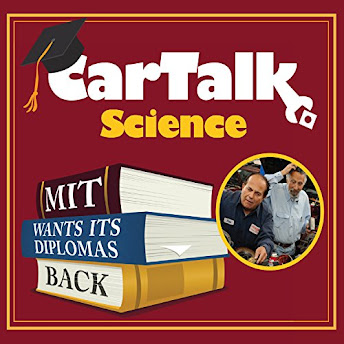
CAR TALK SCIENCE: MIT WANTS ITS DIPLOMAS BACK by Tom Magliozzi and Ray Magliozzi


For years a staple on the weekend schedule of every NPR station was "Car Talk", a call-in show featuring brothers Tom and Ray Magliozzi. These guys were experts in practical car maintenance and repair, they could talk all day long and they clearly enjoyed each other's company. The show was entertaining and informative. The last new show was broadcast in 2012.

Neither of these brothers was a professional mechanic, but they operated a "bring your own parts and fix it yourself" car shop in Cambridge, Massachusetts and picked up a thing or two along the way. They also both have degrees from the Massachusetts Institute of Technology (M.I.T.), also located in Cambridge. 

They used to receive calls that covered all sorts of car-related topics. Most were straight up car questions, but some were different. In this case, these are more science-related. Some are kind of duds, like the rather long conversation about Boy Scout pinewood derby cars. I did enjoy the conversation about creating an aerodynamic spoiler for mattresses being hauled on top of cars. For me the best conversation was a debate about whether it is better to take the shorter route over a big hill in the family car to go visit a nearby relative or if it is better to take a longer route around the hill and stay on flat land.

This was a so-so collection since I can only remember two segments that I liked. The rest were just so-so or best left in the studio archives.

I rate this collection 3 stars out of 5. It can be found on Amazon.com here:

THE BROKEN CONSTITUTION: LINCOLN, SLAVERY, and the REFOUNDING of AMERICA (audiobook) by Noah Feldman


Published in 2021 by Macmillan Audio.
Read by the author, Noah Feldman.
Duration: 11 hours, 14 minutes.
Unabridged.


In The Broken Constitution Feldman argues that the Constitution as it was known to Congressman Abraham Lincoln (he served in the Congress from 1847-1849) was already a broken Constitution and maybe had been broken since it had been ratified in 1788. What caused this break? No real surprise - slavery.

Abraham Lincoln (1809-1865)
Feldman details the compromises that had been in place to induce the Southern states to join a stronger Federal union and how those compromises were re-hashed in the decades that followed in acts like the Missouri Compromise (1820), the Nullification Crisis (1832-33) and the Compromise of 1850. The Dred Scott decision by the Supreme Court in 1857 only heightened tensions between the slave states and the rest of the union. Feldman's point is that if the Constitution were not already broken, these crises wouldn't have been so dramatic and wouldn't have actually have been crises.

When the Confederate states start seceding after Lincoln's 1860 Presidential election, it was really a continuation of the ongoing series of crises. Feldman details all of those crises and also tells how Lincoln's rising political career was affected by them. 

Feldman then details how Lincoln often broke the rules of the Constitution in the name of restoring U.S. Constitutional government to the Confederate states. Lincoln's political evolution during the war paved the way for the 13th, 14th and 15th amendments. The 14th Amendment (1868) in particular changed the relationship between the Federal government and the citizens of the United States and made the Federal government the ultimate guarantor of Civil Rights.

This is not a book for readers who are not already very aware of the issues that created all of the crises I mentioned above and eventually caused the Civil War. Feldman spends almost no time talking about the fighting in the war. He assumes the reader knows all about them and can follow along without anything more than a reminder.

I rate this book 4 stars out of 5. It was an interesting take.

This book can be found on Amazon.com here:  THE BROKEN CONSTITUTION: LINCOLN, SLAVERY, and the REFOUNDING of AMERICA by Noah Feldman.

WOLF PACK (Joe Pickett #19)(audiobook) by C.J. Box


Read by David Chandler.
Duration: 9 hours, 51 minutes.
Unabridged.


Synopsis:

Wyoming game warden Joe Pickett is back on the job and glad to be doing the mundane work of a game warden once again.

The game warden in the district next to his reaches out and tells him about a fancy drone she has spotted. The drone is being used to drive winter-weakened deer and elk into groups and then panic them into stampedes, killing and maiming several of them. Of course, this is a violation of Wyoming law.

But, when they go to track down the owner, they find that they are stymied everywhere they look. Once they find the owner, it turns out that they wish they hadn't found what they are looking for...

Review:

This is a pretty engrossing thriller with lots of action.

But...

Huge chunks of this book is told from the perspective of characters that are guests in this series. I don't know exactly what percentage, but it felt like Joe Pickett was mostly a guest in book number 19 in the Joe Pickett series. There was not a lot of game wardens doing game warden things because the series has largely moved away from that and, in my opinion, that is simply a shame.

Don't get me wrong, I enjoy Joe and his family and his friend Nate very much and I was happy to go along for another ride with them in this book. However, this was a good book, but not a great one because it moves away from Joe Pickett and becomes a thriller that could've have been adapted into any police series without a lot of thought. 

I rate this 4 stars out of 5 because it is a good thriller, but I am disappointed.

This book can be found on Amazon.com here: WOLF PACK (Joe Pickett #19) by C.J. Box.

THE MYTH of the LOST CAUSE: WHY the SOUTH FOUGHT the CIVIL WAR and WHY the NORTH WON by Edward Bonekemper III


Published in 2105 by Regnery History.

Edward Bonekemper (1942-2017) was a lawyer by day and historian in his spare time. He worked for the federal government in a couple of regulatory departments. Imagine an attorney coming into a conference room and telling you that you have regulatory issues and then proceeding to lay down one document after another after another that proves it until you have a pile of papers covering your table.

Bonekemper brings that tenacity to his history books as well. He often comes with a point to prove and he brings tons of proof.

In this case, he goes after "The Lost Cause". What is The Lost Cause? It was (and still is) an apologist movement for the Confederacy that says that slavery was not a primary cause of the war and, besides that, slavery was not that bad. Robert E. Lee was the best general of the war (maybe American history) and his personal honor was unimpeachable and his only fault was that the trusted men like his subordinate General James Longstreet who betrayed him at the Battle of Gettysburg. Grant was a butcher who simply used brute force, superior numbers and more supplies to complete the task of overwhelming the brave defenders of the Confederacy who were clearly the more superior soldiers. Throw into this mix the myth that literally thousands of African Americans joined the Confederate army, formed units and actively participated in combat in great numbers. 
Ulysses S. Grant (1822-1885)
and Robert E. Lee (1807-1870)

Bonekemper is devastatingly thorough in his arguments. He argues quite convincingly that Grant was the most brilliant general of the war. To be fair to Grant's reputation, it should be remembered that there were only 4 complete armies that surrendered during the war and Grant took 3 of them. Bonekemper decides to make his argument about the skill of Grant by re-telling the details of his Vicksburg campaign. Typically, Lee's performance at Chancellorsville is often highlighted as the best performance by a general in a battle, but Grant's 6 month plus long Vicksburg campaign is simply an amazing example of initiative, diversrion and speed. This campaign led to the surrender of an entire army, opened the Mississippi as a save way to ship goods into and out of the Midwestern United States, severed of Louisiana, Texas and Arkansas from the Confederacy, destroyed the capitol of Mississippi and defeated of a second Confederate army. All of this while mostly avoiding direct assaults and being outnumbered by the total number of Confederate troops in the field. 

Bonekemper is very critical of Robert E. Lee's skills as a commander - both strategically and tactically. He makes good points especially on a strategic level (big picture, the entire country view), but I think he is a bit tough on Lee, especially on his performance during the Seven Days Battles in 1862 when Lee took over the Army of Northern Virginia in the middle of a campaign because its original commander was severely wounded (he was sidelined for more than 5 months).

Interestingly, this book is published by Regnery History, a publisher that mostly features Lost Cause Civil War history. 

I rate this book 5 stars out of 5. Highly recommended.

This book can be found on Amazon.com here: THE MYTH of the LOST CAUSE: WHY the SOUTH FOUGHT the CIVIL WAR and WHY the NORTH WON by Edward Bonekemper III.

LA MUERTA: LAST RITES #1 (graphic novel) by Brian Pulido


Story by Brian Puildo.
Written by Mike Maclean.

The Zavalas are a crime cartel with a connection to the occult. That in and of itself is not ridiculous since some of the Mexican cartels have taken advantage of religious symbols and ideas in their propaganda.

Maria Diaz came back from the fighting in Afghanistan to find that the Zavalas killed her entire family. She decided to dress up in a disguise, adopt a new persona and get even, very much like The Punisher. Unlike The Punisher, who wears a skull on this shirt, she paints a skull on her face, Day of the Dead-style.

What follows is an almost constant gun battle interspersed with bombs, acid attacks and more. If you like non-stop action, this book has that in spades. If you like character growth of any sort, you will be disappointed.

Turns out, I value character growth. The Zavalas are not explained, for example. They just keep coming up with more and ever-weirder bad guys, culminating in a big boss bad guy who looks like she was designed by a 12 year old boy with a fascination with BDSM. Seriously, who fights a bomb throwing, pistol-shooting former soldier bent on revenge by wielding an Aztec sword and wearing a teeny tiny leather string bikini with thigh-high stiletto boots?


The art was up and down - sometimes top-notch, sometimes skimped over.

I rate this graphic novel 2 stars out of 5. It can be found on Amazon.com here: LA MUERTA: LAST RITES #1 (graphic novel).

Featured Post

<b><i>BAN THIS BOOK (audiobook)</i></b> by Alan Gratz

Published in 2017 by Blackstone Audio, Inc. Read by Bahni Turpin. Duration: 5 hours, 17 minutes. Unabridged. My Synopsis Ban This Book is t...

Popular posts over the last 7 days