THE GREAT UPHEAVAL: AMERICA and the BIRTH of the MODERN WORLD (audiobook) by Jay Winik


Disappointing


Published by HarperAudio in 2007
Read by Sam Tsoutsouvas
Duration: 12 hours, 56 minutes
Abridged.


Jay Winik's April 1865 is one of my favorite Civil War histories - it holds a very safe place on a shelf that has to be purged on a regular basis to make room for new books because it is a brilliant history. 

Before I go on with this review I must note that I listened to the abridged audiobook version The Great Upheaval. Despite the abridgment, this book still clocks in at nearly 13 hours. Some of my criticisms are undoubtedly due to the abridgment.

Winik's thesis in this book is that the time period from 1788 to 1800 was a time of revolutionary ardor and that most of the great European powers were affected. Victor Hugo wrote: “One can resist the invasion of armies; one cannot resist the invasion of ideas.” Winik looks at how the ideas of America's Founding Fathers and the French philosophes affected three countries: The United States, France and Russia.

In 1788, those three countries had almost nothing in common. The United States was small, almost inconsequential to European politics and in the middle of implementing a new Constitution. Mostly, it was a curiosity. France was the most powerful, most important country in Europe and quite possibly the world. Russia was a massive, largely mysterious backwater that hovered on the fringe of the European political scene.

The execution of Louis XVI (1754-1793) on January 21, 1793
Winik presents three different models of how various countries dealt with the new "invasion of ideas." Russia, in the person of Catherine the Great, entertained them on a philosophical level, but on a practical level she smashed them and dug them out by the root. The French King Louis XVI attempted to compromise with them but, in the end, he could not compromise enough to please Revolutionary France and it cost him his life. Worse, the country spun out of control and began to consume itself. The United States institutionalized the conflict between change and tradition by creating political parties and a system of government that allowed give and take without permitting everything to spin out of control (although the Whiskey Rebellion came close to doing just that - Winik discusses the Rebellion in detail but never says why the Western farmers were so upset about the tax on Whiskey. The answer - they had to convert their corn into whiskey to transport it out to sell. It taxed them but not farmers in the East who could sell regular corn).

John Paul Jones (1745-1792)
For me, the greatest weakness of this book is the inclusion of Russia. The discussion about the Russo-Turkish War (1787-1792) was not particularly interesting (I had to turn it off while I was driving because I found myself so bored with the topic that I began to nod off), with the exception of the brief mention of John Paul Jones.  Catherine the Great's reaction to the implementation of the revolutionary ideas of the time was no different than that of almost all dictators of almost all times and all places - she perceived a threat and she destroyed it as thoroughly as she could. In this book she serves as the opposite example of what happened to Louis XVI. As such, she really was superfluous - she was the norm and could have been described in just a few paragraphs or even sentences (for example, "While Catherine the Great loved to read and discuss these new revolutionary ideas, she never tried to negotiate with those who would take away her power as absolute monarch in the name of those new ideas like Louis XVI did. Instead, she engaged those revolutionaries with military power and hunted them down until they were utterly destroyed, much like successful tyrants like Augustus Caesar, Stalin and Kim Jong Il have done throughout history.")

On the other hand, I found the descriptions of the French Revolution to be fascinating. Winik included the grim details, a decision I agree with because those details demonstrate the degree to which the crowds were moved to act. For example, the simple fact that the crowds taunted the Marie Antoinette with the severed head of one of her friends (after they had its hair made up nice) shows that the French Revolution was out of control. Fortunately, the largest portion of the abridged audiobook deals with the French Revolution. The American Revolution section is also very strong.

The narrator of this audiobook was Sam Tsoutsouvas. He is an experienced audiobook reader and his command of French came in very handy when he read the occasional French word or phrase that pops up in this book. On top of that, when the crowd yelled, he would actually yell too which makes the descriptions even more powerful. His greatest strength, though, is the sense of gravitas he gives to everything he reads. If he read my grocery list it would sound as though the security of the nation depended on the purchase of a 2 liter bottle of Coke Zero and a box of Cheerios.

However, when coupled with Winik's often overwritten text this sense of gravitas becomes overwhelming. Winik has invested in a thesaurus and truly loves using it. He repeats himself in long strings of sentences. He loves to restate things with very similar words. He is verbose, wordy, repetitious and long-winded (yes, I did that on purpose). Winik invests a lot into injecting false drama into the story by asking dramatic questions such as, "What would happen next?" and listing a series of adjectives and using this kind format (sorry, I could not write one down - I listen while I drive and it did not seem prudent): "Coca-Cola. Is it brown? Is it fizzy? Is it wet? It is all of that - and more!"

He also likes to describe things and then use this ending to the description to inject doubt: "If - and it was a big if..." and "Yet - and it was a big yet..." and my favorite "But - and it was a big but..." Yes, he actually made the audiobook reader read the phrase "it was a big butt."

So, match this dramatic reader with an overly dramatic writing style and this book approaches parody in its audiobook form. Maybe this sentence is the epitome of the problem: "A bodyguard, a mere boy, was ruthlessly murdered and dragged into the courtyard half dead, becoming little more than a bleeding trophy." Indeed, the murdered boy was half dead.

Once again, I must point out that I did listen to the audiobook and it was abridged so some of the problems may have occurred because the abridgment. 


I rate this audiobook 3 out of 5 stars. It can be found on Amazon.com here: The Great Upheaval: America and the Birth of the Modern World.

Reviewed on May 24, 2014. 
Updated on January 4, 2025.

ORBIT (audiobook) by John J. Nance


Published by Brilliance Audio in 2006
Read by the author, John J. Nance
Duration: approximately 6 hours.


This near future science fiction book is actually a ¨near past¨ book now. Written in 2006 but set in 2009 (why would Nance set the date so close to the date he published it? I just ignored the date and went on). 
 
The premise of the book is that private, simplified space shuttles are regularly flying back and forth to the international space station, to put satellites into orbit and to take space tourists for a day trip into space and back. Kip Dawson, a salesman, has won a trip to space - the fulfillment of a lifelong dream. His wife, however, is sure that this trip will result in disaster and has told Kip that if he goes she is leaving with the kids and going back to live with her father.

Kip decides to go anyway, figuring he will make up with his wife when he comes back. But, when a tiny meteor passes through the shuttle, destroying the radios and drilling a hole right through the head of the pilot Kip realizes that he has to bring the shuttle down all by himself with no outside help or just stay in orbit and die. Turns out his wife was right after all.

John J. Nance, the author, read this audiobook himself. I was a bit leery about this and was not encouraged when I first heard Nance. But, he grows on you and by the end of the story I was riveted (sorry, no details - I want to avoid spoilers).

I rate this audiobook 5 stars out of 5.

This audiobook can be found on Amazon.com here: Orbit: A Novel

Reviewed on May 18, 2014.

GETTYSBURG: THE GRAPHIC NOVEL by C.M. Butzer


Sometimes Brilliant, Sometimes Lacking and Sometimes Just Plain Wrong


Published in December of 2008 by HarperCollins

This is the 65th review of a book that is somehow connected to the Civil War that I have written. I am also a teacher of American history. I only mention this so that the reader knows that I do not come to my critiques of this book lightly.

In Gettysburg: The Graphic Novel, Butzer has attempted to do something that would be tough no matter who the author is - tell the entire story of Gettysburg in just 80 pages of a graphic novel. By the entire story, I mean why the war was going on in the first place, the status of both sides when the battle started, the battle itself and dealing with the dead, the wounded and the dignitaries that came to nose around afterwards. It also includes the decision to make a special cemetery at Gettysburg and the Gettysburg Address and a discussion of the famed speech, plus additional comments and a bibliography.

If I were asked to do this as two typewritten pages I would find it to be a difficult challenge, so I do appreciate the task faced by Butzer.

Butzer's treatment of the Gettysburg Address is brilliantly conceived and wonderfully demonstrates the power of the little speech to the crowd at the cemetery and the power of the speech as it has resonated down through time.

He also does a great job of talking about how difficult it was to deal with so many dead and wounded once the armies had moved on. The awful nature of Civil War surgery is shown (including a pile of amputated limbs).

 However, his focus was just wrong in so many ways and there are at least two factual errors. The battle itself gets just 9 pages out of the 80 - the little skirmish in Gettysburg itself that started the battle gets two complete pages! If you are uninformed as to the particulars of the Battle of Gettysburg, this book will do little to inform you. But, there is a great deal of, in my opinion, wasted space dedicated to Lincoln's trip to Gettysburg and the build up to the dedication ceremony. 

On pages 22 and 23 Pickett's Charge is drawn in one epic sweep, but the dimensions are wrong (the length of the charge is dramatically shrunken) and the height and angle of Cemetery Ridge is greatly exaggerated. It is a low rise, not the steep angle shown in the book. It looks like Pickett is leading a charge up the dam of a man-made lake, not up the gentle heights of Cemetery Ridge. This distinction makes Lee's decision to attack the Union line directly look like less of a calculated risk and more like a cruel suicidal attack on an impregnable position.

The Evergreen Cemetery Gatehouse
On page 38 workers are building the gatehouse to the cemetery in order to prepare for the ceremony. He also alludes to this in his notes at the end of the book. But, this gatehouse was built before the war (its cornerstone was laid in 1855 and it was used as Union General O.O. Howard's headquarters during the battle) as a part of Evergreen Cemetery, not the national cemetery. When I first visited Gettysburg, I also assumed that the gatehouse went with the National Cemetery so it's an understandable mistake - if you weren't writing a book on the topic. When you visit the cemetery they let you about 

So, sometimes brilliant, sometimes lacking and sometimes just plain wrong, I rate this graphic novel 3 stars out of 5.

This graphic novel can be found on Amazon.com here: Gettysburg: The Graphic Novel.

Reviewed on May 17, 2014

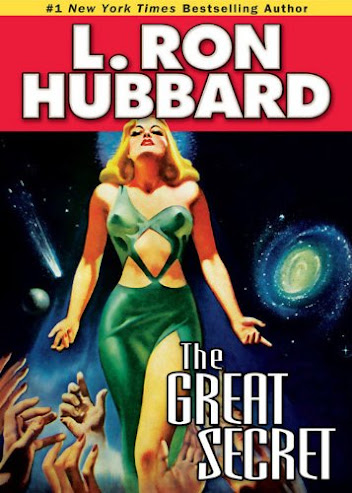
THE GREAT SECRET (Stories from the Golden Age) by L. Ron Hubbard


Re-published in 2008 by Galaxy Press.

These stories were originally published in 1942 and 1943.


Before L. Ron Hubbard became famous for creating Scientology he wrote a whole bunch of short stories for the pulp magazines from 1936 to 1950. Galaxy Press has been re-releasing them in small collections as paperbacks and audiobooks. This collection consists of four short stories.

The first story is "The Great Secret" which was originally published in Science Fiction Stories in April of 1943. It is an okay story about a man who is willing to give anything to find out what the secret of a great, lost civilization was.

Story number two is "Space Can" - the best story in the bunch. Originally published in Astounding Science Fiction in July of 1942 it features a fight between two space fleets and the hand-to-hand combat that ensues.

"The Beast" is a forgettable safari tale based on Venus rather than Africa. But
File:L. Ron Hubbard in 1950.jpg
L. Ron Hubbard (1911-1986) in 1950
, it is filled with submissive natives and a great foreign hunter - just in case you like to ponder how racist a story can be without actually involving human beings being oppressed. Originally published in Astounding Science Fiction in July of 1942.

"The Slaver" (Astounding Science Fiction, June 1942) would have been a good novel if it had been extended but it is an unsatisfying short story. It features an alien race capturing humans and using them as slaves after the humans lost an interstellar war.

The "Stories from the Golden Age" collection is an admirable attempt to preserve stories from the age of pulp fiction but this particular book is mostly not worth the effort. 

Reviewed on May 13, 2014.

I rate this collection 2 stars out of 5. It can be found on Amazon.com here: THE GREAT SECRET (Stories from the Golden Age) by L. Ron Hubbard.

NPR AMERICAN CHRONICLES: WORLD WAR I (audiobook) by NPR


Multicast performance
Duration: 3 hours, 25 minutes

National Public Radio (NPR) has gone through its archives and pulled out almost thirty stories about World War I in honor of the 100th anniversary of the start of the war. The stories include interviews with soldiers and historians and various authors. 
File:Eddie Rickenbacker.gif
World War I flying ace Eddie
Rickenbacker (1890-1973) in his Spad
plane in October of 1918.

Topics include a look at pre-World War I Europe, a look at the creator of the Sopwith Camel, discussions of several battles, hand-created masks for men whose faces were damaged in the war, a mini-biography of America's famed flying ace Eddie Rickenbacker, a look at the post-war Bonus Army during the Great Depression and audio visits to several World War I museums, including one that recognizes Herbert Hoover's efforts to feed Belgium during the war (mostly forgotten in America).

The audio quality of all of these stories is excellent since they were all originally broadcast on the NPR network. They are told in a logical manner and make for an interesting look at this oft-overlooked war.

I rate this audiobook 5 stars out of 5 and it can be found on Amazon.com here: NPR American Chronicles: World War I by NPR

THE GREAT DIVORCE (audiobook) by C.S. Lewis


Originally Published in 1944-1945
Published by HarperAudio
Read by Robert Whitfield
Duration: about 3 hours.

First published as a newspaper serial in 1944-45, The Great Divorce is a fictional look at heaven and hell. The story is not so subtly built to be a vehicle for Lewis to discuss his major themes, including God's forgiveness, the pride of men and women who chose to remain in hell rather than accept heaven and the respect and power accorded to those with strong faith in heaven. 

C.S. Lewis (1898-1963)
This short book (160 pages in print, 3 hours as an audiobook) starts with the narrator riding a bus away from a disagreeable grey suburban town. The town is not really a bad place but its residents are all difficult in some way and they squabble and then move away from each other. 

Later, the reader learns that the grey town is purgatory or hell, depending on the person. From time to time a free bus comes to the town and its residents can ride to a new place, which turns out to be the outskirts of heaven. The people from the bus get out and are greeted from people they knew from earth but are now residents of heaven. They are implored to give up the things that are keeping them from heaven so that the can stay. Some do. Most don't.

The narrator visits different conversations and Lewis uses these as a chance to give some common arguments as to why the resident of hell should not have to repent. Some are funny (the nagging housewife is actually hilarious) and some are pathetic. 

I grew rather tired of the stilted back and forth format, found the descriptions of the residents of heaven off-putting and I think the whole story comes off as very heavy handed. Robert Whitfield's narration was strong and the variety of voices and accents were commendable but the book rated a mere 3 stars from me.

This audiobook can be found on Amazon.com here: The Great Divorce by C.S. Lewis.

MANDELA: AN AUDIO HISTORY by Radio Diaries


Published in 2014 by HighBridge Audio
Hosted by Desmond Tutu
Commentary by Nelson Mandela
Duration: 1 hour, 15 minutes.

Winner of the Audie Award - Audiobook of the Year for 2015.

Considering that Mandela: An Audio History is the history of the entire apartheid era of South Africa in 75 minutes, this short history is surprisingly thorough and very compelling. 

The audiobook tells the story of apartheid through the story of Nelson Mandela - why he decided to fight against it, how he decided to fight against it, his trial for treason, his time in prison, how the struggle continued with him as the symbol of hope and resistance, the collapse of the apartheid system and it ends with the election of Mandela as president. Each chapter begins with a short introduction by Anglican Bishop Desmond Tutu (also a large voice against apartheid).
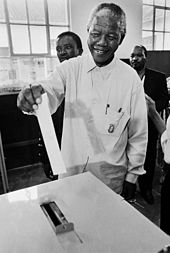
Nelson Mandela  (1918-2013)
casting his vote in the 1994
election.

The story is mostly told through interviews with Mandela and dozens of others and also includes snippets from radio and TV news broadcasts. Of course, details are left out. Desmond Tutu's Nobel Prize is not mentioned and Winnie Mandela is glossed over and nothing is mentioned about their marital troubles (to be expected considering their age difference and considering that he was imprisoned for such a long part of their marriage) and her implication in a murder and virtual endorsement of the heinous practice of necklacing.

But, like I already noted, things have to be left out if the goal is a short history. This is a very fine short history of apartheid - very approachable and I found it to be quite engrossing. 


I rate this audiobook 5 stars out of 5. It can be found on Amazon.com here: Mandela: An Audio History by Radio Diaries

INFLUX by Daniel Suarez


Published in 2014 by Dutton Adult (Penguin Group)

Have you heard the stories of the engineer that invented the engine that gets 200 miles per gallon and the oil companies put a stop to it? Or, of the Japanese inventor that created the car that burns hydrogen from water but he suddenly disappeared? Or, the story that cold fusion really was invented but the energy companies nixed it?

Well, that is the premise behind Influx by Daniel Suarez. The Bureau of Technology Control (BTC) is a secret government agency that was established to identify and isolate "disruptive" technologies - technologies that would seriously de-stabilize the world economy and/or the current social order. The inventors are imprisoned or, if they are willing to cooperate, allowed to develop their technologies for the good of the BTC.

Now, imagine if the BTC's lead on technology kept on growing and the BTC started to disdain the government that it was supposed to report to (think about our own news and imagine an NSA that started to turn on its own leaders with its listening program). That's where the story starts.

Jon Grady is a physicist who has just invented a gravity mirror - it reflects gravity. The BTC has determined that this will be very disruptive and kidnaps Grady and imprisons him. But, Grady won't make it easy on his captors...

No one currently writing does near-future sci-fi better than Daniel Suarez and this book keeps that trend going with an interesting story line and a true David vs. Goliath story. He has picked up where Michael Crichton left off.

I rate this novel 5 stars out of 5.

This book can be found on Amazon.com here: Influx by Daniel Suarez

Reviewed on March 30, 2014.

DEEDS of a MASTER ARCHER, A SHORT STORY (short story) by J.H. Bogran


Published as a Kindle e-book in 2012 by Pretur

Estimated length: 28 pages

The story starts with two friends in the modern world trying to move a washing machine from a basement. Suddenly, they are sucked into another world (no explanation) where they discover a typical medieval fantasy village after they rescue a captive princess.

Turns out she was to be a sacrifice to a dragon and the dragon is no mood to be denied. One of the travelers from our world is a former U.S. Marine and somehow this enables him to be proficient with a sword and a bow and arrow. Actually, he is not just proficient - he is a master, as described in the title. I was not aware that the Marines trained in those weapons, but I have never been a Marine, what do I know?

So, the young men do battle not once, but twice with unfamiliar weapons against the shocking might of a dragon while hampered with almost no character development, a story with the thinnest of plots and an absurd willingness on the part of everyone in the story just to go along with this story just because it makes the story go along.

Yikes.

I rate this story 1 star out of 5.
Reviewed on March 25, 2014.

PARADOX RESOLUTION (Spider Webb #2) (audiobook) by K.A. Bedford


Originally published in 2012.

Audiobook version published in 2013 by Post Hypnotic Press.

Read by Cameron MacDonald.

Duration: 9 hours, 45 minutes.

Time travel science fiction can be tricky. Do you play it straight and have time traveler affecting the time line like Blackout/All Clear by Connie Willis? Or, do you play fast and loose with time travel and timelines like the Dr. Who series does?

Personally, I like the stricter interpretation of time travel. I think the loose interpretation is like Robert Frost's famed comparison of free verse poetry to rhyming/metered poetry to "playing tennis without a net." I guess it comes from to many years of playing Role Playing Games as a kid - I tend to put myself in complicated plots and think about how I would get out. Unfortunately (for me at least), this book plays by a set of fast, loose and rather arbitrary rules about time travel and leaves its own plot open to its own internal inconsistencies - the entire story could have been undone with judicious use of any of the thousands of time machines that exist in this story at any point in almost any of the main characters' lives. 

I have not read the first book in this series but I think that Bedford does a very good of catching the reader up to the events that transpired in the first book. I was drawn to Paradox Resolution because of the back of the book description of Spider Webb - a down on his luck ex-cop who fixes time machines at an Australian franchise location of the Time Machines Repaired While-U-Wait chain. Spider is a likable guy who wants to get back with his ex-wife, can't see that another lady is practically throwing himself at him and has a very strong sense of right and wrong. 
The story starts out with a bang but in the middle of the book there are long, long often repetitive passages of discussion and thought (and thoughts about the discussions that we just heard) that bog the book down. Sadly, the book never picks up the quick pace again and prone to shorter (but still repetitive) discussions and thoughts about discussions.

I enjoyed the reading by Cameron MacDonald. He had a nice command of Australian and Canadian accents and portrays the clueless yet committed Spider Webb quite skillfully. Plus, he made the long bouts of discussion and thinking listenable.

I rate this audiobook 3 stars out of 5. It can be found on Amazon.com here: Paradox Resolution (Spider Webb #2).

Reviewed on March 24, 2014.

LOVE YOU to DEATH (Charlie D #1) (audiobook) by Gail Bowen


Originally Published in 2010.

Post Hypnotic Press audio version published in 2013.
Read by Daniel Mate
Duration: 1 hour, 34 minutes

Canadian author Gail Bowen takes a break from her Joanne Kilbourn series to bring us Love You to Death, featuring Charlie D, a talk radio personality who works the late night shift. This is part of the Rapid Reads series by Orca Books. This is designed to be a set of exciting, short mysteries. On paper this book clocks in at 128 pages.

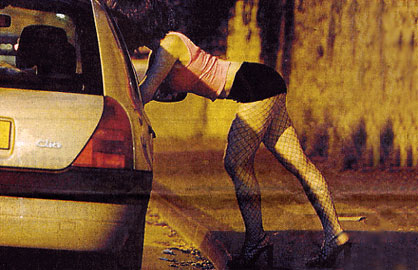
Charlie D is working the night show on Valentine's Day. His guest is the boss's wife. The boss is an ancient man who has married the young, very elegant and very expensive prostitute he used to frequent. She is now very pregnant and being interviewed about her thoughts on love and relationships. 

Meanwhile, the neighborhood around the station is now awash in threatening newsletters and posters that advocate getting rid of the local prostitutes in any way possible. These vigilantes are inspired by the right wing host on the air just before Charlie D. He is a Bill O'Reilly type of host with discussions of fighting for the preservation of Canadian morality and some of his fans have gone too far - especially when they call Charlie D to show him live video feed of a local prostitute who is awaiting execution at their hands...

I enjoyed the give-and-take between Charlie D and his listeners and the guest. But, the premise of the story - the coalition of bad guys, the frank discussions of prostitution, the "hooker with a heart of gold" scenario played out twice in just an hour and a half just made the book seem less like a story and more like a political screed against the political right ("Watch out for them sexually repressed right wing nutjobs!  They are all twisting the Bible to justify all kind of horrendous things because a radio guy told them to!"). 

I also had a problem with a discussion of sex workers that only included the positives of this kind of work (such as helping people with physical handicaps attain sexual satisfaction and providing sexual and perhaps even emotional comfort to the lonely) but said almost nothing about the downsides, including the spreading sexual diseases, dealing with pimps, human trafficking and the rampant substance abuse that often accompanies this career choice. Despite the politically correct use of the term "sex worker" in an attempt to give prostitution a veneer of respectability, I cannot imagine the day when a parent will be as proud of his or her daughter being a "sex worker" as he or she would be if she were an accountant, a used car salesperson or even a politician.

Daniel Mate's pleasant voice made Charlie D a fairly believable and likable character. The rest of it just fell flat and would have no matter how well Mate had read it.

Note:  I received a copy of this audiobook free from the publisher in exchange for an honest review.

I rate this short story 2 stars out of 5. It can be found on Amazon.com here: Love You to Death (Charlie D #1) by Gail Bowen.

THE FOURTH DAY (Dr. Hoffman #4) by Christoph Spielberg


This Thriller Does Not Have Much Sizzle


Originally published in Germany in 2002.

Re-published by Amazon Crossing in 2013.

Translated from German to English by the author (Christoph Spielberg) and Christina Henry de Tessan

Amazon.com's publishing house Amazon Crossing is designed to bring popular authors who do not write in English to an English-speaking audience. Award-winning German author Christoph Spielberg has brought his Dr. Hoffman series to this program. This series is quite popular in Germany, even spawning a series of made for TV movies.


The Fourth Day features Dr. Hoffman. a wise-cracking doctor in a down and out hospital. He has just got done with a very long shift and was planning to head home after one more consultation in the Intensive Care Unit when a blind gunman with a bunch of explosive charges comes in with a seeing eye dog and takes the room hostage, along with two doctors, two nurses and several patients.


While this would certainly seem to be an exciting premise for a thriller, this thriller just is not all that thrilling after the first 20 pages or so. As the hostages and the hostage-taker settle into a routine the book does too and it just becomes a waiting game until the arrival of the "fourth day" indicated by the title of the book.


There is a mildly interesting medical mystery that goes hand-in-hand with the story of the hostages but on the whole this book just sort of fizzles out.


Note: I received this book for free as a part of the Amazon Vine program in exchange for an honest review.

This book can be found on Amazon.com here: The Fourth Day by Christoph Spielberg.


I rate this book 2 stars out of 5.


Reviewed on March 18, 2014

SLEEPYHEAD (Tom Thorne #1) (audiobook) by Mark Billingham


Originally published in 2001.

Published HighBridge Audio in 2013.

Read by Simon Prebble.

Duration: 10 hours, 32 minutes

Mark Billingham's Sleepyhead is set in London and features a serial killer with a twist. Rather than actually trying to kill his victims, the attacker is trying to paralyze them by pinching a spot in their neck for nearly two minutes in an attempt to cause a stroke in the victim's brain stem. The result, if done right, is a person who cannot do anything more than blink even though their brain is entirely functional. This is difficult and the result has been a slew of dead young women and one "successful" victim who is forced to breathe on a ventilator in a hospital.

Thanks to the inspired work of a coroner, the local police know what the attacker is trying to do - but they have no idea how to stop him. The star of the investigation is Detective Inspector Tom Thorne, a troubled middle-aged cop with his own demons. Due to a past failure, Thorne is driven to the point where he risks everything to find this attacker.

Sleepyhead was Billingham's first novel (this series now has a dozen novels) and as such it is has some room for improvement. Typically, new authors tend to skip details in an attempt to keep the plot moving. Billingham did the opposite here - some scenes included a stifling amount of detail that make the story drag. Billingham set out to set a somber mood and he successfully maintains it throughout, even to the detriment of the story.

The audiobook was read by Simon Prebble. I think the style of the book hurt Prebble's presentation. There were multiple characters that told the story from the first person perspective and there were no clues that the narrator had changed when the changes occurred. Sadly, Prebble chose not to change the voices of these characters very much so that they could be told apart instantly. I think that may have been on purpose - the book gives the reader no idea that the story is being told by another person, either. It just switches and the listener is left to try to figure out who is telling the story.

On top of that, there is a gigantic amount of British slang used throughout the book that gives it an authentic feel but sometimes lost this American listener. Combine that with the multiple, but often indistinguishable narrators and the slow spots and you can see why this can be a frustrating audiobook.


Note: I received a copy of this audiobook for free from the publisher in exchange for an honest review.

I rate this audiobook 3 stars out of 5. It can be found on Amazon.com here: Sleepyhead (Tom Thorne #1) by Mark Billingham.

THE MEN WHO UNITED the STATES: AMERICA'S EXPLORERS, INVENTORS, ECCENTRICS and MAVERICKS and the CREATION of ONE NATION, INDIVISIBLE (audiobook) by Simon Winchester


Published in 2013 by Harper Audio
Read by the author, Simon Winchester
Duration: 13 hours, 33 minutes

Simon Winchester's sprawling book, The Men Who United the States, tells a history of the United States organized around five themes: Wood, Earth, Water, Fire and Metal. To be honest, I largely ignored the themes and just enjoyed listening to this magnificent, chaotic, rambling history.

Starting roughly with Lewis and Clark (Winchester backtracks a lot), the story of America is told through the tales of the people that made America a more perfect union through their explorations or their inventions. The reader (or listener if you are enjoying the audiobook) is told about Lewis and Clark and the Pony Express and the invention of the telegraph, the first transcontinental rail line, the exploration of the Grand Canyon, the role of New Harmony (Indiana) in the study of American geography,  a con game involving jewels, how George Washington toured the Frontier before he became president, the Erie Canal, the telephone, Edison vs. Tesla, the first plane to travel across America, television, radio, the internet, modern day nuclear silos, the path of the Mississippi River and so much more that I cannot possibly remember it all.


I listen to audiobooks as I drive and this book was like having a history professor just ramble along with the most interesting stories about American history and the interesting places he has been. Like in a conversation, the story meanders but it flows quite naturally almost all of the time as the author throws in lots of interesting anecdotes about his own experiences, the lives of related historical figures or just something that was odd.

The author, Simon Winchester, narrates his own audiobook. It always concerns me when I see that the author is the reader of his or her own audiobook. Frankly, most authors do not have the voice or the skill to pull it off. Winchester's voice is pleasant and he succeeds with his narration even though his English accent sometimes made for some interesting pronunciations and served to remind me that he is not an American by birth but by choice (he recently became a Naturalized citizen).

I rate this audiobook 5 stars out of 5.

This book can be found on Amazon.com here: The Men Who United the States

Reviewed on February 28, 2014

SURVIVAL of the NICEST: HOW ALTRUISM MADE US HUMAN and WHY IT PAYS to GET ALONG by Stefan Klein


Published in 2014 by The Experiment

German science writer Stefan Klein looks into the concept of altruism vs. egocentrism and the current thinking behind why people act altruistic or egocentric in Survival of the Nicest. This has been a popular topic in many news reports as the idea of a "stingy gene" or a "sharing gene" is discussed. 

Of course, the idea of a single stingy or sharing gene is simplistic, but Klein does spend a lot of time discussing altruistic behaviors and egocentric behaviors and why people actually act as altruistic as they do, even going so far as to donate money to people they will never meet in countries they will never go to. Why is that?

Klein reports that the current thinking is that simple Darwinian competition is too simplistic to explain altruistic behavior - giving away resources or time that could be used to raise one's own offspring makes no sense in a simple Darwinian worldview.

But, when you move out a little bit and look at groups of people and see that groups of people who are willing to give to one another and enforce a set of norms that expect a certain amount of fair play and giving to help the entire group have more success than groups that do not than you see that the Darwinian model may yet have some merit - it is not a single person vs. a single person but groups of people vs. groups of people.

Klein compares the behavior of chimpanzees to people, looks into tests of when young children start to display altruism and into experiments involving games that are supposed to test the altruistic nature of people (to be honest, I had a hard time understanding the value of the games, they were rather poorly explained). 

Survival of the Nicest has its interesting moments but vague explanations of the experiments and games and meandering discussions about other animals like vampire bats made the book an up and down read at best. There are some wonderful ideas in this book and a good editing could have knocked off about 50 pages and made it a tighter, more effective read.

I rate this book 3 stars out of 5. It can be found on Amazon.com here: SURVIVAL of the NICEST: HOW ALTRUISM MADE US HUMAN and WHY IT PAYS to GET ALONG by Stefan Klein.

Reviewed on February 19, 2013.

RUNAWAY HEART (audiobook) by Stephen J. Cannell


Great Characters, Giant Plot Holes


Published in 2003 by Sound Library (BBC Audiobooks America)
Read by Nick Sullivan
Unabridged
Duration: 11 hours, 47 minutes

Stephen J. Cannell (1941-2010) was best known as a television writer, producer and the creator of such classic shows as the A-Team, The Rockford Files, and The Greatest American Hero. But, late in his career Cannell also wrote a lot of novels, mostly action-based mysteries (not all that surprising considering his history in television).

Runaway Heart is, in some ways, a typical Cannell story, but it does have some distinct differences. There are three main characters. The book starts with Herman Stockmire, an overweight, idealistic Los Angeles-based attorney with a bad heart (arrhythmia) who heads up a law firm called The Institute for Planetary Justice. Despite the big name, the Institute consists of Herman and his daughter Susan. Together, they go to court for all sorts of hopeless causes. They have sued mega-corporations, the CIA, the military and almost all for naught. 

The story starts with a lawsuit over genetically modified crops and how they are affecting Monarch butterflies. Herman fares poorly in court (again) and is fined $1 million for wasting everyone's time in court. Of course, Herman and the Institute have no way to pay this off. This is typical of Cannell's TV shows - he loves to write about likable, idealistic losers with real faults.

But, in this case, Herman Stockmire is onto something. He has a friend in San Francisco (from a previous case) who is a highly skilled hacker that succeeds in getting into the deep data files of this agribusiness corporation in order to steal their files and find evidence that they did not properly test their creations to see if they affected species like the Monarch. But, he also finds files associated with DARPA (Defense Advanced Research Projects Agency). This real-life agency helped create the internet, military drones and passive radar (and much, much more). He doesn't know what he is looking at for sure but it seems to him that this agribusiness company is doing some research on genetic modification for DARPA. So, this hacker steals that file as well and that's when things start to get out of control.
Stephen J. Cannell
(1941-2010)


Within hours, the hacker is found dead, his body horribly shredded by someone's bare hands - someone with amazing brute strength. His corpse has been claimed from the morgue by the federal government and they are denying that they know anything about it.

Looking for a little help and some information, Susan Stockmire hires Jack Wirta, a former LAPD policeman who has just retired due to severe injuries to his back sustained in the infamous 1997 North Hollywood Bank Shootout. Jack's pain has caused him to become addicted to painkillers. Jack is also a very new Private Investigator - this is his first case and he has no idea what he's going to get into. 

There are a ton of interesting supporting characters throughout. I was kind of bugged by the over-the-top ultra-stereotypical portrayal of the man who operates the gay escort service down the hall from Wirta's new office, but as the book continues on his character displays an immense amount of character and physical bravery. He may be effeminate to the extreme but he knows how to "man up" when he needs to.

My favorite scene was probably the one where the men of a dying Indian nation have a council of war to determine what to do about illicit activities taking place on their reservation. They meet in a Denny's in one of those big corner booths and discuss over tuna salad sandwiches. Not what you expect from a Council of War if you grew up watching westerns like I did!

Nick Sullivan read this book. He is the winner of two Audiofile awards. I found his performance to be up and down. His characterization of Herman Stockmire was low key, but it was just too low key. Herman's bad heart and perpetual exhaustion should be part of the character, but his monotone delivery in court was so boring that I found it unlikely that he would actually perform so poorly in front of a jury. But, the other characters were well done, especially the hacker and the overly-effeminate proprietor of the gay escort service. 

The book is filled with strong characters - but it has a disjointed plot that is full of gaping holes and strange fits and starts. If that bothers you, this story is going to be torturous to you. For me, I overlooked the plot problems and just went with the story because of the characters. I am docking its final score by one star for those plot problems but that still leaves me with a score of 4 out of 5 stars.

This audiobook can be found on Amazon.com here: Runaway Heart by Stephen J. Cannell.


Reviewed on February 15, 2014.

KILL DECISION by Daniel Suarez


Great sci-fi always asks, "What if...?" and gives the reader something to think about.


Published in 2012 by Dutton (Penguin Group)

The premise behind Kill Decision is really quite simple: What if the concept of attack drones was re-thought a bit and instead of having them be small airplanes carrying big missiles, have them be the size of hobby-sized toy helicopters (about the size of a two year old person) and instead of spending almost $17 million per drone (according to Wikipedia) you spend just a few thousand dollars per drone and have them attack low and in close and in a swarm?

Think about it. Instead of one $17 million drone that fires a missile that may or may not hit its target,  let's say you have 170 $100,000 drones that swarm over an area using facial recognition software that already exists (the government uses more advanced versions of it but you may already be familiar with the simple recognition system Facebook uses to let you tag people and your digital camera may have it) to swarm over a GPS-targeted area and shoot every face that it finds in that area. Then imagine if they can be fitted with a variety of weapons such as guns, poison gas or plastic explosives so that some part of the swarm has the right tool for the job at hand.

All that is missing is the programming that enables this swarm to work together...

Three weaver ants working together to build a nest.
Photo by Karmesinkoenig
In Kill Decision, the programming is provided quite by accident by Linda McKinney, an expert in ants. To be more specific, she is an expert in weaver ants, an aggressive species that works so well together that some ask if the collective of all the ants should really be thought of as a single mind. McKinney has described their swarming behavior mathematically and when her research is stolen and applied to the swarm of small drones they become an almost unstoppable force that can overwhelm traditional defense systems on the cheap.

But, when McKinney is rescued/kidnapped right before a old-style single drone missile attack destroyed her research facility in Tanzania, her rescuers tell her that she was killed so her research could not be duplicated and her expertise could not be used to counter the swarm drone attacks. But, she does not know whether this odd group of soldiers and their enigmatic leader are truly what they say they are or if she is on the wrong side of this fight...

In the background of the main story is an ongoing story of the escalation of international drone warfare and a series of terrorist attacks in the United States that is fueling the drive to automate America's drone fleet and have them go on a perpetual hunt for America's enemies without having anyone actually having to  make the kill decision, or the decision to attack. 

This is a thoroughly enjoyable sci-fi action adventure with just enough near-future realism to make everyone pause and wonder where our current policy of using attack drones may lead. It seems to me that all we are missing is the software. If you are a fan of Michael Crichton, you will enjoy this book.

I rate this book 5 stars out of 5 and it can be found on Amazon.com here: Kill Decision by Daniel Suarez

Reviewed on January 28, 2014.

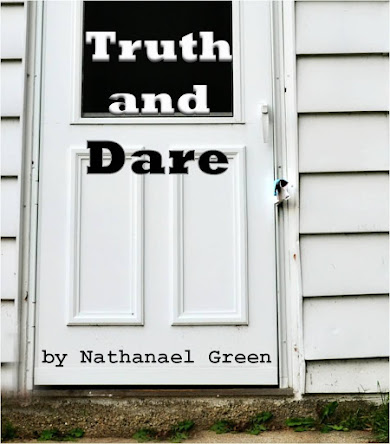
TRUTH and DARE (short story) by Nathanael Green


Published in December of 2013 as an e-book

Simon is the second least popular kid in his summer camp.  Sadly, the least popular kid in camp, Charlie Fergle, is going home and Simon knows he will be be the target of the nightly rounds of "truth or dare."  But, Simon does not want to leave his summer camp because he has met the girl of his dreams, Opal Finley.

Well, he hasn't really met her properly. He has admired her from afar, he has tried to speak to her and he has failed in spectacular fashion every time.


So far, this makes TRUTH and DARE sound like a horrible short story, but it is actually very funny and very sweet. 


This is my first short story by Nathanael Green, but I can guarantee it won't be my last.


I rate this short story 5 stars out of 5.


This story can be found on Amazon.com here: Truth and Dare by Nathanael Green.

Reviewed on January 25, 2014

BONES in HER POCKET (Temperance Brennan #15.5) (audiobook) (short story) by Kathy Reichs


Published by Simon and Schuster Audio in December of 2013.
Read by Linda Emond
Duration: 1 hour, 56 minutes.
Unabridged.

This short story is designed to go between books 15 & 16 in the series and is the audiobook version of a kindle e-book that was released in the summer of 2013.

In Bones In Her Pocket forensic anthropologist Temperance Brennan is called out to a remote location called Mountain Island Lake. It is the site of an artist colony and a raptor rescue center (they help deal with injured hawks, eagles and owls as well as advocate for policies that will help those animals).

A body was found floating in a canvas bag that floated up in the aftermath of a serious flood. As Brennan figures out whose body was found she soon discovers that there is no shortage of suspects...

This is my first Kathy Reichs book of any sort. To her credit, Reichs did not lose this newbie to her series despite the short length of the audiobook. The story moves along quickly and is easy to follow.

The reader, Linda Emond did a fabulous jobs with the reading, particularly the  accents. 

Note: This audiobook was sent to me by the publisher through Audiobook Jukebox's Solid Gold Reviewer program in exchange for an honest review.

I rate this audiobook 4 stars out of 5.

This book can be found on Amazon.com here: Bones in Her Pocket.

Reviewed on January 25, 2014

Featured Post

<b><i>BAN THIS BOOK (audiobook)</i></b> by Alan Gratz

Published in 2017 by Blackstone Audio, Inc. Read by Bahni Turpin. Duration: 5 hours, 17 minutes. Unabridged. My Synopsis Ban This Book is t...

Popular posts over the last 7 days