WAR on the BORDER: VILLA, PERSHING, the TEXAS RANGERS, and an AMERICAN INVASION (audiobook) by Jeff Guinn


Published in 2021 by Simon and Schuster Audio.
Read by Timothy Andres Pabon.
Duration: 10 hours, 10 minutes.
Unabridged.


Synopsis:

The famous expedition into Mexico led by "Black Jack" Pershing to punish Pancho Villa in 1916 and 1917 is the stated topic of this book. However, this book is much more than that. It is a look at the Mexican Revolution (1910-1920) and World War I (1914-1918) and America's rather aggressive foreign policy in Latin America.

Within most Americans' living memory the United States had taken on the responsibilities of empire by defeating Spain in the Spanish-American War in 1898. The United States took the Philippines, Guam, Cuba and Puerto Rico and immediately got involved in a fight against Filipino insurgents and independence movements that lasted more than a decade. The concept of foreign intervention was not a new one and the impulse to intervene remained strong.

With war in Europe looming, the Mexican Revolution made America nervous. An unstable Mexico looked like an invitation for European intervention. America directly intervened multiple times, including the well-known punitive mission led by Pershing to capture or kill Pancho Villa. 

Villa led one of the many revolutionary armies that was trying to change the government in Mexico. Sometimes they worked together, sometimes they fought each other as much as they fought the government. Villa was on the decline, having been beaten multiple times and reneging on several promises to him men. 

But, Villa understood "media" as it was then. He had been the subject of a Hollywood movie, including actual footage of his men "in action". He got his name and his image in the newspapers regularly - always with the same exciting look - a big sombrero, a big mustache and bandoleers full of ammunition.

Villa decided to shake things up. He needed money, he needed attention, financial support and volunteers to join him and an attack on the United States itself might just do it. He attacked Columbus, New Mexico. He needed the loot but more importantly, he needed to look like he had no fear of Mexico's neighbor. He also figured (correctly) that America would intervene and the Mexican people would reflexively come to his aid with money and volunteers (not really). 

*******

My review:

This book is a big sprawling book and it is mis-titled in my opinion. The actual punitive mission by Pershing mentioned in the title takes up maybe 1/3 of the book. It's not that the other information wasn't relative, there was just so much of it and I did not think it was not organized particularly well. It's like the author just kept collecting tons of relevant information and somehow couldn't cull it down to the original theme of the book - Pershing vs. Villa and couldn't organize it in a compelling way. 

Some critics have gone after the author for pointing out that the border situation simply seethed in racial tension and the Texas Rangers were far from the noble heroes you see in Chuck Norris' TV show Walker: Texas Ranger. I literally have no issue with the facts that he presented. I have an issue with the presentation of the facts.

I rate this audiobook 3 stars out of 5. It can be found on Amazon.com here: WAR on the BORDER: VILLA, PERSHING, the TEXAS RANGERS, and an AMERICAN INVASION by Jeff Guinn.

WHY WE DID IT: A TRAVELOGUE from the REPUBLICAN ROAD to HELL (audiobook) by Tim Miller


Unabridged.

Tim Miller is a Republican political operative. He previously worked on the presidential campaigns for John McCain (2008), Jon Huntsman (2012) and Jeb Bush (2016), worked for the Republican party as a liaison to the Romney campaign (2012), created "gotcha" content for websites and traditional media, helped run a Political Action Committee (PAC) and writes regularly for Rolling Stone magazine and political websites.

He's connected. He knows someone on every campaign. He knew people all over the Trump administration. 

He is also a "Never Trumper". He once made a list compiled by the Washington Post of the top ten Never Trumpers.

Miller talks about the motivations of people that joined the Trump White House after they swore that they never would because he was simply not an acceptable candidate or president. He talked with several people and he got the same answers over and over. Among them are these:

1. Fear of Missing Out. The White House is where the action is, no matter who is the President. 

2. Fear of damaging their careers. Refusing to work for President Trump could spell the end of their career as Republicans.

3. Looking to further their careers. Enthusiastically supporting the GOP candidate and the GOP President could vault their career ahead.

4. Being the adult in the room. Someone had to keep an eye on Trump and say no to the bad ideas and suggest better ones. A lot of people said this but there were very few times when someone could tell him that they actually did it.

There were other categories as well, but perhaps you get the idea.

Miller makes an excellent analogy comparing his own life with his colleagues that went to work for President Trump and his own experiences working for multiple Republican candidates as a gay man. He notes that he simply ignored the clear biases that some of the candidates he supported had against people like him. Instead, he focused on the positives because...(insert one of the reasons from up above). 

Miller's analysis was most likely accurate. However, I wasn't a big fan of Miller's snarky nicknames for people. He was especially rough with Sean Spicer. I am not a fan of Spicer, but I see no reason to call him by an embarrassing nickname that he was given in college over and over and over again. It was unnecessary.

I rate this audiobook 4 stars out of 5. It can be found on Amazon.com here: WHY WE DID IT:  A TRAVELOGUE from the REPUBLICAN ROAD to HELL (audiobook) by Tim Miller.

THE KITE RUNNER (audiobook) by Khaled Hosseni


Published by Simon and Schuster Audio in 2003.
Read by the author, Khaled Hosseni.
Duration: 12 hours, 1 minute.
Unabridged.


This book was published about 20 years ago and I just got around to reading it. This is not an uncommon thing for me - I did the same with the Harry Potter books and The Handmaid's Tale, also.  I was motivated to read this for the same reason I was motivated to read The Handmaid's Tale - it was permanently placed on a banned book list in Idaho in May of 2022.

There are three parts to the story. The first part is a long description of the life of Amir, a boy who is growing up in Afghanistan in the 1970s. Amir had his problems, but he had a pretty decent life. He and his father fled to the United States when the chaos think of as "Afghanistan" began - the Communist Revolution of 1978.

The author, Khaled Hosseni
The second part of the book is the story of how Amir and his father adapt to life in the United States, including the re-building of an Afghan community in California. 

The third part of the book is Amir dealing with a great offense that he committed against his best friend when he was a young man as he heads back to Afghanistan.

***********

For years and years, I have been hearing how amazing this book is. It is very hard to live up to almost 20 years of hype. This is a good book (I rate it 4 out of 5 stars), but not an amazing book. It was a first book for Hosseni and it shows first book problems like pacing issues. The first part is very slow and Amir's mental self-flagellation happens so often that it gets old. I wanted to scream at Amir to do something about it or just shut up about it.

Bottom line - it is a good book, but not an amazing one. It can be found on Amazon.com here: THE KITE RUNNER by Khaled Hosseni.

Here is a link to an article about books banned in Florida schools during the 2023-2024 school year. It is a ridiculously long list. Here are other schools that have banned this book: Click here


INCENDIARY GIRLS: STORIES by Kodi Scheer


Published in 2014 by Little A.

Kodi Scheer was the writer-in-residence at a cancer center when she wrote this collection of short stories. They all have two things in common: 1) a focus on female characters and 2) a medical tie-in.

This picture goes with the first story.
Normally, I struggle with short story collections - they don't develop the characters enough or they tell too little for the reader to get any sort of handle on what is going on until the story is practically over. 

This collection has a couple of weird stories that fit those characterizations, but it is mostly a set of strong stories that actually gets better as it goes along. 

As I mentioned, there is a medical theme throughout the stories, but there is also a strong dose of the supernatural throughout these stories as well.  

I rate this short story collection 4 stars out of 5. It can be found on Amazon.com here: INCENDIARY GIRLS: STORIES by Kodi Scheer.

INDIANA by Darryl Jones and Jared Carter


Published in 1984 by Graphic Arts Center Publishing Company.

This coffee table book is primarily a showcase of pictures highlighting beauty from all over the state of Indiana. The photographer is Darryl Jones and he has a good eye. Some of his pictures are truly great, most are solid and none are bad. There is not a single picture that could be construed as a negative one.

The book is introduced by a rather lengthy essay by Jared Carter. The best part of the essay is his recollections of the days when he sat in the infield to watch the Indy 500. I am interested because I have gone to the Indy 500 for 35+ years.

Scaffolding in the infield at the Indy 500.
Note: this is NOT a picture from the book.
Carter discusses how people would bring trucks to sit on in the infield so they could see the race better. Soon enough, people started sitting on the roofs of box trucks to get a better view. Not long after that, people would bring scaffolding and attach it to the truck and build a platform above the box truck. One level became two and that became three and so on. Eventually, one of the platforms collapsed and killed two people and the platforms were banned. 

Usually, I am a sucker for books like these, but this one just didn't do much for me. I rate it 3 stars out of 5. It can be found on Amazon.com here: INDIANA by Darryl Jones and Jared Carter

V for VENDETTA (graphic novel) by Alan Moore and David Lloyd


Originally published in 1982.
Originally published in completed form in 1988 by DC Vertigo.

This iconic graphic novel has been on my to-be-read list for a long while. I tried watching the movie, but it had been a long week and I soon fell asleep. I assumed that the movie missed some of the pizazz of the graphic novel. I decided to go ahead and read the book when I noticed it was on the list of some 850 books that a Republican Texas state legislator wanted to ban from all Texas schools. 

V for VENDETTA is the story of a masked vigilante who decides to stand up against the fascist government of an alternative history version of the United Kingdom. The masked character has become the single most recognizable feature of the book and the face of the "anonymous" movement that swept over social media a few years ago.

Many people assume that it was put on the censorship list because it features a character that fights back against a repressive government. They assume that Texas is afraid of people that fight back, but they forget that this is a state that loves its own history of fighting back. The story of the Alamo and the Texas Revolution is revered in Texas. Texas was also a member of the Confederacy in the Civil War and some people in the Texas Republican Party have openly discussed another attempt at secession.

Based on the other books on this list, I think that the book was added to the list because there are 4 or 5 little panels in the comic that show a naked woman. They are not particularly lurid drawings, but most of the books are on this list for some sort of sexual reason. What appears in this book is certainly not worth the fuss of banning the book, but if you are making a list of 850 books you don't care about not making a fuss.

On to my review:

I was very much looking forward to this book. I like dystopian novels and I am very sympathetic to the themes of this book. However, I must admit that my reaction to the movie pretty much matched my reaction to the graphic novel. It is stylish but very slow and boring. I had a hard time finishing it and probably wouldn't have if not for occasional bursts of interesting plot showing up from time to time. 

I rate this graphic novel 2 stars out of 5. It can be found on Amazon.com here: V for VENDETTA by Alan Moore and David Lloyd.

CHINESE CIVIL WAR: A HISTORY from BEGINNING to END (Chinese History) (kindle) by Hourly History


Published in 2022 by Hourly History.


Hourly History is a series of histories and biographies that a reader can read in about an hour. Sometimes, that works out quite well. Sometimes, the topic is just too big to cover in an hour.

The first half of the twentieth century was a time of great turmoil for China. There were multiple wars, political chaos, multiple governments. There was also 15 years of civil war in two distinct phases, interrupted by the Japanese invasion of China during World War II.

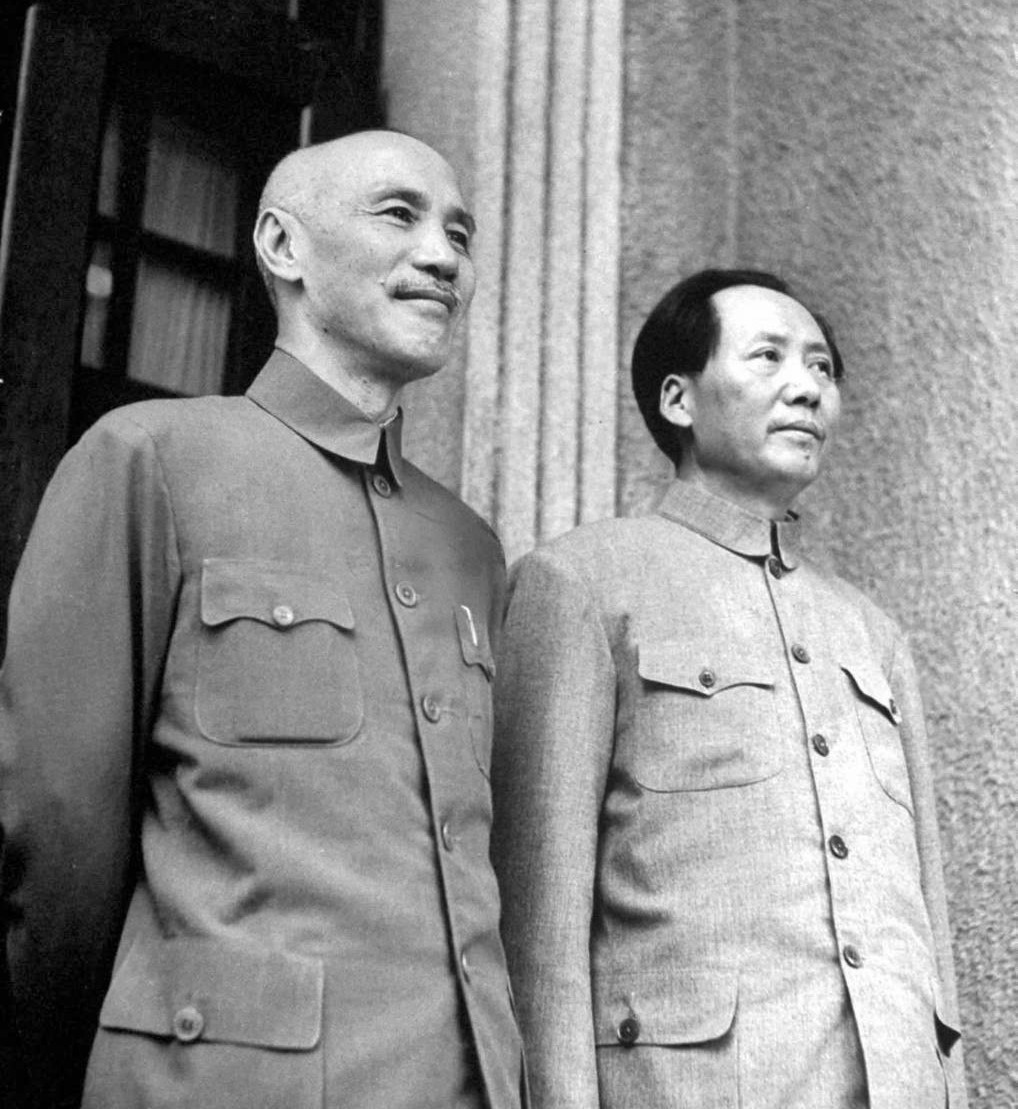
From 1927-1937, Chaing Kai-shek's Nationalist government and Mao Zedong's Communist government fought a civil war. When Japan invaded China, the civil war was suspended (sort of) and a united front was formed. Soon after the end of the war, the civil war resumed and the communist faction won, with the exception of the island of Taiwan.

Chiang Kai-shek (1887-1975) and
Mao Zedong (1893-1976)
This short history suffers from a couple of problems. There is simply too much to cover. The book attempts to describe Mao's politics, but never even tries to explain the Nationalist program, such as it was. 

The book also suffers from an abundance of clunky writing. For example, this is from a paragraph about 2/3 of the way through the book: "...the next stages of the Chinese Civil War would commence. This state of civil war would last for more than three years, sending China into a state of warfare once more."

In two sentences there are three references to the civil war starting up again that state nothing more than the fact that the civil war was starting up again. Space is tight in a book that is only supposed to last an hour and also tell the story of almost 20 years of warfare. Cleaning up this sort of writing would make more room for other important items, like an explanation of Chiang Kai-shek's policies. 

I rate this audiobook 3 stars out of 5. It can be found at Amazon.com here: CHINESE CIVIL WAR: A HISTORY from BEGINNING to END by Hourly History.

FRANCIS of ASSISI (The Great Courses)(audiobook) by William R. Cook and Ronald B. Herzman


The idea behind The Great Courses is a simple one - take a college lecture course given by an expert that knows how to give an interesting lecture and package it up as an audiobook that anyone can listen to.

In the case of this audiobook, there are two college professors that have a great chemistry together and really enjoy a discussion of St. Francis.

Before this audiobook, I knew only the barest of details of St. Francis so I found the entire discussion interesting and informative.

I do have a rather big complaint about the way the information was presented, however. They start with a biography of St. Francis up until the moment when he becomes recognized by the Pope and his movement is up and going. From that moment, they move to a thematic presentation and the listener hears about moments in his life that are not tied to any sort of biography. 

For example, they mention more than once that he participated in a crusade as a bystander and as a person that wanted to reach out to the Muslims that were defending, but there is no coherent narrative to that story that makes it more than just a few random snatches of extremely interesting information and teachings. I do not like the fact that I listened to a six hour audiobook about the life of a person and I do not have a grasp of many of the basics about the life of that person. As a fellow teacher of history, I cannot imagine the thought process that went into that decision.

Fortunately, they provided an interesting list of books or presentations written by other, well-known authors such as W.E.B DuBois and G.K. Chesterton.

I rate this audiobook 4 stars out of 5. It can be found here: FRANCIS of ASSISI (The Great Courses)(audiobook) by William R. Cook and Ronald B. Herzman.

THE FLAG, the CROSS, and the STATION WAGON: A GRAYING AMERICAN LOOKS BACK at HIS SUBURBAN BOYHOOD and WONDERS WHAT the HELL HAPPENED (audiobook) by Bill McKibben


Published in 2022 by Macmillan Audio.
Read by Eric Jason Martin.
Duration: 6 hours, 39 minutes.
Unabridged.


McKibben looks back at his life in the suburbs in the 1960s and the 1970s and modern America and compares the two.

In certain circles this is an invitation to complain about the modern world with comments like, "When I was a kid, we didn't have all of this blah, blah, blah foolishness."

This is not that sort of book.

McKibben looks at three general areas:

1) The way that history was taught and the ways that he perceived that his country acted ("The Flag"). He grew up in Lexington, Massachusetts and was a tour guide as a young man for tourists who came to celebrate the bicentennial in 1976. The more he has learned, the more he knows that he was taught a simplistic, feel-good version of American history in school;

2) The things that his church taught him and how churches have fared over the intervening years ("The Cross"). He grew up and was very active in his church. He is really quite complimentary of his church upbringing. But, all denominations of churches have been shedding members. He even describes how one of the churches he attended had to consolidate with another congregation.

His thesis is not that the church in America was doing bad things, necessarily. His thesis is that the church gave up its best role - the role of speaking truth to power (for example, of the Old Testament story of when the prophet Nathan went to King David to tell him that he was wrong for sleeping with Bathsheba, the wife of one his trusted soldiers and then having that soldier killed so he could keep her).

Instead, the church became a part of the power structure. It worked with the government with the best of intentions. It seemed like a good idea to put these two institutions to work on social issues, but it neutered the church when it came to calling out the government on areas where it fell/falls short because the church owes certain things to the government or it is just too tied in to see the problems. McKibben uses the example of an attempt to build low income apartments in Lexington that was nixed because "those people" would come out of Boston and live with them in the suburbs. 
Bill McKibben in 2016
(photo by Gage Skidmore)

3) The situation of the American family and how it has changed over the years, including the wealth gap, how it relates generational wealth and policies that have exacerbated the wealth gap, especially among minority groups. He also throws in a healthy serving of environmental concerns - an area that he was worked in for a long time ("The Station Wagon"). This ties in well with the low income apartments in the previous paragraph.

I found this book to be a well-written and surprisingly tight set of arguments, considering that this book could have meandered all over the place with the topics of American history, the church in America and the American family. At the end, McKibben tosses in too much environmental discussion. It is the only part of the story that is not very tight, very focused and very integrated with the rest of the book. I'm not saying he didn't have a point, I am saying that it may not have been the best place to insert that point.

Still, I rate this book 5 stars out of 5. It can be found on Amazon.com here: 
THE FLAG, the CROSS, and the STATION WAGON: A GRAYING AMERICAN LOOKS BACK at HIS SUBURBAN BOYHOOD and WONDERS WHAT the HELL HAPPENED (audiobook) by Bill McKibben.

PABLO PICASSO: A LIFE from BEGINNING to END (Biographies of Painters #5) by Hourly History


Published in 2020 by Hourly History.

Despite me having talked extensively about Pablo Picasso (1881-1973) in my recent review of an e-book about Francisco Franco, I am not an expert on Picasso, but I know way more than the average person. He has some paintings that I really like, but I am mostly not a fan. 

This short biography hit the spot in that it covered the details of his life without focusing too much on one particular part. This covered his 70+ year career in an even manner and included his personal life well.
Pablo Picasso in 1962

The real weakness of this e-book was the fact that they couldn't license his paintings and insert them into the book. But, since I read this on my cell phone it was pretty easy to switch to the browser and search the piece of art that was being discussed and take a look at it.

I wasn't much of a fan of Picasso as a person before I read this book and my impression was not changed one bit.

I rate this e-book 4 stars out of 5. It can be found on Amazon.com here: PABLO PICASSO: A LIFE from BEGINNING to END (Biographies of Painters #5) by Hourly History.

THE PRESIDENTS' WAR: SIX AMERICAN PRESIDENTS and the CIVIL WAR THAT DIVIDED THEM by Chris DeRose


Published in 2014 by Lyons Press.

This is my 142nd Civil War-related review. When I heard about this book, I found myself wondering how no one else thought to write this book before.

Former presidents have their own political power and impact current events. Nowadays, you can see this with Jimmy Carter's modeling of volunteerism and his attempts to be a peace mediator in the 1980s and 1990s, Bill Clinton's maneuvering to remain relevant, George W. Bush's refusal to endorse or approve of anything done by Donald Trump, the calls that the Biden Administration is really just the third Obama Administration and, obviously, the 45th President's refusal to admit he lost the 2020 election.

DeRose starts with a rundown of the political careers of each politician involved: John Tyler, Martin Van Buren, James Buchanan, Millard Fillmore, Franklin Pierce and Abraham Lincoln. 

Then, he discusses how they reacted to Lincoln's candidacy, the break up of the Democrat Party in 1860, Lincoln's election and the Secession Crisis. 

John Tyler, the 10th President (1790-1862)
To a man, they were all critical of Lincoln's handling of the Secession Crisis. John Tyler surprised me, though. Tyler was from Virginia and owned slaves and had a working slave labor plantation so he was never going to be supportive of Lincoln who was philosophically against slavery but only against expanded it into new territories and/or states as a matter of policy. 

Tyler left the presidency politically unpopular and seemed to have relished in the attention he received during the Secession Crisis. Suddenly, people were seeking his opinion on the most important issue of his lifetime. Tyler came to D.C. and led a peace conference hosted by Virginia in the Willard Hotel. 

Nothing came from the conference. Tyler operated as a proxy for the Confederacy, in my opinion, and his proposals were ridiculous. Tyler was elected to the Confederate Conference and served in the Provisional Confederate Congress until his death. He remains the only President that ever served in a government at war with the United States. 

I was amused by the constant thread of James Buchanan's post-presidency - he was going to write a book to explain his actions during the Secession Crisis. He claimed over and over again that he would be vindicated once everyone knew all of the facts and ... he never was. It was almost like a running gag throughout the book. Even today, he is universally acknowledged to be the one of the worst presidents of all of the presidents. 

The book continues on with reactions from each of the surviving presidents to the events of the war such as Antietam, the Emancipation Proclamation, Gettysburg, the fall of Atlanta, Lee's surrender and, finally, the assassination of Lincoln. 

I rate this book 5 stars out of 5. It can be found on Amazon.com here: THE PRESIDENTS' WAR: SIX AMERICAN PRESIDENTS and the CIVIL WAR THAT DIVIDED THEM by Chris DeRose.

INDIANA from the AIR by Richard Fields and Hank Huffman


Published in 1996 by Indiana University Press and Indiana Department of Natural Resources.

From 1993 to 1995 the two authors combined to take pictures of Indiana from an Indiana Department of Natural Resources helicopter - one was the pilot and one was the photographer.

They chose 100 pictures of the state for this coffee table book. There are 92 counties in Indiana, but there is not a picture of each county. However, these pictures are a good representative sample of the state ranging from the Indiana Dunes on Lake Michigan to the fossil bed at the Falls of the Ohio. The pictures include urban areas, suburbs, small towns, farms and pictures of Indiana's understated beauty. There are no commanding views like the Grand Canyon or the Rockies, but it is beautiful in its own way.

Since the book is more than 25 years old, it was interesting to note some of the changes. The Indianapolis skyline has changed with the addition of at least two very large buildings on either side of downtown. The photograph featuring the campus of IUPUI (Indiana University Purdue University at Indianapolis) is, I am pleased to say, very out of date. That university has really expanded and come into its own in the last 25 years. The West Baden Springs Hotel is pictured as it used to be - an abandoned but still glorious piece of architecture. Now, it is completely restored and very high class working hotel. 

I rate this book 4 stars out of 5. I liked the book, but I would have made an effort to have a wider variety and included architectural gems like Columbus and Indiana University - Bloomington. 

This book can be found on Amazon.com here:  INDIANA from the AIR by Richard Fields and Hank Huffman.

FRANCISCO FRANCO: A LIFE from BEGINNING to END (kindle) by Hourly History


I am an avid reader of history, but I have areas of weakness that I am perfectly willing to shore up a bit, but I don't want to invest a ton of time in. Francisco Franco was one of those people for me. 

I came into this biography knowing only the barest of facts about the long-time dictator of Spain. Franco ruled from 1939 until his death in 1975. This biography spends little time on his early life and could have expanded on the Spanish Civil War that brought him to power. For example, the most famous image of the war is the painting Guernica

Guernica by Pablo Picasso (1937)
Guernica
is one of the most famous paintings of the 20th century. It depicts the chaos of an attack by the German air force on the city of Guernica. Guernica was holding out against Franco's forces and Franco enlisted German help to deal with the city. German and Italian bomber planes tried out the relatively new technology in real life. Pablo Picasso painted Guernica to protest the attack and had it displayed at the 1937 World's Fair in Paris. Because of that, perhaps the most famous artist in the world and perhaps the most famous citizen of Spain was not allowed to return to Spain because of Franco. Most likely, Picasso wouldn't have wanted to return anyway - because of Franco.

This is the problem with the series. Since each book is limited in length, the author has to pick and choose what to include. In this case, they skimped on how he came to power. I enjoyed the discussion of how he sorted out a third way between the Axis and the Allies during World War II (not that I thought he was a good man for having done so, but it was interesting) and continually sought to become an accepted member of the western alliance against the Soviets after the war. I wouldn't have cut a word from the coverage of World War II, but I would have cut some of the talk about how he ran things on a day-to-day basis.  Why? Going back to Picasso, what most of the world outside of Spain knows about Franco comes from that painting of the bombing and it should have been addressed.

Anyway, I confirmed what I had gleaned about Franco. I found it interesting how he picked a member of the royal family, Juan Carlos, to be his successor. Juan Carlos went on to lead his country to a democratic system of government.

This e-book is a good choice to fill in some blanks (what I did) or get an introduction to one of the longest-ruling dictators of the 20th century. But, it is not the complete story. 

I rate this e-book 3 stars out of 5. It can be found on Amazon.com here: 
FRANCISCO FRANCO: A LIFE from BEGINNING to END (kindle) by Hourly History.

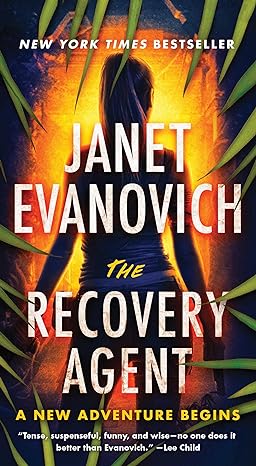
THE RECOVERY AGENT: A NOVEL (audiobook) by Janet Evanovich


Published in 2022 by Simon and Schuster Audio
Read by Lorelei King
Duration: 7 hours, 26 minutes.
Unabridged.


Janet Evanovich's The Recovery Agent features Gabriela Rose. Recovery agents can be another term for bounty hunters who look for fugitives, but Gabriela Rose is not a bounty hunter. She searches for missing property. Sometimes it's insurance fraud, sometimes it's stolen property and sometimes it's just looking for something rare for a wealthy client. She is based in New York City, is quite successful and flies all over the world recovering items. 

Gabriela Rose is dismayed to hear that her hometown in North Carolina has suffered a direct hit from a hurricane and (somehow) won't get any help from FEMA or any other government recovery program. The town is dying but Gabriela's grandmother knows where a fortune might be found. She was somehow told about the fortune by the ghost of her dead grandmother. In that fortune there is a ring called the Seal of Solomon. This ring is mostly in Arabic language legends about King Solomon of Israel who could use it to talk to animals and to control demons and djinn (genies).

Most of the book is a hunt to find and keep the ring in various settings with an ongoing simmering romance on the side. Readers familiar with the 1980s movie Romancing the Stone or the 2022 movie The Lost City will get the idea - except this book has competent protagonists.

My review:

This book is just all over the place, literally. There are 5 different trips to 4 different countries with jungles to find this ring. It gets old.

*****caution: spoilers*****

The goal of all of this searching is to find a treasure to save the town. Time after time the main characters leave behind literal fortunes of common, run of the mill gold trinkets, jewel-encrusted necklaces, statues, and at least one other famous golden item that would certainly have saved the town. 

There are other issues as well. Evanovich loves to name drop products in her books - pistols, boats, cars and more are named by brand. At one point, there is a planned attack on a compound. Gabriela Rose goes into battle with a fully automatic machine gun wearing a $465 La Perla Balconette bra (the price is mentioned). We know what bra she is wearing because at one point her bra is used as a tourniquet. Who wears a $465 lacy push-up bra into battle and not a sports bra? Sure, it made for a funny scene in the book, but it makes no sense - especially when she goes to a Target later on and buys common everyday underclothing and makes comments about how great they are.

*****end spoilers*****

What is good in the book is interesting supporting characters throughout the book.

I rate this audiobook 2 stars out of 5. It can be found on Amazon.com here: THE RECOVERY AGENT: A NOVEL (audiobook) by Janet Evanovich.

LAST ONES LEFT ALIVE: A NOVEL (audiobook) by Sarah Davis-Goff


Published in 2019 by Macmillan Audio.
Read by Anne-Marie Gaillard,
Duration: 5 hours, 33 minutes.
Unabridged.


Set in a dystopian future in Ireland, Last Ones Left Alive is the story of Orpen, a teenage girl. The world is overrun by "skrakes".

The reader is never exactly told what skrakes are, but it is useful to just think of them as a sort of zombie. Skrakes hunt humans and when a human is bitten by a skrake, the human gets an infection and becomes a skrake. 

Orpen grew up on an island off of the coast of Ireland. There are three of them - Orpen, her mother and another woman named Maeve, The skrakes never come to the island, but from time to time her mother and Maeve must leave the island to scrounge for supplies and hunt.

The story is told in chapters that alternate between the present and flashbacks to Orpen's childhood. There are hints as to what Maeve and her mother did before they came to the island. It is clear is that they have extraordinary hand-to-hand combat skills, both individually and especially as a team. Orpen is trained in those skills as she gets older and has finally reached the point where she can head to the mainland as well....

This is a debut novel for the author and she did an extraordinary job of telling the story from the point of view of just one character. There is no all-knowing narrator that tells us what happened to unleash the skrakes and there is no change of perspective that lets the reader go "Oh! Now I see." Instead, we get the perspective of this one young lady and it's more than enough to build a compelling story.

The audiobook was read by Anne-Marie Gaillard. Her Irish accent was an amazing change of pace for this audiobook reader. Her tone was perfect, no matter the accent.

I rate this audiobook 4 stars out of 5. It can be found on Amazon.com here:

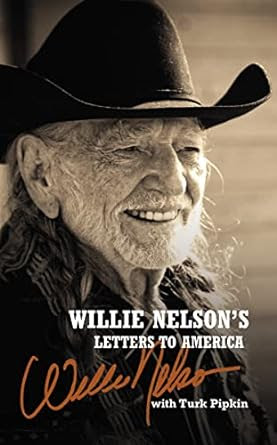
WILLIE NELSON'S LETTERS to AMERICA (audiobook) by Willie Nelson and Turk Pipkin


Published in 2021 by Harper Horizon.
Read by co-author Turk Pipkin
Duration: 3 hours, 6 minutes.
Unabridged.

During the Covid-19 lockdowns Willie Nelson decided to write a book. This is not an unusual thing for Willie - he has written a handful of memoirs focusing on various parts of his almost 80 years as a professional musician (he was paid to play in a local band at the age of 10) and this book almost certainly overlaps with other books. 

The format of Willie Nelson's Letters to America is that Willie is writing thank you letters to various people, places and things that influenced his life and his career. He has a letter to his hometown, his grandparents, his sister, various members of his band over the years, his ex-wives, his wife, his kids, the fellow members of the supergroup The Highwaymen, among others.
Nelson's guitar, Trigger

There is also a letter to his guitar, Trigger. Nelson bought Trigger, sight unseen, in 1969 because he needed a new guitar after someone accidentally damaged the guitar he had been playing. Nelson has been playing that guitar ever since. He has literally worn a nasty-looking hole in it. This iconic instrument has its own Wikipedia page and was the subject of a Rolling Stone magazine documentary in 2015.

Nelson's last big theme is a series of politically-inspired letters. He writes to the Founding Fathers and he notes that although he is politically active, he refuses to talk politics on stage because that's not why people buy tickets and it ruins the fun.

I listened to this as an audiobook, but I liked these quotes well enough to get out a piece of paper and write them down:

"Rather than hiding our flaws, it's best to use our right of free speech and discuss them in the open."

"I've been asked if I believe people should be allowed to kneel during the national anthem. Regarding peaceful protests, and just about everything else, I believe everyone should do whatever the f*** they want to."

The biggest disappointment if this audiobook is that Willie Nelson chose not to read it. Instead, he asked his co-author Turk Pipkin to read it. Pipkin seems like a great guy and he does a good job with the reading, but he does not have that iconic Willie Nelson voice. 

I rate this audiobook 4 stars out of 5. It can be found on Amazon.com here: WILLIE NELSON'S LETTERS to AMERICA (audiobook) by Willie Nelson and Turk Pipkin.

HOW CIVIL WARS START: AND HOW TO STOP THEM (audiobook) by Barbara F. Walter


Published in January of 2022 by Random House Audio.
Read by Beth Hicks.
Duration: 7 hours, 17 minutes.
Unabridged.


The author of How Civil Wars Start has an extensive background in studying exactly why some countries collapse into Civil War and other countries don't, even when everyone thinks they will, like South Africa after Apartheid.

The first half of the book is a look at countries that slid into Civil War and specific characteristics that tend to make Civil War more likely. Her team has come up with a scale and they get concerned when societies move quickly on that scale. It doesn't matter if they move quickly away from democracy or towards it - generally speaking moving quickly means that groups in power lose power and they don't like it and they lash out. A classic example of this is Iraq. The Sunni had almost all of the power under the dictatorship Sadam Hussein, but once he was overthrown the Shia majority took power and decided that it was time to get even - democratization brought on a civil war because one group feared losing power and another group couldn't wait to abuse their newfound power.

The author explains how her team studies modern examples of civil wars and starts listing out the warning signs. A careful reader will start to compare those clues to the current political climate in The United States

and start to notice uncomfortable similarities. 

This is intentional.

This book is meant as a warning. The author lays out a scenario in which militias start a terror campaign against state governments across the country. By the way, the very existence of group-based militias is a sign of major trouble. The Proud Boys were clearly heavily involved in the January 6 riot (as I am writing this, several are on trial and at least one has made a plea deal) and a group called Patriot Front had 31 members arrested for planning attack on a LGBTQ event in a city park in Idaho.

We are standing on a precipice. Do we fall in, like the former Yugoslavia and Iraq did, or do we somehow decide to go back to working together like South Africa did?

I rate this book 5 stars out of 5. It can be found on Amazon.com here: HOW CIVIL WARS START: AND HOW TO STOP THEM by Barbar F. Walter.


SEA HORSE: THE SHYEST FISH in the SEA by Chris Butterworth


Published in 2009 by Candlewick.
Illustrated by John Lawrence


Sea Horse: The Shyest Fish in the Sea is an early reader picture book aimed at children aged 4-8. It tells the story of a male sea horse named Sea Horse. It describes his daily routine and introduces his mate. Along the way, they have babies. The entire book is read on this 8 minute long YouTube video.
Link to this Tweet on Twitter
Yes, they misspelled Santa Claus.
Perhaps they should read more...😉

I normally don't review books aimed at small children but this summer I have been reading a lot of books that have been included on various book ban lists. This one was on a list in Tennessee because of a group called Moms for Liberty. They thought that the sea horses in the book were too sexy. Also, they argued that this book was a sneaky argument in favor of transgenderism (see attached picture - yes, it's a real Tweet - see the link underneath it to go to the actual Tweet). 

Here are more links to stories about the books they wanted to ban: Link here and here.

How does the subject of transgenderism come into a story about sea horses? Turns out that sea horses have a fairly unique way of breeding. They female deposits her eggs into the male to be fertilized and the male carries them until they hatch and then they leave his body. So, it looks like the male is giving birth. 

As a teacher (30+ years of grades 6-12) and as a dad, I didn't see any problem with this book. My experience tell me that kids love 5 kinds of "fishes" at aquariums, in no particular order:

1) Sharks;
2) Clown Fish (because of Finding Nemo);
3) Tang Fish (because of Finding Nemo);
4) Sea horses;
5) Electric eels.

Sea Horses have a cool factor all their own and kids love to learn things like the fact that they mate for life and the male "gives birth". This is exactly the kind of things that kindergartners learn and tell everyone they meet for the next 3 days.

I encourage you to watch the video I linked above and see if you think that this book is too sexy and encourages children to change genders. I don't think so. Moms for Liberty does. It's not the first time that I disagree with Moms for Liberty. I am certain it won't be the last time, either. 

I rate this book 5 stars out of 5. It can be found on Amazon.com here: SEA HORSE: THE SHYEST FISH in the SEA by Chris Butterworth.

PRONTO (Raylan Givens #1)(audiobook) by Elmore Leonard


Originally published in 1993.
Published by HarperAudio in 2010.
Read by Alexander Adams.
Duration: 5 hours, 54 minutes.
Unabridged.

I am a big fan of the TV series Justified which features a character named Raylan Givens. I stumbled across this audiobook and was pleased to see that Elmore Leonard had done more than create a character for a TV show - he had written a whole series of books about that character.

Synopsis:

Pronto starts out in Miami and is mostly about Harry Arno, a man who runs an illegal bookkeeping operation (just to be clear, he takes illegal bets, he does do illegal accounting). Harry is ready to retire but is unclear how he will extract himself from the organized crime syndicate that "protects" his operation and likes their 50% take. Or...maybe it's less than that. Turns out Harry has been cooking the books for years and has been taking a cut out of the mob boss's cut for years, maybe even decades.

A U.S. Attorney has decided to take down the organized crime boss that Harry reports to. The U.S. Attorney assumes that Harry is basically honest with his organized crime boss and decides to pressure Harry by setting him up to look like he's skimming money from the organized crime boss's cut. The idea is to make the crime boss mad and Harry will run to the U.S. Attorney's office for protection in exchange for testifying in court.

U.S. Marshal Raylan Givens thinks that this is a raw deal so he gives Harry a warning. Harry pretends to go along and agrees to go into hiding if Raylan Givens is the one that takes him in. Raylan agrees and Harry ditches him in an airport and flies away to Italy. The U.S. Attorney decides it wasn't much of a loss, but Raylan can't stand the injury to his pride of having someone in his custody escape so he takes time off of work and goes to Italy to find Harry...

My review:

I was hoping for better. I rate this audiobook 3 stars out of 5, so it's not horrible - but I was hoping for better. 
Ezra Pound (1885-1972)

Most of the book is about Harry Arno. The second theme of the book is the American expatriate poet Ezra Pound. Pound had lived in the town that Harry Arno fled to and there are plenty of quotes from his poems and discussions about him throughout the last third of the book. Pound was anti-Semitic and openly supported the German Nazis and the Italian Fascists during World War II. Clearly, Elmore Leonard was interested in Pound and decided to work him into the book.

Unfortunately, this felt more like filler rather than anything that added to the story in any sort of meaningful way and I think it hurt the book quite a bit. I doubt I will be moving on to the second book in the series.

This audiobook can be found on Amazon.com here: Pronto (Raylan Givens #1) by Elmore Leonard.

Featured Post

<b><i>BAN THIS BOOK (audiobook)</i></b> by Alan Gratz

Published in 2017 by Blackstone Audio, Inc. Read by Bahni Turpin. Duration: 5 hours, 17 minutes. Unabridged. My Synopsis Ban This Book is t...

Popular posts over the last 7 days