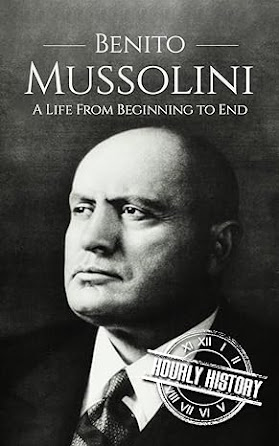
BENITO MUSSOLINI: A LIFE from BEGINNING to END (World War 2 Biographies) (kindle) by Hourly History


Published by Hourly History in 2017.

Mussolini and Hitler in 1937.
Nowadays, Benito Mussolini is best known as Hitler's far lesser partner in the Pact of Steel (signed in 1939), the formal treaty of the Axis Powers. He is often seen as the weaker partner that may very well have drug the entire alliance down due to incompetence. 

But, back when Mussolini took power in Italy in 1922, he was seen, by some, as the vanguard of the future of political organization in Europe - a movement called fascism. He was at least begrudgingly admired by people all around the world. 

This is, perhaps, the most balanced of all of the Hourly History biographies. I was mostly interested in a brief look at how Mussolini came to power and what he did once in power. The biography was a little skimpy on Mussolini's years in power before World War II and it won't please students of the war to see how little they discuss of his wartime policies and decisions. That being said, I thought this was a pretty solid short biography. 

I rate this kindle e-book 4 stars out of 5. It can be found on Amazon here: BENITO MUSSOLINI: A LIFE from BEGINNING to END by Hourly History.

THE RANGER (Quinn Colson #1) (audiobook) by Ace Atkins


Originally published in 2011.
Audiobook version published in 2022 by Recorded Books.
Read by MacLeod Andrews.
Duration: 8 hours, 36 minutes.
Unabridged.


Synopsis:

Quinn Colson is an Army Ranger at the end of his "storming the castle" days. He is in the process of transitioning to a role as a trainer of Army Rangers at Fort Benning, Georgia when he finds out that his Uncle has committed suicide.

So, Colson goes to Northern Mississippi for the funeral.

His uncle was the country sheriff and one of the deputies (a high school friend) tells Colson that she believes that it was a murder staged to look like a suicide. Colson doubts it. 

Meanwhile, word gets out that Colson will inherit all of his father's land, his house, and everything else. Colson starts to believe the deputy's theory of murder vs. suicide once he starts getting major pressure to dump the property as soon as possible to a shady county board member with a reputation of putting together shady deals.

So, Colson decides to stay a few more days to try to figure out what is going on. The more he digs, the worse it gets...

My Review:

First, the negatives:

*Colson knows EVERYBODY in this small county (except for the outsider bad guys). Like this character, I grew up in a rural area and left due to work. I have met literally hundreds of new people and I have tended to forget the ones that I left behind because I didn't see them any longer. Colson has been on active military duty in war zones for the majority of the 9 years and has met lots and lots of people and he still remembers every detail about everyone he knew. He must've been the most well-connected 18 year old in the county because he knows everyone. Someone will say something like, "Do you remember Jimmy?" and he will say sure - and ask if he still dyes his hair, works the morning shift at the gas station, likes ketchup on his scrambled eggs and drives a blue ford 4x4 with a white passenger door. C'mon. Also, yes, Jimmy still does all of these things 9 years later.

*The situation that caused Colson to come back to town would have worked out for the bad guys if they had just stayed patient for a few more days. It's weird that they didn't because they had spent years working on it.

*The first third of the book worked so hard to set a Southern Gothic mood that I almost quit at the 1 hour mark and the 2 hour mark. It was as if the author went down a checklist and tried to squeeze as many things in as soon as possible:

-Broken down homes? Check.

-People with eccentric hobbies or obsessions? Check.

-Grotesque characters? Check.

-Decayed surroundings? Check.

-The weight of the past upon the present? Check.

-Sinister events related to or stemming from poverty, alienation, crime or violence? Check, check, check and check. This is the plot of the book.

Positives: 

-In some books, when a person gets hit or shot it's no big deal and they get up and fight again even though they have a broken jaw or a punctured lung or their spine was severed. Not in this book. When someone gets shot or punched hard that injury stays with them.

-The conspiracy, when it is finally uncovered, makes a lot of sense and rings true.

-The reader of this book is excellent. He doesn't just read the book - he performs it. 

So, three really annoying things and three really good things. That's why I am rating this book 3 stars out of 5. It can be found on Amazon.com here: The Ranger (Quinn Colson #1) by Ace Atkins.

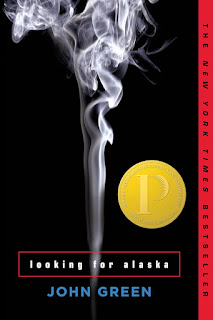
LOOKING for ALASKA (audiobook) by John Green


Originally published in 2005.
Audible audiobook edition published in 2019.
Read by Wil Wheaton
Duration: 6 hours, 40 minutes.
Unabridged.


Set in a boarding school in rural Alabama, this book features a diverse group of friends who are trying to figure out the big things in life - where to get cigarettes, where to get booze, where to get fireworks, the meaning of life, where to find a girl or a boy, how to hide your violations from the adults at the school and what is going to be the next big prank.

Miles Halter is the new kid at school and he is desperately in love (like a lot of young men) with the lively and enigmatic Alaska Young. Alaska is as unique as her name. She is a fervent defender of women's rights, she smokes and drinks whenever possible, she is an A student and yet she insists on carving her own way.

The book follows this group as they go through Miles' first year at the school, all the while counting down to something as indicated by the chapter titles...

Wil Wheaton did a good job reading this novel (as always.) 

I rate this novel 5 stars out of 5. It can be found on Amazon.com here: LOOKING for ALASKA  by John Green.

The author, John Green
***Blogger commentary:

This is a multiple award-winning book and it is also listed on several school book ban lists, including the infamous 850 book list from a legislator in Texas. It was also the most banned book in 2015. I am a fan of John Green, but a relatively new one, having only read three of his books before this one. At first I thought it was because of all of the drinking, smoking and general sense of irreverence towards authority that is exhibited throughout the book.

But, there is a hilariously uncomfortable sex scene that this veteran teacher would hate to teach in a classroom. As an adult, I found it laugh out loud funny, but I would hate to discuss it with 30 kids in a classroom. John Green makes an interesting comment in this article about how this sex scene fits in thematically and the point it does make. He's right, but I'd still hate to discuss a sex scene with a bunch of high school students.

That being said, if it were up to me, the book would be welcome in a classroom library or a school library. 

SHADOWS HAVE OFFENDED (Star Trek: TNG) (audiobook) by Cassandra Rose Clarke


Published in 2021 by Simon and Schuster Audio.
Read by Robert Petkoff.
Duration: 8 hours, 45 minutes.
Unabridged.


Synopsis:

This story of Shadows Have Offended is set in season 7 of Star Trek: The Next Generation.

The command team of the Enterprise is split. Data, Riker and the doctor are helping scout out a planet for a group of refugees. They are planning to resettle there, but there has been a glitch in the last round of data. 

The Enterprise is in orbit around Betazed. The ship delivered several ambassadors to the planet to participate in a planet-wide ceremony. Counselor Troi and Captain Picard are participating as well. 

But, things go awry on Betazed when three iconic relics are stolen and taken off world in the middle of the ceremony.

Meanwhile, the away team scouting the new planet is having its own issues...

My Review:

I liked the idea of a story where the command team is split into two parts when there are multiple crises and having them work in areas that they were not necessarily comfortable. But, both of these stories were slow-moving and the Betazed story line just never didn't have enough going for it to make it a stand-alone story for me.

There is another problem as well. The Enterprise is part of a space-based navy and rank means something in navies. Lieutenant Commander Data kept on being referred to as Lieutenant Data. Titles mean something and a Lt. Commander is a lot different than a Lieutenant. 

At one point in his story, Lt. Worf takes command of the Enterprise. No big deal in and of itself because Worf could use some command experience and there is no better time than while the ship is orbiting a friendly planet doing nothing but waiting for a boring ceremony to end.

But, it is a big deal when it involves taking command during the equivalent of an international incident. Both Geordi La Forge and Counselor Troi have previous command experience. They also outrank Worf and should have been in charge since Picard was stuck planetside at the request of Ambassador Troi. If you are a La Forge fan, sorry, I don't even think he makes an appearance in the book. It would have made some sense to put a Betaz


oid in charge considering the politics of the incident.

I rate this book 2 stars out of 5. It can be found on Amazon.com here:

MARY BAKER EDDY: A LIFE from BEGINNING to END (Biographies of Christians series)(kindle) by Hourly History


Published in 2019 by Hourly History

Mary Baker Eddy (1821-1910) is the founder of the controversial Christian sect knows as Christian Science or The Church of Christ, Scientist in the late 1800s. I picked this short biography because I know something of the teachings of Christian Science, I knew next to nothing about its founder.

Mary Baker Eddy grew up in small town New Hampshire and was often sickly as a child and young adult. It is unclear whether her illnesses were due to physical or nervous problems. As was typical for the time, life was hard and there were many tragic deaths in the early part of her life, including an older brother who served as a mentor, her husband while she was pregnant, a fiance and her mother. Her family took over raising her son and did not let her see him for years. Her son's caretakers moved away and let him believe that Mary Baker Eddy was dead. They did not speak to one another again until he was 34 years old.

None of this, of course, make Mary Baker Eddy a national religious figure, although it would be reasonable to suppose that these experiences had an impact on her religious views. 

From 1862 to 1866, Mary Baker Eddy became involved with a mesmerist named Phineas Quimby. Quimby claimed to be able to heal people with his powers and Mary Baker Eddy believed him. She believed that Quimby had stumbled upon an important principle, even though he was not religious. She continued his work after he passed away in 1866.

Mary Baker Eddy in the 1850s

The beauty and the weakness of this series is the brevity of each book. They are designed to be read in about an hour, which means I can explore a whole new area or person with little time commitment. But, I always end up with questions. In this book, I was left wondering how this woman turned a fairly small religious movement into an established church with its own publishing house and tens of thousands of members at a time when women did not even have the right to vote. This book is skewed too much to the early years and covers the last 40+ years of her life with a mere 3 pages of text. Too bad. A bit of judicious editing would have ensured some balance in the telling of the story of her life.


Because of that imbalance, I give this short biography a grade of 2 stars out of 5. It can be found on Amazon.com here: MARY BAKER EDDY: A LIFE from BEGINNING to END

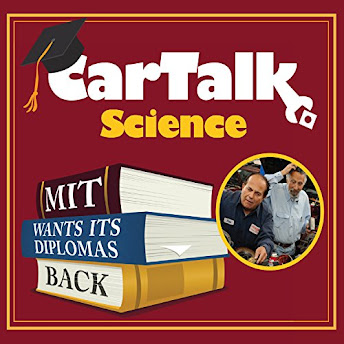
CAR TALK SCIENCE: MIT WANTS ITS DIPLOMAS BACK by Tom Magliozzi and Ray Magliozzi


For years a staple on the weekend schedule of every NPR station was "Car Talk", a call-in show featuring brothers Tom and Ray Magliozzi. These guys were experts in practical car maintenance and repair, they could talk all day long and they clearly enjoyed each other's company. The show was entertaining and informative. The last new show was broadcast in 2012.

Neither of these brothers was a professional mechanic, but they operated a "bring your own parts and fix it yourself" car shop in Cambridge, Massachusetts and picked up a thing or two along the way. They also both have degrees from the Massachusetts Institute of Technology (M.I.T.), also located in Cambridge. 

They used to receive calls that covered all sorts of car-related topics. Most were straight up car questions, but some were different. In this case, these are more science-related. Some are kind of duds, like the rather long conversation about Boy Scout pinewood derby cars. I did enjoy the conversation about creating an aerodynamic spoiler for mattresses being hauled on top of cars. For me the best conversation was a debate about whether it is better to take the shorter route over a big hill in the family car to go visit a nearby relative or if it is better to take a longer route around the hill and stay on flat land.

This was a so-so collection since I can only remember two segments that I liked. The rest were just so-so or best left in the studio archives.

I rate this collection 3 stars out of 5. It can be found on Amazon.com here:

THE BROKEN CONSTITUTION: LINCOLN, SLAVERY, and the REFOUNDING of AMERICA (audiobook) by Noah Feldman


Published in 2021 by Macmillan Audio.
Read by the author, Noah Feldman.
Duration: 11 hours, 14 minutes.
Unabridged.


In The Broken Constitution Feldman argues that the Constitution as it was known to Congressman Abraham Lincoln (he served in the Congress from 1847-1849) was already a broken Constitution and maybe had been broken since it had been ratified in 1788. What caused this break? No real surprise - slavery.

Abraham Lincoln (1809-1865)
Feldman details the compromises that had been in place to induce the Southern states to join a stronger Federal union and how those compromises were re-hashed in the decades that followed in acts like the Missouri Compromise (1820), the Nullification Crisis (1832-33) and the Compromise of 1850. The Dred Scott decision by the Supreme Court in 1857 only heightened tensions between the slave states and the rest of the union. Feldman's point is that if the Constitution were not already broken, these crises wouldn't have been so dramatic and wouldn't have actually have been crises.

When the Confederate states start seceding after Lincoln's 1860 Presidential election, it was really a continuation of the ongoing series of crises. Feldman details all of those crises and also tells how Lincoln's rising political career was affected by them. 

Feldman then details how Lincoln often broke the rules of the Constitution in the name of restoring U.S. Constitutional government to the Confederate states. Lincoln's political evolution during the war paved the way for the 13th, 14th and 15th amendments. The 14th Amendment (1868) in particular changed the relationship between the Federal government and the citizens of the United States and made the Federal government the ultimate guarantor of Civil Rights.

This is not a book for readers who are not already very aware of the issues that created all of the crises I mentioned above and eventually caused the Civil War. Feldman spends almost no time talking about the fighting in the war. He assumes the reader knows all about them and can follow along without anything more than a reminder.

I rate this book 4 stars out of 5. It was an interesting take.

This book can be found on Amazon.com here:  THE BROKEN CONSTITUTION: LINCOLN, SLAVERY, and the REFOUNDING of AMERICA by Noah Feldman.

Featured Post

<b><i>BAN THIS BOOK (audiobook)</i></b> by Alan Gratz

Published in 2017 by Blackstone Audio, Inc. Read by Bahni Turpin. Duration: 5 hours, 17 minutes. Unabridged. My Synopsis Ban This Book is t...

Popular posts over the last 7 days