THE DAWN of EVERYTHING: A NEW HISTORY of HUMANITY (audiobook) by David Graeber and David Wengrow


Published by Macmillan Audio in 2021.

Read by Mark Williams.
Duration: 24 hours, 2 minutes.
Unabridged
.

In my professional life I am a high school history teacher. I don't teach it now (I teach another subject), but in the past when I taught world history I taught that the origins of civilization in the traditional way and it always goes something like this:

-At first there were wandering groups of people, probably based around 1 or 2 families. Things were fairly democratic because these groups had to talk things out to make decisions.

-Somebody along the way figured out how to domesticate a few animals.

-Somebody along the way figured out how to domesticate plants. Some small fields were started and left mostly on their own while the wandering continued with scheduled returns to the fields.

-Eventually, the fields were so productive that it made no sense to leave them.

-Populations grew, towns were developed and simple authoritarian government led by almost always by a man who served as an all-powerful king of some sort always sprang up to manage the resources, resolve property disputes, etc.

-With the exception of Athens and a few other Greek city-states, democracy was non-existent. 

The classic case for this was Egypt. The way we taught it is that it has always gone this way, pretty much without fail - like it was a law of human behavior.

In The Dawn of Everything, these authors come at this with a different perspective. They've done a lot of research and have come to the conclusion that what happened in Egypt was not only not the norm but may have been a fairly unique exception. 

The authors look at the roots for our the official history of how it had to have happened (we really have no idea how, when you think about it). They then proceed to take a long look at why it is wrong to say that all or even most civilizations followed that pattern when they adopted agriculture. 

The authors spend 24 hours of audiobook telling us something that we all should have known to begin with without being told - there is no law to human behavior in any area. Human beings continue to come up with a multitude of familial, work, governmental and religious arrangements. Is that a feature of modern man or has that been the situation all along? My vote goes to "all along."

Monks Mound at Cahokia in Illinois. It is the largest
pyramid structure in the Americas north of Mexico
and one of the largest pyramids in the world.
This audiobook is interesting and makes a serious, well-considered argument. It looks at ancient Egypt, Crete, ancient Pakistan, Turkey, Stonehenge, Ukraine, China, Japan, Cahokia near the Mississippi River in Illinois, Poverty Point, the Aztecs, the Mayas, the Inca and more. Sometimes it gets a little too detailed, especially in the first one-third of the book, but it did bring a different perspective to my view of ancient history and was well worth listening to.

I rate this audiobook 4 stars out of 5. It can be found on Amazon.com here: THE DAWN of EVERYTHING: A NEW HISTORY of HUMANITY (audiobook) by David Graeber and David Wengrow.



JESUS LAND: A MEMOIR (Kindle) by Julia Scheeres


Published in 2005 by Counterpoint.

Winner of the 2006 Alex Award from the American Library Association.
Winner of the 2006 New Visions Nonfiction Book Award from the Quality Paperback Book Club.

Note: I read because it is on a list of books that MAGA Republicans have asked to be banned in one way or another. I call it the MAGA Censorship List. More about that down below. 

Julia Scheeres grew up in around Lafayette, Indiana. She grew up in a fundamentalist household. When she begins this memoir, she has older brothers and sisters who have moved out of the house and lives with her parents and two adopted brothers out in the country outside of Lafayette. Her family is unique in that her two adopted brothers are black and the rest of the family is white.

The first part of Jesus Land: A Memoir deals with her horrible home and school life. At home, her father is mostly a distant figure. He returns home from work and dispenses discipline - often with great physical violence. These are not spankings - these are beatings with a 2x4. 

Her mother is a distant woman - more concerned with expressing love and support to missionaries she has never met in distant lands than in her own children. Her older adopted brother sexually abuses her for years.

Her younger adopted brother, however, is the closest to her in age and in spirit. His name is David. They are best friends and truly brother and sister. They are almost inseparable.

I say almost inseparable because when they go to school, Julia finds the racist pressure too much and often separates from her brother at school just to protect herself.

Halfway through the book, Julia and her younger brother get into trouble and are shipped off to a Christian Academy in the Dominican Republic called Escuela Caribe. Escuela Caribe advertises that it will help students free themselves from the influences of popular culture and maintain their education.

The school is really a lockdown facility. It is a reform school that is staffed with people with little or no training. All that is required of the staff is a high school diploma (or a GED) and faithful zeal.The students are in the Dominican Republic because it is on an island. They can't run away from the school because they don't know the language and the school holds their passports so they cannot go back to the United States.

The school is a model of brainwashing. Psychological abuse, cruelty, and even physical abuse runs rampant. Even straight out physical violence is used in an effort to show the campers the love of Jesus.

If that sounds wrong - well, that's because it is wrong. Very wrong.

I read this book because it was on a list of books that an angry parent group wanted to ban at a school corporation because it is anti-Christian and has sexual content (more on that later). I don't think of this book as "anti-Christian". All Scheeres did was point out that she and her brothers were physically beaten in their own homes by Christians and the violence continued at Escuela Caribe by Christians who hit them in the name of Jesus. My take as a lifelong Christian is that the book is not "anti-Christian". The behavior of the supposed Christians in this book is anti-Christian. Those "Christians" literally abused the author so much in the name of Jesus that she wants nothing to do with Jesus. 

Is there sexual content? Yes.

Is it glorified? No. 

It's actually pretty sad. 

More about Escuela Caribe here in a Newsweek article. Escuela Caribe is now closed but it was bought out by a group with lots and lots of ties to Mike Pence. The new school kept some of the same employees as the old school and has the exact same qualifications to be a staff member.

This was a profound and disturbing memoir. I was not disturbed by the actions of a girl trying to find her way. I was disturbed by adult Christians who psychologically and physically abuse people so they can show them the love of Jesus. It angered me like few books have ever angered me.

I rate this memoir 5 stars out of 5. It can be found on Amazon.com here: Jesus Land: A Memoir by Julia Scheeres

FATES WORSE THAN DEATH: AN AUTOBIOGRAPHICAL COLLAGE by Kurt Vonnegut


Originally published in 1991.

Fates Worse Than Death is a collection of essays is basically Vonnegut's commentary on the 1980's. It was interesting to note how many of his essays (or parts thereof) address current day problems. I don't know if that means there are some problems that are timeless or if it simply means that we have just ignored the problems and they have festered. I know what Vonnegut would say:

"We probably could have saved ourselves, but were too damned lazy to try very hard...and too damn cheap." (p. 116, Essay XI)
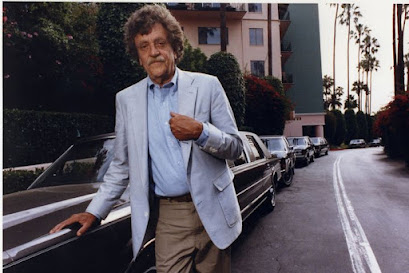
Kurt Vonnegut (1922-2007)

There are 21 essays (some are actually transcribed speeches), a preface and a lengthy Appendix with multiple essays. Like any collection, there are good ones, mediocre ones and even a couple of terrible essays here. But, I found this collection to be pretty good, especially if you space them out.

I rate this collection 4 stars out of 5. It can be found on Amazon.com here: FATES WORSE THAN DEATH: AN AUTOBIOGRAPHICAL COLLAGE by Kurt Vonnegut.

REDSHIRTS: A NOVEL with THREE CODAS (Kindle) by John Scalzi


Winner of 2012 RT Reviewers Choice Award.
Winner of the 2013 Hugo Award for Best Novel.
Winner of the 2013 Locus Award for Best Science Fiction Novel.

Published in 2012 by Tor Books.

Redshirts is considered a modern classic and I absolutely jumped at the chance to download it for free thanks to Tor Publishing's e-mail newsletter and their monthly free e-book offer. I don't take every e-book they offer, but this is a book I've been considering for a while and you can't beat the price of free.

The title of the books tells you that there is a Star Trek tie-in with this novel. As every Star Trek fan knows, on the original series the joke is that the character wearing red shirts (except for Scotty and Uhura) are expendable characters that die in a number of weird and sometimes horrible ways. 

This book features a universe similar to that of Star Trek. The characters are based on the flagship of the Universal Union fleet - the Intrepid. The fate of the redshirts on the Intrepid is much like that of the redshirts on the Enterprise on Star Trek

And...that's all I can really say without going into spoilers and I really don't want to do that. Suffice it to say - if you are a Star Trek fan, you will enjoy this book.

I rate this book 4 stars out of 5. I would have made it 5 stars but the first of the three codas at the end was so padded with repetitive information that I literally skimmed several pages of it.

This book can be found on Amazon.com here: Redshirts: A Novel with Three Codas by John Scalzi.

UPRIGHT WOMEN WANTED (audiobook) by Sarah Gailey


Published in 2020 by Tantor Audio.
Read by Romy Nordlinger
Duration: 3 hours, 52 minutes.
Unabridged.

A 2021 Hugo Award Finalist
A 2021 Locus Award Finalist
A 2020 ALA Booklist Top 10 SF/F Pick
Booklist Editor's Choice Pick

Book Riot's Best Books of 2020 So Far
Named a Best of 2020 Pick for NPR | NYPL | Booklist Bustle | Den of Geek

I have a weakness for dystopian literature. I don't do too much of it because so much of it is repetitive - usually it is World War III caused by a nuclear or bio-warfare attack by the Iranians, the Russians, the Chinese, the North Koreans, or the Americans. But, I do enjoy seeing where the author thinks we will break down and how we might recover and rebuild.

Upright Women Wanted fit the bill - a future world in which the western United States has devolved back into a Wild West environment ruled by iron-fisted sheriffs that enforce a strict moral code. Their rules include a death penalty for sexual crimes, such as homosexuality and lesbianism. The main character, Esther, had a short-lived romantic relationship with another female who was put to death for holding resistance propaganda material that she was reading because she did not want to forcibly marry a man. When Esther was assigned to marry that man, she fled.

The world she fled to is not very recognizable as modern America. The United States is involved has been involved in a war for so long and has devoted so many resources to that war that the home front has fallen to disrepair. For example, paved roads no longer exist - rich towns have gravel roads. Everyday people ride horses, use wagons and carry pistols. The clothing looks more like a western TV show than ours does. Modern jet planes still exist and are used by the military but civilian TV and radio no longer exist. Also, three states are pretty much out of the union - Utah, Florida and Maine. 

Esther stows away in the wagon of two women known as Librarians. Librarians bring literature, movies, news and packages from one town to another. If you have seen the Kevin Costner movie The Postman or read the book by the same name, the librarians serve roughly the same purpose as The Postman did in that movie/book. They knit together these communities and are welcomed almost as celebrities when they arrive. 

This book won a lot of awards and I am not sure how. Before I get judged for it, be aware that I had no problem with the book's lesbian content. I knew that was in the story when I downloaded it and I was interested in seeing how that was worked into the story. Turn out it was pretty much like I imagined. 

Careful: spoilers ahead

I was disappointed in the story because so little about the dystopian future was explained (like who was American fighting the war with and how did it let the home front deteriorate so badly) and the book felt more like the introductory chapters to a much longer story than an actual complete story. I would say that it was a novella, but novellas usually have an actual ending and this story just sort of ended at what felt like maybe the halfway point, maybe even not that far along. It felt like a solid start, but nothing more. I was not bothered at the themes of the book, I was bothered by the fact that it just...abruptly ended.

More spoilers:

The government in this story, at the local and national levels, is very much into censorship. It is odd to me that no one wants to censor the materials that the librarians carry from town to town considering that libraries are often targets for censorship. I know the book was published in 2020, but a common theme of the news in 2021 was "concerned community members", lawmakers and other politicians that clamored for schools to remove books from school and classroom libraries. There were even concerted attempts to remove books from regular public libraries. 

The idea that a government that executes people for simply possessing propaganda would not also regulate what amounts to an Old West style bookmobile carries is laughable. It would be more appropriate to have the librarians subject to thorough searches at every checkpoint and town. 

I rate this audiobook 2 stars out of 5. It can be found on Amazon.com here:  
UPRIGHT WOMEN WANTED by Sarah Gailey.

ELECTRIFY: AN OPTIMIST'S PLAYBOOK for OUR CLEAN ENERGY FUTURE (audiobook) by Saul Griffith


Published by Tantor Audio in November of 2021.

Read by David Marantz.
Duration: 7 hours, 13 minutes.
Unabridged.


Saul Griffith makes a convincing argument in Electrify that the clean energy future to prevent excessive global warming (No carbon) only comes from making everything, and I mean everything, electric (with the exception of air travel) - electric cars, electric boats, electric trains, electric heat pumps to heat homes, electric stoves, electric ovens, electric water heaters, and electric clothes dryers. 

I mostly picked up this book as a reaction to the fact that so many people in my social media feed keep re-posting anti-electric car memes that they did not create. Someone is really pushing back hard against the concept. I saw this book and began to wonder if this concept were even possible.

According to Griffith, it is very possible and with almost no "and then we come up with magic technology" moments baked into his plan. Based on what is already being done in Australia and the United States, this could be 99.5% done with current technology. We just need to divest from Carbon infrastructure (oil, natural gas, coal) and re-route that spending to renewable electricity (hydroelectric, solar, wind) and carbon free energy like nuclear. 

People will argue that solar and especially wind have to be subsidized to keep up with fossil fuels, but Griffith correctly points out that fossil fuel companies receive billions of dollars of subsidies every year so it's kind of a moot point.

He imagines a world where every roof has solar power cells installed on them and can feed directly into the electrical grid. Every farm has windmills. Every parking lot is covered with a car port cover that is covered with solar power cells. The electric company becomes less of a supplier and more of a distributor from all of those homes. The company would manage the flow and would maintain a backup system (nuclear, hyrdo, or solar power brought in from other locations) to keep it all running. 

The biggest problem is financing all of this. For that, Griffith looks back to American history. After World War II, the U.S. government backed home loans to veterans (and later others) through government programs. This could be duplicated to homeowners, new builds and landlords to pay for solar panels and the changes to a home's electrical grid. Not only would the electricity have to be able to flow away from homes, but it would also have to be able to handle a lot more electricity. Electric cars and trucks take a lot of juice to recharge in a short time. 

I walked away convinced but can only rate this book 3 stars out of 5.

Why the low rating for a compelling argument?

1) I listened to the audio version of this book. Griffith includes a lot of charts and relies on them heavily to make his point. Rather than edit the audiobook text and provide summaries of the charts, Griffith has the narrator literally read the charts. I could have sat down and literally transcribed them onto a piece of paper. Do you know how completely boring it is to listen to all of that data when you are not literally transcribing it to a piece of paper?

2) I am going to go with a stereotype. Griffith is an engineer. I think he was taught to write by middle school English teacher who loved the TRIT writing plan and he never deviates from it (it is tried and true after all). This leads to an easy to follow format - but very boring. Griffith tries to liven it up with some dad joke humor here and there. The result - it reads like a government report presented by a likable guy. 
Too bad - he has an important message.

3) The audiobook reader is very clear and easy to understand. However, he sounds so detached that I thought he was a computer-generated voice (he sounds similar to a popular synthesized voice you find online).  With the processed writing format it just got tedious at times. 

I rate this audiobook 3 stars out of 5. It can be found on Amazon.com here:  ELECTRIFY: AN OPTIMIST'S PLAYBOOK for OUR CLEAN ENERGY FUTURE (audiobook) by Saul Griffith.

IF GOD IS LOVE, DON'T BE a JERK: FINDING a FAITH THAT MAKES US BETTER (audiobook) by John Pavlovitz


Published by eChristian in November of 2021.

Read by the author, John Pavlovitz
Duration: 6 hours, 19 minutes
Unabridged.


John Pavlovitz is a minister who has done a lot of thinking about how Jesus told us to act and how formal "name brand" Christianity often acts to those that it deems as "less". We all know that thinking of people as "less" is not really a thing Christ endorses, but it is still an all too often sad reality.

Who are the less that have been in the news lately? Immigrants, LGTBQ people, Muslims...and more. 

Pavlovitz asks:

"If God is love and if you're emulating that God, then you should be loving. If you claim a religious worldview or have spiritual aspirations, those should yield more compassion, not less; more decency, not less; more generosity, not less. If not, what's the point of having them?"

Great question. What's the point?

I've had these thoughts more than once in the last 6 years, coinciding with the candidacy and presidency of the 45th President. If nothing else, he shook a lot of things loose. 

The author, John Pavlovitz
Pavlovitz doesn't really follow a mainstream religious tradition any longer. He boils it all down very simply - God calls us to love each other. He gave us a great example in the person of Jesus. Aspire to that. If your theology is in the way of you doing that, ditch the theology.

I don't agree with everything Pavlovitz talks about, but I found some parts extremely compelling. Specifically, I found myself in serious agreement with his chapter on prayer. 

I listened to this as an audiobook from my library so I was not able to take notes as well as I could have on paper. I have added this book to my wish list to get as a paper copy so I can mark it up and think about it harder later on.

I rate this audiobook 5 stars out of 5. It can be found on Amazon.com here: 
IF GOD IS LOVE, DON'T BE a JERK:  FINDING a FAITH THAT MAKES US BETTER by John Pavlovitz.

Featured Post

<b><i>BAN THIS BOOK (audiobook)</i></b> by Alan Gratz

Published in 2017 by Blackstone Audio, Inc. Read by Bahni Turpin. Duration: 5 hours, 17 minutes. Unabridged. My Synopsis Ban This Book is t...

Popular posts over the last 7 days