SERGEANT STUBBY: HOW a STRAY DOG and HIS BEST FRIEND HELP WIN WORLD WAR I and STOLE the HEART of a NATION (audiobook) by Ann Bausum


Published in 2014 by Blackstone Audio.
Read by Pam Ward.
Duration: 5 hours, 12 minutes.
Unabridged.


Sgt. Stubby wearing his medal vest (left), marching in a parade
(upper right) and wearing his special gas mask (lower right).
During the quick basic training for American forces heading for France in World War I, a stray dog found its way into a Connecticut National Guard training camp at Yale University. The unit was sprawled all over the campus and this Boston Terrier mix wandered around making friends all over. His friendly nature guaranteed a lot of table scraps. He marched with the men, learned the commands and blended in as well as a dog can. Somewhere along the way, someone taught him how to salute and hold the salute until it was returned.

When it came time to board a ship and head to France, the soldier that he spent the most time with, Corporal James Robert Conroy, hid him under his coat as others provided a distraction. Once aboard, Stubby ensured he got to stay with his friends by saluting any superior officer that questioned his presence and all resistance melted away.

Stubby stayed with his friends in France. He served several months in the trenches, participated in 17 battles, was wounded by a German hand grenade, was wounded by German poison gas, helped locate wounded soldiers in the "no man's land" between the trenches, single-handedly captured a German spy (he grabbed his pants with his mouth and made a ruckus until human soldiers came) and won admirers everywhere he went.

The title of this book exaggerates the importance of Sgt. Stubby to the war effort. He was immensely important to Conroy and their circle of friends, but the title makes it sound like Sgt. Stubby turned the tide of the war or something.

The book is equal parts a biography of Sgt. Stubby and a history of the era in which he lived. It's also a pretty serviceable history of World War I and includes discussions of movements in American history like the suffragette movement, the anti-alcohol campaigns that resulted in Prohibition and the rise of the FBI.

The audiobook was extremely well read by Pam Ward. I hope to come across other audiobooks read by her.

I rate this audiobook 5 stars out of 5. It can be found on Amazon.com here: SERGEANT STUBBY: HOW a STRAY DOG and HIS BEST FRIEND HELP WIN WORLD WAR I and STOLE the HEART of a NATION.

THE OPTIMIST (audiobook) by Roy Schreiber


Published by Author's Republic in 2019.
Multicast performance.
Duration: 1 hour, 11 minutes.
Unabridged


This audiobook is a mixed bag. I will start with the positive side.

The multicast performance in this audiobook is really, really good. The voice actors perform it like an old-fashioned radio play and they are excellent. It even has sound effects that are timed right, set to the right sound level and are not obnoxious.

The story is another matter. It starts out with one plot (two university professors trying to grow the size of the practically nonexistent faculty labor union at a small private university in Indiana), drifts into a second story line and finally moves into a third, rather bizarre story thread that doesn't even come close to addressing the original conflict in this 71 minute story. This audiobook just slides around like a nervous six year old tells a story to a bunch of adults at a family get-together.

I rate this audiobook 2 stars out of 5. It gets 2 stars because I really liked the work of the team that put together the audiobook.

This audiobook can be found on Amazon.com here: The Optimist by Roy Schreiber.

JUST MERCY: A STORY of JUSTICE and REDEMPTION (audiobook) by Bryan Stevenson


Published in 2014 by Random House Audio

Read by the author, Bryan Stevenson.
Duration: 11 hours, 11 minutes
Unabridged.

"...if he just had the money for a decent lawyer."

Bryan Stevenson is a lawyer who has spent his entire career working with people who have been wrongfully convicted and unfairly sentenced. He works through the Equal Justice Initiative with a lot of death row inmates in Alabama. He has succeeded in getting over 100 re-trials and/or re-sentencing hearings for people on death row. He has had multiple convictions completely overturned.

Stevenson does a lot of work in Alabama because Alabama doesn't do much to subsidize the defense in death row cases. How much does the state spend for the entire case, including appeals?

Just $1,000.

Some counties help with that amount, but more than 70% of Alabama's death row inmates were represented by $1,000 lawyers. Considering that the average cost of a simple will is $375, you can see that a $1,000 worth of death row defense won't get much. The author says it won't even pay for the photocopying costs associated with a death row defense, let alone DNA tests, expert testimony, hiring investigators and other costs. In one of his cases, he freed a man because he was able to demonstrate that the bullet that killed the victim could not have been fired from the supposed "murder weapon" owned by the defendant - it wouldn't have fit in the gun. That is super-basic expert testimony that should have been presented at the original trial.

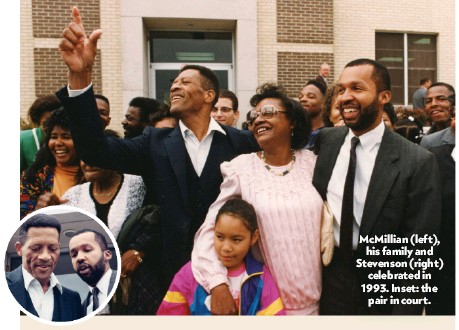
Stevenson tells the stories of many of his clients as Just Mercy moves along, but the thread that ties it together is the story of Walter McMillian. McMillian was convicted of murdering a teenage girl based on flimsy testimony and even flimsier circumstantial evidence. It is the attorney's most famous case and it does give the reader a good idea about the length of time it takes to straighten out one of these incorrect verdicts.

Stevenson also makes a compelling argument that there is a great deal of racial bias in these cases. The sentences for black defendants are often longer, more likely to go to Death Row and are less likely to have an adequate defense. Younger black defendants are much more likely to get moved to adult court than white ones.

My advice if you are poor and/or black is to never get arrested for anything in Alabama.

This book is an important read. Stevenson's writing style is very to the fact - very much in line with someone that writes a lot of legalese all day. He avoids technical terms in this book, but it is often a "just the facts" style of writing. 

That said, this book 
can be inspiring and Stevenson paints a compelling picture. There was one point in the story that I was so frustrated with what was going on that I was physically angry. At another point just a few minutes later, the situation resolved itself in such a profoundly moving way that it brought tears to my eyes. The topic is so engrossing that artistic flourishes are not required.

I rate this audiobook 5 stars out of 5. It can be found on Amazon.com here: J
UST MERCY: A STORY of JUSTICE and REDEMPTION by Bryan Stevenson.

STAR SPANGLED SCANDAL: SEX, MURDER, and the TRIAL THAT CHANGED AMERICA (audiobook) by Chris DeRose


Published by Blackstone Audio in June of 2019.
Read by Traber Burns.
Duration: 8 hours, 36 minutes.
Unabridged.


In February of 1859, Daniel Sickles, a sitting U.S. Congressman, shot and killed a man in Washington, D.C. across the street from the White House.

Why is this not just a weird moment in American history?

Five reasons.

#1) Daniel Sickles went on to become the highest-ranking Union officer in the Civil War that did not graduate from West Point. He performed very well at the disastrous Battle of Chancellorsville and performed bravely, but with great controversy at Gettysburg, where he lost a leg.

#2) The victim was Phillip Barton Key, the son of Francis Scott Key, the author of the Star Spangled Banner. Phillip Barton Key was also the U.S. Attorney for Washington, D.C.

#3) Key and Sickles' wife had been carrying on a long-term adulterous affair and Sickles had just discovered this fact.

#4) The new technology of the telegraph spread this story to newspapers across the country and it became THE scandal story of its era. Some newspapers sold literally tens of thousands of copies when this story was on the front page. Record numbers of telegraph messages were sent out across the country - totals only eclipsed by the Civil War just a few months later.

#5) It was the first time the temporary insanity defense was used successfully in the United States and kicked off a wave of similar defenses in adultery cases for most of the next century.

For me, an enthusiastic student of the Civil War, Star Spangled Scandal should have been an amazing book. A future Civil War general is defended in a murder trial by the future Secretary of War during the Civil War (Edwin Stanton). A few days before the murder Sickles, his wife and her lover had all been at a party hosted by Rose O'Neal Greenhow - the future famed Confederate spy who used her parties during the war to gather information. Abraham Lincoln was fascinated by the case and discussed it back home in Springfield, Illinois. Later, he and his wife became friends with Mr. and Mrs. Sickles.

But, this book gets bogged down with long passages from the trial. He literally quotes the opening and closing statements from the trial at great length with no analysis - just copies and pastes it into the book. That might have been all right, unless you have read anything from the 1850's. Verbose and flowery speech abounds. Everyone comes off as a self-important, pompous windbag. It is tedious to listen to. If it could be said in 10 words, they were sure to use 50 or 60.

Here is a great example. This single sentence with more than 90 words was written to the New York Herald by Daniel Sickles to complain that they were writing about his personal life, but they didn't know any of the details and they should just butt out:

"The editorial comments of the Herald of yesterday, although censorious, (of which I do not complain whilst I read them with regret) differ so widely in tone and temper from the mass of nonsense and calumny which has lately been written concerning a recent event in my domestic relations, that I cannot allow a mistake, into which you have been held by inaccurate information, to pass without such a correction as will relieve others from any share of the reproaches which is the pleasure of the multitude at this moment to heap upon me and mine."
An artist's rendering of the murder from Harper's Weekly
 in March of 1859.


If you enjoyed that sentence, you would love the extended quotes from the trial transcript threaded together with an occasional comment for page after page.

I did not enjoy the narration in this book. I only have a couple of readers I will not listen to. Before this book, I only had one reader. Traber Burns has made it two. The reader has the perfect voice for pompous, self-important commentary. He is perfectly suited for this style of writing.

So, I rate this audiobook 2 stars out of 5. Just too many quotes. I get the value of letting the people actually speak for themselves, but this was too much.

This book can be found on Amazon.com here: STAR SPANGLED SCANDAL: SEX, MURDER, and the TRIAL THAT CHANGED AMERICA by Chris DeRose.

NOT A DRILL (Jack Reacher #18.5) (audiobook) by Lee Child


Published in 2014 by Random House Audio.
Read by Dick Hill.
Duration: 1 hour, 27 minutes.
Unabridged


Lee Child was a prolific writer of Jack Reacher stories. I say was because he recently announced his intention to stop writing those stories. His brother will start writing them instead.

Child wrote numerous books and short stories in no particular order, bouncing around the timeline of Jack Reacher's life. Not a Drill is set in Maine. I presume it fits in on the timeline with the other Reacher stories that take place in Maine and New England.

Jack Reacher is hitchhiking to the end of I-95 at the U.S.-Canada border. Another of his books starts at the other end of I-95 down by Miami, Florida and Reacher makes a point that he wants to have traveled from one end of the road to the other.

Once he gets there, he gets out and is soon picked up by three younger Canadians who are headed to a four day long hiking trip. Their trail starts at one town and ends up at another. Reacher decides to go with them to the trail head because he has nothing else to do. But, when the military shows up, things start to get weird...

Not a Drill is a short story or perhaps a novella (depending on how you want to interpret those terms). To me, it felt like this story was the beginning of a novel that never really blossomed into a book-length story. But, this story is just too short to be much of anything at all. Very forgettable.

I rate this audiobook 2 stars out of 5. It can be found as part of a larger collection on Amazon.com here: NOT A DRILL (Jack Reacher #18.5) (audiobook) by Lee Child.

IN DEFENSE of ELITISM: WHY I'M BETTER THAN YOU and YOU'RE BETTER THAN SOMEONE WHO DIDN'T BUY THIS BOOK (audiobook) by Joel Stein


Published in October of 2019 by Grand Central Publishing.
Read by the author, Joel Stein.
Duration: 7 hours, 18 minutes.
Unabridged.


Joel Stein's In Defense of Elitism: Why I'm Better Than You and You're Better Than Someone Who Didn't Buy This Book is an interesting book. The title suggests that it is a tongue-in-cheek look at politics, but it is much more than that. To be sure, there are plenty of jokes, wisecracks, puns and witty observations of varying quality throughout the book. But, there is also a lot of solid political analysis, especially in the last third of the book.

Stein's primary argument is that populism, embodied by both Donald Trump and Bernie Sanders for the last 4 years, is a road to nowhere except authoritarianism. Stein, like most elites, is worried more about Trump than Sanders (makes sense - he is President, while Sanders is a Senator).

Trump is well-known for his anti-intellectual tenancies. He discounts expertise and people that might have been called eggheads a few years ago. He As evidence for this, just note the number of things that President Trump has claimed that he knows more about than anyone else: drones (January 2019), technology (December 2018), renewable energy (April 2016), the visa system (March 2016), ISIS (November 2015). In July 2016 he said he even knows more about Senator Cory Booker than Senator Cory Booker does (
"I know more about Cory than he knows about himself." )*
The author and narrator, Joel Stein

No one can be an expert on everything. That is where Elites come in, according to Stein. Stein explains this part rather poorly (in the first 10% or so of the book), because he insists on talking about his Elite friends. He name drops a ton of people who seem to be experts on everything - which is exactly what Stein is decrying. I recognized none of them except for Rob Reiner, who is not an expert on anything except making movies. He's very good at that, but I wouldn't go to him for his thoughts on tax policy.

The book gets so much better from this point on. Stein decides to go to a town in the county that voted with the highest percentage for Trump - Miami, Texas. He doesn't know what to expect, which this Hoosier who grew up in rural Indiana finds hilarious. It is a completely different world than his, which he acknowledges is part of the problem. Stein is kind with his descriptions of the people of Miami (pronounced My-am-uh) and seems to enjoy himself while he is there.

Stein also interviews Scott Adams, the creator of the Dilbert cartoon. Adams has become an anti-expert advocate, which is sort of ironic for the creator of a cartoon that continually makes fun of a boss and a bureaucracy that discounts the engineers (the experts) who are creating the products their company markets and sells. He also interviews Tucker Carlson. I was surprised. Before I heard this book, I would have suspected that I would have enjoyed the Adams interview and been dismayed by the Carlson interview. Instead, it was completely reversed. Tucker Carlson makes a lot of good points (not all, but a lot) and Adams comes off as an opportunistic nut.

Stein's thesis, when he finally gets around to it, is that there are two kinds of elites out there. The first group is the intellectual elites (like Stein and Rob Reiner and, of course, the late William F. Buckley who was the ultimate member of the intellectual elite). They value policy discussions, connections to other elites of all stripes and ideas. He calls the other group "boat elites" because they value possessions over ideas. He goes on to describe them like this: 

"The boat elite are steeped in honor culture. Dignity is their most valuable nonboat possession. If their girlfriend gets insulted, they fight. If their friend gets in a fight, they fight. If their fighting ability is questioned, they fight. When they get cut off, they honk. Then they yell at the other driver to get out of their car and fight. The intellectual elite don't do this because we know that honking and yelling makes it hard to hear NPR stories."


It is actually a pretty sophisticated observation for a guy trying to sneak in funny comments all of the time. It explains why President Trump is trying to prove to everyone that he is an expert on everything. It makes you look bad to ask for help on anything (like most men and asking for directions).

I enjoyed this audiobook. I blew right through it in two days. Not a perfect book, but an interesting book and full of some big ideas presented in an unorthodox way.

I rate this audiobook 4 stars out of 5. It can be found on Amazon.com here: IN DEFENSE of ELITISM: WHY I'M BETTER THAN YOU and YOU'RE BETTER THAN SOMEONE WHO DIDN'T BUY THIS BOOK by Joel Stein.


*Source for all of these claims: Axios.com "Everything Trump Says He "knows more about than anybody"

BLOODY SPRING: FORTY DAYS that SEALED the CONFEDERACY'S FATE (audiobook) by Joseph Wheelan


Published in 2014 by Blackstone Audio.
Read by Grover Gardner.
Duration: 14 hours, 11 minutes.
Unabridged.


Joseph Wheelan's Bloody Spring is a look at General Grant's Overland Campaign from May to June in 1864. This was Grant's first experience against Robert E. Lee and he brought a change in strategy to the Eastern Theater.

Rather than try to defeat Lee in a single battle like the previous generals, Grant decided that it was best to find Lee, engage in a battle and never disengage and let the superior resources and manpower grind Lee's army into surrender. Grant understood that when Lee surrendered the Confederacy would surrender.

Wheelan spends little time talking about the causes of the war, but he does offer a short recap before he delves into a lively and interesting narrative history of the forty days of the Overland Campaign. 


Union soldiers near the Battle of North Anna in May of 1864.
They are on a small bridge. A larger pontoon bridge is behind them.

This campaign had several of the most brutal battles of the war, including The Battle of the Wilderness, Spotsylvania Court House, Yellow Tavern, Cold Harbor, North Anna and the beginning of the Siege of Petersburg. It was also rough on the Confederate leadership. Famed cavalry general J.E.B. "Jeb" Stuart was killed and trusted General James Longstreet (Lee called him his "Old War Horse") was severely wounded early on and forced to recuperate for several months.
We learn about the first major uses of African-American soldiers, Union engineering marvels that overcame the swamps and rivers, the quickly-evolving use of breastworks. Sometimes, we see brilliant maneuvers and choices from the leadership. More often, we see questionable choices from both armies. 

These fights were horrific. Wheelan's re-telling does not pretty it up for the listener. This was a nightmare campaign. It started on the site of the Battle of Chancellorsville from the previous year. There were fights among the exposed skeletons that were ripped from their shallow graves by cannon fire, night marches through forest fires, wounded men being burned alive, hand-to-hand combat in trenches and the single most deadly hour of the Civil War.

Grover Gardner read this audiobook and did a fantastic job. This was a surprisingly well-told story and Gardner's reading added to that.

I rate this audiobook 5 stars out of 5. It can be found on Amazon.com here: 
BLOODY SPRING: FORTY DAYS that SEALED the CONFEDERACY'S FATE by Joseph Wheelan.

Featured Post

<b><i>BAN THIS BOOK (audiobook)</i></b> by Alan Gratz

Published in 2017 by Blackstone Audio, Inc. Read by Bahni Turpin. Duration: 5 hours, 17 minutes. Unabridged. My Synopsis Ban This Book is t...

Popular posts over the last 7 days