More than 2000 reviews over the last 25 years.
FAITH and the FUTURE FORCE (graphic novel) by Jody Houser
Published in 2017 by Valiant Entertainment, LLC,
Art by Stephen Segovia, Barry Kitson, Diego Bernard and Cary Nord.
Faith Herbert is a superhero (Zephyr) in hiding. She has been accused of a murder she did not commit in another series (she's a member of some sort of Justice League/Avengers type of group). She no longer acts as a superhero and her secret identity now has a secret identity. She is working in an office and trying not to get noticed.
Now, a note about this graphic novel. Before this book, I had never heard of Faith Herbert or this series. But, I was attracted to the front cover because of Faith. Faith is a woman of generous proportions - something I have never seen in any comic book. In fact, I can't think of a single superhero comic that features an overweight superhero without it being a joke (Mr. Incredible's gut doesn't slow him down, but it has been a sight gag from the very first trailer of the first movie). This got my attention because I am a man of generous proportions.
Secondly, when I opened up the book and thumbed through it I found multiple Doctor Who references. On the third page, a superhero in a typical full curve-hugging superhero outfit appears in Faith's office and says, "Come with me if you want to save history."
Faith answers, "I've been preparing my whole life for this moment."
The hero responds, "Oh God, you're a Doctor Who fan aren't you? Of course."
Well, that was it - I was sold. Guess what? It turns out that Faith is not only a Doctor Who fan - she is also a Star Trek fan. What's not to love?
Back to the story...
Faith has been recruited to help stop a robot from the future that is traveling through time and destroying human history. If I tell any more, I will make spoilers.
The story is a bit confusing for at least the first half of the book, with all of the time traveling and Faith having things explained to her a little bit at a time on the fly . If you are a Doctor Who fan, you are used to this. And, like a great Doctor Who episode, it all comes together and has a clever ending.
The art is top notch in this book. It was quite fun.
I rate this graphic novel 4 stars out of 5. It can be found on Amazon.com here: FAITH and the FUTURE FORCE.
THE TWO HENRYS: THIS CAN'T BE HAPPENING COLLECTION (audiobook) by Kevin Allison
Published by Brilliance Audio in 2018.
Read by the author, Kevin Allison.
Duration: 1 hour, 22 minutes.
Unabridged.
Kevin and Ben are best friends and have been since first grade. They are both a little different than the other guys. Both are more interested in singing and acting than in sports. Both have active imaginations, a wide-ranging knowledge of movie and Broadway soundtracks and both have quirky senses of humor.
As they go through school together, they have sleep-overs, they start a theater club and they even write a play together that they perform in front of their Catholic school in Cincinnati.
Ben even teaches Kevin all about the birds and the bees in a three day tutorial on the playground during recess (Surprisingly solid info considering that it was based on what the older neighbor boys told him).
But, on the weekend before the beginning of seventh grade, everything changes when Kevin tells Ben his biggest secret...
This audiobook was brilliantly read by the author. Kevin Allison has a real talent for narration. The big secret is that Kevin is gay and the last half hour of the audiobook deals with the aftermath of that revelation.
My only complaint about this audiobook is that we don't hear more about these two friends as they move on into high school and beyond. I wish there had been a short epilogue - even a paragraph. But, this was still an enjoyable listen.
I rate this audiobook 4 stars out of 5. It can be found on Amazon.com here: THE TWO HENRYS: THIS CAN'T BE HAPPENING COLLECTION (audiobook) by Kevin Allison.
Read by the author, Kevin Allison.
Duration: 1 hour, 22 minutes.
Unabridged.
Kevin and Ben are best friends and have been since first grade. They are both a little different than the other guys. Both are more interested in singing and acting than in sports. Both have active imaginations, a wide-ranging knowledge of movie and Broadway soundtracks and both have quirky senses of humor.
As they go through school together, they have sleep-overs, they start a theater club and they even write a play together that they perform in front of their Catholic school in Cincinnati.
Ben even teaches Kevin all about the birds and the bees in a three day tutorial on the playground during recess (Surprisingly solid info considering that it was based on what the older neighbor boys told him).
But, on the weekend before the beginning of seventh grade, everything changes when Kevin tells Ben his biggest secret...
This audiobook was brilliantly read by the author. Kevin Allison has a real talent for narration. The big secret is that Kevin is gay and the last half hour of the audiobook deals with the aftermath of that revelation.
My only complaint about this audiobook is that we don't hear more about these two friends as they move on into high school and beyond. I wish there had been a short epilogue - even a paragraph. But, this was still an enjoyable listen.
I rate this audiobook 4 stars out of 5. It can be found on Amazon.com here: THE TWO HENRYS: THIS CAN'T BE HAPPENING COLLECTION (audiobook) by Kevin Allison.
SING, UNBURIED, SING: A NOVEL (audiobook) by Jesmyn Ward
Winner of the National Book Award for Fiction.
Publishers Weekly Top 10 for 2017.
New York Times 10 Best Books of 2017.
Published in 2017 by Simon and Schuster Audio
Read by Kelvin Harrison, Jr. and Chris Chalk and Rutina Wesley
Duration: 8 hours, 22 minutes.
Unabridged.
Jojo lives in rural Mississippi on a small farm, but it is a complicated world. He is bi-racial. His white father (Michael) is in Parchman Farm, officially known as the Mississippi State Penitentiary. His African American mother is a frequent substance abuser and is in and out of his life so much that he and his toddler-aged sister just refer to her by her first name, Leonie. His little sister treats him much more as a parent than Leonie.
He lives with his African American grandparents (his grandmother is dying of cancer) and his white grandparents won't have anything to do with him because they are racists and cannot stand the idea that their son had mixed-race children. To make it all the more complicated, Michael's cousin murdered Leonie's brother and covered it up to be just a hunting accident.
Most of Sing, Unburied, Sing deals with the trip to Parchman Farm to pick up Michael on the day of his release. Jojo and his little sister Kayla are forced to go along with Leonie and her friend in addiction, Misty. Jojo's African American grandfather won't go because he served time there as a teenager for a crime he did not do. Plus, he is the only one that can take care of Jojo's grandmother. The trip is a long one. It shouldn't have been, but Leonie is in charge of things. Also, Jojo's little sister Kayla is sick and vomits often. Her "mother" mostly ignores her illness, conducts drug deals along the way and demonstrates her unworthiness as a parent. Once they pick up Michael, he shows that he is a marginally better parent (but that is not too hard).
While at Parchman, Jojo starts to see a ghost who seems to know a lot about grandfather...
This book should have been split into two books. The story of Jojo and his family was interesting, especially the relationship between Jojo and his grandfather. The mystic part of the story was not nearly as interesting as Jojo's life and his grandfather's history. That history could have been told without the introduction of ghosts. For me, it would have been much more effective without them.
What we really ended up here was a long story about Jojo's messy family situation, death and loss and a toddler that vomits all over everyone at one point or another. For me, this was a wasted opportunity.
There were three readers for this audiobook since the story is told from three different points of view: Jojo, Leonie, and Richie (a ghost). The parts read for Jojo and Richie were excellently read. But, the parts read by Rutina Welsey for Leonie were excruciating. I will blame this entirely on the producer, not the voice actor. When she read, it sounded like she was pretending to be Eartha Kitt from the 1960's Batman series. Eartha Kitt played Catwoman with a sultry, purring voice. Now imagine a sultry, purring Eartha Kitt reading a text as a parody of Slam Poetry. It was tedious, making an already tedious character unbearable.
So, I rate this audiobook 2 stars out of 5. This book won a ton of awards (some of them are listed above) and I cannot figure out why. For me, this was an uncomfortable mash-up of two different books forced to become one unwieldy mess that doesn't explore either idea to a satisfactory end.
This book can be found on Amazon.com here: Sing, Unburied, Sing.
Publishers Weekly Top 10 for 2017.
New York Times 10 Best Books of 2017.
Published in 2017 by Simon and Schuster Audio
Read by Kelvin Harrison, Jr. and Chris Chalk and Rutina Wesley
Duration: 8 hours, 22 minutes.
Unabridged.
Jojo lives in rural Mississippi on a small farm, but it is a complicated world. He is bi-racial. His white father (Michael) is in Parchman Farm, officially known as the Mississippi State Penitentiary. His African American mother is a frequent substance abuser and is in and out of his life so much that he and his toddler-aged sister just refer to her by her first name, Leonie. His little sister treats him much more as a parent than Leonie.
He lives with his African American grandparents (his grandmother is dying of cancer) and his white grandparents won't have anything to do with him because they are racists and cannot stand the idea that their son had mixed-race children. To make it all the more complicated, Michael's cousin murdered Leonie's brother and covered it up to be just a hunting accident.
Most of Sing, Unburied, Sing deals with the trip to Parchman Farm to pick up Michael on the day of his release. Jojo and his little sister Kayla are forced to go along with Leonie and her friend in addiction, Misty. Jojo's African American grandfather won't go because he served time there as a teenager for a crime he did not do. Plus, he is the only one that can take care of Jojo's grandmother. The trip is a long one. It shouldn't have been, but Leonie is in charge of things. Also, Jojo's little sister Kayla is sick and vomits often. Her "mother" mostly ignores her illness, conducts drug deals along the way and demonstrates her unworthiness as a parent. Once they pick up Michael, he shows that he is a marginally better parent (but that is not too hard).
While at Parchman, Jojo starts to see a ghost who seems to know a lot about grandfather...
This book should have been split into two books. The story of Jojo and his family was interesting, especially the relationship between Jojo and his grandfather. The mystic part of the story was not nearly as interesting as Jojo's life and his grandfather's history. That history could have been told without the introduction of ghosts. For me, it would have been much more effective without them.
What we really ended up here was a long story about Jojo's messy family situation, death and loss and a toddler that vomits all over everyone at one point or another. For me, this was a wasted opportunity.
There were three readers for this audiobook since the story is told from three different points of view: Jojo, Leonie, and Richie (a ghost). The parts read for Jojo and Richie were excellently read. But, the parts read by Rutina Welsey for Leonie were excruciating. I will blame this entirely on the producer, not the voice actor. When she read, it sounded like she was pretending to be Eartha Kitt from the 1960's Batman series. Eartha Kitt played Catwoman with a sultry, purring voice. Now imagine a sultry, purring Eartha Kitt reading a text as a parody of Slam Poetry. It was tedious, making an already tedious character unbearable.
So, I rate this audiobook 2 stars out of 5. This book won a ton of awards (some of them are listed above) and I cannot figure out why. For me, this was an uncomfortable mash-up of two different books forced to become one unwieldy mess that doesn't explore either idea to a satisfactory end.
This book can be found on Amazon.com here: Sing, Unburied, Sing.
APRIL MORNING: A NOVEL by Howard Fast
Originally published in 1961.
Howard Fast (1914-2003) was a prolific writer (more than 60 novels, plus scores of short stories, plays, articles and histories). He is most famous work is Spartacus, the novel that inspired the iconic movie by Stanley Kubrick.
April Morning is my second Howard Fast novel and if you throw in Spartacus you see a trend in Howard Fast's books - he likes to tell the story of the underdog who fights back.
In this novel, the underdogs are the colonists of Massachusetts. The April morning in the title is the day that the British army moved on the stores of gunpowder in Concord, Massachusetts. This is when Paul Revere makes his famous ride. This action is now known as The Battles of Lexington and Concord. The book takes place in and around Lexington.
Adam Cooper is a fifteen year old boy in 1775 and the troubles of Boston with the British Redcoats seems a world away. His father is deeply involved with the committees that try to workout a common response to the British government. When the British army marches towards Concord with nearly 1,000 trained regulars, the local militia forms up to confront them. The militia musters only 77 men, many with small hunting weapons.
15 year old Adam Cooper is in that militia...
This was a truly great novel. As I previously noted, this is only my second Howard Fast novel, but it won't be my last. He had a real knack for making the characters seem real and believable. His characterization of 15 year old Adam is perfect.
The book does not glorify war in any way. It can be graphic. The fighting has real-life consequences. Some of the passages were quite touching. Others passages were cleverly observant. I liked this line on page 88: "Blame the devil, Reverend, but I tell you that three-quarters of the misery of mankind is the result of plain damned foolishness."
I rate this novel 5 stars out of 5. It can be found on Amazon.com here: April Morning: A Novel.
THE UNBEATABLE SQUIRREL GIRL: 2 FUZZY, 2 FURIOUS (audiobook) (Unbeatable Squirrel Girl novelization #2) by Shannon Hale and Dean Hale
Published in 2018 by Listening Library.
Read by Abigail Revasch and Tara Sands.
Duration: 8 hours, 20 minutes.
Unabridged.
Middle school in a new town is tough enough - establishing new friendships, figuring out a new school and a new town and more.
Being a superhero in middle school has extra difficulties. How do you keep your secret identity a secret? How do you keep up with your homework when you are patrolling for bad guys at night? How do you balance your superhero and regular people friendships? And, if you are Squirrel Girl, you also have to balance your squirrel and human friendships.
Read by Abigail Revasch and Tara Sands.
Duration: 8 hours, 20 minutes.
Unabridged.
Middle school in a new town is tough enough - establishing new friendships, figuring out a new school and a new town and more.
Being a superhero in middle school has extra difficulties. How do you keep your secret identity a secret? How do you keep up with your homework when you are patrolling for bad guys at night? How do you balance your superhero and regular people friendships? And, if you are Squirrel Girl, you also have to balance your squirrel and human friendships.
After successfully establishing herself as a genuine superhero in the first novel, Squirrel Girl is working on non-violent ways of dealing with bad guys, she has a tough new English teacher and she and her BHFF (Best Human Friend Forever), Ana Sofia are still sorting out what friendship is all about.
Squirrel Girl's new town (Shady Oaks, New Jersey) is getting a mall. But, everything seems a bit off to Ana Sofia. The promotions are weird, people are reacting strangely and the mall's logo looks an awful lot like the Hydra logo...
I really enjoyed the first Squirrel Girl novel. It was all about her origin story and it was a lot of fun. This novel was also fun, but not quite as good. There were laugh out loud moments (Squirrel Girl group texting the Avengers and their responses) and there were touching moments (Ana Sofia struggles with her hearing - she wears hearing aids but they don't fill in all of the gaps. My wife and my daughter also wear hearing aids and her struggles were accurate to their struggles).
But, there was a lot of repetition of things and the extended squirrel conversations were mostly annoying.
The last book was clearly meant to be set in the Marvel Cinematic Universe. This book had a bit of trouble because in the two years since the first novel was written, six movies have been released and some of the characters don't match up so well any longer. Don't sweat it. It's still a fun time. I'll keep an eye out for a third book.
I rate this audiobook 4 stars our of 5. It can be found on Amazon.com here: THE UNBEATABLE SQUIRREL GIRL: 2 FUZZY, 2 FURIOUS.
Link to my review of the first novel in this series: http://dwdsreviews.blogspot.com/2017/07/the-unbeatable-squirrel-girl-squirrel.html
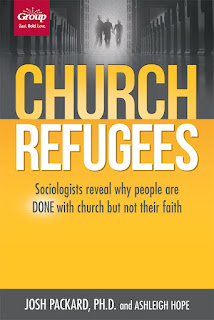
CHURCH REFUGEES: SOCIOLOGISTS REVEAL WHY PEOPLE ARE DONE with CHURCH but NOT THEIR FAITH by Josh Packard, PhD and Ashleigh Hope
Published in 2015.
Packard and Hope set out to investigate why formerly active members of Christian churches (all denominations) leave and don't come back to any church at all. These are not members that leave and go to a new church - these are members that completely walk away from any church. He calls them "dechurched" or "dones", as in they are completely done with church.
Every year, churches across the country lose active members. In this case, Packard and Hope are not talking about merely regularly attending members - they are talking about members who lead committees, music directors and even former clergy. These are part of the leadership of the church - the people that are committed enough to get things done.
Packard and Hope assumed that these folks were simply "burnout" cases - people that just were tired and dropped out altogether. "Instead, the dechurched are walking away from church work, but not the work of the church. They're walking away because they're convinced that the structures and bureaucracy of the church are inhibiting their ability to serve God. They see church as oriented only to its own survival. Instead on empowering, they find the church to be stifling. Over time, they've become convinced that their efforts and energies could be better spent serving God outside of the church." (p 55)
Once again, this is not a certain style or denomination of church. They talk about churches with big bureaucracies, churches essentially led by a CEO-type pastor who makes all of the decisions and everything in between. In the end, churches tend to turn inwards (focused on things like presenting a great worship service and maintaining a building) while these "dechurched" people wanted to keep a much more outward focus. They propose any number of outreach activities that emphasize a sense of personal community and the idea of making their church a more integrated part of its surrounding community (Think comments like: "That's a great idea, Bob. But, we need that money you would use to start a food pantry to re-pave the parking lot.")
Many of the dechurched (They call them "church refugees" because they are like real-life refugees who reluctantly flee their homelands because they feel forced out) feel like they have to leave the church to do the things they need to do because they are Christians. They see the opportunities to do the things that Christians are commanded to do and paving the parking lot is not one of them (there are several pages that use just the example of paving a parking lot lifted from an interview). The surprising point here is that so many of these people - the overwhelming majority, do not just walk away and just quit doing anything like church. This is not because of doctrine - it is because they feel like the formal church structure is getting in the way.
Instead, many of them join informal groups that act like house churches or in-depth Bible studies that emphasize discussion. Others work on those projects that they were denied as part of a formal church. Some move to groups like Habitat for Humanity. Almost all of them retain Christian beliefs and act on them. But, they are done with anything that is "organized" about organized religion. The formal rituals turn them off. Formal dogma does as well. Rather, they prefer a sense of community and the idea that the community is exploring what is meant to be a Christian - they are exploring it together and they are learning together, and they don't necessarily have to draw the same conclusions.
These people are not burned out. They throw themselves into new roles, unhampered by a bureaucracy that tells them no (or says "Yes, but only if you do this and this and this and fill out this form and make a presentation and...)
This was an interesting book. I know that in my own church, I have seen my share of fairly pointless disputes over turf issues as I have served as the head of a major board, so I get it.
In defense of a traditional church, Packard and Hope do note that a real strength of a traditional church is that it has real staying power. The energy of a small group of believers that meets from time to time fades. Church committees keep going and going and going - their structure can carry a church during times of low energy. They make several suggestions, but do not offer a prescription along the lines of "Do these three things to lure back the dechurched" because everyone's situation is different. Instead, they point out a few general guidelines that might keep the "almost" dechurched from leaving and becoming the next set of church refugees and might take advantage of the energy and training that these people desperately want to share.
I rate this book 5 stars out of 5. It can be found on Amazon.com here: CHURCH REFUGEES: SOCIOLOGISTS REVEAL WHY PEOPLE ARE DONE with CHURCH but NOT THEIR FAITH.
Every year, churches across the country lose active members. In this case, Packard and Hope are not talking about merely regularly attending members - they are talking about members who lead committees, music directors and even former clergy. These are part of the leadership of the church - the people that are committed enough to get things done.
Packard and Hope assumed that these folks were simply "burnout" cases - people that just were tired and dropped out altogether. "Instead, the dechurched are walking away from church work, but not the work of the church. They're walking away because they're convinced that the structures and bureaucracy of the church are inhibiting their ability to serve God. They see church as oriented only to its own survival. Instead on empowering, they find the church to be stifling. Over time, they've become convinced that their efforts and energies could be better spent serving God outside of the church." (p 55)
Once again, this is not a certain style or denomination of church. They talk about churches with big bureaucracies, churches essentially led by a CEO-type pastor who makes all of the decisions and everything in between. In the end, churches tend to turn inwards (focused on things like presenting a great worship service and maintaining a building) while these "dechurched" people wanted to keep a much more outward focus. They propose any number of outreach activities that emphasize a sense of personal community and the idea of making their church a more integrated part of its surrounding community (Think comments like: "That's a great idea, Bob. But, we need that money you would use to start a food pantry to re-pave the parking lot.")
Many of the dechurched (They call them "church refugees" because they are like real-life refugees who reluctantly flee their homelands because they feel forced out) feel like they have to leave the church to do the things they need to do because they are Christians. They see the opportunities to do the things that Christians are commanded to do and paving the parking lot is not one of them (there are several pages that use just the example of paving a parking lot lifted from an interview). The surprising point here is that so many of these people - the overwhelming majority, do not just walk away and just quit doing anything like church. This is not because of doctrine - it is because they feel like the formal church structure is getting in the way.
Instead, many of them join informal groups that act like house churches or in-depth Bible studies that emphasize discussion. Others work on those projects that they were denied as part of a formal church. Some move to groups like Habitat for Humanity. Almost all of them retain Christian beliefs and act on them. But, they are done with anything that is "organized" about organized religion. The formal rituals turn them off. Formal dogma does as well. Rather, they prefer a sense of community and the idea that the community is exploring what is meant to be a Christian - they are exploring it together and they are learning together, and they don't necessarily have to draw the same conclusions.
These people are not burned out. They throw themselves into new roles, unhampered by a bureaucracy that tells them no (or says "Yes, but only if you do this and this and this and fill out this form and make a presentation and...)
This was an interesting book. I know that in my own church, I have seen my share of fairly pointless disputes over turf issues as I have served as the head of a major board, so I get it.
In defense of a traditional church, Packard and Hope do note that a real strength of a traditional church is that it has real staying power. The energy of a small group of believers that meets from time to time fades. Church committees keep going and going and going - their structure can carry a church during times of low energy. They make several suggestions, but do not offer a prescription along the lines of "Do these three things to lure back the dechurched" because everyone's situation is different. Instead, they point out a few general guidelines that might keep the "almost" dechurched from leaving and becoming the next set of church refugees and might take advantage of the energy and training that these people desperately want to share.
I rate this book 5 stars out of 5. It can be found on Amazon.com here: CHURCH REFUGEES: SOCIOLOGISTS REVEAL WHY PEOPLE ARE DONE with CHURCH but NOT THEIR FAITH.
STEVE McQUEEN: THE SALVATION of an AMERICAN ICON (audiobook) by Greg Laurie and Marshall Terrill
Published by Christianaudio.com in 2017.
Read by John Pruden.
Duration: 7 hours, 2 minutes.
Unabridged.
In the 1960's to the 1970's, Steve McQueen (1930-1980) was the epitome of "cool" in Hollywood. Movies like The Magnificent Seven, Bullitt and The Great Escape made him one of the most sought-after actors in the world.
But, there was a long back story to Steve McQueen and his tragic death due to cancer had a surprising twist for a man who seemed to be out to take as much out of life as possible.
Greg Laurie, a super-successful California pastor (who I had never heard of, but his Wikipedia page is something else) wrote Steve McQueen: The Salvation of an American Icon in order to investigate a rumor that Steve McQueen became a Christian before his death. He decided to be methodical and investigate McQueen's life from its beginning in Beech Grove, Indiana to its end at Ciudad Juarez, Mexico.
McQueen was born at St. Francis hospital in Beech Grove, Indiana, a suburb of Indianapolis. His family struggled from the very beginning and he never knew his father. His mother struggled with substance abuse and often brought home "boyfriends" who abused both Steve and his mom.
The author grew up with similar struggles (single mom who moved a lot, abused a lot of different substances and brought unsavory men into the household) and he uses this similar background as a starting point of the book. In reality, this book is both a biography of McQueen and an autobiography of Laurie. I found both of their lives to be interesting and Laurie's observations about his own experiences growing up shed light on Steve McQueen's life as well.
Laurie follows McQueen from his childhood (including a stint in a group home for young men that was similar to a low-intensity jail) to his stint in the Marines to his beginnings as an actor in New York City and then on to Hollywood.
The question that Laurie was investigating was whether McQueen became a Christian before he died. Yes, he did - several months before he was diagnosed with the aggressive cancer that killed him.
I am not a particularly great fan of Steve McQueen, but this biography was pretty interesting as a look at popular culture 50 years ago. This book could've have used a little less about Greg Laurie and a half hour of repetitive storytelling could have easily been edited out of this audiobook. Despite those caveats, this was still an enjoyable listen.
John Pruden read the audiobook and he did an excellent job. It truly sounded like he was reading his own story.
I rate this audiobook 4 stars out of 5. It can be found on Amazon.com here: STEVE McQUEEN: THE SALVATION of an AMERICAN ICON (audiobook) by Greg Laurie and Marshall Terrill.
Subscribe to:
Posts (Atom)
Featured Post
<b><i>BAN THIS BOOK (audiobook)</i></b> by Alan Gratz
Published in 2017 by Blackstone Audio, Inc. Read by Bahni Turpin. Duration: 5 hours, 17 minutes. Unabridged. My Synopsis Ban This Book is t...
Popular posts over the last 7 days
-
Published in 2008 by Brilliance Audio. Read by James Daniels. Duration: 7 hours, 52 minutes. Unabridged. Synopsis Usually, books in the Elv...
-
Published in 2024 by Nyifie Brothers Publishing. Read by Joe Hempel. Duration: 3 hours, 58 minutes. Unabridged. Synopsis Fat Vampire is a u...
-
Published by Blackstone Audio in 2014. Read by Bernadette Dunne Duration: 6 hours, 49 minutes. Unabridged. When Books Went to War looks at ...
-
Published by Scholastic in 2016. Study Hall of Justice is a YA graphic novel that is a re-imagining of the DC universe with a comic twist. ...
-
Published in 2014 by RSO Publications. The short story Mildred has a tone and plot that is reminiscent of a Stephen King story. Certainly...
-
Published by DC Comics in 2023. Written by Collin Keely and Jackson Lanzing. Art by Xermánico and Romulo Fajardo, Jr. Synopsis Clayface has ...
-
Published in 2025 by Hourly History. Hourly History is a publisher that specializes in short histories and biographies in e-book form that ...
-
The premise of this book is not particularly original, but it still enjoyable. Originally published in book form in 2021 by My Story Product...
-
Originally published in 2009. In 1960, a six year old little girl named Ruby Bridges was to be the first African-American student to integ...
-
Published by The Great Courses in 2014. Lectures delivered by the author, Gregory S. Aldrete. Duration: 18 hours, 29 minutes. Unabridged. ...