I'M STILL HERE: BLACK DIGNITY in a WORLD MADE for WHITENESS by Austin Channing Brown


Published in 2018 by Convergent Books.

Let me address the title of I'm Still Here: Black Dignity in a World Made for Whiteness for all of you that will get hung up on the word "whiteness."

Let me use a rough analogy to explain it.

I am an overweight person. I used to be even more overweight (I have lost 85 pounds). I weighed enough that I had to buy almost all of my clothes online or in special stores. Most major chains literally sold nothing that would fit me. Certain brands make it very clear that they refuse to make clothes for heavy people because they don't want them wearing their brand. Once, I had a salesperson yell at me from across her empty mall store when she saw me walk in that they didn't carry my size (I was looking for something for my daughter).

The normal (easy to find, available everywhere) clothing world was not made for me. I was living in a world designed for thinner people.
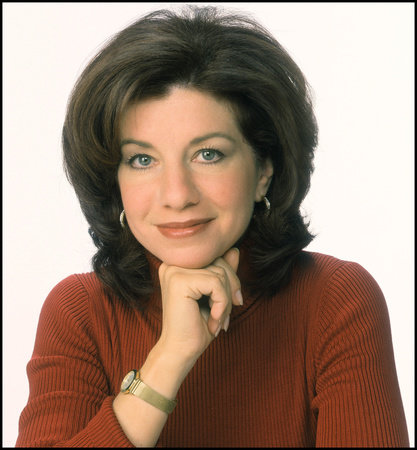
The author, Austin Channing Brown


This is how the author, Austin Channing Brown, feels about modern America. It is designed for white people. Period. Everyone else makes large accommodations to the majority while white America makes small ones. For example, in media most television shows feature white characters with maybe a token non-white character. Just this month the Marvel movie Black Panther came out. It is the eighteenth Marvel movie. It is also the first one with a main character who is not a white man. 1 of 18 is not a very good ratio.

Brown grew up in White America in suburban parochial schools. She is not a stranger to the mostly white religious organizations that she has been hired to help with their diversity issues. But, too often, she has been hired as a token hire rather than a guide to how to truly embrace a different part of the body of Christ. It is not enough to get the numbers right.

I understand her first sentence of the book: "White people are exhausting." I am a white man who teaches at a majority minority school. The culture of the school is simply not mine (separated by race and at least one generation) and there are times when I leave school exhausted by the constant mental translating I have to do just to keep up. I understood her comment immediately.

There are weird things that Brown experiences that I also have experienced. For example, she has white people at work that want to touch her hair without permission - simply because they are curious about how it feels. I have that happen, too - on a semi-regular basis from my African American students. I had it happen the day after I read her a passage in the book in which she complains about it. But, I expect that kind of things from kids - they're impulsive and curious and that impulsivity and curiosity overwhelms proper social rules. She gets it from adults who should know better - that's truly inappropriate behavior.

At it's core this is a hard book full of hard teachings. I don't embrace all of them. I think that she takes offense at things that are not necessarily meant to offend. Sins of omission versus sins of commission, if you like. I try to teach my students and my own children to try to not to take offense if there was none intended. She addresses this in the book as well and calls it out as simple excuse-making. 
She may be right.  This I know - she has many more valid points than I would like to admit.

More than most anyone would like to admit.

The biggest and most successful argument she makes is that the church (not one specific denomination, but rather the whole of Christianity) should be the one place that is actively working for justice, not just grudging, half-hearted accommodation (when it is remembered at all).

It took me about 10 days to read this small book because I felt that I often just had to sit it aside for a while and let it digest. It has given me a lot to think about as I approach my own classes every day.

I rate this book 5 stars out of 5.

Note: I was provided an uncorrected proof pre-publication copy of this book through the Amazon Vine program.

This book can be can be found on Amazon.com here: I'M STILL HERE: BLACK DIGNITY in a WORLD MADE for WHITENESS by Austin Channing Brown.

Note: this book was challenged in 2021 because a parent claimed it was 
“filled with hate speech, racial division, anti-white rhetoric and cancel culture all rooted in critical race theory.” That is a whole lot of buzz words. See the story here (towards the bottom.)

BLOOD SWEEP (Posadas County Mystery Book 8) by Steven F. Havill


A Review of the Audiobook

Published by Books in Motion in 2015
Read by Beth Richmond
Duration: 11 hours, 40 minutes
Unabridged

Blood Sweep is my eleventh Posadas County/Bill Gastner mystery. I have been with Bill Gastner when he was on patrol, when he was being lowered into a mine to find a kidnapper, when he was fighting a man in a little plane and through a whole lot of extra-spicy burritos.

Sadly, Bill is a minor character in this book. I understand why - when the series started out he was already old for a sheriff. Now, he's retired and really can't go out and fight bad guys so much.

Estelle Reyes-Guzman and Bob Torres carry the load in this book. I enjoyed the Torres story line, but found the Reyes-Guzman story line to be poorly paced and exceptionally wordy (never a problem with Torres since he famously says as little as possible). The Reyes-Guzman story line features a former resident of a Mexican border town that has spent most of his adult life in prison. This character speaks English like a Shakespearean actor, using tons of fancy words like "beseech" in everyday conversation. No one uses "beseech" in everyday conversation, especially not people who speak English as their second language and must have learned it in a Mexican prison. The whole plot revolves around this character and he is simply not believable as he is presented. Plus, he talks waaay tooo much.

So, this ties my lowest score for a Posadas County mystery. Thank goodness, most of them are much better than this one. I will be visiting Posadas County again.

Beth Richmond read Blood Sweep and did a solid job with most of the characters. Two of her Spanish-speaking characters sounded so much alike that it was difficult to follow who was speaking when they spoke to one another.

I rate this audiobook 3 stars out of 5. It can be found on Amazon.com here: Blood Sweep by Steven F. Havill.

THE HATE U GIVE (audiobook) by Angie Thomas


A Review of the Audiobook.


Published by HarperAudio in 2017.
Read by Bahni Turpin

Duration: 11 hours, 40 minutes
Unabridged

Starr Carter lives two lives in The Hate U Give.

She is an African American high school junior that lives in a rough African American neighborhood. Her best friend was killed in front of her, accidentally caught up in a drive-by shooting, so Starr's parents drive her 45 minutes (one way) out to a "white" school out in the suburbs for her own safety. 

She works in her neighborhood, at her father's store, on the weekends but she feels like she doesn't really live there. Most people don't even know her real name - they know here as "King's daughter that works in the store." She feels like no one at her school knows her either - she speaks differently, acts differently and cares about different pop culture things. She has a white boyfriend - a fact she hides from her father.

On a Friday night Starr goes to a massive party in her neighborhood and meets a boy she grew up with (his grandmother babysat both of them for years). After a scuffle turns into gun play they leave in his car. They get pulled over, the traffic stop goes bad and the officer shoots and kills her friend. The officer claims that he thought her friend had a gun (he didn't - he had a hairbrush).

Both of Starr's worlds come crashing down. In the neighborhood she feels unsafe, the police pressure her family to be quiet and others pressure her to speak up and tell the world about what happened. At school, she hides the fact that she was at the shooting and is mortified when some of her friends make callous racist comments.

Starr doesn't trust the police, but her uncle that she trusts more than anyone else in the world is a policeman. She is proud of her neighborhood, but she never speaks about it at school. She loves her friends at school, but they never come to her home. She loves her boyfriend, but she hides her home and her family from him and she hides him from her family. She is afraid to tell the world about what she saw, but she knows she must. Does she trust the system, like her uncle wants her to do? Does she fight back with her words and her testimony or does she do something more?

I am a middle-aged white man who teaches in an urban high school that is majority minority. I make the lighter-weight version of the trip that Starr makes every day - but in reverse. The cultural notes that author includes struck true to me and made it all the more enjoyable.

The title comes from a quote from Tupac Shakur. Here is how the book explains it: 
“Pac said Thug Life stood for “The Hate U Give Little Infants F***s Everybody. T-H-U-G-L-I-F-E. Meaning what society gives us as youth, it bites them in the a** when we wild out. Get it?” This theme is explored throughout.

I enjoyed the audiobook presentation of this book. The reader, Bahni Turpin, just nailed it. She sounded like my students. Great job.

Note: This book has a lot of vulgar language in it. Guess what? Kids like to use vulgar language. People in stressful situations use vulgar language. If that offends you, you will not enjoy this book.


I rate this audiobook 5 stars out of 5.

This book can be found on Amazon.com here: The Hate U Give

Update February of 2022: This book has now been tagged on my blog with the tag "MAGA Censorship List". Here is why: Click here for article. Also here. Also here (note: read the attached Google Doc that serves as a "review" of the book. One of the concerns of this chapter of Moms for Liberty is a possible George Floyd reference. This book was first published in February of 2017. Floyd died in May of 2020. I verified this with 20 seconds of Google searching. But, at least the unknown reviewer seems to have actually read the book.)

THE POWER of DIFFERENT: THE LINK BETWEEN DISORDER and GENIUS (audiobook) by Gail Saltz


Published by Macmillan Audio in 2017
Read by the author, Gail Saltz
Duration: 8 hours, 18 minutes
Unabridged


Psychiatrist Gail Saltz looks at the larger categories of "brain differences", such as dyslexia, depression and ADD in this interesting audiobook. This is a surface-level look at these brain differences (it comes out to a little more than an hour per difference she discusses - you can't expect any more than surface-level discussion), but informative nonetheless. Considering that the average person probably has no knowledge of any of these differences or, at best, a great deal of knowledge of one or two of the seven she discusses, this book serves as an excellent introduction.

Dr. Gail Saltz. Photo by Sigrid Estrada
Each chapter starts with a description of each of the brain differences including physical differences, if any. Saltz also introduces the reader to two or three high-achieving people with these differences. Some are celebrities, some are not. Then, she lets them describe how they used turned their perceived weakness into a strength. 

Saltz does not sugarcoat these differences and she is sure emphasize the amount of work that these individuals put in to get to where they are now.

Saltz read her audiobook herself. Sometimes authors who read their own books do a less-than-stellar job, but Saltz 
did a very good job with it.

As a teacher, I would recommend this to any general education teacher.

I rate this audiobook 5 stars out of 5.

This audiobook can be found on Amazon.com here: 
THE POWER of DIFFERENT: THE LINK BETWEEN DISORDER and GENIUS by Gail Saltz.

FREEDOM NATIONAL: THE DESTRUCTION of SLAVERY in the UNITED STATES, 1861-1865 (audiobook) by James Oakes


Published by Gildan Media, LLC in 2012
Read by Sean Pratt
Duration: 18 hours, 54 minutes
Unabridged


James Oakes takes a unique look at the Civil War in Freedom National - through the lens of the anti-slavery movement. I have read more than 200 Civil War histories and almost all of them cover this part of the story - but, just in bits and pieces.

Oakes looks at the anti-slavery movement from its roots in the Revolutionary War era and moves forward with the different Abolitionist arguments until they finally stumbled upon the concept of "freedom national". The argument is over the standard, default setting of the slavery issue. Was slavery legal everywhere, except where it was specifically abolished, or was it illegal everywhere, except for where it was specifically made legal? Or, in shorthand - was it "freedom national" or "slavery national"?


This book puts the lie to the idea that the Civil War was over taxes, tariffs or anything else but slavery. This book demonstrates that so much time, energy and effort was expended over how to deal with the slavery issue by both sides that, if it weren't the biggest question of the war, why was there so much constant uproar over it? Slavery was both the carrot and the stick in the Emancipation Proclamation. Slavery would be preserved if the areas in rebellion returned to the fold (the carrot), or it would be the slaves in those areas would be forever free and those slaves could be turned into Union soldiers to use against the Confederacy.

Almost as soon as the war started, it became obvious that the Confederacy's slaves were both an asset and a liability. They were an asset because they were a built-in workforce that would keep the fields in production (and some factories) while the armies were in the field. But, they were a liability because their owners feared an uprising, they were mobile and if they fled to Union lines they could be an invaluable source of military intelligence.


But, Lincoln faced a unique challenge that the Confederacy never faced - how do you free slaves in the Confederacy but maintain slavery in the four loyal slave states? 

I rate this audiobook 5 stars out of 5. 

A DOG'S PURPOSE by W. Bruce Cameron


Originally published in 2010.

This is the book that inspired the controversial movie (not due to content but rather due to how a scene was filmed). The book itself is not controversial, but a sentimental reincarnation story involving a dog who is looking for his purpose in this world.

The dog lives a variety of lives (a stray, a working dog, a pet) as a variety of breeds and eventually discovers his purpose. Along the way the author shows some very solid insight into dog psychology and has a lot of fun trying to guess the motivations of the simple (or maybe not so simple dog). 

There are times when the story is pretty sappy, but there are times when the story is gripping and very touching. It is an easy read, but worth the time of any dog lover.

I rate this book 4 stars out of 5.

The book can be found on Amazon.com here: A Dog's Purpose by W. Bruce Cameron.

THE WAR on KIDS: HOW AMERICAN JUVENILE JUSTICE LOST ITS WAY by Cara H. Drinan


Published by Oxford University Press in November of 2017.

Cara H. Drinan is a law professor at The Catholic University of America in Washington, D.C. Her book The War on Kids: How American Juvenile Justice Lost Its Way deals primarily with the changes to the justice system over the last 30 years and the mostly unforeseen consequences of those changes.

Drinan discusses how in the late 1980's and early 1990's the United States was experiencing a crime wave, including "the nation's peak murder rate" (p. 156) and a number of these criminals were minors. Lawmakers responded by making it easier to move cases involving juvenile offenders into adult court. Juvenile court, although imperfect, at least made some attempt to accommodate itself to the specific needs of youth offenders and offered opportunities to rehabilitate themselves. It also recognized the fact that young people's brains just work differently than adult brains - a point Drinan brings up often throughout the book,

Early in the book, Drinan offers a powerful set of facts about the effects of poverty on youth and the truly dreadful conditions that some young people grow up in. Chapter 2's detailed description of Terrence Graham's childhood is tough reading. He was failed by nearly every adult relative in his life and was clearly failed by the social workers that knew the conditions he lived in and did nothing to remove him from a home filled with drugs, hunger, violence, chaos and deprivation. I wouldn't have let a dog stay in that house, let alone a human child.

Drinan also describes how defendants in the justice system often have to depend on understaffed public defender offices that clearly don't have the time to do much more than process their clients and hope for the best. The book Rights at Risk: The Limits of Liberty in America by David K. Shipler also covers this topic very well. Minors moved up into adult court become a part of an already over-burdened system. 

Not that the juvenile courts are doing much better. On pages 58 and 59 Drinan details a litany of failings, including statistics that show more than half of the minors held in juvenile detention don't even have an attorney. Public defenders that deal in juvenile law are overwhelmed. The industry standard is no more than 200 cases per defense attorney. Some have caseloads with more than 1,500 clients. There is no way they can do any sort of quality work with that sort of caseload. To make matters worse, many are not even trained in juvenile law. 

Drinan argues that there need to be a whole series of safety nets in place to help young people like Terrence Graham from getting into the justice system in the first place, but she offers precious few specifics. She also argues for rehabilitative programming in juvenile detention but only offers one detailed description - a program in Missouri that does sound promising. It is so promising that it makes me wonder why the other states haven't adopted it as well.

The second half of this slim book is a tough read. Not due to the content, but due to a lot of legalese. She makes a series of recommendations that sound all right, but I really can't say for sure because I am not an attorney. It's almost like she forgot who her intended audience was at the halfway point of the book and lapsed into jargon and started talking to the attorneys reading the book.

There are times when Drinan comes off as more than a little naive. She often reminds the reader that youth are often impulsive and their brains don't work like an adult human's brain. True enough. At times, though, she sounds like she would excuse nearly any crime simply because the perpetrator was a youth and youth can be more easily rehabilitated than adults. One case study involved a young man that lured another to a car wash so he could "talk" about an issue they were having. Instead, he ambushed him and shot him three times with a rifle. This is different than a young person who is serving time because he was the driver waiting outside in the car during a robbery in a store that resulted in someone being shot.


The closing is an unsatisfying mish-mash that takes way too many shots at Donald Trump. I am not a fan of the President. Despite all of his faults though, he is a political newbie and had nothing to do with the current state of the juvenile justice system.

Read the first half of this book to find out the depth of the problems with our juvenile justice system. It is powerful reading.

I rate this book 3 stars out of 5.


This book can be found on Amazon.com here: THE WAR on KIDS: HOW AMERICAN JUVENILE JUSTICE LOST ITS WAY by Cara H. Drinan.

Note: I received an advance uncorrected proof of this book for free so that I could write an honest review as a part of the Amazon Vine Program.

Featured Post

<b><i>BAN THIS BOOK (audiobook)</i></b> by Alan Gratz

Published in 2017 by Blackstone Audio, Inc. Read by Bahni Turpin. Duration: 5 hours, 17 minutes. Unabridged. My Synopsis Ban This Book is t...

Popular posts over the last 7 days