THE LOST KINGDOM (audiobook) by Matthew J. Kirby


Published by Scholastic Audio in 2013.
Read by Charlie McWade
Duration: 8 hours, 41 minutes

The Lost Kingdom is an alternate history set in a world in which mastodons still roam North America in great herds and are hunted by giant predators called bearwolves. The story is set just before the French and Indian War and the situation is easily recognizable for anyone familiar with that time period. The English colonies arranged along the Eastern Seaboard but the interior is largely controlled by the French and their numerous Indian allies through a vast trading network. As the English move farther inland they encounter more and more resistance and everyone knows that it will lead to open warfare, probably sooner rather than later.


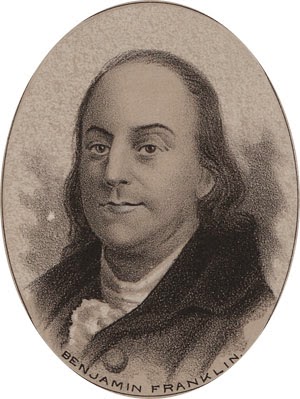
In a bold move to secure a new set of allies in the interior, the American Philosophical Society, a group of intellectuals led by Benjamin Franklin, have decided to send an expedition in search of a fabled Welsh kingdom built around the legendary tale of Madoc, the Welsh prince who is supposed to have landed in the America's centuries before Columbus. This really is a legend in our world, so I found that to be quite interesting.

The intellectuals are joined by the son of their botanist, a young teen named Billy Bartram. They are not traveling by boat or by foot but in a sort of steampunk airship powered by balloons of some kind. The ship is an actual ship and it flies much like a blimp. They fly out to the new fort at what will be Pittsburgh in the distant future (barely escaping French spies as they leave Philadelphia). A sneak attack by French Marines and an encounter with a bearwolf throw the entire expedition off track. Throw in the suspicion that there is a spy in their midst and things have really gone wrong for Billy and this crew of geniuses...

****Spoiler alert****
So, here's the thing for me and this book. I do not mind the steampunk ship or the mastodons or even the legend of the Welsh. I think those made the book fun. But, I have a problem when the book violates its own internal rules and here are three gigantic errors that just don't make sense.

1) The expedition sets off without a single weapon in a time period when people of the frontier did not step out of the house to feed their chickens without a gun at hand. They did this out of fear of Indians and also fear of animal attack. To borrow from another story, imagine if in The Hobbit the expedition set out without a single sword because they knew that swords would be useless against the dragon. Well, that would be silly considering how often they had to fight everything else along the way. In a similar way, the lack of weapons means they cannot defend themselves from animals. Also, they cannot hunt to supplement their food which is a massive mistake in and of itself. This mistake compounds itself

2) The expedition has no weapons because they claim they are a science expedition, not a military one. But, in reality, they are out to find out if the legend of the Welsh is true and make a military alliance with them. That makes them a military expedition.

3) The expedition is attacked by a bearwolf just outside of Pittsburgh. The bearwolf chases the very fast-moving ship on land, somehow tracking it over mountains, across rivers and streams through the little sliver of what is now West Virginia, all along the bottom of Ohio, Indiana, across the Wabash river into Illinois and even across the Mississippi River in some crazed single-minded pursuit of this group so it can attack them for reasons that are never stated. But, really, what animal chases a group of people for hundreds and hundreds of miles?

****End spoilers****

I rate this audiobook 2 stars out of 5. I couldn't get past the internal contradictions. It can be found on Amazon here: The Lost Kingdom.

WOOF (Bowser and Birdie #1)


Published by Scholastic Press in April of 2015


Spencer Quinn is best known for his dog and owner Chet and Bernie detective series. Now, he takes this winning formula in a new direction. Rather than have a police dog (almost) and an army veteran turned detective solve murders, Quinn has re-tooled things for a different series. But, he keeps the most important part the same - the story is told from the point of view of the dog!

In Woof, the first book in the Bowser and Birdie series, Birdie Gaux, a little girl living with her grandmother alongside a swamp in St. Roch, Louisiana. Her grandmother runs what some might call a bait shop and conducts swamp tours in her small boat. Birdie's mother works on an oil rig and talks with Birdie on Skype.

Birdie gets a shelter dog for her birthday and she chooses Bowser. Bowser has had a pretty rough go of it and he hates the shelter. But, boy, does he love Birdie. They make quite the pair as they try to figure out who stole the stuffed Black Marlin that has hung in the bait shop for more than 60 years. There are stories of hidden treasure maps hidden in that marlin and no one wants to hear to the clues that Bowser and Birdie have found. So, Birdie decides to investigate on her own. Of course, Bowser just has to go along...

I was interested to see how Quinn could adapt his Chet and Bernie style into a book for kids. It turns out that he does it fantastically. The book moves along well. Bowser is a good narrator, even if he is easily distracted. The mystery is fairly simple but it could not have been solved without Bowser's help. 

The book can be found on Amazon here: Woof (Bowser and Birdie) 

I rate this book 5 stars out of 5.

Note: I received a uncorrected proof pre-release copy of the book in exchange for an honest review.

SHADOW WARRIOR: WILLIAM EGAN COLBY and the CIA (audiobook) by Randall B. Woods


I have rarely been so glad to have been done with an audiobook as I was with this one.


Published in 2013 by Post Hypnotic Press
Narrated by Michael Puttonen
Duration: 21 hours, 56 minutes.
Unabridged.

William Egan Colby was present at the beginnings of the CIA and served as an inserted commando with the Office of Strategic Services (OSS) in both France and Norway during World War II, pioneering the kind of action he advocated for during his years in the CIA.

The beginning of Shadow Warrior is excellent as it details Colby's life and his World War II exploits. But, as it transitions from World War II to the early years of the Cold War to the Vietnam War the book becomes bogged down, especially in the endless detail about the politics of South Vietnam. Clearly, the Vietnam War was a pivot point for America and for Colby so it should be stressed. However, hours and hours of details about the governing elite of the doomed country were simply tedious.

Colby moves back to America and into the halls of power in the CIA just as the Watergate Crisis is starting to break. America's faith in government was at a low point and people were starting to ask if the CIA should be restrained. Colby had worked his way up to be the Director of the CIA. Colby was as honest as he could be and still keep the CIA open and running as an effective intelligence and counter-intelligence unit. But, once again, the forward momentum of the book is swamped with details. 

Look, I am a high school history teacher. I love history. But, I have rarely been so glad to have done with an audiobook as I was with this one.  
William Colby
(1920-1996)
Making it worse, the reader, Michael Puttonnen insisted on reading quotes from different politicians of the 1960s and 1970s with in an impersonated voice. His LBJ was subtle, but his Nixon and Kissinger voices were not very good and I found them to be distracting
.

I rate this audiobook 2 stars out of 5. I cannot rate it 1 star because I did learn a few things along the way.

Note: I was sent a free copy of the mp3 CD audiobook by the publisher in exchange for a fair review.

It can be found on Amazon.com here: Shadow Warrior: William Egan Colby and the CIA.

A THOUSAND MILES to FREEDOM: MY ESCAPE from NORTH KOREA by Eunsun Kim with Sebastien Falleti. Translated by David Tian


A Remarkable Tale


To be published in the United States on July 21, 2015. 
I received an "Advance Reading Copy" 


Eunsun Kim's tale of her escape from North Korea, along with her mother and her older sister is remarkably easy to read, remarkable engrossing and just a remarkable tale in general.

When Eunsun Kim was 11 years old her mother determined that they could no longer live in North Korea. Eunsun's grandparents were dead, her father was dead, almost everything in the house was sold for money to buy food but there was almost no food to be had because North Korea was in the middle of its Great Famine (1994-1998). Depending on whose statistics you use, the estimates range anywhere from 250,000 to 3,500,000 people starved to death or died from starvation-related causes. Of course, it is hard to say for sure because North Korea is such a closed off society.

Eunsun Kim and her family lived in the northernmost part of North Korea and they decided to cross the Tumen River into China and live as illegal aliens. They would have no promise of safety, no guarantee of work and risked being shot by the border guards on both sides of the border. But, at least they would have chance to eat.

She details several botched attempts at escape and I was pleased to see that at least one border guard was a decent human being. He could see they were starving and desperate and he took pity on them and let them go with a warning - twice! But, he couldn't feed them because there was no food to be had so this small family eventually makes it to China. The family tries to stay together but when Eunsun Kim's mother is sold into sexual slavery (she calls it an unofficial marriage, but the entire purpose of the marriage was to produce a son for her "husband" and no one recognized the marriage as legitimate) the family splits up. The daughters have a better time of it, but it is not easy.

As you can tell by the title, eventually Eunsun Kim makes it to freedom. Their last push to make it to South Korea is tension-filled and her story of how she adjusts to life in South Korea is interesting in and of itself. Now, she lives in South Korea and has lived and travelled all over the world studying (making up for lost years when she had to work to collect wood rather than go to school so they could get food) and promoting her book.

Ironically, A Thousand Miles to Freedom is late to be translated into English (it was published in French in 2012). I say ironically because the United States has had so much involvement with North and South Korea over the last 60+ years. This translation is very good (I teach Spanish and I know how hard it can be to make foreign text sound smooth in a different language). The text flows easily and makes it sound like Eunsun Kim is sitting with you telling her story in everyday, conversational language over a cup of tea.

Last two lines of the book: "The Kim dynasty has so successfully isolated my country that it would be easy for the rest of the world to forget about us. If my memoir can even play a small part in raising global awareness about our suffering and about the tragedies taking place at the hands of this regime, then all that I have endured will not have been in vain."

It can be purchased at Amazon here:  A Thousand Miles to Freedom: My Escape from North Korea

I rate this book 5 stars out of 5.

THE EASTERN STARS: HOW BASEBALL CHANGED the DOMINICAN TOWN of SAN PEDRO de MACORIS by Mark Kurlansky


Published in 2010 by Riverhead Books

The Eastern Stars is more a history of the Dominican Republic than a baseball book, but as author Mark Kurlansky clearly demonstrates, for the last 40 years or so the history of the Dominican Republic has clearly been molded and in some ways defined by its love of baseball. It is also a clear sign of the unhealthy state of economic affairs in a country when so many young people see no hope in moving up in the world except for playing professional baseball in America.

Kurlansky takes his readers through a meandering history of the Dominican Republic, moving backwards and forwards through time detailing a number of interesting stories about this Caribbean country but always coming back to the present to touch base and remind the readers that this is a baseball book, too. 

The Dominican Republic has had a long love affair with baseball thanks to American economic and military excursions into the country. It also has been so poorly managed by it various governments that for decades many young men have sacrificed everything in order to make it on to an American Major League Baseball team roster. Who can blame them - in 2006 ten percent of all major leaguers were from the Dominican Republic (p. 75). So many young men hope to win a contract, play for a few years and then return to the Dominican Republic and live like kings in their gated communities back in their hometowns.

Scouts prowl dusty sandlots looking for some spark of talent, even of the players are using balls made out socks and gloves made out of cardboard, the talent shines through. Or, at least they hope that it does.  Top prospects are enrolled in one of many "schools" that teach a lot of baseball and English and some math and science. In return, these schools get a cut of their contracts for helping to develop their talent. Even the Japanese teams have started sending scouts to the Dominican Republic.

As the title states, the real focus is the small fishing town of San Pedro de Macoris. It is unremarkable in every way except that it keeps producing major league baseball players. 

Why?

Kurlansky never comes out and says it, but after reading so many pages about the Dominican Republic and its sad history the reader just knows that it is because there really isn't anything else. It's either fishing in ever-more-depleted waters for less and less fish for more and more work or its baseball. Meanwhile, you can watch the SUVs of retired major leaguers pick their way around the potholes of roads that haven't been repaired in years and probably won't be anytime soon and know that the only rational choice is to put all of your effort into baseball and only baseball. Everything else is a sucker bet.

Note: many other reviewers have been critical of Kurlansky's detailing of some of the facts about the careers of some of the Dominican players the he describes, getting batting averages wrong and some of the dates wrong. No sport generates factoids like baseball and it is disappointing that Kurlansky has so many errors. But, read the book for what it was intended to be - a history of the Dominican Republic detailing how it became a sort of incubator for major league baseball players.

This book can be found on Amazon here: The Eastern Stars: How Baseball Changed the Dominican Town of San Pedro de Macoris.

I rate this book 4 stars out of 5.

NPR FAVORITE DRIVEWAY MOMENTS: RADIO STORIES that WON'T LET YOU GO by NPR


Published in 2012 by HighBridge Audio
Multicast performance
Duration: 2 hours, 16 minutes

This collection was inspired by listeners who wrote NPR and commented on why these stories from their vast treasure trove of stories have stuck with them for so long. Some are funny, some are sad and some are thought-provoking. They are also a mixed bag. Some are great, some are so-so and some had me wondering why they were included at all.

Pretty typical of the collection is a skit called "Complexities of Modern Love in the Digital Age". It features the two voice actors that you most typically hear when you call a big corporation for customer service and they lead you through the phone tree. In this case, they have the two voices talk to one another and date. The idea is sort of cute but the actual skit was not as funny as the idea of the skit.

A Kathy Griffin interview. Eh. 

The Cookie Monster interview was fun.

I loved the story about a stray cat that wandered into a prison yard and was adopted by the prisoners. They feed it, take turns with it and the amount of discord in the yard has dropped because of this one cat.

I also liked the story of the former KKK member who went from harassing his Jewish neighbors to converting to Judaism thanks to a little human kindness.

The story about pets in the Sarajevo during the war among what used to be Yugoslavia was very interesting.

The story of a young couple in China digging through the rubble after an earthquake looking for their only son and his grandparents who were babysitting was gripping and heartbreaking. Easily the best in the collection.

The story that will stick with me was "Growing Up, Aging Out: The End of Foster Care". It was told from a very sympathetic point of view, wondering what a girl was going to do when she turned 21 and was no longer eligible to be part of the foster care system. But, I found it to be very irritating and the longer I listened the angrier I got. This girl was not physically disabled. She still had not finished high school and she was nearly 21 years old. She was making no moves to get a job or even finish high school. Instead, had been conditioned to accept handouts her whole life and to not work. How would she live without a government check? What would she do? What she was doing was sleeping with her drug dealer boyfriend and trying to get pregnant. I listened to it with my high school-aged daughter and I turned it into a cautionary tale.

So, lots of forgettable stories, some so-so stuff, a couple of really good ones and one really disturbing one.


I rate this collection 3 stars out of 5. It can be found on Amazon.com here: NPR FAVORITE DRIVEWAY MOMENTS: RADIO STORIES that WON'T LET YOU GO.

INSURGENT: BOOK 2 of AMERICA'S FUTURE by Charles Sheehan-Miles


Published in 2012 by Cincinnatus Press 

Insurgent is a worthy successor to the original book in this series, Republic: A Novel of America's Future. Book One details how a fictional confrontation between the state of West Virginia and the federal government over the proper role of the Department of Homeland Security eventually leads to a very short war in which West Virginia is quickly defeated. 

Book Two deals with post-war relations between the occupying federal government, its troops and the people of West Virginia and the closely monitored civilian government of West Virginia.

The flag of West Virginia
The parallels between this fictional war and the Iraq War and the multi-year struggle to create a stable environment in Iraq once Sadaam Hussein was removed from power are striking and, I am sure, quite intentional. And, since this is a book about Americans in a situation similar to that experienced by the people of Iraq, the Iraqi reactions are made all the more understandable to an American reader. 

Sheehan-Miles switches from the point of view of a small military unit helping to keep a crucial road clear to the civilians who interact with that unit to the officials in the limited civilian government and keeps multiple story lines going, including the origins of a nascent insurgent group with powerful weapons and even stronger religious beliefs who starts taking on the occupying troops with bombs, assassination attempts and threats against those who collaborate. 

It is a compelling read and, like I said about the last book, it is guaranteed to make you think.

It can be purchased here on Amazon.com: Insurgent: Book 2 of America's Future

I rate this book 5 stars out of 5.

Featured Post

<b><i>BAN THIS BOOK (audiobook)</i></b> by Alan Gratz

Published in 2017 by Blackstone Audio, Inc. Read by Bahni Turpin. Duration: 5 hours, 17 minutes. Unabridged. My Synopsis Ban This Book is t...

Popular posts over the last 7 days