The Colonel's Lady and No Man's Gun : Unabridged Stories from The Tonto Woman and Other Western Stories by Elmore Leonard


Short but pretty sweet


Read by James Naughton and Dylan Baker
Duration: about 1 hour, 30 minutes
Published in 1999 by Simon and Schuster.

These two stories are taken unabridged from a larger collection of Elmore Leonard short stories called The Tonto Woman and Other Western Stories.

Both stories last about 45 minutes each. The entire package consists of one audio cassette lasting about one and one-half hours. They are read by veteran television actors James Naughton and Dylan Baker.

I thought that "The Colonel's Lady" (she is taken captive as a result of an ambush) had a pretty good twist to it but was a bit slow. I would give it three stars. On the other hand, I enjoyed "No Man's Guns." In that story, a recently discharged member of the cavalry is framed for murder. I give the second story 5 stars. That makes an average of four stars.

This audiobook can be found on Amazon.com here: The Colonel's Lady and No Man's Gun.

Reviewed on April 13, 2008.

Twenty Decisive Battles of the World by Lt. Col. Joseph B. Mitchell and Sir Edward Creasy


Interesting collection


Published in 2004 by Konecky and Konecky

Sir Edward Creasy published a book called Fifteen Decisive Battles of the World: from Marathon to Waterloo in 1851. His original work was expanded in 1964 by Lt. Col. Mitchell in order to create Twenty Decisive Battles of the World. In some cases, Mitchell corrected factual errors in Creasy's original work that came to light since it was first written.

The main criteria for picking these twenty battles was that the battle had to have a lasting impact on the war it was a part of and also have a lasting impact on history. For example, the Confederate victory at the battle of Chancellorsville in the American Civil War was not chosen despite the fact that it was brilliantly fought by Robert E. Lee. The Confederacy went on to lose the war and the victory at Chancellorsville may have prolonged the war by a few months at most. On the other hand, Mitchell picked the Vicksburg campaign as a battle that was decisive in the history of the world because it spelled out the doom of the Confederacy in the West and led to the Grant's appointment as leader of all of the Union armies. A weakened United States (without the Confederate States) would not be as big a player in world politics as it is now, so that victory had a lasting impact.

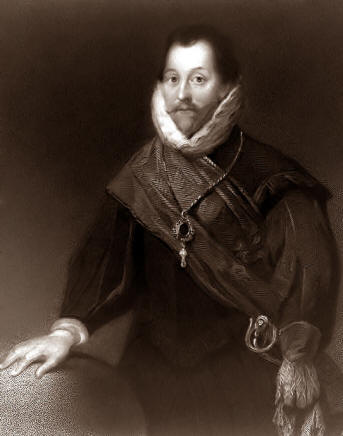
Francis Drake (ca. 1545-1596), 
victor over the Spanish Armada
The battles are:
-Marathon;
-Syracuse;
-Arbela;
-The Metaurus;
-Teutobarger Wald;
-Chalons;
-Tours;
-Hastings;
-Orleans;
-The Spanish Armada;
-Blenheim;
-Poltava;
-Saratoga;
-Valmy;
-Waterloo;
-Vicksburg;
-Sadowa;
-First Marne;
-Midway;
-Stalingrad.

Each chapter describes the situation before and after the battle and tells why this battle was so important, a hinge of history, so to speak. In some cases, there is a lot of detail about the battle itself, in some cases there is only some hazy detail to draw from so there is not much to tell. Clearly, this is a Eurocentric, or at least Western-based series of battles. Nothing from Asia or Africa unless a European/American force is fighting against them. This makes the basis for calling it Twenty Decisive Battles of the World pretty iffy, but these are certainly twenty well chosen battles that created the West.

I rate this history 4 stars out of 5.

This book can be found on Amazon.com here: Twenty Decisive Battles of the World

Reviewed on August 4, 2011.

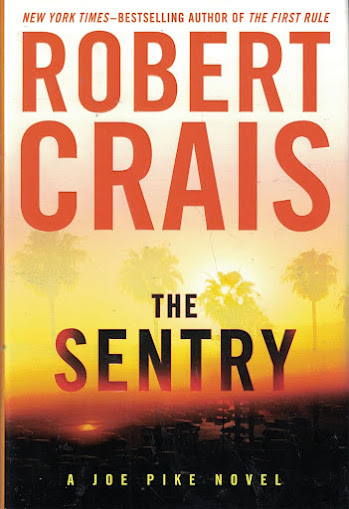
The Sentry: A Joe Pike Novel by Robert Crais


Relentlessly paced


Published in 2011 by G.P. Putnam's Sons

The Elvis Cole/Joe Pike series continues with The Sentry. Technically, it is a Joe Pike novel, but as with most of the books in this series, you get a little bit of both.

Joe Pike stumbles into a gang intimidation racket (the famed "give us money or your restaurant gets damaged" routine) in progress and, of course, the two fools actually attempt to fight Pike.

When the police come to arrest the one assailant that Pike captures the victim refuses to cooperate with the police. Pike takes a protective interest in Dru, the niece of the owner who was beaten by the gang members before Pike's intervention. Dru and Joe share a nice moment over coffee and, for a moment, Joe's impenetrable emotional armor is actually penetrated. Joe takes a shine to Dru and gets involved and tries to protect her by taking steps to stop the ongoing harassment by the Latino gang.

But, somewhere along the way things go awry. The FBI has Dru and her Uncle's restaurant under surveillance, the talk with the gang's leader seems to have come to nothing despite promises that were made and Dru and her uncle go missing after their restaurant is gruesomely vandalized. Joe and Elvis start to dig to see what has happened and they find out that almost nothing is what it seemed...

I rate this book 4 stars out of 5 and it can be found on Amazon.com here: The Sentry: A Joe Pike Novel.

Reviewed on August 4, 2011.

Naked Economics: Undressing the Dismal Science by Charles J. Wheelan


Don't know much about economics? Well...


Published in 2003 by W.W. Norton and Company.

If, like most, you don't know much about economics, than I strongly recommend giving yourself a painless, entertaining introduction to the major concepts by checking out Naked Economics: Undressing the Dismal Science.

Serious economists are sure to argue all sorts of fine points with Charles Wheelan, but the broad strokes of economic theory are laid out in an easy-to-read, fun, informative format that uses no graphs, charts or mathematical formulae. The experts may love all of those tools and jargon, but they do get in the way for most everyone else. Wheelan is one of those rare people who speaks technical econ-speak and regular English and can translate for the majority.

This is a strong enough book that I would seriously recommend it for anyone taking a basic econ class as a primer. I would also recommend it as a supplemental textbook to go along with a basic econ textbook for advanced high school students or Econ 101 type classes in college. I would even recommend it instead of most basic econ textbooks since they are usually about as interesting as reading the owners manual for a microwave oven. Naked Economics is a book that will be read and enjoyed, rather than skimmed, dreaded and cursed.

Read this along with Thomas Friedman's The World is Flat and you have doubled your education about economics and the modern world and you have a fundamental grasp of the modern economy. Notice I said fundamental, not complete - these book are tremendous places to start your learning.

I rate this book 5 stars out of 5.

This book can be found on Amazon.com here: Naked Economics by Charles Wheelan.

Reviewed on April 13, 2008.

Farnham's Freehold (audiobook) by Robert A. Heinlein


Often frustrating. Sometimes shocking. Never boring.


Read by Tom Weiner
Duration: 10 hours, 24 minutes.
Blackstone Audio
Unabridged.

Robert A. Heinlein was recognized many times over as a master of the science fiction tale – he is a multiple winner of the Hugo award and the first recipient of the Grand Master Award for lifetime achievement. Heinlein is one of those golden age writers that moved science fiction from being stories strictly for kids to a separate and recognized literary genre for adults, too.

Farnham’s Freehold is, at best, a difficult book. Perhaps books like this were a requirement when moving science fiction from a kid’s genre to an adult genre. It seems that Heinlein the iconoclast was out to irritate as many sensibilities as possible in an attempt to question some of society’s long held ideas about race, sex and the male-female relationships, even if it caused the story to suffer at the expense of all of that questioning.

The story first appeared as a magazine serial in 1964 and has some superficial similarities to Pierre Boulle’s 1963 novel Planet of the Apes. The story features Hugh Farnham, a building contractor, and his family. They live in a suburban Colorado neighborhood during an undefined time, most likely the mid to late 1960s at the height of the Cold War. The Soviet Union and the United States have maintained a Cuban Missile Crisis state of readiness and it is clearly getting worse.

Hugh Farnham is prepared for nuclear war, however. As already noted, he is a contractor and he has designed, built and stocked a fallout shelter. Nuclear war begins while the entire Farnham clan (and a visitor) are home so Hugh quickly moves his wife, college-aged daughter, her sorority sister, his lawyer son and their house servant Joseph into the shelter. The Farnham family is white while Joseph is African American. They all survive the attack and emerge in a world that is not destroyed, but actually a lush forest with wildlife and no radiation and no sign of the nuclear war that occurred.
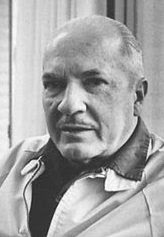
Robert A. Heinlein 
(1907-1988)

The Farnham family just may be the most dysfunctional family in all of science fiction. Mrs. Farnham is so chemically dependent that in literally every scene she is either passed out, drunk, high or looking to get drunk or high. Her daughter openly considers incest with her father or her brother. The brother Duke gets into two fistfights with his father, fawns over his mother and openly hates Joseph because of his race. Hugh advocates eugenics, seriously threatens to kill his son several times, orders everyone to take sleeping pills and alcohol or other drugs on a regular basis, openly leers at his daughter’s naked body, insists that everyone walk around naked in multiple scenes and conceives a child with his daughter’s best friend during the nuclear attack while his wife sleeps in the next room after he has drugged her.

This creepy cast of characters and their fallout shelter are actually thrown about 2,000 years into the future – that is the reason for the lush landscape rather than a nuclear wasteland – Colorado has had time to recover. They set out to build a little settlement in the wilderness and Heinlein goes to great lengths to describe everything that Farnham included in the shelter and the difficulties that modern people would have in going back to a log cabin lifestyle.

Hugh assumed that they were in some sort of Eden and makes plans to re-populate the Earth.  One day, however, flying ships arrive and the Farnham’s discover that the world is a very different place than they had assumed. The lush wilderness actually belongs to a feudal type lord who is part of a worldwide, very high tech culture based on countries that were not part of the American-Russian nuclear war – Africa, India, the Arab world and some parts of Latin America, but especially Africa and India. Race becomes an issue, and the ruling ethnic groups are a complete reversal from the situation that the Farnhams knew back home.

Skin color is still important but whites are the enslaved and the ruling class is entirely made up of people with darker skins tones. White females are primarily used for sexual entertainment (they are called “sluts” – a word that Heinlein must use a hundred times in the second half of the book) and white males are used for all sorts of labor. Hugh wants to escape with Barbara, his daughter’s best friend, because their sexual encounter during the nuclear attack has resulted in twin sons. Hugh is particularly motivated to act quickly once he discovers that the ruling class is fond of eating white people and he fears that one of his sons or Barbara will be a victim of cannibalism. Farnham’s plans to escape and possibly return to his own time take up the last quarter of the book. As Farnham puts it, “We go on…no matter what happens.”

As I listened to Farnham’s Freehold I questioned Heinlein’s motives throughout. I had to wonder why Heinlein included such things as the open and positive discussion of incest and why he made every female character weak and dependent - their entire world revolves around men – they attach themselves to them and have little else in their lives but their approval or their scorn. His continual reference to them as “sluts” in the last half of the book only reinforces that thought. The choice to make the African rulers of the world some 2,000 years from now cannibals is, for me, the most confusing aspect of the book. What seemed a neat trick to show the folly of racism by having the positions reversed instead becomes a reinforcement of the most pathetic of racial stereotypes from the days when Africa was known as the “dark continent.”

The only conclusion I can come to is that Heinlein was just writing in what interested him and really did not care if it went down smoothly with his readers – he was in full iconoclast mode. In that case, he achieved his goal. At best, this is an uncomfortable book with some good points mixed in with the bad, like an elderly relative that can give good advice and in the next breath go off on some racist or sexist rant. At worst, Farnham’s Freehold is an anti-minority, anti-woman survivalist rant. It is oftentimes frustrating. It is sometimes shocking. It is never boring.

Tom Weiner read the book. He did an exceptionally good job with the voices of Hugh Farnham and Joseph. His female voices were not as good, but they were also hampered by Heinlein’s oftentimes-stilted female dialogue.

I rate this audiobook 2 stars out of 5 and it can be found on Amazon.com here: Farnham's Freehold by Robert A. Heinlein.

Reviewed on July 8, 2011.

A Lynching in the Heartland: Race and Memory in the Heartland by James H. Madison


An important look at a terrible act


Published in 2001 by Palgrave Macmillan

On August 7, 1930 a crowd of hundreds, possibly thousands swarmed around the Grant County Court House in Marion, Indiana with the intent to remove three black teenagers and kill them by hanging from the trees on the Court House lawn - a lynching. Two of the young men were lynched, the third was spared for reasons that no one seems to remember. The survivor claims it was a miracle that he was released and put back into the jail, and it may well have been so. Nevertheless, it may have mostly disappeared from America's collective memory except as an aberration from the stereotypical norm of lynchings being a mostly Southern phenomenon.

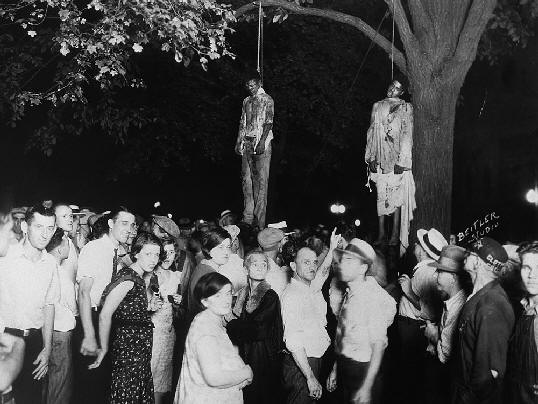
That is, it may have been forgotten except for the picture taken by a local photographer named Lawrence Beitler who printed off hundreds of copies and sold them to gawkers the next day. Those copies made their way across the state and eventually across the world to be reprinted in newspapers, magazines, textbook and even in movies. The Beitler print is the iconic photo of a lynching. Two young men hang dead while a crowd of onlookers gawk. An angry man points. A husband and his pregnant wife hold hands and smile as though a lynching were as much fun as the county fair. Old men and old women stand and stare - one old woman uses the occasion to people watch. The surreality is striking and disturbing.

The infamous photo by Lawrence Beitler of the lynching of Tom Shipp and Abe Smith. August 7, 1930 - Marion, Indiana

 James H. Madison's A Lynching in the Heartland: Race and Memory in the Heartland is more than a look at that one awful night. He puts it in context. He discusses lynching throughout the country, looks at the history of Grant County and its history of race relations and what he refers to as the ever-shifting "color line" - those unnamed rules of proper relations between blacks and whites in America as a whole and in Grant Country in particular.

Madison does not try to portray the victims of the lynch mob as martyred saints, nor does he demonize white Hoosiers. There are heroes and villains in the book, to be sure but they come as individuals, not in racial groups. This is not a case of the Ku Klux Klan rolling into town and killing two young man (the KKK was mostly disgraced and defunct in Marion after many statewide scandals despite having had a popular run a few years before). Nor is it the case of a consistently intolerant city just doing what came naturally. Madison shows us the frustrating nuances that make this a complicated piece of history.

Madison follows the city through the 1940s and into the Civil Rights era of the 50s, 60s and 70s to the turn of the 21st century. Real racial progress was made, in fits and starts. But, always looming in the background was the awful image of Beitler's photograph...

Truly a remarkably well-written and deftly handled history.

I rate this book 5 stars out of 5.

This book can be found on Amazon.com here: A Lynching in the Heartland.

Reviewed on August 1, 2011.

J.R.R. Tolkien (Christian Encounters series) by Mark Horne


A nifty little biography


Published in 2011 by Thomas Nelson

Mark Horne's J.R.R. Tolkien is an enjoyable biography of the famed writer of The Hobbit and The Lord of the Rings trilogy. It is not a large biography (130 pages) but, if you are like me and knew just a little about Tolkien and wanted to know a bit more, this biography fits the bill perfectly.

Horne begins with quite a bit of detail about Tolkien's early life, especially the difficulties caused by the loss of his father when 
he was very young and the death of his mother when he was 12 years old. His mother's faith and the difficulties she endured when she converted to Catholicism are very important foundations of Tolkien's young life.

Tolkien's relationship with his wife Edith (both before and after they were married) are covered quite well. Horne skimps a bit on his children and we almost completely lose track of Tolkien's brother, who endured the same difficulties but chose a different path through life.

Tolkien had no inheritance or lofty standing in society to help him prosper in pre-World War I England. But, he did have a first class mind and despite the distraction of his budding romance with Edith, he was able to procure an academic scholarship to Oxford. Tolkien and academia were a great fit and he continued to teach throughout most of his life. He seems to have been an excellent teachers as his academic programs grew even though he was very much an advocate of letting students have more choices and less rigid programming in their education (this is in line with the general freedoms he promoted throughout his works).
J.R.R. Tolkien (1892-1973)


Academic male companionship was important to Tolkien and he almost always had a group of students and/or professors that he met with regularly. They discussed the news of the day, literature, various academic disciplines and they served as willing foils for each one another's new projects. This seems to have been the great joy of Tolkien's life. C.S. Lewis was one of these companions, being a fellow member of group that called themselves the Inklings.

This little biography's strength is how it tells the tale of the creation of Tolkien's beloved books and their enormous influence on literature and culture even today and how truly surprised Tolkien was at his success. Tolkien was prone to multiple re-writes, self-doubt and what might be referred to as attention deficit disorder when it came to finishing projects - he was constantly adding this or that and re-working sections of books, even while the presses were waiting, as was the case for The Return of the King. Thrown in is Tolkien's omnipresent and ultimately quixotic desire to publish the never-quite-done The Silmarillion, his background source for the world of Middle Earth (it was published after his death after careful editing by his son, Christopher).

I received my copy of this book without charge from Thomas Nelson Publisher's BookSneeze program. There was no expectation of a positive review in exchange for the book, nor would I simply "give" a positive review since that would be unethical.

I rate this biography 5 stars out of 5.

This book can be found on Amazon.com here: J.R.R. Tolkien by Mark Horne.

Reviewed on August 1, 2011.

Featured Post

<b><i>BAN THIS BOOK (audiobook)</i></b> by Alan Gratz

Published in 2017 by Blackstone Audio, Inc. Read by Bahni Turpin. Duration: 5 hours, 17 minutes. Unabridged. My Synopsis Ban This Book is t...

Popular posts over the last 7 days