The Pilots by James Spencer

\

An excellent book of vignettes about World War II's Pacific Theater

Published in 2003 by Putnam Adult

The Pilots consists of a series of short stories, mostly about American pilots of B-24s in the Pacific Theater in World War II. The stories are all related to one another but any one of them is also a stand-alone story on its own (in fact, the author notes in the back note that 5 of the stories were previously published independent of one another in magazines). The dust jacket liner notes call it a novel-in-stories.

Spencer's book consists of 15 vignettes about the lives of two pilots. The first one is about their childhood. It is by far the weakest of the stories. It has the least to do with the war, but it is a decent little story about the Great Depression. The rest of them give us a little taste of the action in the air over the Pacific but also a sense of life back on base and on the atmosphere of the pilots on leave in Australia.

The book is a breeze to read and quite enjoyable. As a memoir in fiction, one can assume that some of it really happened to Spencer, some of it is based on things he heard about and some of it he just made up. Either way, I enjoyed it.

I rate this book 5 stars out of 5.

This book can be found on Amazon.com here: The Pilots by James Spencer.

Reviewed on July 10, 2006.

The Struggle for the American Curriculum, 1893-1958 by Herbert M. Kliebard


Bias holds the score down for this book


Third edition published in 2004.

The Struggle for the American Curriculum, 1893-1958 by Kliebard is a classic in the world of college textbooks about American educational history and curriculum. However, if I might be so bold to say so, it is not a classic due to its own strength but rather to the paucity of books that cover this topic.

I have no problem with Kliebard's choice of years to write about (1893-1958) since they are the years when debate over what should be the proper curriculum in America's schools was at its most fierce, beginning with the Committee of Ten report in the 1890s, he documents several movements and ends with the federal government assuming more control over education right after the Sputnik incident caused the American government to doubt the quality of teaching science and math students were receiving.

Kliebard is a professor of education. This shows when he tells this story to his readers. Although he knows his material backwards and forwards, he clearly is an apologist for John Dewey and he has little tolerance for any other education movement. He openly mocks many of them as tools for social control by the ruling class. Other times he pulls out sexist and racist quotes that are intended to excite the reader into disliking educational movements. While it is a dependable (but cheap) tactic to score a few points in a debate, it is a very poor way to write history. It also distorts the true study of some of these movements.
John Dewey (1859-1952)


Any history student can tell you that America in the late 1800s and early 1900s was a racist and sexist place. It serves no purpose to drag those facts into the discussions of the policy debates of the time. Rather, it clouds the issue behind the offending words and phrases. This book was the source of much discussion in a graduate level class I took and many of the students become upset with the words and phrases of certain educational movements and then utterly dismiss their main ideas. Thus, the true study of the philosophies of curriculum becomes obscured in the name of partisanship.

The only exception to these tactics is John Dewey. Kliebard admits in one of his prefaces (he has included each preface from each of his 3 editions of his book in this edition) that he is a big fan of Dewey. Unfortunately, Kliebard does not make it entirely clear why. He talks about Dewey's University School and some of the innovations in rather vague terms. Many other times in the book he points out that Dewey is incorrectly interpreted by other movements who claim Dewey as one of their own, but he does little to explain why this well-written, widely-published educational philosopher could not clearly lay out a plan that would not be misinterpreted by so many. Mr. Kliebard, if Dewey was so great why couldn't he more clearly express himself, especially when it came to curriculum for the secondary level?

So, this book gets a grade of 3 stars. He loses points for being biased in his reporting of history. He gets extra credit for being one of the few to document this facet of American history in a fairly reader-friendly format.

This book can be found on Amazon.com here: The Struggle for the American Curriculum, 1893-1958.

Reviewed on July 9, 2006.

1421: The Year China Discovered America? DVD


Surprisingly well-balanced approach to a controversial theory 


Published in 2004 by PBS

I fully expected the DVD of 1421: The Year China Discovered America? to be a whole-hearted film adaptation of the book without any criticism of the central thesis. If you are not aware of the thesis, British naval officer Gavin Menzies proposes that the gigantic Chinese "Star Fleet" not only explored the Indian Ocean and the coasts of Africa, India and Arabia, but also went around South Africa, into the Atlantic and eventually landed in the Caribbean, North America and South America. Menzies asserts that they went around Tierra Del Fuego, entered the Pacific and eventually returned to China, thus being the first the circumnavigate the globe.

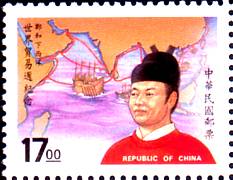
The DVD is very sketchy about the latter half of this trip (The Pacific Ocean leg). The first hour does a strong job of explaining why you may have never heard of Zheng He or his fleet. It also tells about the voyages that historians are confident that Zheng He completed. This lasts about an hour.

Zheng He (1371-1433)
The second half of the DVD focuses on the suggestion that Xheng He went to the Americas. Menzies lays out his case and the casual observer comes away convinced.  

Then, the experts are brought out and Menzies solid case becomes more of an interesting speculation, which is really where this belongs. Under close scrutiny, this fun bit of theory develops a lot of holes (including New World and Old World diseases, a topic not even mentioned by the experts but that occurred to me).

It turns out that Menzies has very little solid data to hold up his proposal. That being said, it should not be entirely dismissed. I encourage Menzies to address the shortcomings that were brought up and make the necessary adjustments to his thesis. Will he? I certainly hope so.

I rate this DVD 4 stars out of 5. It can be found on Amazon.com here: 
1421: The Year China Discovered America?

Reviewed on May 29, 2008.

The Covenant by James Michener


Michener's take on South Africa


Originally published in 1980.

Michener's historical fiction epics are always worth the time to read. The Covenant is no exception. Michener's take on South Africa and its history is an honest attempt to give some perspective on one of the more complex histories that this history teacher has encountered.

The book starts out strong (my edition was the two-volume hardback). The first volume was vintage Michener, but the second one dragged. Perhaps it was because the subject matter became more and more depressing. With the final 200 pages or so being about Apartheid, it's hard to find something to cheer about.

In a way, Michener's book seems incomplete - he hints that Apartheid could no longer stand - he gives a prediction that it would end by about the year 2000. Turns out, he was just about right, but the book feels like it does not have a proper ending.

If you are pondering a Michener book and have not read them all (personally, I only have one more of his major books to go), I recommend skipping this one and coming back to it later.

I rate this book 4 stars out of 5.

This book can be found on Amazon.com here: The Covenant by James Michener.


Reviewed on June 1, 2008.

Hunting Badger (Jim Leaphorn/Jim Chee #14) (audiobook) by Tony Hillerman


It is better the second time around.


Published by Recorded Books
Read by George Guidall.
Duration: 5 hours, 49 minutes.
Unabridged.

I've read all of the Hillerman books so I'm re-reading them as audiobooks to ease a tedious drive to work and to re-enjoy them.

I had remembered Hunting Badger as a weak link in the series, and I was wrong. The book, as usual for this series, is set on the Navajo reservation. Joe Leaphorn is retired but gets involved anyway. The story involves the is about the armed robbery of a Ute Indian casino that results in the murder of two security guards. Throw in an anti-government militia movement and, as always, plenty of local color and you get the makings of great Leaphorn and Chee mystery.

Watching retired Lt. Joe Leaphorn work the mystery from one end and current Navajo Tribal Police (now called Navajo Nation Police) officer Jim Chee work it from another was interesting and enjoyable. The banter in the early parts of the book between Chee and Cowboy Dashee is very enjoyable. The irony of having a white rancher complain to a Navajo about the federal government taking away the lands that his family had lived on for the last 100 years was too much for me - I had to laugh out loud.

I rate this book 5 stars out of 5.

This book can be found on Amazon.com here: Hunting Badger by Tony Hillerman.


Reviewed on June 1, 2008.

The Killer Angels (abridged audiobook) by Michael Shaara


A Must for any Civil War buff


Published by HighBridge Audio
Read by George Hearn

Lasts about 6 hours
Abridged

This book won the Pulitzer Prize in 1975.

Way back in 1989 I had to read The Killer Angels as part of a American Military History class while I was attending Indiana University. Since then I've read it 3 or 4 more times and I've recommended it to countless friends and students. Surprisingly, hearing it as an audiobook was an entirely new experience for me - it was much more powerful than I remembered.

The Killer Angels is the story of the Battle of Gettysburg told from a variety of points of view, but mostly from the points of view of Robert E. Lee and James Longstreet on the Confederate side. The Union side is largely represented by John Buford and Colonel
Joshua Lawrence Chamberlain
(1828-1914)
Joshua Lawrence Chamberlain
of Maine who won the Medal of Honor for his actions on the second day of the battle.


The Killer Angels won the Pulitizer Prize in 1975 and is one of the finest pieces of fiction, let alone historical fiction, that I have ever read.

The audiobook was brilliantly read by George Hearn and uses music from Gettysburg,  the 1993 movie adaptation of the book (it is a faithful adaptation that just does not do justice to the power and tragedy of the book). This really is a beautiful production. More than once I had to stop it for the tears that came to my eyes due to the tragedy and spectacle of the battle (I am a Civil War softy - I tear up every time I watch the movie Glory as well). I do not particularly remember the soundtrack of the movie as being very moving, but it is used to great effect in the audiobook. It lasts about 6 hours and is well worth the purchase.

Highest recommendation.

I rate this audiobook 5 stars out of 5.

This abridged audiobook can be found on Amazon.com here: The Killer Angels.

Reviewed on June 1, 2008.

The Translator: A Tribesman's Memoir of Darfur by Daoud Hari


A nicely done personal history of a large, sad tale

Published in 2008 by Random House

Unfortunately, the only thing that 99.999% of the world associates with the word "Darfur" is death, hate and tragedy. Daoud Hari's small memoir,  The Translator: A Tribesman's Memoir of Darfur, reminds the reader that Darfur was once home to millions - a place of family, friends, play and work.

That is the strongest asset of this short work - it puts a human face on a large tragedy. Written in simple, elegant English and with a wry sense of humor ("Most people like me, are tall - I am six feet - and are also a little thin because of all the walking, the hard work and the dieting that is one of the many advantages of poverty."[p. 108]), this book is an extension of Hari's way of fighting back against the forces that are destroying Darfur. Rather than taking up arms, Hari decided to expose Darfur to the world by escorting journalists from Chad into Darfur in Sudan.
Daoud Hari


This was not a choice for the faint of heart. Journalists and their guides were considered to be spies by the government of Sudan. Hari and his journalists were exposed to gunfire, captured multiple times and eventually one group was captured, tortured and eventually released through the efforts of former presidential candidate and New Mexico Governor Bill Richardson.

Before reading the book, I suggest reading "Appendix 1: A Darfur Primer" at the end of the text. It helps give his story some context.

I rate this book 4 stars out of 5.

This book can be found on Amazon.com here: The Translator: A Tribesman's Memoir of Darfur by Daoud Hari.

Reviewed on June 2, 2008.

Featured Post

BAN THIS BOOK (audiobook) by Alan Gratz

Published in 2017 by Blackstone Audio, Inc. Read by Bahni Turpin. Duration: 5 hours, 17 minutes. Unabridged. My Synopsis Ban This Book is t...

Popular posts over the last 7 days