Forced Out: A Novel by Stephen W. Frey


This book had such potential and then...


Published in 2008.

I really liked the premise behind Forced Out: a young baseball player hides from the New York mob by playing single A ball in Florida but he is discovered by a former Yankees talent scout. Soon enough, the mob is on the hunt again.

But... (WARNING: Spoilers, sort of...)

The book gets increasingly complicated (which is fine, life is complicated) and the only way Frey resolves anything with any character in this book is by having someone killed off. I expected lots of people to die (it is about the mafia, after all) but this story gets ridiculous. The book ends up feeling like Frey was either: a) under a tight deadline; or b) unable to figure out how to end this complicated book in a reasonable way so he just started killing everyone off.

Either way, it was a very unsatisfying ending. In good conscience, I cannot recommend this book to all but the most ardent of Stephen Frey fans.


I rate this book 2 stars out of 5 and it can be found on Amazon.com here: Forced Out by Stephen W. Frey. 

Reviewed on September 5, 2008.

Samuel Adams: A Life by Ira Stoll


The "Forgotten" Founding Father

Published in 2008.

George Washington. Thomas Jefferson. Benjamin Franklin. John Adams. All there at the founding of our country. All recognized for their unique contributions to the revolution. Author Gary Wills noted that Adams was "the most influential man at the first two Congresses." He was on the committees of correspondence that tied the colonies together in the first place and no one was on more committees in the Continental Congress. It is easily argued that Samuel Adams had as great a role, if not greater than any other member of the Congress. He had such an integral part to play that a local newspaper noted in his obituary that "to give his history at full length, would be to to give an history of the American Revolution."

In Samuel Adams: A LifeIra Stoll tells the story of Samuel Adams. Called by some the Last of the Puritans for his strong religious faith and willingness to express it openly, Adams was certainly one of the strongest defenders of liberty from the outset. In fact, a general amnesty was offered to everyone in the Massachusetts colony by the British government, except for Samuel Adams and John Hancock. At other times, the British government approached him with clumsy attempts to bribe him with high office or favors, which he rejected with flair ("tell Governor Gage it is the advice of Samuel Adams to him no longer insult the feelings of an exasperated people.") Stoll correctly labels Adams a "religious revolutionary" - those two themes dominate his life until the very end.

Samuel Adams (1722-1803)
Politically, he was closer to Thomas Jefferson than his Federalist cousin John Adams. But, unlike Jefferson, he decried slavery and acted upon it (his wife received a slave as a gift and he freed her that day). He also advocated education for women. He wrote page after page for newspapers supporting the idea of independence and would not compromise on that point. He could whip up a crowd with his voice as well, and he often did during the years when Boston led the protests against taxes, leading up to the Boston Tea Party.


Stoll's prose is not necessarily the most exciting of reading, but Adams words and life are inspiring enough that I rate this book 4 stars out of 5.

This book can be found on Amazon.com here: Samuel Adams: A Life.


Reviewed on July 13, 2011.

The Quotable Rogue: The Ideals of Sarah Palin In Her Own Words edited by Matt Lewis


Sarah Palin, without the filter


Published in 2011 by Thomas Nelson

There is no one, and I mean no one that generates as much energy and as much anger in American politics as Alaska's former governor Sarah Palin. In The Quotable Rogue: The Ideals of Sarah Palin In Her Own WordsMatt Lewis has collected a number of Palin's quotes on a variety of topics from her speeches and interviews over the last 5 or 6 years. He has organized them into broad 32 categories ranging from abortion to Barack Obama to Gun Control to Tina Fey. He also has a category of quotes from others about Sarah Palin.

I was interested in this book because so much of what I hear about Sarah Palin is filtered through the opinions of columnists or edited heavily for TV or radio. This book is just Sarah's comment with a brief note about where and when it was said or written. That's it - no spin one way or the other.
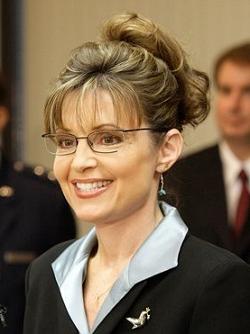
Sarah Palin


Being that it is a book of quotes, it really can only be judged on the quality of the quotes - did they clarify Sarah Palin's point of view and were they interesting? Yes, on both counts. I picked this book up and ended up quickly reading it while in the middle of another book.

I rate this book 4 stars out of 5.

Reviewed on July 13, 2011.

I received this book for free as part of Thomas Nelson's Booksneeze program in exchange for a fair and honest review. This book can be found on Amazon.com here: Quotable Rogue.

What They Didn't Teach You About the Civil War by Mike Wright


Entertaining but too many errors.

Published in 1996 by Presidio Press

Mike Wright is a television writer. In fact, he writes a pretty entertaining book as well. But, his lack of training as a historian shows in What They Didn't Teach You About the Civil War

 Some of the facts things he writes about were not taught to you because they just are not facts. In other cases, they are factual, but not truthful. For example, the fact about Robert E. Lee not owning any slaves at the time of the Civil War (p. 23) is technically true - but ignores the fact that his wife owned the slaves and they freed them in 1862 (not "long before the Civil War" as the book asserts) because of a requirement of her father's will).

Wright makes the comment that the Confederacy only had one good general (Lee) on page 40. Perhaps Wright meant to clarify his point and say that Lee was the Confederacy's only good commanding general because one cannot say that Stonewall Jackson was a bad general (Lee called him his "right arm"). Or Longstreet (despite Wright's derision of his abilities on page 40). Or Stuart. Or Forrest. Even some of the Confederacy's fair to middling generals, such as Beauregard or J. Johnston or even Hood compare relatively well to the average Union general. Can you imagine if John Bell Hood with his attack at all times philosophy would have done in place of McClellan in the Peninsula Campaign or at Antietam?

On page 39 Wright makes a gigantic mistake. He claims that on May 3, 1861 the U.S. Congress declared war on the Confederacy. It was the other way around - the Confederacy declared war on the U.S. The Union never declared war on the Confederacy because according to international law can only declare war on a country and the Union argued to the European powers that the Confederacy was NOT a country - it was a rebellion. If the Union had declared war on the Confederacy, it would have been an admission that the Confederacy was a country and the European powers would have been free to make alliances with the Confederacy and intervene in the war.

Benjamin Butler (1818-1893)
Good points:

-Wright totally nails the personality and career of McClellan.

-The book is full of fun quotes, stories and facts. His story of the attempt to rid Nashville of its prostitutes by shipping them out to Louisville and Cincinnati was my favorite.

-He includes nice small biographies of Nathan Bedford Forrest and Benjamin Butler.

To sum up, a number of errors combine to make this book less than trustworthy, even though it is quite fun.

I rate this book 3 stars out of 5.

This book can be found on Amazon.com here: What They Didn't Teach You About the Civil War by Mike Wright.

Reviewed on July 13, 2011.

Motherhood and Hollywood: How to Get a Job Like Mine by Patricia Heaton


A fun, breezy read about a normal girl who made it big

Published in 2002 by Villard

Motherhood and Hollywood: How to Get a Job Like Mine is not out to change anyone's life, but it is a funny, light look at one woman's meandering quest to be an actress. Also, it is quite reassuring to find out that there are people in Hollywood who are quite normal.

Patricia Heaton's book is irreverent, sometimes serious, frank, cute, and her tales of a time when kids could run the neighborhood in suburban Cleveland without fear reminded me of my own fun in small town Indiana. She pokes fun at her own silliness and naivete and reminded me of my own way back when.

The author, Patricia Heaton
This is a weekend read (it also has great potential as a read-out-loud-to-your-spouse-in-the-car book), but it will be one that you'll pass on to friends so they can have a fun weekend as well.


I give this one 4 stars out of 5.

This book can be found on Amazon.com here: Motherhood and Hollywood: How to Get a Job Like Mine.

Reviewed on June 20, 2006.

Keeping Black Boys Out of Special Education by Jawanza Kunjufu


Full of good advice about ALL boys and special education

Published in 2005.

While Jawanza Kunjufu, an author of nearly two dozen books, writes primarily for an African-American audience, Keeping Black Boys Out of Special Education is full of good observations about boys in special education in general.

There is a growing concern about the number of boys in special education as compared to girls. Kunjufu joins more established authors such as Christina Hoff Sommers ('The War Against Boys') and Michael Guiran ('Boys and Girls Learn Differently') in pointing out that there is something wrong out there in the world of education as far as boys are concerned.

Kunjufu gives wonderful advice about the questions parents should ask if they are brought in to the school to discuss placing their student into special education. His suggestions include signing nothing until you completely understand it, insisting on seeing what modifications have been done up to this point (unfortunately, some teachers have the reputation of referring every student who does not learn quickly from that teacher's ONE teaching style for special education services) and asking for a different assessment test (it is your right) - scores can vary widely from one test to the next.

His best advice comes in the area of the IEP, or Individualized Education Plan. All special education students must have one and most are vague. He insists on specificity and the book is worth the purchase price just for this chapter alone - both for the prospective special education parent and the special education teacher.
Jawanza Kunjufu


Kunjufu's target audience is African-American, as I've already said. I am not, so some passages were not really aimed at me. I was not comfortable with Kunjufu's seemingly equating inner-city poverty with African-American culture in general. As he points out in the beginning of the book, that this is a stereotype. However, he reinforces that stereotype over and over again. It could be that he is really targeting that segment of the African-American population... Like I said, I don't know.

Regardless of my comfort level with certain passages, this is a must read if your student is being referred for special education services. It is a quick and practical read with a clear table of contents to get you quickly to the IEP and Parent Empowerment sections and room for notes in the back.

I rate this book 5 stars out of 5.

This book can be found on Amazon.com here: Keeping Black Boys Out of Special Education by Jawanza Kunjufu.

Reviewed on June 20, 2006.

The Keeper by Meg O'Brien


This thriller does its job but misses the mark on being a great read.


Originally published in 1992.

In The Keeper Meg O'Brien produces a thriller that keeps the suspense up but still comes up short from being a truly satisfying read.

The plot concerns the kidnapping of Charly Hayes, the daughter of a Nathan and Brooke who are divorced. Accusations of parental kidnapping fly from both parties and eventually Brooke is secretly sent to John Creed, an ex-cop who is known as the Keeper (Keeper of the Flame, Keeper of the Faith, Keeper of the Files) who is unofficially attached to LAPD as a one-man department to find missing children. When things get rough, he has a team of volunteers to help him out - both inside and outside the department. Creed is an emotional train wreck who obsesses since his own son has been missing for 5 years.

Some of O'Brien's transitions from one character to the next are clunky and the relationship between Creed and Brooke is telegraphed from the first page that they meet. O'Brien has several discrepencies, such as having Brooke chamber a round in a revolver and using plain, untreated tap water to clean a fish tank. Those are annoying, but mostly I found myself wishing that this same premise for a plot were re-written by someone else who could make the characters come alive a bit better. The character of Brooke just did not work for me. Unfortunately, despite the name of the book, The Keeper and his team were not the focus of the book. If they had been, it probably would have been a better book.

Once again, it's not a bad book, but it certainly isn't a great one either.

This book can be found on Amazon.com here: The Keeper.

I rate this book 3 stars out of 5.

Reviewed on June 9, 2006.

Featured Post

<b><i>BAN THIS BOOK (audiobook)</i></b> by Alan Gratz

Published in 2017 by Blackstone Audio, Inc. Read by Bahni Turpin. Duration: 5 hours, 17 minutes. Unabridged. My Synopsis Ban This Book is t...

Popular posts over the last 7 days