Bill Peet: An Autobiography by Bill Peet


While not aimed at someone my age...


I nevertheless found Bill Peet: An Autobiography quite fascinating and engrossing.

First published in 1994.

Bill Peet was a self-professed reluctant student, especially of English classes, but he was nonetheless quite the good writer. Peet's illustrations added a lot to the pace and feel of the book and are a joy in their own right. His stories of life in Indianapolis before World War II will be interesting to any native Hoosier (as am I).

However, the most interesting part details his jobs at Walt Disney studios. His descriptions of how they made movies in the old days as well as the insider's look at Walt Disney himself are fascinating. Peet worked on several Disney movies, including Pinocchio, Fantasia, Cinderella (he created the lovable mice) and the original 101 Dalmatians.

Peet brushes over his life after he left Disney a little too quickly. Peet left Disney to write and illustrate more than 30  books for children.  I would have liked to have read his descriptions of life in the publishing world as well. Also lacking is much history of his family life.
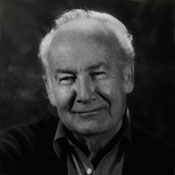
Bill Peet (1915-2002)


That being said, it was still fascinating, entertaining and totally worth the reader's time.

I give this one 5 stars out of a possible 5 stars.

This book can be found on Amazon.com here: Bill Peet: An Autobiography.

Reviewed on April 13, 2006.

The Spirit of the Place: Indiana Hill Country by James Alexander Thom and Darryl Jones


A wonderful coffee table book that espouses the beauty of much-maligned Indiana


Photographer Darryl Jones and author James Alexander Thom teamed together to make a wonderful little book about the natural beauty of the southern Indiana hill country in The Spirit of the Place: Indiana Hill Country. Thom's text complements Jones' photographs wonderfully.

Indiana does not have mountain vistas or magnificent buttes or gigantic canyons that overwhelm the senses.  Being a native Hoosier, I have an appreciation for the subtle beauties of the state.  Jones does as well. Most of his pictures are taken in hilly Owen county. He captures every season, as well as forest, field, stream, farm, and town scenes.
James Alexander Thom


Thom's text is part biography and part stories he heard growing up in Owen County. If you are a fan on Thom's other works, this one will be a nice addition. If you've never heard of Thom, this is a great place to get to know him and his motivations as an author.

I give this book 5 stars out of a possible 5.

This book can be found on Amazon.com here: The Spirit of the Place: Indiana Hill Country


Reviewed on April 12, 2006.

Sanctuary (Star Trek, Book 61) by John Vornholt


You can't go home again


Published in 1992.

I picked my title for this review for two reasons:

#1 - Sanctuary describes a legendary planet called 'Sanctuary' - a place where any and all fugitives are welcomed and spared from any further persecution. Unfortunately, McCoy, Kirk and Spock discover that once you come to Sanctuary you can never leave again. Thus the main challenge of the book - how do our intrepid three break out and get back to the 'Enterprise'?


#2 - I used to be a gigantic reader of Star Trek books. In the 80's and very early 90's I had a rather large collection. In fact, my cousin and I had a complete collection if we put ours together. I was quite the fan. I ran across this book and picked it up for old times sake and discovered that 'You can't go home again'. The old magic just was not there. Not that I dislike the characters or even the basic plot idea. It was the way the book was written:

-The supporting characters are one-dimensional cutouts.

-There's no character development.

-The planet is apparently covered with the same plant life since they encounter it in nearly every outdoors scene.

-I found myself being drawn into the last scene until I realized that my own fear of heights was making me imagine it much, much better than it was written.


Probably the last of the series for me. It's not the fault of the series - I have moved on to greener literary pastures and expect more.

I give this one a grade of 2 stars out of 5.

This book can be found on Amazon.com here: Sanctuary (Star Trek: The Original Series Book 61)

Reviewed on April 11, 2006.

The Last Detective (Elvis Cole #9) (audiobook) by Robert Crais


Excellent!


Published by Brilliance Audio in 2008
Read by James Daniels.
Duration; 8 hours, 4 minutes.
Unabridged.


First things first - this is an excellent work - and James Daniels, the reader,  was absolutely great. First rate job. I found myself taking advantage of any chance to listen (while showering, housework, etc.).

The Last Detective is the 9th installment of the Elvis Cole series but it really is the sequel to L.A. Requiem. Not that the bad guys return, but rather Crais continues to show the readers insight into the mechanics of our duo - Pike and Cole. In L.A. Requiem we were treated to the psyche of Pike. This time it is Cole.

I would not recommend this book as a stand-alone since it spends so much time delving into the heart and soul and past of Cole. This means a lot to the fans of the series but most likely means little to newcomers.

The plot in just one sentence: Elvis Cole's girlfriend's 10 year old son is kidnapped and Elvis pulls all of the stops to find him.

I rate this audiobook 5 stars out of a possible 5 stars and it can be found on Amazon.com here: The Last Detective by Robert Crais.

Reviewed on April 11, 2006.

The Vig (Dismas Hardy #2) by John Lescroart


A solid, more upbeat sequel to Dead Irish


Published in 1990.

Although The Vig is intended to be a stand alone, I would strongly recommend reading the previous Dismas Hardy book entitled Dead Irish to understand some of the self-torment on the part of Dismas Hardy that continues into this book.

For those that have read Dead Irish, this book is not nearly so dark and tortured. Not that it's a comedy since there are plenty of people dying, being set up in criminal schemes and hard choices are faced by many of the main characters. However, the overall climate of the book is much less severe.

As to the general plot - an old colleague of Hardy's named Rusty from the DA's office warns him that a murderer who had threatened to kill them both when he was released was being released soon. Rusty's houseboat becomes the scene of an apparent double murder and it turns out that lots of people had a motive to kill Rusty, including an ex-cop, a jealous husband, the mafia, a prosecutor and the ex-con murderer.

Good, solid read. I give this one 4 stars out of 5.

Reviewed on April 6, 2006.

This book can be found on Amazon.com here: The Vig by John Lescroart.

For Gold and Glory: Charlie Wiggins and the African-American Racing Car Circuit by Todd Gould


For racing fans of any stripe and any color

Published in 2007 by Indiana University Press

Todd Gould has written a number of articles and books on Indiana business and history. With For Gold and Glory: Charlie Wiggins and the African-American Racing Car Circuit he has addressed a fascinating time in racing history and Indiana history as well.

The main focus is Charlie Wiggins, an African-American auto mechanic originally from Evansville, Indiana who moved to Indianapolis in 1922 to take advantage of the bustling (yet segregated) cultural and business climate around Indiana Avenue. At the same time, several Indianapolis businessmen (both black and white) are looking into starting up the Colored Speedway Association (CSA), a racing division for Blacks that was to be modeled after Negro League Baseball. The hope was to demonstrate that African-Americans were fully capable of driving high-performance racecars and create a groundswell that would cause the American Automobile Association, the main sanctioning body of most races back then, to de-segregate big-time auto racing. Their main goal would be to race in the hometown Indy 500.
Charlie Wiggins
(1897-1979)

The title, Gold and Glory, comes from the name of an annual race, the Gold and Glory Sweepstakes started by the CSA at the 1 mile dirt track at the Indiana State Fairgrounds in Indianapolis. This one mile dirt track hosted 10 'Gold and Glory' 100 mile races. Charlie Wiggins won 4 of them and earned the nickname 'Negro Speed King' in race cars of his own design and manufacture.

Gould tells about the active role the KKK played in Indiana politics in the 1920s and does a nice bit of 'parallel lives' biography with Klan leader D.C. Stephenson and Charlie Wiggins for about 50 pages in the book. He also tells about the mini-Harlem Renaissance that occurred in Indianapolis in the 1920s and the cultural life of Indy's near west-side. He also ties in a lot of basic history of the early days of auto racing - of the dangers and pitfalls of dirt track racing, of mechanics building cars in their garages, of having to tow your race car with a rope and having a young apprentice steer it while it was being towed, of race tracks being built in the middle of a cornfield for a one day event, and so on.

Gould tells the story of the CSA, Charlie Wiggins and the racial politics of the time in a near-seamless fashion. He ties it all together and leaves the reader a bit amazed. Amazed at how far we have come politically, amazed at the changes that have taken place in racing (long gone are the days of a big-time racer building his own car in his spare time) and heartened by the fact that racing really knows no color. While the sport was strictly segregated by rule, every racer and race fan knows that every advantage has to be pursued in order to win - white teams helped black teams and black teams helped white teams. Why? Because regardless of color, racers are a group unto themselves.

This is a must read for all auto racing fans, but especially for fans of the Indy 500.

I rate this book 5 stars out of 5.

Reviewed on March 31, 2006.

This book can be found on Amazon.com here: For Gold and Glory: Charlie Wiggins and the African-American Racing Car Circuit.

No Lesser Plea by Robert K. Tanenbaum


A legal thriller that gets lost in its own antics


Originally published in 1987.

Robert K. Tanenbaum has created a well-regarded series of legal thrillers set in New York City and featuring D.A. Roger 'Butch' Karp. I have read others in this series. No Lesser Plea is the first and is set from 1970-1973.

The main legal focus of the book and the source of the title is the case of Mandeville Louis, a user of men and women who masterminds a murderous liquor store heist and causes his getaway driver to die from an overdose. Louis has a plan to avoid punishment by faking to be mentally ill and eventually plea bargain his way to freedom based on time served in a mental institution rather than a harsher penal institution (shades of One Flew Over the Cuckoo's Nest).

Butch Karp sniffs out the true legal motives of Louis and writes in magic marker on the case file 'No Lesser Plea' just in case it comes up for review again and he is not informed.

The legal story is quite good but Tannenbaum's story bogs down in the antics of the District Attorney's office (it reminds me of the movie M*A*S*H but without the excuse of an insane war to push the characters to the edge of sanity). Butch's friend Guma is insufferable (he drags pistols out of the evidence room to play cops and robbers and then promptly loses some of them, he sets of a C-4 charge in a reflection pool during an office garden party, has sex on his office desk and so on) and the whole office politics scene is too hurried. If Tannenbaum had paced himself a bit these antics would have been more tolerable. As they are presented, they distract from the legal thriller at hand.

I rate this book 3 stars out of 5.

This book can be found on Amazon.com here: No Lesser Plea.

Reviewed on March 27, 2006.

Featured Post

<b><i>BAN THIS BOOK (audiobook)</i></b> by Alan Gratz

Published in 2017 by Blackstone Audio, Inc. Read by Bahni Turpin. Duration: 5 hours, 17 minutes. Unabridged. My Synopsis Ban This Book is t...

Popular posts over the last 7 days