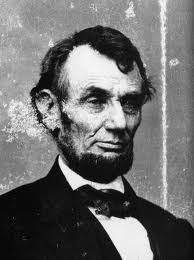
Lincoln and Chief Justice Taney: Slavery, Secession and the President's War Powers by James F. Simon


An interesting head-to-head biography about two gentlemen who went head-to-head quite often during the Civil War.

Published in 2006 by Simon and Schuster.

James F. Simon's Lincoln and Chief Justice Taney shines an interesting light on two overlooked aspects of 19th century American history.

The first overlooked aspect is the Supreme Court, specifically the person of Roger Taney (pronounced Tawney), the Chief Justice most famous for what may be known for all time as his single worst legal opinion, and one of the most controversial and ill-considered opinions of all time - Dred Scott.


Roger Taney  
(1777-1864)
Simon tells the story of Taney's life, including his surprisingly liberal views on slavery and his legal defense of blacks who were seized illegally to be sold into slavery, the fact that he freed most of his family's slaves and even provided a modest pension for the elderly ones. Taney even defended an the rights of an abolitionist preacher to preach his message in Maryland. However, it seems that those opinions all changed once slavery became THE issue of the 1840s and 1850s. His views seem to have hardened in response to outside pressure on the institution of slavery.

Abraham Lincoln 
(1809-1865)
I must admit that I was not well-informed about Taney - for me he was the man who is most famous for the line about African-Americans in which he says that they were "so far inferior that they had no rights which the white man was bound to respect."  Of course, it turns out that Taney's political life was much more than just that one line that appears in all of the history books and I did learn a lot about Taney's life and the intricate politics of the era - more than a reader normally gets: Jackson, Calhoun, Webster, Clay and finally Lincoln. Taney bridges all of these figures, was seen as a moderating presence for most of that time and really gets the short-shrift historically due to the abusive excesses of the Dred Scott decision.

Lincoln, on the other hand, is, seemingly, the subject of a new biography every week. What has not been written about Lincoln? In this case, there is nothing new, but the focus on his administration's interactions with the Taney Court is interesting and thought-provoking.


This is a good, small dual biography of two of the towering political figures of their time. Not so much detail that the general history reader is bored, not so little that the serious reader of history is turned off.


I rate this biography 4 stars out of 5.

This book can be found on Amazon.com here: Lincoln and Chief Justice Taney.


Reviewed on May 15, 2011.

Dove and Sword: A Novel of Joan of Arc by Nancy Garden


Published in 1997.

I am always in a quest to find a sizable number of historical fiction titles to use in my class. I bought Dove and Sword in the hope of adding it to my classroom collection, and I will do just that. However, I also was hoping to be able to enthusiastically recommend it, as I have been able to do for many other titles. That I cannot do.

I have no problem with the historical details of the book. Rather, I was unimpressed with the writing. It tended to drag and be a bit repetitive. Reluctant readers will be turned off.

I was also expecting more about Joan of Arc. Instead, we are treated to a fictional female friend named Gabrielle who wants to be a midwife and doctor that follows Joan to the battlefield (the Dove, to Joan's sword - thus the title).

So, it joins my collection, but I will only be recommending it to those specifically interested in Joan of Arc, rather than as a general recommendation.

I rate this book 3 stars out of 5.

This book can be found on Amazon.com here: Dove and Sword: A Novel of Joan of Arc.


Reviewed on January 11, 2006.

Spectator Sport by James Alexander Thom


One of James Alexander Thom's first published books - shows his potential and rookie problems.


Originally published in 1978.

James Alexander Thom is one of my favorite authors. In my classroom I have had two of his books on my shelves - when kids come to me looking for something to read I recommend those books first due to the power of the storytelling. Those that accept my recommendations concerning his books are never disappointed. Great stuff!

While most of his books concern the frontier days of America's old Northwest Territory (Indiana, Michigan, Illinois, etc.), Spectator Sport concerns itself with the rain-shortened and deadly 1973 Indy 500. The race took part over the course of 3 days and was finally called after a little more than 300 miles due to rain and the fact that only 9 of the 33 starters were still on the track. Thom was at the race and the events inspired him to write this book and explore the motivations of race fans, violence on television and the news and voyeurism of all sorts.

This book however does not qualify as great - it is too up and down and inconsistent.

First - what is done well:

-Thom accurately portrays the way the 'Snake Pit' of the Indy 500 used to be - the dirt, the beer, the hedonism.
James Alexander Thom


-Thom accurately captures the feel of the 500 just before the race starts. The tension, the anticipation, the pomp and ritual.

-Thom's descriptions of the Speedway and its environs are dead-on. Especially the traffic and the insanity of the some of the police who are directing it.

What does not work so well:

-Too many characters - especially the boy from Kokomo who has to see the race no matter what. The girls who break out from the Indiana Girls' School (Indiana's prison for teenaged girls) and party in the infield are interesting but also fail to advance the story.

-Thom's theme is that sex, violence and power are all inter-related. The fighter pilot war hero and the soft-porn movie starlet, and the 500 festival princess who poses naked for the camera are all supposed to tie in with the race and the mayhem that occurred on the track, in the stands (debris and fuel were sprayed all over one section of the stands) and in the infield. However, I thought that Thom failed to connect all of these dots and the story gets too off-target. Too many themes means that he hits none of them well. It would have been better to have made two books - one exploring the violence of auto racing and the motivations of the racers and the fans, the other exploring sexuality, power and fidelity.

Fans of the 500 will appreciate:

-Transcripts of the race thrown into the text to tell the reader how far along the race is. These are actually transcribed from "The Voice of the 500" Sid Collins' personal tapes and include ads, Sid Collins and other local (Indy area) broadcasters such as Mike Ahern.

-Local sites such as the Indiana Girls' School, The Coke Lot, The Snake Pit and a local west side bakery that just has to be Long's Bakery.

Bottom line: The book has lots of faults, shows his great promise as an author but really does not quite deliver. Hardcore fans of the Indy 500 will certainly appreciate it.

**On a different note, why do they use a modern era Indy Car on the cover photo on the October 2000 reprint rather than a car from the 1973 race?

I rate this book 3 stars out of 5.

This book can be found on Amazon.com here: Spectator Sport

Reviewed on January 4, 2006.

The War Against Boys: How Misguided Feminism Is Harming Our Young Men by Christina Hoff Sommers


This teacher comments: One of the best non-fiction books I've read all year!


Published by Simon and Schuster in 2000.

I graduated from Indiana University in 1990 - just as the 'girls are fragile' movement was gaining momentum. I was taught the 'facts' that Sommers refers to in numerous in-services (for all of you non-teachers, many teacher in-services are attempts at teacher training in which a speaker comes and entertains or horrifies us with a speech that usually has little or no practical value - when I taught in the inner city it was usually the horrifying type: "these kids are all failing and blah-blah percent of them will end up dead or in jail and it's all because you didn't teach them how to multiply fractions or diagram a sentence correctly!").

Anyway, I did buy into some of the stuff about girls being fragile and being overrun in the classroom. I have heard the statistics Sommers skewers so completely and thoroughly and I swallowed many of them hook, line and sinker because it was early in my career and as a young person I foolishly believed that if a Harvard PhD researched the facts they must be right. As a more jaded professional, I appreciate Sommers' meticulously end noted work.

In The War Against Boys she embarrasses the 'fragile girl' theorists by burying their under-researched (and sometimes un-researched) theories in a blizzard of relevant studies and facts from responsible and trusted sources (for example, I've had the '4 million women die from physical abuse from a man' stat thrown at me in a diversity seminar. Yes, verbally thrown at me - as if I were the man who personally beat them all to death! Well, if it happens again, I'm armed with the REAL facts from the Centers for Disease Control, thanks to Sommers).

Sommers overwhelmingly makes the point that our 'touchy-feely' self-esteem oriented schools are a great big turn-off to most of the boys. (in my experience as a high school teacher, the girls don't buy into it much either). Schools are not designed for most boys, especially as we take away physical activities and recesses. Male boisterousness is seen as wrong - a mental disorder and/or a sign of ADHD. Boys have to be medicated specifically for their built-in attributes that they possess as boys.

Special interest groups such as NOW and the ACLU will fight for the rights of women since they are oppressed, despite the fact that their grades are better, they are much less likely to be in special education classes (4-1 ratio of boys to girls), girls are more likely to go to college (55-60% of college students are female) and boys are much more likely to be punished in school than are girls.

As I read The War Against Boys (while enjoying the first few days of my Christmas Break from school) I found myself resolved to take a look at how boys are treated in my class and in my school. I also found myself thinking of ways I can provide the specific needs of young men that Sommers' experts identify. I'll refer back to those recommendations often and make a few changes in my classroom and lobby for changes in the school.

***This is a must-read for any serious-minded and open-minded educational professional.

On a lighter note, why do publishers insist on using end notes when footnotes are so much easier for the reader to access. Sommers' research was overwhelming - she should have proudly showcased it through the use of footnotes.

I rate this book 5 stars out of 5.

This book can be found on Amazon.com here: The War Against Boys.

Reviewed on December 26, 2005.

The Bold West: Edition 4 (audiobook) by Steve Frazee, Zane Grey and T.T. Flynn


Up and down quality.


So, here's the scoop on the audiobook The Bold West: Edition 4.

There are 3 unabridged stories read by three different readers. The stories are:

'Death Rides This Trail' by Steve Frazee. It is the longest and definitely the best of the three stories. It concerns a family of settlers and the struggles they have after the father is killed in a senseless gunfight. Good character development and an entertaining story. Often funny and often sad. It was originally published in 1953. I give this story 4 out of 5 stars.

Zane Grey (1872-1939)
'Yaqui' by Zane Grey. Originally published in 1920, this is the story of Yaqui, the young chief of the Yaqui Indians of Western Mexico. The Yaqui were hunted down and killed or moved to the Yucatan Peninsula to be enslaved in the Sisal plantations to make rope. This is the worst story of the three by far. The writing was stilted and overly formal and the reader was the worst of the three. The 'gotcha' moment at the end seemed more like a bad 'Twilight Zone' idea. to tell you the truth, it seemed like Mr. Grey had two short stories that he couldn't finish so he stuck them both together just to get them both finished. I give it 1 star out of 5.


'Back Trail' by T.T. Flynn. Originally published in 1949, this is the story of a love triangle involving a cowboy, a rancher and a young woman who manages the local hotel. It is also a story of personal redemption through a change of heart. This story had the most potential, but it was skimpily written so it was hard to fathom the relationship between all of the members of this love triangle. I give it 3 stars out of 5.

So, 4 stars + 1 star + 3 stars = 8 stars. Divide 8 stars over three stories and you get 2.66, or 3 stars.

This audiobook can be found on Amazon.com here: The Bold West: Edition 4.

Reviewed on December 16, 2005

Small Vices (Spenser #24) by Robert B. Parker


One of the best books in the Spenser series.


Originally published in 1997.

This is my second reading of Small Vices. I'd read it before, years ago, and all I remembered was that this is the one in which Spenser gets himself shot and very nearly killed. (The beauty, I guess, of having so many Spenser novels is that it is hard to keep them all straight so I can go back and re-read them like they're like new every few years).

If you are familiar with Spenser, most of your favorite characters see some action in this outing. If you are not familiar with Spenser, this may be a good one to start with, although I would recommend some of the older ones to begin.

The never-aging Spenser lives through an entire year of his life in this one, but don't worry, he still doesn't age. Neither do Hawk or Susan. They're like James Bond in that respect. It used to bug me but I know that I don't want to read about Hawk and Spenser's adventures in a nursing home.

I rate this book 5 stars out of 5.

This book can be found on Amazon.com here: Small Vices.

Reviewed on December 8, 2005.

The Adjustment Bureau (audiobook) by Philip K. Dick


The original short story that the movie is based on.

Published by Brilliance Audio in 2011.
Read by Phil Gigante.
Duration: 58 minutes.
Unabridged.

Originally written in 1954 and titled The Adjustment Team, this audiobook was  renamed so that it can be tied in with the movie that is very loosely based on this short story by famed science fiction writer Philip K. Dick.

The one hour length and subject matter put me in mind of an episode of the Twilight Zone - one of the really good ones where we find out the world does not work quite the way we thought it did.

Philip K. Dick (1928-1982)
The premise of the short story is that real estate agent Ed Fletcher is not where he is supposed to be when the adjustment team comes to adjust his office. Instead, due to a bureaucratic mix-up on the supernatural level, Ed comes in to work a few minutes late and finds an adjustment team at work. The team has frozen the regular world and drained it of all of its life while they make adjustments to all the things and inhabitants. This is just regular maintenance and no one notices it - except for Ed who walked right into the middle of it, much to everyone's surprise.

This is a great little science fiction story - fun, freaky and a little thought-provoking.

I rate this audiobook 5 stars out of 5.

This audiobook short story can be found on Amazon.com here: The Adjustment Bureau

Reviewed on May 11, 2011.

Featured Post

<b><i>BAN THIS BOOK (audiobook)</i></b> by Alan Gratz

Published in 2017 by Blackstone Audio, Inc. Read by Bahni Turpin. Duration: 5 hours, 17 minutes. Unabridged. My Synopsis Ban This Book is t...

Popular posts over the last 7 days