First Blood by David Morrell


Decent, but not Morrell's best work


Originally published in 1972.

The copy I have of First Blood includes an interesting forward by the author in which he discusses the Rambo phenomenon that swept the world after the Stallone movies were made. That forward was written several years ago and the Rambo legacy continues today. Just last night I saw a commercial for a Nicholas Cage movie that mentions Rambo twice.

Anyway, this is Morrell's first novel and it is not bad. Morrell tries to work in several serious themes and tries to make it a piece of really violent literature rather than settle for just a bit of escapism. In fact, this novel was used for several college and high school classes as a novel to discuss until the Rambo movie phenomenon overwhelmed the books.

Even though this was regarded highly enough by some instructors to be used in the classroom, I think that it missed the mark a bit too much - the rivalry between Rambo and the sheriff was a bit too contrived and the Special Forces officer sent to help with Rambo never really worked well for me. He was too aloof, too uncommitted to his soldier (Rambo) or to the people he was sent to protect.
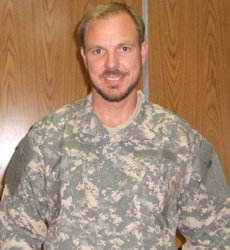
David Morrell


As an action thriller this book seemed overblown - it reminded me, ironically, of the Rambo II movie (Morrell discounts Rambo II and Rambo III because he had little say in the screenplays. He wrote the novelizations in an attempt to salvage a bit of the flavor of his original character) - too over the top. Just too much.

I rarely say this, but now I have said it in two of my last three reviews - the movie is better than the book. The motivations of the Rambo character are more defined (even though the sheriff and deputies are reduced to stereotypes of redneck country cops) and, ironically, the action in the blockbuster Hollywood action flick is more believable than in the book.

I rate this book 3 stars out of 5.

This book can be found on Amazon.com here: First Blood

The Princess Bride: S. Morgenstern's Classic Tale of True Love and High Adventure by William Goldman


Great book, great movie, great story no matter the format!

Originally published in 1973.

The author, 
William Goldman
I wasn't even aware that The Princess Bride: S. Morgenstern's Classic Tale of True Love and High Adventure was even a book until I was looking through the special features on my DVD and they were speaking of the difficulties they had bringing the book to the big screen. Once I found out about the book I just had to get it!

So, is it better than the movie?

While I certainly enjoyed the background information on Fezzik and Inigo, this is one of the first books that I can honestly say is better as a movie. Notice, that I have given this book 5 stars, so we are distinguishing between very good and very, very good here. Still, the movie is a further abridgment of S. Morgenstern's classic tale (wink, wink) that makes the story even stronger.


My edition had a wonderful new introduction the recounted some of the struggles and joys in making the movie and includes the first chapter of the long-lost 'sequel' entitled 'Buttercup's Baby.' Both are worth your time.

I rate this book 5 stars out of 5.

This book can be found on Amazon.com here: The Princess Bride: S. Morgenstern's Classic Tale of True Love and High Adventure by William Goldman.

Crisis on Centaurus (Star Trek) by Brad Ferguson


A pleasant enough read but at times it was just 'off'


Published in 1986 by Pocket Books.

The premise of Crisis on Centaurus is that the colony Centaurus is bombed by a terrorist group and approximately 1 million victims die. The planetary government is in a shambles and the Enterprise is dispatched to aid in whatever way possible. However, Enterprise is having a series of computer failures and is not up to full capacity so things get tricky for Kirk and the crew.

Ferguson has written an adequate Star Trek novel - his main characters are written very solidly, but his supporting characters are rather like cardboard cutouts. The women weep and the men clench their teeth and pound their fists in anger at the news of the terrorist attack.

Having the benefit of hindsight in regards to the 9/11 attacks, I found the behavior of many of the characters to have been implausible at best, including doctors taking time away from the thousands of refugee patients to tour the Enterprise and especially the Mardi Gras-type partying that was going on in the new capitol city just a few days after a million people were killed in the planet's old capitol city. Remembering the somber mood of the country after 9/11 that went on for weeks with only a few thousand deaths, I found it to have been a jarring, hard to believe part of the story.

The first half of the story was really much, much better than the contrived second half. It is the first half that pulls it up to the third star and makes this a book that I recommend, albeit weakly.

I rate this book 3 stars out of 5.

This book can be found on Amazon.com here: Crisis on Centaurus by Brad Ferguson.

Reviewed on August 12, 2005.

A Return to Common Sense: Seven Bold Ways to Revitalize Democracy by Michael Waldman


Some good thoughts but...


Published in 2008 by Sourcebooks Inc.

Written by a former speech writer for President Bill Clinton, A Return to Common Sense Seven Bold Ways to Revitalize Democracy features a series of suggestions for how to improve democracy in America. His seven suggestions are:

1. End Voter Registration as We Know It.

2. Rocking the Vote. (issues such as voter ID, changing election day, changing the primary system)

3. Stop Political Hacking. (use electronic voting machines but with scan-tron type backups)

4. Campaign Finance Reform (public financing based on the NYC model)

5. Gerrymandering (stop the creation of "safe" districts for both Democrats and Republicans)

6. Flunk the Electoral College (recommends not changing the Constitution but rather going around it at a state level)

7. Restore Checks and Balances (more Congressional oversight of the Executive branch)


I have no problem with many of these suggestions but Waldman is a bit simplistic in some of his recommendations. For example, he suggests a national voter registration system but has no plans for how local election officials should deal with local registrations.

He bemoans the fact that fundraising is so important to the modern Congress and the election system that demands an endless supply of funds. He also is bothered that Congress does not do enough to oversee the Executive Branch (with some justification, in my opinion) but on page 128 belittles the efforts of Congress to investigate the Clinton Administration's use of White House Christmas Cards to fundraise. Huh, you'd think he'd be all for oversight and limiting fundraising...
Michael Waldman


Interestingly, he is very excited about Congressional oversight over the Executive and never worried about the growing power of the court system in "creating " law.

His recommendations on changing the election day, the way we create Congressional districts, having paper backups for electronic elections, campaign finance reform and increasing Congressional oversight have value. On the other hand, his suggestions for the other problems are, quite often, silly and should be dismissed out of hand.

I rate this book 3 stars out of 5. A good place to start the discussion, but not the end. It can be found on Amazon.com here: A Return to Common Sense: Seven Bold Ways to Revitalize Democracy by Michael Waldman.

Reviewed on May 17, 2009.

Gates of Fire: An Epic Novel of the Battle of Thermopylae by Steven Pressfield


Published in 2005 by Bantam.

First and foremost - Gates of Fire is a top-notch bit of writing. It is one of the better books that I have read and is a fantastic example of the value of historical fiction. Pressfield takes the Spartans and makes them real. He takes their struggle for independence against a world-shaking power and makes it not just an academic enterprise, but something the reader becomes invested in. He takes these names from history and makes them flesh and blood for the reader. Is that the way they really were? No. Most likely not. But, no history book can do that definitively either.

This is Steven Pressfield's most popular book for a reason. He makes the Spartans and the battle between the 300 Spartans (and a few hundred other semi-professional Greek soldiers) against the Persians at the Battle of Thermopylae come to life. This battle was most recently featured in the cartoonish (but still great) movie 300, which is not based on this book but, of course, shares many of the same characters and themes.

Steven Pressfield
Pressfield drags you into the story and makes you feel like you are there - in an ancient battle - in the maelstrom of death and destruction and blood and confusion. Pressfield takes a spare skeleton of a story passed down to us in our modern age and makes it do more than just come alive - you almost feel like you were there and that you know these characters personally. That is a true gift.

I have but one quibble - the map in the front of the book is a big help, but it would have been better if it had been more detailed. I wish that it would have included all of the city-states mentioned in the book as well as have included the roads that the main characters (and the armies) take multiple times.

This book can be found on Amazon.com here: Gates of Fire: An Epic Novel of the Battle of Thermopylae

I rate this book 5 stars out of 5.


The Middle East: A Brief History of the Last 2,000 years by Bernard Lewis


2000 years in 387 pages - A great effort but somewhat unsatisfying.

Published in 1997.

Don't get me wrong - I am came to The Middle East: A Brief History of the Last 2,000 Years as a true fan of Bernard Lewis. His book The Crisis of Islam: Holy War and Unholy Terror was one of the more thought-provoking books I read last year. However, this book is quite different than 'Crisis'. It's scope is massive, and it is a history book rather than a work of examination and informed conjecture.

Lewis addresses these shortcomings in his introduction and admits that it will be a difficult undertaking to do it well. He acknowledges that whatever format he chooses to cover this history, it will be unsatisfying for some. I give him credit for doing it well, but not as great as the other books and articles of his that I've read.

Bernard Lewis
The book is broken up into three general sections. The first is a general overview of the Middle East over the last 2,000 years. It is a bit overwhelming and frustrating. Overwhelming because the empires, dynasties and civilizations rise and fall so quickly that I felt like I was watching a time-elapsed movie. It was frustrating because there were some new areas (for me) that I really wished he would explore, such as the link between the Persians and the Jews of the Roman Era. I was also intrigued by the Coptic Christians, but learned little more than I already knew. Lewis is fairly skimpy with the life of Mohammed and the early spread of Islam as well. I give this section 3 stars.

The second section is called 'Cross sections' and it deals with specific topics throughout the 2,000 years of history, such as the military or agriculture. I give this section 4 stars.

The last section goes into the struggles the Middle East has experienced since Europe and the West have become such a vital part of the world since the European Renaissance. This is Lewis' strongest area and by far the most interesting to read. I give this section 5 stars.

So, the average of the 3 sections is 4 stars - my final score for this book.

This book can be found on Amazon.com here: The Middle East: A Brief History of the Last 2,000 Years.

Reviewed on August 2, 2005. 

How to Break a Terrorist: The U.S. Interrogators Who Used Brains, Not Brutality, to Take Down the Deadliest Man in Iraq by Matthew Alexander


A fascinating read

Published in 2008 by Free Press.

How to Break a Terrorist: The U.S. Interrogators Who Used Brains, Not Brutality, to Take Down the Deadliest Man in Iraq is a fascinating must-read for anyone who is interested in the war on terror. I was handed this book by a friend and I assumed it was going to be a typical anti-war screed that demands that terrorists be "understood" and coddled.

There is also little fear of coddling with Alexander. He is repulsed and haunted by the senseless butchery that went on in Iraq and was sickened by those that were willing to kill innocents with suicide bombings. Alexander's techniques only prove that his eyes were strictly on the goal - stop Zarqawi.

Alexander's techniques are hardly "touchy-feely" - in a way they are a form of psychological trickery. He fools his interview targets into giving him the information he wants and then exploits their trust. It is also the type of technique that any regular viewer of TV detective shows see every day.

Matthew Alexander
The methods Alexander espouses only make sense to me, a veteran teacher. It is easier to get cooperation from someone that you can create a sense of rapport with, even if it is only temporary.

Anyway, the book reads like a suspense novel. It is a quick and intense read and absolutely riveting and informative.

Well done. Highly recommended.

I rate this book 5 stars out of 5. It can be found on Amazon.com here: How to Break a Terrorist: The U.S. Interrogators Who Used Brains, Not Brutality, to Take Down the Deadliest Man in Iraq by Matthew Alexander.

Reviewed on May 18, 2009.

Featured Post

<b><i>BAN THIS BOOK (audiobook)</i></b> by Alan Gratz

Published in 2017 by Blackstone Audio, Inc. Read by Bahni Turpin. Duration: 5 hours, 17 minutes. Unabridged. My Synopsis Ban This Book is t...

Popular posts over the last 7 days