A Return to Common Sense: Seven Bold Ways to Revitalize Democracy by Michael Waldman


Some good thoughts but...


Published in 2008 by Sourcebooks Inc.

Written by a former speech writer for President Bill Clinton, A Return to Common Sense Seven Bold Ways to Revitalize Democracy features a series of suggestions for how to improve democracy in America. His seven suggestions are:

1. End Voter Registration as We Know It.

2. Rocking the Vote. (issues such as voter ID, changing election day, changing the primary system)

3. Stop Political Hacking. (use electronic voting machines but with scan-tron type backups)

4. Campaign Finance Reform (public financing based on the NYC model)

5. Gerrymandering (stop the creation of "safe" districts for both Democrats and Republicans)

6. Flunk the Electoral College (recommends not changing the Constitution but rather going around it at a state level)

7. Restore Checks and Balances (more Congressional oversight of the Executive branch)


I have no problem with many of these suggestions but Waldman is a bit simplistic in some of his recommendations. For example, he suggests a national voter registration system but has no plans for how local election officials should deal with local registrations.

He bemoans the fact that fundraising is so important to the modern Congress and the election system that demands an endless supply of funds. He also is bothered that Congress does not do enough to oversee the Executive Branch (with some justification, in my opinion) but on page 128 belittles the efforts of Congress to investigate the Clinton Administration's use of White House Christmas Cards to fundraise. Huh, you'd think he'd be all for oversight and limiting fundraising...
Michael Waldman


Interestingly, he is very excited about Congressional oversight over the Executive and never worried about the growing power of the court system in "creating " law.

His recommendations on changing the election day, the way we create Congressional districts, having paper backups for electronic elections, campaign finance reform and increasing Congressional oversight have value. On the other hand, his suggestions for the other problems are, quite often, silly and should be dismissed out of hand.

I rate this book 3 stars out of 5. A good place to start the discussion, but not the end. It can be found on Amazon.com here: A Return to Common Sense: Seven Bold Ways to Revitalize Democracy by Michael Waldman.

Reviewed on May 17, 2009.

Gates of Fire: An Epic Novel of the Battle of Thermopylae by Steven Pressfield


Published in 2005 by Bantam.

First and foremost - Gates of Fire is a top-notch bit of writing. It is one of the better books that I have read and is a fantastic example of the value of historical fiction. Pressfield takes the Spartans and makes them real. He takes their struggle for independence against a world-shaking power and makes it not just an academic enterprise, but something the reader becomes invested in. He takes these names from history and makes them flesh and blood for the reader. Is that the way they really were? No. Most likely not. But, no history book can do that definitively either.

This is Steven Pressfield's most popular book for a reason. He makes the Spartans and the battle between the 300 Spartans (and a few hundred other semi-professional Greek soldiers) against the Persians at the Battle of Thermopylae come to life. This battle was most recently featured in the cartoonish (but still great) movie 300, which is not based on this book but, of course, shares many of the same characters and themes.

Steven Pressfield
Pressfield drags you into the story and makes you feel like you are there - in an ancient battle - in the maelstrom of death and destruction and blood and confusion. Pressfield takes a spare skeleton of a story passed down to us in our modern age and makes it do more than just come alive - you almost feel like you were there and that you know these characters personally. That is a true gift.

I have but one quibble - the map in the front of the book is a big help, but it would have been better if it had been more detailed. I wish that it would have included all of the city-states mentioned in the book as well as have included the roads that the main characters (and the armies) take multiple times.

This book can be found on Amazon.com here: Gates of Fire: An Epic Novel of the Battle of Thermopylae

I rate this book 5 stars out of 5.


The Middle East: A Brief History of the Last 2,000 years by Bernard Lewis


2000 years in 387 pages - A great effort but somewhat unsatisfying.

Published in 1997.

Don't get me wrong - I am came to The Middle East: A Brief History of the Last 2,000 Years as a true fan of Bernard Lewis. His book The Crisis of Islam: Holy War and Unholy Terror was one of the more thought-provoking books I read last year. However, this book is quite different than 'Crisis'. It's scope is massive, and it is a history book rather than a work of examination and informed conjecture.

Lewis addresses these shortcomings in his introduction and admits that it will be a difficult undertaking to do it well. He acknowledges that whatever format he chooses to cover this history, it will be unsatisfying for some. I give him credit for doing it well, but not as great as the other books and articles of his that I've read.

Bernard Lewis
The book is broken up into three general sections. The first is a general overview of the Middle East over the last 2,000 years. It is a bit overwhelming and frustrating. Overwhelming because the empires, dynasties and civilizations rise and fall so quickly that I felt like I was watching a time-elapsed movie. It was frustrating because there were some new areas (for me) that I really wished he would explore, such as the link between the Persians and the Jews of the Roman Era. I was also intrigued by the Coptic Christians, but learned little more than I already knew. Lewis is fairly skimpy with the life of Mohammed and the early spread of Islam as well. I give this section 3 stars.

The second section is called 'Cross sections' and it deals with specific topics throughout the 2,000 years of history, such as the military or agriculture. I give this section 4 stars.

The last section goes into the struggles the Middle East has experienced since Europe and the West have become such a vital part of the world since the European Renaissance. This is Lewis' strongest area and by far the most interesting to read. I give this section 5 stars.

So, the average of the 3 sections is 4 stars - my final score for this book.

This book can be found on Amazon.com here: The Middle East: A Brief History of the Last 2,000 Years.

Reviewed on August 2, 2005. 

How to Break a Terrorist: The U.S. Interrogators Who Used Brains, Not Brutality, to Take Down the Deadliest Man in Iraq by Matthew Alexander


A fascinating read

Published in 2008 by Free Press.

How to Break a Terrorist: The U.S. Interrogators Who Used Brains, Not Brutality, to Take Down the Deadliest Man in Iraq is a fascinating must-read for anyone who is interested in the war on terror. I was handed this book by a friend and I assumed it was going to be a typical anti-war screed that demands that terrorists be "understood" and coddled.

There is also little fear of coddling with Alexander. He is repulsed and haunted by the senseless butchery that went on in Iraq and was sickened by those that were willing to kill innocents with suicide bombings. Alexander's techniques only prove that his eyes were strictly on the goal - stop Zarqawi.

Alexander's techniques are hardly "touchy-feely" - in a way they are a form of psychological trickery. He fools his interview targets into giving him the information he wants and then exploits their trust. It is also the type of technique that any regular viewer of TV detective shows see every day.

Matthew Alexander
The methods Alexander espouses only make sense to me, a veteran teacher. It is easier to get cooperation from someone that you can create a sense of rapport with, even if it is only temporary.

Anyway, the book reads like a suspense novel. It is a quick and intense read and absolutely riveting and informative.

Well done. Highly recommended.

I rate this book 5 stars out of 5. It can be found on Amazon.com here: How to Break a Terrorist: The U.S. Interrogators Who Used Brains, Not Brutality, to Take Down the Deadliest Man in Iraq by Matthew Alexander.

Reviewed on May 18, 2009.

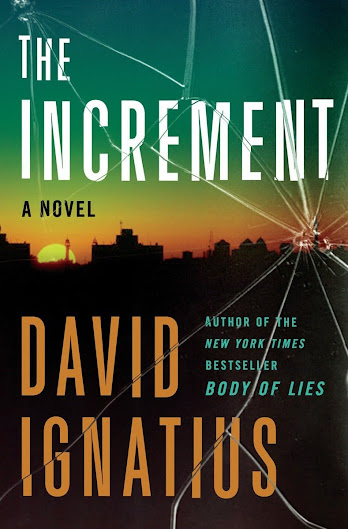
The Increment: A Novel by David Ignatius


It started out so strong but...


Published in 2009.

The Increment started out so strong, the characters were so strong, the plot was crisp and the whole thing just felt right.

The plot centers around two characters. One is an Iranian nuclear scientist that is disillusioned with the Iranian regime. The other character is a veteran CIA chief - the head of the Iranian desk.

Like I said, the book starts out very strong. I was intrigued by the characters, the situation and the back story of the two main characters.

By the end of the first page I was convinced I was reading a 5 star book.

But, the characters started to change. They started acting differently. For example, the head of the CIA is a retired Admiral. He comes off as a principled, with-it kind of leader who is just out of his element when he's not commanding a ship. Fine. Later on, he has multiple scenes in which he just plays with toy ships rather than making decisions. He goes from being a leader to being a little boy. Other characters make similar shifts.

So, for the 2nd 100 pages I had determined that this was probably a 4 star book. Good, but not great.

Throw in the goofy technology (you cannot realistically power an electronic device through radio waves, folks, if we could your cell phone would never run out of power. This book has a device being powered by a hand held device hidden under a robe beaming signals through the walls of a hardened nuclear facility - fun stuff but more sci-fi than reality), the satellite system that literally takes dozens of photos of ALL of Iran, including dumpy little towns that aren't even on the map (we photograph every square inch all day long and we don't know what's going on?), and the skimpy treatment of the special unit that the book is named after and...

well, the book degenerated to a 3 star piece of pulp fiction. Nothing special. It's a good airplane ride read. It can be found on Amazon.com here: The Increment: A Novel by David Ignatius.

Reviewed on May 20, 2009.

1601 Conversation as it was by the Social Fireside in the Time of the Tudors (kindle) by Mark Twain


The commentary is actually more interesting than the story


Originally published anonymously in 1880.

Literary critic Edward Wagenknecht called 1601 "the most famous piece of pornography in American literature."


Just to be clear, it's not really pornography, at least not by modern standards. Rather, it's a short story featuring Queen Elizabeth I, Ben Jonson, Beaumont, Shakespeare, the Duchess of Bilgewater, Sir Walter Raleigh, and a few other people all in a closet talking about passing gas and sex.

Sound strange?

Well, it is. And - it's only so-so funny.

Mark Twain (1835-1910)
3/4 of my edition was a fairly interesting commentary on the history of the story and about the characters. We learn that Twain wrote this as a diversion after the publication of Tom Sawyer (while he was working on Huckleberry Finn) during a time of writer's block. Twain showed it to some friends who published a few copies and then it snowballed. Twain's 1601 went "viral" before there was an internet, apparently.


I rate this kindle short story 3 stars out of 5. It can be found on Amazon.com here: 1601 Conversation as it was by the Social Fireside in the Time of the Tudors.

Reviewed on May 20, 2009.

The House of the Scorpion (audiobook) by Nancy Farmer


Recommended for middle schoolers through adults 

 
National Book Award, Young People's Literature, 2002.

Published in 2002.

Limiting The House of the Scorpion to a young adult audience is a disservice to the book and to the themes it brings up. This would be a fantastic book for an adult discussion group - there are so many themes and controversial topics that a group could discuss for hours and hours.


That being said, I nearly quit listening to this audiobook after the first hour. It was sooooo slow to get started. On top of that, it was often dark and opressive. However, after the character Tam Lin comes in to the story the whole book changes and you would have had to fight me to get me to give the book up. By the time the end came around I felt like I had lived a life with Mateo and was thoroughly satisfied.

So, what kind of themes are there? Well, this book, in my opinion, points out the dangers that many of the more Conservative thinkers warn us about with our current policies towards bio-technology and, to a lesser extent, immigration.

Nancy Farmer
The future, as portrayed in The House of the Scorpion is often a dark place with clones created solely to provide body parts for their originals and "eejits" - people with computer chips inserted into their brains to make them completely docile and the perfect slaves who will literally do the task they're assigned to do until they are told to stop (or die). The United States is no longer the world's only superpower and there is a new country between Mexico (now called Aztlan) and the USA. It is called "Opium". Opium serves as a buffer between Aztlan and the U.S. that is run by a cartel of drug lords with drug plantations worked by eejits, most of whom are illegal aliens from the U.S. or Mexico who were captured and enslaved (the parallels with the American underground labor force comprised of illegal immigrants can be easily made).


Aztlan has become a country obsessed by economic success and the duty to the larger society as a whole. The goal there seems to be the bee hive - all workers know their place and sacrifice for the good of the society. The mantra is the "5 principles of Good Citizenship" and the "4 Attitudes Leading to Right-Mindfulness." The success of the state is paramount over the interests of any individual.

Grand themes run throughout the book such as:

-What does it mean to be human?

-Who is accorded human rights?

-What are the limits of cloning? Do we clone people just to use them for parts? Do we clone fetuses just to use their parts (as happens in the book)?

-The rights of the individual vs. the demands of the state? Where are the boundaries or should there be any? Is the individual entirely free? Can the state demand everything of the individual? Is there a difference between an eejit and an Aztlanian worker bee?

The audiobook lasts 12.5 hours and is read brilliantly by Robert Ramirez (NOTE: There are other audiobook versions out there with different readers). I'm glad I stuck through the initial slow parts - I was thoroughly rewarded.

I rate this book 5 stars out of 5.

This audiobook can be found on Amazon.com here: The House of the Scorpion

Reviewed May 21, 2009.

Featured Post

<b><i>BAN THIS BOOK (audiobook)</i></b> by Alan Gratz

Published in 2017 by Blackstone Audio, Inc. Read by Bahni Turpin. Duration: 5 hours, 17 minutes. Unabridged. My Synopsis Ban This Book is t...

Popular posts over the last 7 days