Jericho's Fall by Stephen L. Carter


It just didn't work for me


Published in 2009 by Knopf.

This wasn't a bad book - I finished it and I wanted to know what was going on, but...


The book successfully creates a mood. It reminds me of one of those novels set in the Highland Moors in which creepy Lord Whatshisname gathers his family, friends and professional acquaintances to his manor as he lies dying. The sparks fly and secrets are revealed as the horrible weather howls outside.

Jericho's Fall is not based on the Highlands, but on a lonely mountaintop mansion compound in Colorado. There is no English Lord, but instead we have a former Secretary of Defense/CIA Director. His daughters, his ex-lover and loads of professional contacts are in and out of the compound. Sparks do fly and secrets are revealed as freezing rain and snow fall.

Well, I hate those kinds of books and this one had a few too many hidden agendas, double secret agents and super spy secret gadgets for my tastes. Too much posturing and too many mind games. It is readable, but not great.
Stephen L. Carter
On the positive side, however, I was intrigued by the author's non-fiction titles inside the front cover and have begun to read them. I have found them to be quite well-written and have added many of them to my wish list.

I rate this book 3 stars out of 5. It can be found on Amazon.com here: Jericho's Fall by Stephen L. Carter.

Reviewed on July 23, 2009.

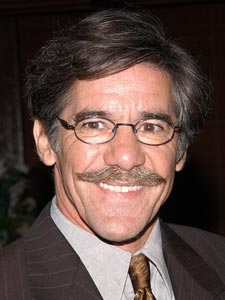
The Great Progression: How Hispanics Will Lead America to a New Era of Prosperity by Geraldo Rivera


Much like Geraldo himself, this book is a lot of sizzle and not much substance

Published in 2009 by Celebra.

Sadly, I have to do some explaining before we start. I am a history and a Spanish teacher (20th year this year!). I live in an ethnically mixed neighborhood in which my best neighbors are, by far, a Mexican family. I live with illegal immigration every day, in my neighborhood and at my work. I am not a raving nut that says "round 'em up!" Nor am I an open borders guy that wants to take in the whole world. My neighborhood has been materially improved by immigrants who have moved in.

So, now that we've gotten that out of the way, on to Geraldo's book, The Great Progression: How Hispanics Will Lead America to a New Era of Prosperity. It is a lot of sizzle, half-baked commentary and an endless series of attacks on Lou Dobbs (who I must admit that I have not watched for years now since we ditched cable and we don't have satellite - I thought he was the host of a financial show).

Early on Geraldo Rivera attacks Rush Limbaugh for a series of anti-immigrant comments entitled "Limbaugh's Laws." I did an internet search and I found 3 paragraphs of the same title. They are inflammatory. They are awful. But, here's the essential third paragraph of the commentary - the paragraph that Rivera ignores: "I can imagine many of you think that the Limbaugh Laws are pretty harsh. I imagine today some of you probably are going, "Yeah! Yeah!" Well, let me tell you this, folks. Every one of the laws I just mentioned are actual laws of Mexico, today. I just read you Mexican immigration law. That's how the Mexican government handles immigrants to their country."

That's a telling example of the slipshod commentary throughout. Rivera's thesis doesn't even hold up to his own scrutiny. He is critical of those that claim illegal immigration drives down wages and than, a few chapters later, he notes that Cesar Chavez of the United Farm Workers fame was against illegal immigration for that same reason. He even calls it an economic law.

Rivera asserts that the anti-illegal immigration crowd (he disingenuously calls them anti-immigration, meaning against immigration of all sorts) is racist because it is afraid of the gang violence of such groups as MS-13 and than he has a whole chapter devoted to drug-related gang violence on the border. So, the violence is real, but trying to keep it out or even to talk about it is racist? He does a similar thing with ARM mortgages and immigrant families (they aren't overly-represented, but then, a few chapters later they are because they are victims). He gets upset that Hispanics are hassled for ID to prove they are citizens and then notes that the presence of "obviously foreign" day laborers. Is only Mr. Rivera allowed to make such assumptions?

The book begins with "hard hitting" interviews with such political greats as J-Lo, George Lopez and Rosario Dawson. We get lists of baseball players of Hispanic origin (literally - paragraph after tedious paragraph) is a chapter called "Beisbol." I am still unsure as to the purpose of the chapter.

Geraldo Rivera gives us a look into his jet-setting lifestyle (he notes that he is writing in L.A. for this paragraph, Puerto Rico for another and so on) but shows how truly out of touch he is when he comments that America's lawns wouldn't be mowed, their kids cared for or our toilets cleaned if it weren't for Hispanics. Really? I wish I had that kind of money. The only lawn mowed by Hispanics in my neighborhood belong to houses with Hispanic families living in them.

Geraldo Rivera
Is he all wrong? No. Rivera gives an impassioned argument as to why education must become a priority in the Hispanic community. His chapter on "The Hispanic Consumer" is fascinating and entertaining. He makes valid points when discussing allowing illegal aliens to join the military as a path to citizenship in another chapter.

But, more often he wanders afield in commentary such as his on unions - he wants the so-called "Card Check" legislation to pass but isn't quite clear as to why, especially when businesses can just go to newly arrived workers with fake IDs to replace the strikers.

More irritating is his tendency to name call. For example, he calls "Joe the Plumber" a "douchebag".

If you want a lot of splash, this is your book. If you want well-reasoned commentary - the kind that has been thoroughly researched, discussed and evaluated, well, this is not it. There is no middle ground in this book. Even attempting to have a reasoned conversation about immigration with Rivera would be cause for attack and liberal use of the epithet "anti-immigrant".

I rate this book 2 stars out of 5. It can be found on Amazon.com here: The Great Progression: How Hispanics Will Lead America to a New Era of Prosperity.

Reviewed on August 3, 2009.

Note: This review was edited on January 19, 2025. Update: My Mexican neighbors who lived behind me (I referred to them in the first paragraph)
 have long since moved away. It's a rental property and no one stays more than a couple of years. But, multiple houses further down their street have been purchased and flipped by a Hispanic family that is using their skills to build wealth and turn some of the worst houses in the neighborhood into some of the best. Good for them and good for the neighborhood! I still think Rivera makes a few good points, but weakens the overall argument with weird comments, name-calling, off-topic points, edited quotes intended to be "gotcha" moments, and comments that reinforce stereotypes.

Lee: A Life of Virtue (The Generals series) by John Perry


A solid biography in many aspects, but not without its problems

Published in 2010 by Thomas Nelson Inc.

First, a bit about this reviewer and Civil War books. This is my 80th Civil War book. Robert E. Lee figures prominently in almost every one of them. I consider him to be the the most talented general that served on either side in that war and that is high praise indeed because many generals rose to the top and did distinguished themselves in that war. If Lee is the most talented general in that war, he is the most talented American officer of the 19th century and one can make the argument that he may have been the best ever (assuming one overlooks the massive point that he earned that reputation as a fighter by breaking his oath and taking up arms against the United States government, which I am.)

No one did so much with so little against an opponent that was better fed, had better and more numerous weapons, and outnumbered him in literally every battle. He fought with principle and with respect for his enemies (who he refused to call his enemies - he called the Union forces "those people.")

All of that being said, even I cannot approach the standard of hero worship that John Perry creates in the introduction of this book. Perry cites as one of his primary sources the Douglas Southall Freeman biography R. E. Lee.  Freeman was the primary advocate of a revisionist movement of historians popularly called the Lost Cause movement. It emphasizes the noble character of the southern generals, de-emphasizes the importance of slavery as a cause of the Civil War and justifies secession as a legitimate response to aggressive Northern attacks on the Southern way of life and economy. I would consider Lee: A Life of Virtue to be Lost Cause "lite".

For example, Perry makes a big deal of the fact that Lee never personally owned a slave. He also notes that Lee condemned slavery. That is true, but he did not need to personally own a slave - his wife and her family owned more than one hundred slaves and at least one travelled with the family whenever they followed him in his army postings. Condemning slavery while benefitting from it is a difficult position to defend (ask any devotee of Jefferson.)

Clearly, the war was about more than just slavery, but as noted Civil War historian James McPherson notes in his book of essays about the Civil War entitled This Mighty Scourge, modern historians are re-discovering the primacy of slavery in the debates concerning secession. Charles B. Dew notes in Apostles of Disunion, "Defenders of the Lost Cause need only read the speeches and letters of the secession commissioners to learn what was really driving the Deep South to the brink of war in 1860-61."

Perry's biography of Lee, however, is quite good on the whole. He makes the details of Lee's early life interesting, including all of his postings around the country as an engineer in places such as St. Louis and New York City.

More than half of the book concerns his time in the service of the state of Virginia and the Confederate States of America in the Civil War. Perry's description of the battles and the politics of the war is solid, despite glaring glitches such as the time when he refers to the Battle Sharpsburg (Antietam) as "Strategically...relatively unimportant." (p. 167)

Antietam was a massive strategic loss for the Confederacy. This loss caused Lee to stop his strategy of bringing the war to the North for nearly a year and, even more importantly, provided Lincoln with the victory he needed (vague as this victory was) to issue the preliminary version of the Emancipation Proclamation. This document brought in African American soldiers, stopped Britain's attempts to interfere in the war, and laid the groundwork for the laws and Constitutional Amendments that ended slavery forever. Some have argued that Antietam (Sharpsburg) was the most important battle of the war because of all of those strategic losses.


So, to sum up, this is a solid biography, but not perfect. Too much hero worship and a basic misunderstanding of the Union war strategy as typified by the fundamental misunderstanding of the importance of the Battle of Antietam.

I rate this book 3 stars out of 5. It can be found on Amazon.com here: Lee: A Life of Virtue (The Generals series).

Reviewed September 25, 2010.

I reviewed this book in conjunction with Thomas Nelson's BookSneeze program. I was not compensated for this review. The opinions expressed are mine.

Review updated on July 27, 2024.

The Jinglebob Man by Robert Kammen


So, your first question has to be "What is a jinglebob?"

Published in 1995 by Kensington Pub Corp

A jinglebob is part of the little spinny thing on the back of a set of spurs - the sharp part. It makes the "ting, ting, ting" sound you always hear in westerns as the cowboys are walking along and setting up for a big shoot-out.

The main character is The Jinglebob Man because he is imprisoned tortured by a sadistic superior officer with a set of sharpened spurs during the Civil War because he is accused of treason.

Our protagonist, Tyler Carradine, escapes from his prison and is now forever on the run, afraid of meeting someone from his past and in pain due to a lost love that he feels will not accept him due to his physical deformities and the accusations against him.


Carradine stumbles into a corrupt mining town years after the war and is finally forced to turn and fight rather than continue to run. Oh, and he finally has a chance to find love again (but not with his long-lost love).


The plot of the book is pretty basic western fare. Kammen's writing style is uneven. At times, the story flows effortlessly and at other times it seems as though he is trying too hard to sound authentically western and the narration breaks down and trips all over itself.

I rate this book 3 stars out of 5 and it can be found on Amazon.com here: The Jinglebob Man.

Reviewed January 28, 2005.

Riding for the Brand (audiobook) by Louis L'Amour


Good, but predictable

Audio version originally published in 1986 by Random House Audio
Multicast performance with sound effects
Duration: 55 minutes.

I like Louis L'Amour. His descriptions and conversations are top notch. However, his plots are predictable so I really am grading this on a curve.
Johnny Cash, Willie Nelson,
Kris Kristofferson and Waylon Jennings

I am also rating the audio version of Riding for the Brand which is interesting because it is told by Willie Nelson, Waylon Jennings, Kris Kristofferson and Johnny Cash. It was quite enjoyable to hear the four of these men work together - they were all quite good, especially Kristofferson and Nelson.

This audio edition has features that most don't, including special effects and a music soundtrack that was sometimes reminiscent of Clint Eastwood's Spaghetti Westerns and sometimes reminiscent of Silverado. The inclusion of the special effects did speed the plot along (you don't have to describe that people are knocking on the door or riding horses, etc.) but sometimes they are distracting (one scene in particular had an overly loud clock ticking over the top of everyone's voices).

I rate this audiobook 4 stars out of 5.

This audiobook can be found on Amazon.com here: Riding for the Brand.

Reviewed on January 26, 2005.

A Separate Country by Robert Hicks


Tries too hard to set a mood, loses focus on the history.


Published in 2011 by Grand Central Publishing.

As a history teacher, I love well-written historical fiction. It places the reader right in the story. A judicious author can blend the history and the fiction together in a harmless fashion and tell the story in an accurate and entertaining way.

A Separate Country does not live up to those standards. It it presumptuous of an author of historical fiction to take the first person with a very famous historical figure. Commonly, if a first person perspective is used it is with a fictional character - an aide to a general that witnesses events but does not effect them, for example. In this case, Hicks has taken one of the "name" generals from the Civil War and turned him on his head. He has sacrificed the "historical" in the name of the "fiction."

Hicks places John Bell Hood into a series of historic events, some of which are quite true (such as the lottery drawings - many Confederate ex-generals were lottery commissioners) and some of which are of dubious truth (Hood's fascination with the comatose Pascal, for example). A great deal of the book is supposed to be Hood's secret autobiography, but it reads more like a modern blog than a Victorian era journal.

Confederate General John Bell Hood
(1831-1879)
The problem is that Hood's real life story is subordinate to this fiction in the story. It is peopled with characters with symbolic names (for example, Pascal's name is like paschal - an Easter term referring to Jesus and his sacrifice). Hood becomes a part of a much larger morality play about race, love and sacrifice. He even works in a young Homer Plessy, of later Plessy vs. Ferguson claim.

The author, Robert Hicks, is fascinated with Hood's performance at Nashville and Franklin, TN but almost completely ignores his other battles, which read like a roll call of the war itself: The Peninsula Campaign, 2nd Bull Run, Antietam, Fredericksburg, Gettysburg (Also, another historical inaccuracy - Hood never would have heard Lee apologize to the survivors of Pickett's Charge - Hood was in the infirmary trying to save his mangled arm), Chickamauga (where he lost his leg) and Atlanta.

The book is just tedious. The use of three points of view to tell the story guarantee us extended descriptions of the heat, humidity and the lush plant and insect communities of New Orleans. Page after page of descriptions of the plagues that strike New Orleans. Enough already!

This history teacher says pass on this one.

I rate this book 2 stars out of 5. It can be found on Amazon.com here: A Separate Country by Robert Hicks.

Reviewed on August 3, 2009.

Apocalypse Troll  by David Weber


A solid sci-fi story saddled with a fantasy genre name

Published in 2000 by Baen Books.

Just seeing the title of this book you would assume that David Weber's first solo novel is all about ogres, witches and elves. The cover shows differently, of course. The Apocalypse Troll is an action-packed bit of sci-fi that includes time travel, a threat to planet earth and a lovely lady.

Here are the plot basics: an alien race from the future lands on earth in an effort to destroy it and humans from the future arrive in an effort to stop them. But, their defense was less than successful so current day humans are left to fight on with the advice of a surviving human from the future.

And this story works.

Mind you, this is not "great" literature - but it is a romp through space and time with plenty of military action, a truly evil villain and lots of snappy dialogue. Be warned, there is not a lot of character development and the reader really doesn't know the entire backstory until about 1/3 of the way through the book, but it's still a worthwhile read.
 
I rate this book 4 stars out of 5.

This book can be found on Amazon.com here: The Apocalypse Troll. 

Reviewed on August 9, 2009.

Featured Post

<b><i>BAN THIS BOOK (audiobook)</i></b> by Alan Gratz

Published in 2017 by Blackstone Audio, Inc. Read by Bahni Turpin. Duration: 5 hours, 17 minutes. Unabridged. My Synopsis Ban This Book is t...

Popular posts over the last 7 days