JUST MERCY: A STORY of JUSTICE and REDEMPTION (audiobook) by Bryan Stevenson


Published in 2014 by Random House Audio

Read by the author, Bryan Stevenson.
Duration: 11 hours, 11 minutes
Unabridged.

"...if he just had the money for a decent lawyer."

Bryan Stevenson is a lawyer who has spent his entire career working with people who have been wrongfully convicted and unfairly sentenced. He works through the Equal Justice Initiative with a lot of death row inmates in Alabama. He has succeeded in getting over 100 re-trials and/or re-sentencing hearings for people on death row. He has had multiple convictions completely overturned.

Stevenson does a lot of work in Alabama because Alabama doesn't do much to subsidize the defense in death row cases. How much does the state spend for the entire case, including appeals?

Just $1,000.

Some counties help with that amount, but more than 70% of Alabama's death row inmates were represented by $1,000 lawyers. Considering that the average cost of a simple will is $375, you can see that a $1,000 worth of death row defense won't get much. The author says it won't even pay for the photocopying costs associated with a death row defense, let alone DNA tests, expert testimony, hiring investigators and other costs. In one of his cases, he freed a man because he was able to demonstrate that the bullet that killed the victim could not have been fired from the supposed "murder weapon" owned by the defendant - it wouldn't have fit in the gun. That is super-basic expert testimony that should have been presented at the original trial.

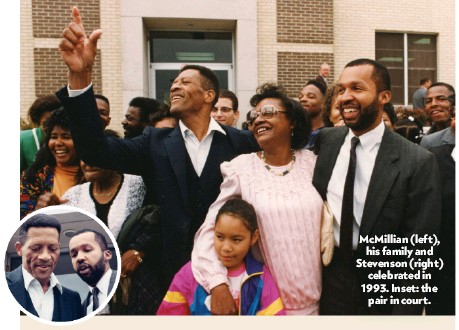
Stevenson tells the stories of many of his clients as Just Mercy moves along, but the thread that ties it together is the story of Walter McMillian. McMillian was convicted of murdering a teenage girl based on flimsy testimony and even flimsier circumstantial evidence. It is the attorney's most famous case and it does give the reader a good idea about the length of time it takes to straighten out one of these incorrect verdicts.

Stevenson also makes a compelling argument that there is a great deal of racial bias in these cases. The sentences for black defendants are often longer, more likely to go to Death Row and are less likely to have an adequate defense. Younger black defendants are much more likely to get moved to adult court than white ones.

My advice if you are poor and/or black is to never get arrested for anything in Alabama.

This book is an important read. Stevenson's writing style is very to the fact - very much in line with someone that writes a lot of legalese all day. He avoids technical terms in this book, but it is often a "just the facts" style of writing. 
That said, this book 
can be inspiring and Stevenson paints a compelling picture. There was one point in the story that I was so frustrated with what was going on that I was physically angry. At another point just a few minutes later, the situation resolved itself in such a profoundly moving way that it brought tears to my eyes. The topic is so engrossing that artistic flourishes are not required.

I rate this audiobook 5 stars out of 5. It can be found on Amazon.com here: J
UST MERCY: A STORY of JUSTICE and REDEMPTION by Bryan Stevenson.

STAR SPANGLED SCANDAL: SEX, MURDER, and the TRIAL THAT CHANGED AMERICA (audiobook) by Chris DeRose


Published by Blackstone Audio in June of 2019.
Read by Traber Burns.
Duration: 8 hours, 36 minutes.
Unabridged.


In February of 1859, Daniel Sickles, a sitting U.S. Congressman, shot and killed a man in Washington, D.C. across the street from the White House.

Why is this not just a weird moment in American history?

Five reasons.

#1) Daniel Sickles went on to become the highest-ranking Union officer in the Civil War that did not graduate from West Point. He performed very well at the disastrous Battle of Chancellorsville and performed bravely, but with great controversy at Gettysburg, where he lost a leg.

#2) The victim was Phillip Barton Key, the son of Francis Scott Key, the author of the Star Spangled Banner. Phillip Barton Key was also the U.S. Attorney for Washington, D.C.

#3) Key and Sickles' wife had been carrying on a long-term adulterous affair and Sickles had just discovered this fact.

#4) The new technology of the telegraph spread this story to newspapers across the country and it became THE scandal story of its era. Some newspapers sold literally tens of thousands of copies when this story was on the front page. Record numbers of telegraph messages were sent out across the country - totals only eclipsed by the Civil War just a few months later.

#5) It was the first time the temporary insanity defense was used successfully in the United States and kicked off a wave of similar defenses in adultery cases for most of the next century.

For me, an enthusiastic student of the Civil War, Star Spangled Scandal should have been an amazing book. A future Civil War general is defended in a murder trial by the future Secretary of War during the Civil War (Edwin Stanton). A few days before the murder Sickles, his wife and her lover had all been at a party hosted by Rose O'Neal Greenhow - the future famed Confederate spy who used her parties during the war to gather information. Abraham Lincoln was fascinated by the case and discussed it back home in Springfield, Illinois. Later, he and his wife became friends with Mr. and Mrs. Sickles.

But, this book gets bogged down with long passages from the trial. He literally quotes the opening and closing statements from the trial at great length with no analysis - just copies and pastes it into the book. That might have been all right, unless you have read anything from the 1850's. Verbose and flowery speech abounds. Everyone comes off as a self-important, pompous windbag. It is tedious to listen to. If it could be said in 10 words, they were sure to use 50 or 60.

Here is a great example. This single sentence with more than 90 words was written to the New York Herald by Daniel Sickles to complain that they were writing about his personal life, but they didn't know any of the details and they should just butt out:

"The editorial comments of the Herald of yesterday, although censorious, (of which I do not complain whilst I read them with regret) differ so widely in tone and temper from the mass of nonsense and calumny which has lately been written concerning a recent event in my domestic relations, that I cannot allow a mistake, into which you have been held by inaccurate information, to pass without such a correction as will relieve others from any share of the reproaches which is the pleasure of the multitude at this moment to heap upon me and mine."
An artist's rendering of the murder from Harper's Weekly
 in March of 1859.


If you enjoyed that sentence, you would love the extended quotes from the trial transcript threaded together with an occasional comment for page after page.

I did not enjoy the narration in this book. I only have a couple of readers I will not listen to. Before this book, I only had one reader. Traber Burns has made it two. The reader has the perfect voice for pompous, self-important commentary. He is perfectly suited for this style of writing.

So, I rate this audiobook 2 stars out of 5. Just too many quotes. I get the value of letting the people actually speak for themselves, but this was too much.

This book can be found on Amazon.com here: STAR SPANGLED SCANDAL: SEX, MURDER, and the TRIAL THAT CHANGED AMERICA by Chris DeRose.

NOT A DRILL (Jack Reacher #18.5) (audiobook) by Lee Child


Published in 2014 by Random House Audio.
Read by Dick Hill.
Duration: 1 hour, 27 minutes.
Unabridged


Lee Child was a prolific writer of Jack Reacher stories. I say was because he recently announced his intention to stop writing those stories. His brother will start writing them instead.

Child wrote numerous books and short stories in no particular order, bouncing around the timeline of Jack Reacher's life. Not a Drill is set in Maine. I presume it fits in on the timeline with the other Reacher stories that take place in Maine and New England.

Jack Reacher is hitchhiking to the end of I-95 at the U.S.-Canada border. Another of his books starts at the other end of I-95 down by Miami, Florida and Reacher makes a point that he wants to have traveled from one end of the road to the other.

Once he gets there, he gets out and is soon picked up by three younger Canadians who are headed to a four day long hiking trip. Their trail starts at one town and ends up at another. Reacher decides to go with them to the trail head because he has nothing else to do. But, when the military shows up, things start to get weird...

Not a Drill is a short story or perhaps a novella (depending on how you want to interpret those terms). To me, it felt like this story was the beginning of a novel that never really blossomed into a book-length story. But, this story is just too short to be much of anything at all. Very forgettable.

I rate this audiobook 2 stars out of 5. It can be found as part of a larger collection on Amazon.com here: NOT A DRILL (Jack Reacher #18.5) (audiobook) by Lee Child.

IN DEFENSE of ELITISM: WHY I'M BETTER THAN YOU and YOU'RE BETTER THAN SOMEONE WHO DIDN'T BUY THIS BOOK (audiobook) by Joel Stein


Published in October of 2019 by Grand Central Publishing.
Read by the author, Joel Stein.
Duration: 7 hours, 18 minutes.
Unabridged.


Joel Stein's In Defense of Elitism: Why I'm Better Than You and You're Better Than Someone Who Didn't Buy This Book is an interesting book. The title suggests that it is a tongue-in-cheek look at politics, but it is much more than that. To be sure, there are plenty of jokes, wisecracks, puns and witty observations of varying quality throughout the book. But, there is also a lot of solid political analysis, especially in the last third of the book.

Stein's primary argument is that populism, embodied by both Donald Trump and Bernie Sanders for the last 4 years, is a road to nowhere except authoritarianism. Stein, like most elites, is worried more about Trump than Sanders (makes sense - he is President, while Sanders is a Senator).

Trump is well-known for his anti-intellectual tenancies. He discounts expertise and people that might have been called eggheads a few years ago. He As evidence for this, just note the number of things that President Trump has claimed that he knows more about than anyone else: drones (January 2019), technology (December 2018), renewable energy (April 2016), the visa system (March 2016), ISIS (November 2015). In July 2016 he said he even knows more about Senator Cory Booker than Senator Cory Booker does (
"I know more about Cory than he knows about himself." )*
The author and narrator, Joel Stein

No one can be an expert on everything. That is where Elites come in, according to Stein. Stein explains this part rather poorly (in the first 10% or so of the book), because he insists on talking about his Elite friends. He name drops a ton of people who seem to be experts on everything - which is exactly what Stein is decrying. I recognized none of them except for Rob Reiner, who is not an expert on anything except making movies. He's very good at that, but I wouldn't go to him for his thoughts on tax policy.

The book gets so much better from this point on. Stein decides to go to a town in the county that voted with the highest percentage for Trump - Miami, Texas. He doesn't know what to expect, which this Hoosier who grew up in rural Indiana finds hilarious. It is a completely different world than his, which he acknowledges is part of the problem. Stein is kind with his descriptions of the people of Miami (pronounced My-am-uh) and seems to enjoy himself while he is there.

Stein also interviews Scott Adams, the creator of the Dilbert cartoon. Adams has become an anti-expert advocate, which is sort of ironic for the creator of a cartoon that continually makes fun of a boss and a bureaucracy that discounts the engineers (the experts) who are creating the products their company markets and sells. He also interviews Tucker Carlson. I was surprised. Before I heard this book, I would have suspected that I would have enjoyed the Adams interview and been dismayed by the Carlson interview. Instead, it was completely reversed. Tucker Carlson makes a lot of good points (not all, but a lot) and Adams comes off as an opportunistic nut.

Stein's thesis, when he finally gets around to it, is that there are two kinds of elites out there. The first group is the intellectual elites (like Stein and Rob Reiner and, of course, the late William F. Buckley who was the ultimate member of the intellectual elite). They value policy discussions, connections to other elites of all stripes and ideas. He calls the other group "boat elites" because they value possessions over ideas. He goes on to describe them like this: 

"The boat elite are steeped in honor culture. Dignity is their most valuable nonboat possession. If their girlfriend gets insulted, they fight. If their friend gets in a fight, they fight. If their fighting ability is questioned, they fight. When they get cut off, they honk. Then they yell at the other driver to get out of their car and fight. The intellectual elite don't do this because we know that honking and yelling makes it hard to hear NPR stories."


It is actually a pretty sophisticated observation for a guy trying to sneak in funny comments all of the time. It explains why President Trump is trying to prove to everyone that he is an expert on everything. It makes you look bad to ask for help on anything (like most men and asking for directions).

I enjoyed this audiobook. I blew right through it in two days. Not a perfect book, but an interesting book and full of some big ideas presented in an unorthodox way.

I rate this audiobook 4 stars out of 5. It can be found on Amazon.com here: IN DEFENSE of ELITISM: WHY I'M BETTER THAN YOU and YOU'RE BETTER THAN SOMEONE WHO DIDN'T BUY THIS BOOK by Joel Stein.


*Source for all of these claims: Axios.com "Everything Trump Says He "knows more about than anybody"

BLOODY SPRING: FORTY DAYS that SEALED the CONFEDERACY'S FATE (audiobook) by Joseph Wheelan


Published in 2014 by Blackstone Audio.
Read by Grover Gardner.
Duration: 14 hours, 11 minutes.
Unabridged.


Joseph Wheelan's Bloody Spring is a look at General Grant's Overland Campaign from May to June in 1864. This was Grant's first experience against Robert E. Lee and he brought a change in strategy to the Eastern Theater.

Rather than try to defeat Lee in a single battle like the previous generals, Grant decided that it was best to find Lee, engage in a battle and never disengage and let the superior resources and manpower grind Lee's army into surrender. Grant understood that when Lee surrendered the Confederacy would surrender.

Wheelan spends little time talking about the causes of the war, but he does offer a short recap before he delves into a lively and interesting narrative history of the forty days of the Overland Campaign. 


Union soldiers near the Battle of North Anna in May of 1864.
They are on a small bridge. A larger pontoon bridge is behind them.

This campaign had several of the most brutal battles of the war, including The Battle of the Wilderness, Spotsylvania Court House, Yellow Tavern, Cold Harbor, North Anna and the beginning of the Siege of Petersburg. It was also rough on the Confederate leadership. Famed cavalry general J.E.B. "Jeb" Stuart was killed and trusted General James Longstreet (Lee called him his "Old War Horse") was severely wounded early on and forced to recuperate for several months.
We learn about the first major uses of African-American soldiers, Union engineering marvels that overcame the swamps and rivers, the quickly-evolving use of breastworks. Sometimes, we see brilliant maneuvers and choices from the leadership. More often, we see questionable choices from both armies. 

These fights were horrific. Wheelan's re-telling does not pretty it up for the listener. This was a nightmare campaign. It started on the site of the Battle of Chancellorsville from the previous year. There were fights among the exposed skeletons that were ripped from their shallow graves by cannon fire, night marches through forest fires, wounded men being burned alive, hand-to-hand combat in trenches and the single most deadly hour of the Civil War.

Grover Gardner read this audiobook and did a fantastic job. This was a surprisingly well-told story and Gardner's reading added to that.

I rate this audiobook 5 stars out of 5. It can be found on Amazon.com here: 
BLOODY SPRING: FORTY DAYS that SEALED the CONFEDERACY'S FATE by Joseph Wheelan.

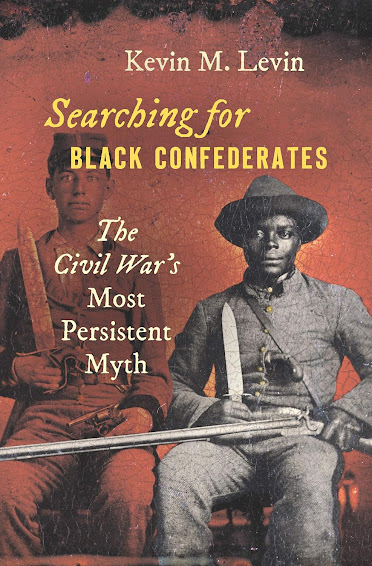
SEARCHING for BLACK CONFEDERATES: THE CIVIL WAR'S MOST PERSISTENT MYTH (kindle) by Kevin M. Levin


Published in August of 2019 by The University of North Carolina Press.

As the title states, one of the most common myths of "the Civil War had nothing to do with slavery" crowd is that thousands and thousands of African-Americans served in organized units in the Confederate Army.

To be fair to the mistaken people that advocate for this position, there were African-American people traveling with the Confederate Army. They were not there as volunteers - they were there as body servants to their masters. There were also a great number of slaves that were commandeered by the Confederate government to dig ditches and fortifications, much like horses were taken to pull wagons and replace cavalry mounts. They were there as property - as tools, but not as soldiers.

Is it conceivable that some of those slaves picked up a gun in the midst of a fight and fired it in anger? Certainly. I am absolutely certain that it happened. But, was that the plan? No, that is simply what happened in the chaos of battle. It was literally against the law for African Americans to join the military in the Confederacy. The Confederate reactions to the creation of African American units in the Union Army was revulsion, panic and fear that the North was trying to incite a slave rebellion by arming former slaves. There was a lot of denial that African Americans would even make decent soldiers - it was frequently commented that they were too docile to make decent soldiers. Why would they say that if the Confederacy had "thousands" of African American soldiers?

Clearly, there weren't.

I would compare it to female soldiers in the Civil War. Were there women that fought in the war? Yes. It is well-documented that several women pretended to be men and fought. But they were not registered as female soldiers - they lied to join up and were discharged when discovered. It is documented that some of the officers brought their wives along to camp. It is certainly possible that some of those women fired a weapon in the middle of a battle. That is not the same as enlisting women in the army.

The Confederate States of America did change its position at the end of the war on March 13, 1865 . Less than a month before the surrender of Robert E. Lee, they sent out a call to arm the slaves. If the Confederacy had already put African American soldiers, why would they debate and argue for months about arming the slaves in the winter of 1864-1865? Why argue about something you are already doing?

Even more important is a point that Levin makes: "What has gone entirely unnoticed by the Confederate heritage community is that in all the records produced by the slave enlistment debate, including letters, diaries, and literally thousands of newspaper articles, not a single officer or soldier suggested that slaves were already serving as soldiers in the Confederate army."

He quotes the Confederate Secretary of War who commented during this debate: "T
Confederate Sergeant Andrew Silas and his slave Silas Chandler pose
for a photograph in a studio. Silas Chandler was his body servant
until his death. He returned to the front as the body servant of his
brother.  Silas Chandler received a pension at at the age
of 78 - but not for being a soldier. Instead, it was a pension for
"Indigent Servants of Soldiers or Sailors of the Late Confederacy".

he foundation of the Southern theory of the racial superiority of whites would crumble if blacks were allowed to enlist.”

Another Quote: "The Richmond Daily Examiner spoke for many when it declared in November 1864 that 'if a negro is fit to be a soldier he is not fit to be a slave...The employment of negroes as soldiers in our armies, either with or without prospective emancipation would be the first step, but a step which would involve all the rest, to universal abolition.'"

The point that Levin repeatedly makes in this short book (according to my Kindle it would be about 240 paper pages and about a quarter of that is sources, end notes and a bibliography) is that the people who actually fought the war did not recruit African American soldiers, did not arm them and would have been shocked at the idea of doing so.

Simply put, any argument otherwise is simply grasping for an excuse to defend one's ancestors for fighting in defense of slavery and white supremacy*. I believe that many of them are sincere because they don't want to believe that their ancestors fought for that goal and feel guilty about it. No one is responsible for their ancestors. I told someone online a month ago this comment while discussing this topic: "My family has been Lutheran as far back as anyone knows. Almost certainly, one of my ancestors fought in the Thirty Years War against the Catholics. I can't justify that in any way. Killing people for Jesus demonstrates a fundamental misunderstanding of Jesus' teachings. Similarly, killing people for the freedom to preserve a system of racial superiority demonstrates a fundamental misunderstanding of freedom. It's not your fault or my fault if our ancestors did wrong - just don't defend it now and do better."

I rate this book 5 stars out of 5. For such a small book, it gives a lot of insight into the "Lost Cause" arguments and refutes them all with primary sources, including lots of them I haven't mentioned, like Confederate pension applications.

This book can be found on Amazon.com here: SEARCHING for BLACK CONFEDERATES: THE CIVIL WAR'S MOST PERSISTENT MYTH  by Kevin M. Levin.

*NOTE: the common argument against this point is that the Union forces didn't universally fight to eliminate slavery. That is a more than a valid point - it is 100% correct. They were called the "Union" army for a reason - it was created to kept the United States united.

But, it is also true that the Confederacy was created to defend slavery and white supremacy. They wanted to divide the country for this purpose. Don't believe me? Check out the Articles of Secession. These were lists for the reasons for secession, much like the bulk of the text of the Declaration of Independence. Here is an analysis of what percentage of each text was devoted to certain topics. Notice how much of each document refers to slavery. Here are the original documents with no analysis. I encourage you to read them for yourself - these are the thoughts of the people who voted to secede. These are their Declarations of Independence. They are not hard to read and they crush any argument that does not place slavery at the top of any list for the causes of the Civil War. 

LOVE YOUR ENEMIES: HOW DECENT PEOPLE CAN SAVE AMERICA from the CULTURE of CONTEMPT (audiobook) by Arthur C. Brooks


Published by HarperAudio in March of 2019.
Read by Will Damron.
Duration: 6 hours, 55 minutes.
Unabridged.


Arthur C. Brooks was the President of the conservative think tank American Enterprise Institute from 2008 to shortly after the publication of this book in 2019. 

Brooks is deeply worried with the present level of political discourse in America. Debates where the candidates just insult one another. Derogatory comments rather than actual proposals. Look at your typical Facebook political argument. Anonymous posters with names like "Trump_2020_Forever" arguing with "Trumpsters_Suck" and using terms like "libtards" and "conservacunts" while they insist that the other side is nothing but a literal bunch of communists and Nazis.

This is getting us nowhere.

And that is his point in Love Your Enemies: How Decent People Can Save America from the Culture of Contempt.

What we are showing each other is contempt. He quotes a couples' counselor that he can work with all kinds of marital struggles - infidelity, anger, distance, physical issues. But, one thing he can't work with is contempt. If the two partners are rolling their eyes at one another and dismissing everything the other one says, the relationship is over.

The problem is, unlike a failed marriage, one half of the entire country can't just go off and find a new political partner to work with. We have a two party system. We need to work together. We are literally stuck with each other. 
The author, Arthur C. Brooks


Both sides need each other's ideas and both sides need to know that the other side is coming at the problem of governing the country in a sincere, meaningful way. They may have different points of emphasis but they can still work together. One of the more interesting chapters of this book explores the sociological differences between conservatives and liberals. It also shows how they can frame problems in such a way that the other side understands where they are coming from.

In the end, Brooks is advocating for a simple application of the Golden Rule - treat the other side the way you'd like to be treated. He's not saying that you shouldn't advocate for your ideas - he is saying that both sides need to listen, not be rude and look for ways to work together.

I highly recommend this book.

I rate this audiobook 5 stars out of 5. It can be found on Amazon.com here: LOVE YOUR ENEMIES: HOW DECENT PEOPLE CAN SAVE AMERICA from the CULTURE of CONTEMPT by Arthur C. Brooks.


IRRATIONALLY YOURS: ON MISSING SOCKS, PICKUP LINES, and OTHER EXISTENTIAL PUZZLES (audiobook) by Dan Ariely


Published in 2015 by HarperAudio.
Read by Simon Jones.
Duration: 3 hours, 22 minutes.
Unabridged.


The author, Dan Ariely
Behavioral economist Dan Ariely has written a lot of books and articles about his various behavioral experiments. I was not aware that he had a regular column in the Wall Street Journal that functions an awful lot like the Dear Abby column has done in newspapers for more than 60 years. People write in questions about relationships or work concerns and Ariely tries to come up with a concise, humorous answer.

The fact that Ariely is a famous behavioral economist did little to make this collection feel any different than a collection of Dear Abby columns. It was not a bad listen, but not a great one either.

I rate this audiobook 3 stars out of 5. It can be found on Amazon.com here: IRRATIONALLY YOURS: ON MISSING SOCKS, PICKUP LINES, and OTHER EXISTENTIAL PUZZLES by Dan Ariely.

A FAREWELL to MARS: AN EVANGELICAL PASTOR'S JOURNEY TOWARDS the BIBLICAL GOSPEL of PEACE (audiobook) by Brian Zahnd


Published by Oasis Audio in 2013.
Read by Dean Gallagher.
Duration: 4 hours, 58 minutes.
Unabridged.


Brian Zahnd is an American pastor of a megachurch in Missouri. I had never heard of him before I ran across this book. I was intrigued by the topic because the election of President Trump has been an interesting experience for this lifelong member of a religiously conservative church.

Over time, Zahnd has become convinced that pacifism is the way that Jesus would have us go. It is not a popular opinion, but Zahnd makes a strong argument for it.


Zahnd's message is essentially that the church is at its best when it acts like the Old Testament prophet Nathan in 2nd Samuel chapter 12. Nathan comes to David to tell him he had done a great wrong and call him on it.

Now, according to Zahnd, t
he church went from being the accuser of wrong-doing - the one that holds it to a high standard - to being the defense attorney of the government. Zahnd describes it as the church is the chaplain for the government. It cheerleads the government and supports it in everything, including going to war, supporting slavery, supporting genocide and more and it has been this way since Constantine the Great co-opted the Church in 313. 

Why is that? Because the government brought the Church into government and made it a stakeholder. The church provides moral cover because it is complicit with the government.  Look at our current political situation and watch religious leaders who are invested in politics use God to promote whatever cause they are involved in.

Here is a great example: In this article, Pat Robertson demanding that we keep troops in Syria. If we don't, President Trump is "in danger of losing the mandate of heaven." Two questions: 

1) Does God crown American Presidents with the mandate of heaven? 
2) Is Jesus a big fan of military action? If so, that puts the American soldier in the position of shooting people for Jesus, which sounds ridiculous when you hear it - but that is what Robertson is advocating.

I was reminded of this skit by a Christian acting duo known as The Skit Guys. The premise is that a boy wants to see a movie with a little bit of nudity in it, even though he knows his family thinks that it is inappropriate for him. His argument is that it is "just a little bit" of unacceptable content. His dad offers him a brownie he has just made and after he bites into it, he tells him that there was some "dog poop" in the brownie batter - but "just a little bit." Governmental and religious entanglement is a lot like having "just a little bit" of dog poop in your brownies. 


The author, Brian Zahnd
Most people think that religion taints the government, but I think that it is the other way around. A little bit of government makes religion act differently. Religion begins to make compromises and promises that it shouldn't make - it begins to say and do things that go against its core beliefs and mission because it is acting in support of governmental policy instead of its religious beliefs. Just a little bit of compromise goes along way to wrecking the entire message.

This book mostly looks at the topic of war and asks if churches should ever support war in any sort of form. Zahnd's own opinion has changed over time. He spends a great deal of time in this short book looking at exactly where he started and where he is at now. He refers to and quotes extensively from this very short Mark Twain story: The War Prayer (Click here to see Twain's story in its entirety). In it, an old man re-states the eloquent prayer for military victory that a church's pastor had just said during a church service - but he uses blunt terminology to show what the pastor and the church were really requesting:

"
O Lord our God, help us tear their soldiers to bloody shreds with our shells; help us to cover their smiling fields with the pale forms of their patriot dead; help us to drown the thunder of the guns with the shrieks of their wounded, writhing in pain; help us to lay waste their humble homes with a hurricane of fire; help us to wring the hearts of their unoffending widows with unavailing grief; help us to turn them out roofless with their little children to wander unfriended in the wastes of their desolated land in rags and hunger and thirst...

...We ask it, in the spirit of love, of Him Who is the Source of Love, and Who is the ever-faithful refuge and friend of all that are sore beset and seek His aid with humble and contrite hearts. Amen."

Zahnd's point is that he cannot imagine Jesus praying the prayer that Mark Twain wrote. But, that is what the church was asking because they had been co-opted into approving everything the country was doing.

This book opens up a lot of intellectual doors but really only looks through a couple of them. It was interesting, though, and I am going to try to check out some more of Zahnd's books.

I rate this audiobook 5 stars out of 5. It can be found on Amazon.com here: 
A FAREWELL to ARMS: AN EVANGELICAL PASTOR'S JOURNEY TOWARDS the BIBLICAL GOSPEL of PEACE (audiobook) by Brian Zahnd.


MOSES by Howard Fast


Originally published in 1958.

Published in 2001 by ibooks.

Howard Fast (1914-2003) was a prolific author of all sorts of works - poetry, plays, screenplays, essays, short stories, science fiction, fiction, articles for various publication and historical fiction. He literally worked as a professional author for his entire life, publishing his first book at age 18 and his last book at age 85.

I've decided to make a commitment to reading a Howard Fast historical fiction book from time to time after I read his novel about the Battle of Lexington and Concord, April Morning, this past summer. It was easily one of the better books I read last year.

Moses is the story of the towering figure of the Old Testament. It was intended to be a two part story, but as Fast notes in a forward to this 2001 reprint, he literally ran out of time to write the second half of the story. This novel covers Moses life up until the time when he kills the Egyptian beating the Hebrew slave and then flees into the wilderness.

You probably won't recognize many features of this story if you are expecting a literal re-telling of the story of the Bible. This 400+ page novel is covered by just 15 verses of the book of Exodus (Chapter 2: 1-15). If you include the setting described in chapter 1, you get to include another 22 verses. That is not much material to write a book with. Even less when you take the supernatural elements out of the story - an interesting choice for a book about Moses. It would have been interesting to see what he had done with the second half of the story - with the plagues and the burning bush and the pillar of fire and so on.

As I read this novel, I did a little research. Fast pulled heavily from non-Biblical traditional stories about Moses and adapted them. I enjoyed the adaptation up until about 3/4 of the way through the book. It was a story about a young, pampered man getting a rough education in love, war, friendship, slavery, and learning how the other 99% lives (you don't get to be any more of a one-percenter than being the son of Pharaoh.)
Howard Fast (1914-2003)

The book takes a turn at that point and Moses seems to realize something that changes his behavior. I am not sure what he realizes but the book seems to meander a bit. Pharaoh's behaviors are pretty random, but Moses acts similarly. For two people that are not related by blood, they sure act a lot like each other.

I think this book is limited by the fact that its ending was never written. Fast was going somewhere with this book and a sequel would have answered a lot of questions.

I rate this book 3 stars out of 5. It can be found on Amazon.com here: Moses by Howard Fast. 

STAR WARS: DARTH PLAGUEIS (audiobook) by James Luceno


Published by Random House Audio in 2012.
Read by Daniel Davis.
Duration: 14 hours, 45 minutes.
Unabridged.


Star Wars: Darth Plagueis came HIGHLY recommended to me from a massive Star Wars fan that I work with who has told me on multiple occasions that this was an amazing book.

If you loved the political intrigue of The Phantom Menace and loved the fact that it was basically the story of a trade dispute that got out of hand, you will LOVE this book.

Let's face it, the problem with this book is that it is very similar to The Phantom Menace - the book actually overlaps with the movie. The problem with this book is that Episode I is generally considered to be the worst of the 11 Star Wars movies and doesn't compare well with the TV shows, either. It's probably better than the Star Wars Holiday Special, but I haven't seen that since it first aired so I can't trust my judgment as a ten-year old viewer.

This book fills in all of the questions that you probably didn't have when you watched The Phantom Menace. Did you wonder why Naboo has a little yellow space fleet? Well, you get to hear all about it anyway. Or, did you want to hear about exactly how the podracing track on Tatooine was financed? Did you ever wonder why Chancellor Valorum of the Senate looked so defeated and tired when he was trying to get things worked out to help Naboo? Well, you will get to hear all about the dirty backroom politics of the leading families of the Republic.

Don't care about the finances of a race track? Well, too bad - you'll hear all about it and how taxation of tax-free trade routes made a lot of people mad. Turns out Darth Plagueis was a banker and he liked to finance race tracks in his bid to take over the galaxy and Palpatine was a politician and he liked to talk about tax policy - so you get to hear about both of them. Also, Plagueis trained Palpatine to be a Sith Lord, but you hear precious little about the actual training and much about their busy schedules as they try to work in training times.

The problem with the book, specifically, is this: a Star Wars book full of spaceships and Sith carrying light sabers gets bogged down in detailed discussion of political and financial intrigues. I liken the experience that are like being forced to watch a Senate hearing on trade policy on C-Span in a Disney Resort hotel room rather than actually leaving the room and going to see Disney World. This is a Star Wars book - turn off the C-Span and bring on the cool Star Wars stuff! This isn't a John Grisham book - and if it were, it would have been a very boring one.

Christopher Lee as Count Dooku.

The only reason this books gets 2 stars from me instead of 1 is because it does go and backfill a giant plot hole from Episode 2 - Attack of the Clones. In Episode 2, Count Dooku just shows up out of nowhere and starts breaking apart the Republic. This book gives the background for Count Dooku, at least. He is by far the most interesting character. It made me wish I had been listening to a Count Dooku book instead. 

Dry exposition. No real antagonist or struggle in this book. It reads more like a super-detailed Wookiepedia entry about Palpatine rather than an actual story. The author goes out of his way to name off as many characters, places and organizations as he can in the Star Wars universe in ridiculously long sentences. I felt bad for the reader who had to just keep reading run-on sentence after run-on sentence filled with the most obscure English vocabulary words. It's like the author was typing away with a thesaurus open on his desk while trying to get in as many obscure character mentions as possible.

The reader, Daniel Davis, did a good job. He did a good job with all of the accents and established character voices from the movies. But, an excellent reading does not make up for a poor text.

Note: the audiobook does include music from Episdode IV. The music is generally used well. It also includes sound effects, but they are used less judiciously. Often the same sound effect is played over and over again in the background - just a little too loud.

I rate this audiobook 2 stars out of 5. It can be found on Amazon.com here: STAR WARS: DARTH PLAGUEIS (audiobook) by James Luceno.

NAVAJO AUTUMN: NAVAJO NATION MYSTERY, BOOK 1 (audiobook) by R. Allen Chappell


Published in 2016 by Tantor Media.
Read by Kaipo Schwab.
Duration: 3 hours, 45 minutes.
Unabridged.


A couple of years ago I requested my library order the audiobook of Navajo Autumn. Honestly, I asked for it because I was looking to find a little bit of that Tony Hillerman magic in a new book series.

But, just because a book is set in the same place as another book series and has a similar theme to another book series doesn't mean it is anywhere near the quality of the other book series.

I finished this audiobook because the library paid for it because of me and I felt I owed it to them to give it an honest listen. Plus, it was short at just 3 hours and 45 minutes.

So, what was wrong with the book. Technically, nothing major. The mystery was okay, but not great - kind of like a real-life mystery. An Bureau of Indiana Affairs investigator from Washington, D.C. comes to the Navajo Reservation to look into some problems with some water rights contracts that Reservation leaders have signed. She is found dead at the side of a river on the Reservation. Want to guess who had her killed?
Well, the cops in the book accuse a habitual drunk without a violent record who just happened to pass out in his normal place - pretty close to where they found the body. Don't worry - there were no spoilers in the previous sentence - all of that happens in the first 10 minutes.

The book is simply too fast-paced and the reader also reads at a fairly quick pace. Easy to understand, but a tad too fast. Also, the mystery was pretty obvious. All of these things just add up to a subpar audiobook experience.

I rate this audiobook 2 stars out of 5. It can be found on Amazon.com here: NAVAJO AUTUMN: NAVAJO NATION MYSTERY, BOOK by R. Allen Chappell.

IN the FOOTSTEPS of ST. PAUL (audiobook) by Richard Rohr


Published in 2015 by Franciscan Media.

Read by the author, Richard Rohr.

Duration: 7 hours, 34
 minutes.

Unabridged.

Richard Rohr is a Franciscan Friar from Kansas who comes at Christianity with a little bit of a different take than most. He would argue that it is a truly Franciscan take, and it might very well be. I would not know because I am not a Catholic - but I did find this work to be very intriguing. He does not approach the text from a purely Catholic point of view - he praises and criticizes typical interpretations from Catholic, Protestant and Orthodox perspectives.

The audiobook In the Footsteps of St. Paul is actually a series of lectures given by Rohr as part of a tourist cruise of Greece. In reality, it should have been called "In the Footsteps of St. Paul and St. John" since they do make a stop at Patmos and see where St. John purportedly spent many years in exile. Nevertheless, Paul's writings and Rohr's take on them dominate the lectures.

One of the more interesting observations was his take on the Trinity. He takes seriously the Catholic view that Father, Son and Holy Spirit are three distinct persons and also one. He makes a powerful point that this is in itself one of the most important teachings of Christianity - the importance of relationships rather than just an orthodoxy checklist.

The author, Richard Rohr
I found Rohr's style and take to be welcoming and enjoyable. Sometimes, he is a little repetitive, but that is to be expected when recording a series of lectures given over a week. I heard them all in the course of 3 days, so the repetition was more noticeable to me.

I don't know where I heard about Richard Rohr - I requested the audiobook be purchased from my library almost 3 years ago. I have no idea why I did. Just this month they purchased it and forwarded it to me and I am glad they did. It was a refreshing change of pace from my normal listens and I am very pleased to see that Rohr has lots and lots of other books for me to explore.

Note: This book is only available as an audiobook.

I rate this audiobook 5 stars out of 5. It can be found on Amazon.com here: IN the FOOTSTEPS of ST. PAUL (audiobook) by Richard Rohr.

RESCUING the BIBLE from FUNDAMENTALISM: A BISHOP RETHINKS the MEANING of SCRIPTURE by John Shelby Spong


Originally published in 1991.


John Shelby Spong (1955-2021) was the retired Episcopal Bishop of Newark, New Jersey. He wrote a series of books with themes similar to this one, but Rescuing the Bible from Fundamentalism is one of the earlier explorations into this topic. Seeing as how it is an early look, it is a little muddled.

Sprong makes a compelling argument that the entire Bible is not actually literal written history. This is an easy argument to make with some books. Jonah, for example, clearly has a point about people valuing things and/or revenge over other people.  This does not mean that the book does not have value - it is my favorite book in the Bible because of the points it makes, regardless of the value of the book as a history text.

Spong's embryonic thesis is that these stories had great value in their time period and had great meaning according to their world view but don't necessarily have to be real. He did not make this analogy, but I will. Compare them to Jesus' parables. No one insists that the Good Samaritan or the Prodigal Son were real people. Still, those stories are among the most powerful teachings of Jesus and are very instructive for Christians.

Spong argues that the insistence on revering every chapter and verse as unadulterated actual history weakens the overall Christian message because sometimes the verses contradict themselves. Many times, he nitpicks which, ironically, similarly weakens his overall message.
The author
If Spong had stopped there, I'd have been completely with him. Spong goes onto a tear and goes after every possible miraculous event in the Bible on the grounds that...well, he's not really clear on that except that it is simply not possible that an All-Powerful God can do those things, I guess. There is a long leap between not being able to act and choosing not to and Spong does not recognize that distinction at all.

Spong proposes to replace all of the miraculous and the Fundamentalist view of the Bible with something else. The problem is that he's not really clear with what. He spends 90% of the book tearing it down and only 10% (including a summary chapter) is spent on the alternative.

So, for offering a vague, unclear alternative and for excessive nitpicking, I give this book 3 stars out of 5. Interesting perspective, poor follow through.  It can be found on Amazon.com here: RESCUING the BIBLE from FUNDAMENTALISM: A BISHOP RETHINKS the MEANING of SCRIPTURE by John Shelby Spong.

Note: Review updated on December 28, 2024.

HOLOCAUST: THE EVENTS and THEIR IMPACT on REAL PEOPLE by Angela Gluck Wood


Published in 2015 by DK Publishing. Originally published in 2008. 

DK Publishing consistently publishes strong "coffee table" type books. Holocaust: The Events and Their Impact on Real People covers a more serious topic than most of their books, but it is immensely readable and compelling.

The text tells the basic history of how the Nazi party took control of Germany, started to implement their anti-Semitic agenda and eventually invaded their neighbors to start World War II. It also tells the story of a series individual Jewish victims as the timeline unfolds.


The book doesn't just cover the Jewish victims of the Holocaust, but goes out of its way to include the other victims as well.

The liberation of Dachau in April of 1945. This picture appears
as a two-page spread in the book. 
The pictures are excellent, the text mostly consists of captions for the pictures or a couple of paragraphs that go with the theme of the page. Considering how disjointed this approach usually is in these sorts of books, this book kept a surprisingly coherent narrative.

There is a foreword by Steven Spielberg of just three paragraphs. It adds little to the book, but it is advertised on the front cover.

I rate this book 5 stars out of 5. It can be found on Amazon.com here: HOLOCAUST: THE EVENTS and THEIR IMPACT on REAL PEOPLE by Angela Cluck Wood.

THE NIGHT FIRE (Harry Bosch #22) Renee Ballard (#3) (Bosch and Ballard #2) Michael Connelly


Published by Hachette Audio in October of 2019.

Read by Titus Welliver and Christine Lakin.

Duration: 10 hours, 4 minutes.

Unabridged.


Michael Connelly has been publishing Harry Bosch since 1992. Harry Bosch started as a grumpy older detective and Connelly has decided to let him age (unlike, say, James Bond who has been basically the same age for almost 60 years). Bosch is now 70 years old and is long past being a LAPD police detective. 

But, he's still on the hunt.

The Night Fire brings back Renee Ballard is a police detective who has been relegated to "the late show" - better known as the nighttime Hollywood beat. It's a world of homeless camps, prostitutes, food trucks and party people going to and from the latest clubs. It's a punishment because she turned in a superior officer for sexual harassment and the old boys network believed the man rather than the woman.
The author, Michael Connelly


This is the second time Ballard and Bosch have worked together. She has the power of the badge and the access to LAPD resources. He has experience and the freedom to work as a free agent - without the restrictions police sometimes have.

Typically, in a Harry Bosch novel there is a serious main mystery and one or two smaller, secondary mysteries. I am rating this book 3 stars out of 5 because all of the mysteries (there are 3) all feel like they should have been secondary mysteries. One of the mysteries lurks on the edges and is resolved in the same way. It could have easily been edited out. I think it would have been better without it. Maybe Connelly is laying the foundation for a future mystery...or maybe not.

The book was read by Titus Welliver and Christine Lakin. Welliver plays Harry Bosch on the Amazon Prime Video show Bosch. Welliver reads the chapters that are primarily about Bosch, Lakin reads the chapters primarily about Ballard. When they converse, each reads the lines of their respective characters. They were quite good.

This book can be found on Amazon.com here: The Night Fire by Michael Connelly

BEHIND the BLUE and GRAY: THE SOLDIER'S LIFE in the CIVIL WAR by Delia Ray


Published in 1991 by Scholastic.
93 pages of text. 
9 pages of a bibliography, a glossary, an index and picture credits.

Behind the Blue and Gray is a simple introduction to what the average Civil War soldier. I would recommend it for grades 5 and above.

However, saying it is for those grades does not mean an adult interested in starting to study the Civil War would not find this book interesting. It is similar to the introductory books that are published by the National Parks that you can find at Civil War battlefields.

The book follows the progress of a few Civil War soldiers as they enroll in their respective armies, set up camps, train, march and eventually fight. It also explores what happened to prisoners and the injured. At the end, it discussed the aftermath of the war and ends with a photo of elderly former Union and Confederate soldiers at a reunion gathering.

There is not a lot about women in the war as a topic, but there are a few pages about Native Americans and African Americans.

The big names of the war get a passing mention, but they are not the focus.

I rate this book 4 stars out of 5. It can be found on Amazon.com here: BEHIND the BLUE and GRAY: THE SOLDIER'S LIFE in the CIVIL WAR by Delia Ray.

Featured Post

<b><i>BAN THIS BOOK (audiobook)</i></b> by Alan Gratz

Published in 2017 by Blackstone Audio, Inc. Read by Bahni Turpin. Duration: 5 hours, 17 minutes. Unabridged. My Synopsis Ban This Book is t...

Popular posts over the last 7 days