God Save the Child (audiobook) (Spenser #2) by Robert B. Parker


Good Early Spenser novel


Published August 1st 1988 by Books on Tape, Inc.
Read by Michael Prichard
Duration: 5 hours, 4 minutes
Unabridged

Robert B. Parker and Tony Hillerman are the two authors I most consistently check when I go to a library or a bookstore. When it is a great day, one of the two has a new book. When it is a tremendous day, they both have a new one out and I have to decide which to read first!

In the meantime, I am making do by going back over their collected works as audiobooks. I have a long drive to work every day and Spenser makes a very good ride-along companion. I have long-since read all of the older Spenser books, but the beautiful thing about a faulty memory is that the plot lines get a bit hazy over time and now I can enjoy them all over again!

Besides, it is always interesting to see how the reader interprets Spenser and the gang. One of the best to capture Spenser smart-aleck comments was Burt Reynolds, although his interpretation of Hawk was pleasurable, but questionable in terms of accent.

The reader for God Save the Child was a Michael Prichard. His interpretation of Spenser was neither here nor there, neither good nor bad. However, his reading of the character Mrs. Bartlett was right on the money. Here's the scoop on Mrs. Bartlett: She and her husband hire Spenser to find her son. He is missing and a note has been sent to the Bartletts asking for $50,000 for his safe return. This book was written in 1974 when $50,000 was a whole lot of money. Mrs. Bartlett is an insipid, vapid twit of the first order. A woman more concerned with fashion than her child's safety. She hosts a dinner party in her house on the same day that a man is killed in it and during the time her son is missing. She is a woman who believes herself to be an artist because it gives her an excuse for her bad behavior. Prichard nails her voice so dead on that you wish you could reach through the radio speakers and smack her upside the head on at least half a dozen occasions.

Robert B. Parker
So, how's the plot? Good thriller, although you could see the ending coming as soon as you hear the details of the missing boy's case. Of course, that could be some latent memories from when I read the book 10 years ago...

We meet Susan Silverman.

We meet Healey of the State Police (Prichard nails him too - I never noticed before that Healey was funny, but Prichard reads him as Spenser's straight man foil and I laughed out loud a couple of times).

There's plenty of Spenser's dogged style of detecting and plenty of smart comments.

This listener was struck as to how old Spenser really is - there is a lot of descriptive detail about clothing from the 1970s that reinforce that fact. Luckily, Spenser is forever middle aged but tough enough to take on the world and Susan Silverman is forever ageless and beautiful, no matter the decade.

I rate this audiobook 5 stars out of 5.

This book can be found on Amazon.com here: God Save the Child by Robert B. Parker.

Originally reviewed on November 23, 2006.

In the Heat of the Night by John Ball


After seeing the movie I was expecting much more

First published in 1965.

If you've seen Sidney Poitier and Rod Steiger tear into one another in the movie version of this book you may be expecting a few more fireworks than this book delivers. Heck, even if all you know of the story is the TV show with Carrol O'Connor and Howard Rollins than you have already seen more fireworks than this book delivers. And why is that? Because in the book version of In the Heat of the Night, Virgil Tibbs is a proud man but he often fails to show the fire that both Poitier and Rollins brought to the character.

John Ball (1911-1988)
Throw in a near-total lack of action (there are two small fight scenes, but they are almost incidental to the plot) with about 50 pages worth of driving around a small Southern town in the middle of the night and you can quickly figure out why the movie version remains popular, with more than 50 reviews on Amazon.com at the time of this writing, while the book has just a handful.

What this book most reminded me of was an Agatha Christie mystery. Sure, there's a lot of racial tension, but the book version of Virgil Tibbs is willing to take whole lot more of the racial runaround than the Sidney Poitier version, so that just becomes more of a nuisance than anything else. Similarities to an Agatha Christie novel include: rich guy gets killed, visiting detective gets on the case, a big "wrap-it-all-up" scene in the living room of one of the characters in which the visiting detective explains everything to everyone.

I rate this book 3 stars out of 5.

This book can be found on Amazon.com here: In the Heat of the Night by John Ball.

Reviewed on November 19, 2006.

Napalm & Silly Putty (abridged audiobook) by George Carlin


Sometimes funny, sometimes just the rants of a cranky old man 

Performed by the author, George Carlin

Published by Highbridge Company, April 1, 2001

Duration: 2 hours, 29 minutes
abridged

George Carlin (1937-2008) was an iconic stand-up comic known for his cutting edge humor. This audiobook is not really either, however. I am not saying it does not have its funny moments - it certainly does. But, large stretches of it sound more like a cranky old man spouting off than an actual attempt at humor.

George Carlin
(1937-2008)
Funny parts of Napalm and Silly Putty include his observations on cats, dogs, grocery stores, "saving" the environment, health nuts and driving. Those are actually full blown comedy bits  and remind me quite a bit of Dave Barry with generous quantities of superfluous cursing thrown in for spice. Sadly, for a comic known for his edginess, none of these topics are particularly edgy.

His attempts at edginess come with rants about businessmen, organized religion and politicians that are too loose to be called bits and end up being along the same line of thought as grumpy old men who curse at these topics out of habit, not of any particularly well-developed line of thinking. Thrown in between some of the longer bits are several one-liners. Most are not particularly funny. I did like this one: "If there are really multiple universes, what do they call the thing they're all a part of?"

So, sometimes funny, sometimes not, always filled with profanity.

I rate this audiobook 3 stars out of 5.

This audiobook can be found on Amazon.com here: Napalm and Silly Putty by George Carlin.

Reviewed on June 17, 2012.

What Went Wrong?: The Clash Between Islam and Modernity in the Middle East by Bernard Lewis


Not the best of Bernard Lewis


Published January 24th 2002 by Oxford University Press, USA
Hardcover, 192 pages

I've read two other books by Lewis and found both of them to be much more comprehensive and satisfying than this one. My dissatisfaction stems from the title. The title What Went Wrong? implies a discussion of how the Islam world went from being the most advanced culture on the planet to one of the most insular and, in many ways, most backwards cultures on the planet. While such a discussion is implied, it is barely touched upon in the body of the book.

Lewis finally gets to this general topic in his conclusion. He notes, "By all standards that matter in the modern world-economic development and job creation, literacy and educational and scientific achievement, political freedom and respect for human rights - what was once a mighty civilization has indeed fallen low." (p. 152)

Bernard Lewis
"To a Western observer, schooled in the theory and practice of Western freedom, it is precisely the lack of freedom - freedom of the mind from constraint and indoctrination, to question and inquire and speak; freedom of the economy from corrupt and pervasive mismanagement; freedom of women from male oppression; freedom of citizens from tyranny - that underlies so many of the troubles of the Muslim world." (p. 159)

Lewis also notes that many Islamic countries blame their troubles on European colonialism and feel very inadequate when other former colonies surpass them as well: "The proud heirs of ancient civilizations had got used to hiring Western firms to carry out tasks that their own contractors and technicians were apparently not capable of doing. Now they found themselves inviting contractors and technicians form Korea - only recently emerged from Japanese colonial rule - to perform these tasks. Following is bad enough; limping in the rear is far worse." (p. 152)

Those are the the types of thoughts that I believed the book was going to be discussing throughout. Instead it gets included, almost as an afterthought, in the conclusion. The main body of the text is primarily concerned with how the Ottomans, and to a lesser extent the Persians, dealt with the rise of the Europe throughout the 1600s through the 1900s. Don't get me wrong, it is legitimate to discuss those issues, especially since they were the main two Muslim powers during that era, but it does little to illuminate the issues of the 21st century. It established a pattern of not keeping up with the West but little to add to an understanding of modern Muslim reaction to the West, with the exception of a few passing references to Khomeni's changes to the role of Islamic clergy in Iran that were not followed up on with enough detail to offer any insight.

A better book about modern Islam and an exploration into 'what went wrong' is Lewis' more controversial The Crisis of Islam: Holy War and Unholy Terror. It was one of the best books that I read in the entire year of 2004. It would not be a bad idea to consider What Went Wrong and The Crisis of Islam to be two volumes of a set that deal with the historical decline of the much accomplished historical Islamic civilization and some of its more modern adaptations to Western challenges, both perceived and real

What Went Wrong?: The Clash Between Islam and Modernity can be found on Amazon.com HERE.

I give this one a grade of 3 stars. The information is good and well-written. However, I felt like I had been a victim of a bait-and-switch scam - the title of the book and the text of the book really did not match. Maybe it should have been called "The Clash Between Islam and the European Renaissance and Enlightenment Movements."

Reviewed on November 18, 2006.

The Attorney: A Paul Madriani Novel (Paul Madriani #5) by Steve Martini


Abridged
Published by Simon and Schuster in 2000
Read by Chris Meloni
Duration: 4 hours, 41 minutes

I am a relative newcomer to the works of Steve Martini, this being my third book, the second one as an audiobook.

As a listener, I can tell that Martini's craft has improved quite a bit - my first experience with a Martini audiobook (The Judge) only accentuated Martini's overuse of the simile (he moved like a cat, etc.) - it was so obvious that I began a running count of how many times I heard them! This plot is not as strong as that one, but his skills as a writer have improved so that the entire effect is actually one of improvement.

Steve Martini
Paul Madriani and his partner Harry are back for another turn as protagonists in The Attorney, although Harry largely takes a backseat in this one, which is too bad. Nevertheless, the plot moves well, suspense builds nicely until the ending comes along and there is a bit of a letdown. However, I am not one to look down on 5 hours of solid entertainment just because the last 5 minutes were a bit weak.

Chris Meloni (more well known as Detective Elliot Stabler on "Law and Order: SVU") reads this audiobook version of The Attorney. Meloni does a pretty good job, especially with Madriani and the defendant, Jonah Hale. Considering that the book is set in San Diego, it is a bit odd that all of his police officers and district attorneys all end up sounding like transplanted southerners.

I rate this audiobook 5 stars out of 5.

This audiobook can be found on Amazon.com here: The Attorney by Steve Martini.

Reviewed on November 18, 2006.

Teacher Man: A Memoir by Frank McCourt


"Stop throwing sandwiches!"


Published in 2005 by Scribner

Teacher Man is my first McCourt book, as I am apparently the only person in the English-speaking world that has not read Angela's Ashes.

The book started like a house afire for me - full of the trepidation of the first day of school for a brand new teacher. What would he say? First impressions are vital - how much more vital is the first impression for an entire career? As is normal on a first day (I've had 17 years of them!), the first words from McCourt are not planned - they are a reaction to what the kids say and do - he has to yell, "Stop throwing sandwiches!"
Frank McCourt (1930-2009)
photo by David Shankbone

McCourt's classroom memories are enjoyable - his style is not mine (at least not as of yet - styles evolve and change over time) but it was certainly original and caused the kids to think and he had their attention - more than half the battle is won if you have your attention. His rantings against administrators seem, for the most part, true (sad to say).

I found myself irritated at the middle of the book - seemingly great stretches that wander away from the classroom and deal with his failed attempt at a doctorate from an Irish university and a bad marriage. At the end, we are back in the classroom and the book sings along happily once again.

So, final grade. I give it 4 stars out of 5. Great start and finish.

This book can be found on Amazon.com here: Teacher Man: A Memoir by Frank McCourt.

Reviewed on November 14, 2006.

300 (graphic novel) by Frank Miller


Published in 1999 by Dark Horse


The Battle of Thermopylae is one of my favorite things to teach about in my world history class so this graphic novel was of particular interest to me.

Miller takes some liberties with history in the graphic novel 300, such as the homophobia of the Spartans and the ethnicity of the Persian emperor. But, he gets the heart of the story correctly. Thermopylae was one of those "turning points in history" battles - not for the events of the 3 days of the battle itself but rather for the time it gave the rest of Greece to prepare (and evacuate, in the case of Athens) and for the inspiration it provided (Think about Texas and the battle cry, "Remember the Alamo!" and you get the idea).


A more accurate portrayal of the battle in a piece of fiction would be found in Pressfield's Gates of Fire. However, as a piece of art and as a simple introduction to the Spartans and to the battle, this book is quite good.

Of course, this graphic novel has been made into the movie of the same name starring Gerard Butler. The movie is quite faithful to the graphic novel.

As a history teacher I am constantly referring to movies and books that got the story wrong in ancient history (Disney's Hercules, Russell Crowe's Gladiator, and the classic movie and novel Ben-Hur to name a few) in order to reinforce a more correct version of history. This book would be an excellent starting point to whet the appetite of a beginning history student..

I give this one 5 stars out of 5 despite the historical errors. That grade comes with the caveat that further reading is recommended.

This graphic novel can be found on Amazon.com here: 300 by Frank Miller.


Reviewed on November 14, 2006.

A Thousand Bayonets by Joel Mark Harris


Published in 2011 by iUniverse


Joel Mark Harris is a young Canadian journalist and new novel writer. The advice always given to writers is to "write what you know" so Harris has done that - the main character of this novel is John Webster, an experienced investigative journalist for a Vancouver newspaper. Webster carries physical and emotional battle scars from covering the wars in Afghanistan and Iraq. He is too old to start a blog to promote his articles and he is definitely too experienced to be playing fast and loose with the mob as the bullets start to fly and the bodies start to fall. But, he does, for reasons he doesn't quite understand his whole life has fallen apart since his horrible experiences in the war zones and he seems driven to push away his son and his ex-wife and take on ever more dangerous assignments at home.


The book begins with Webster listening in on a clandestine meeting of mobster leaders in a barn. The meeting becomes a crime scene as professional assassins shoot everyone. Webster lies still and goes unnoticed but his stories quickly grab the attention of a casino boss, mobsters and the local police (rumor has it some have been bought off) as he tries to figure out who ordered the murders and why before he is arrested or, even worse, killed.

Nice early work by a young author. Great at setting a mood and describing scenes. I have never been to Vancouver but I felt as though I had a sense of its gritty underside.

I rate this book 4 stars out of 5.

This book can be found on Amazon.com here: A Thousand Bayonets by Joel Mark Harris.

Reviewed on June 16, 2012.

I received this book from the publisher as part of a drawing on Goodreads.com. The review is an honest assessment of the book.

The Founders' Key: The Divine and Natural Connection Between the Declaration and the Consititution and What We Risk by Losing It by Larry P. Arnn


Published in 2012 by Thomas Nelson

Larry P. Arnn is the president of Hillsdale College and I suppose I should tell you that I receive Hillsdale's free monthly bulletin, Imprimis, which features excerpts of speeches given by guests at Hillsdale College. President Arnn is featured annually so I was fairly familiar with his work before I picked up this book. In fact, that was the reason I picked The Founders' Key up in the first place.

Arnn's main point is that the Declaration of Independence and the Constitution are highly inter-related and that the efforts of some politicians and academics to separate them are not only incorrect but are also symptomatic of a larger effort to redefine and dilute the rights and governments described in both documents.

Arnn makes this point early and brilliantly in simple and soaring language. He demonstrates that the series of complaints against King George III in the Declaration describe how the King did not act as a faithful representative of his people, invaded their private rights and violated the principle of separation of powers (pages 36-37). These ideas are, of course, enshrined in the Constitution and he explains them quite well.

But, like the old joke about Chicago voters voting early and often, Arnn makes his point early and often. The original text only has 123 pages, but the book keeps on coming back to this main point again and again. I was impressed the first time (literally, I had not seen it that way before and I am glad he pointed it out). He points out how slavery nearly split the union and the Founders built in the tools to end slavery into the system (I was reminded of Martin Luther King's "I Have a Dream" speech in which he observes that they were there to cash the check written by the Founders for their rights), the tendency to let the bureaucracy act as a 4th (unelected) branch of government, the danger of re-interpretation, the danger of trading our rights for promised security and he comes back to the main points again and again in detail. I found myself both impressed and exasperated.

Following the 123 pages of original text, there is an appendix of 71 pages of documents, including the Declaration of Independence, the Constitution, five of the Federalist Papers (#10, #39, #48, #49, #51) and an essay named "Property" written by James Madison in 1792. There are also extensive notes and 2 pages of "Suggested Further Reading."

I rate this book 3 stars out of 5.

This book can be found on Amazon.com here: The Founders' Key: The Divine and Natural Connection Between the Declaration and the Constitution and What We Risk by Losing It

Reviewed on June 16, 2012.

I received this book for free from Thomas Nelson, Inc. in exchange for an honest review.

John Ericsson and the Inventions of the War (The History of the Civil War Series) by Ann Brophy


Published in 1991 by Silver Burdett Press
118 pages of text. 8 pages of timelines, sources and an index at the end.


This book is part of a larger series (The History of the Civil War Series). It is very readable with a good balance of national history versus the biography of Swedish immigrant inventor John Ericsson, with the glaring exception I note below.

John Ericsson (1803-1889) was almost the stereotypical nutty professor type inventor - he never properly patented many of his best inventions. Ericsson built a great number of inventions, but unlike Alexander Graham Bell and Thomas Edison, he never really built any industries around them. He seemed to have trouble with personal relationships and was happiest when the was building in his laboratory.

John Ericsson (1803-1889)
Among other things, Ericsson invented a screw propeller, a "caloric" engine and, most importantly, he was the designer of the famed U.S.S. Monitor, the first ironclad in the Union navy, participant in the Merrimack vs. Monitor battle at Hampton Roads, and the model for dozens of other monitor-style ships that patrolled the shores and rivers of the Confederacy for the duration of the war. The Monitor was notable for its ability to go in relatively shallow waters, its rotating turret and its iron body that made it virtually impervious to the cannon fire of enemy ships.
On the deck of the U.S.S. Monitor


For all of its interesting detail about Ericsson's life, it has one gigantic error. On page 108, in a section describing other advances in naval technology during the Civil War, the topic of one of the world's first submarines, H.L. Hunley comes up. This book claims that the Hunley was a Union ship and that it sank a Confederate ship. In fact, it was a Confederate ship (it was not an official Confederate ship, it was still in the experimental stages) that sank a Union ship by attaching a bomb to its hull and then sank on its way back to shore. This is an unforgivable mistake since the Hunley is literally a world-famous ship, since it was the first submarine to successfully sink an enemy warship.

I rate this book 3 stars out of 5.

This book can be found on Amazon.com here: John Ericsson and the Inventions of War (History of the Civil War Series)

Reviewed on June 14, 2012.

The Gingerbread Girl (audiobook) by Stephen King


A short story: dramatic, gory, creepy and quite satisfying.


Published by Simon and Schuster Audio in 2008
Read by Mare Winningham
Duration: 2 hours, 13 minutes
Unabridged.

"Run, run, as fast as you can
You can't catch me, I'm the gingerbread man!"


Some time back some brilliant someone in the vast Simon and Schuster bureaucracy (I assume it is vast. I guess it could be just some guy named Simon talking to some guy named Schuster all day long but it seems much bigger to me) decided that Stephen King's short stories would make nice little audiobooks. That anonymous, faceless cubicle dweller was absolutely right. Here's the deal with Stephen King and audiobooks - he tends to write long books and that means you are listening to one story for a long time. For example, the audio version of The Stand lasts 47 hours and 52 minutes. Two complete days of a tale of woe, disease, mass death, chaos. I listen in the car so that would mean a solid month, maybe more. Can you imagine what that much Stephen King do to your brain? I shudder at the thought.

Stephen King
But, two hours of Stephen King? Get in, get out and get a little taste of what he has to offer. Yeah, I am in for that. This is my fifth Stephen King audio short story. It is probably the weakest, which means that it is merely good and well worth your time if you like gritty thrillers.

The Gingerbread Girl features Em (Emily), a young wife who has suffered the loss of her daughter to Sudden Infant Death Syndrome (SIDS). The death has had a dramatic toll on her marriage and she and her husband have drifted apart. There is no pathetic affair on his part - the marriage just fell apart after their daughter's death. This is King at his best. He creates characters that are believable and situations that command instant sympathy from the reader.

Em deals with her daughter's death by running. She has never been a jogger or a runner but now she runs. She runs with passion, but not out of sport. She runs as if she is punishing herself for the death of her daughter. She runs until she falls down and then she gets up and runs some more. Understandably, her husband is concerned but he deals with her in a way that shows the love is really gone from the marriage so she moves out to her father's vacation home on an island filled with vacation homes off of the coast of Florida. It is an isolated place because it is off season and she runs and runs and runs up and down the beaches until she is finally starting  feel like she has gotten it out of her system.

And, that is when the bad guy steps in. I remember reading an article by Stephen King in which he comments about his short stories. He doesn't plan on them being short, they just turn out that way. The story doesn't expand in his mind like the books do. This story could have expanded quite easily but it would have been fluff that got in the way of the real story.

Em is warned by the friendly drawbridge keeper who operates the only bridge to the island about her neighbor, a wealthy man who has brought a series of  young women to his house over the years but they never are seen again. Supposedly, they all left the island by way of his yacht, but the drawbridge keeper has his doubts.

Within 10 minutes of audio listening, Em encounters her neighbor and anyone can see where it is going to go, which is probably why Stephen King did not even bother to stretch it out into a novel. But, as a short story, it is dramatic, gory, creepy and quite satisfying.

Two time Emmy Award-winning actress Mare Winningham reads the story with a great deal of empathy, which makes the horrific aspects of the second half of the story all the more powerful.

Click here for the link to The Gingerbread Girl at Amazon.com.

I rate this audiobook 4 stars out of 5.

Reviewed on June 13, 2012.

City of Darkness (audiobook) by Ben Bova


Originally published in 1976.
Published by Audio Literature in 2002
Duration: 3 hours, 24 minutes
Performed by Harlan Ellison.
Unabridged

City of Darkness is my first foray into Ben Bova's work. I've seen his stuff around but never quite picked any of his books up. If this is typical of the quality of his work, I will be back for more.

The story is set in a future United States in which the cities have been closed. New York City is cut off from the rest of the country except for the summer months - where it becomes a tourist destination away from the unrelenting tedium of suburbia (called "the tracts"). Our protagonist runs away to the city and gets locked in after it is closed at the end of the summer - and he finds out that the city is not empty after all...

Harlan Ellison makes this audiobook seem like a one man radio play. He does a first-rate job at making the story sing and zing. Take the word of a listener who has heard more than his share of mediocre readers - Ellison deserves an award.

I rate this audiobook 5 stars out of 5.

This audiobook can be found here on Amazon.com: City of Darkness.

Reviewed on November 13, 2006.

Marked for Death: Islam's War Against the West and Me by Geert Wilders

Published in May of 2012 by Regnery Publishing

Geert Wilders is a member of the Dutch Parliament and the the leader of the third largest political party in the Netherlands, but he is forced to live his life under protection. Since 2004 he has to have armed protection every day, everywhere he goes because of multiple death threats from extremist Muslims. His crime? He dared to take the threats to Western freedom seriously when, in 2004, Muslims killed Theo Van Gogh (a filmmaker whose film Submission criticized the treatment of Muslim women. Van Gogh was stabbed multiple times and a note was stuck to his body with a knife explaining why Van Gogh was murdered) Muslims rioted over the famed Muhammad cartoons in 2005, when they threatened to kill politicians who question why there are "no-go" zones that have basically been ceded to Muslims.

Wilders believes that Islam is more than a religion, it is a totalitarian political ideology that has no tolerance of dissent and is more than willing to use the West's multicultural/pluralistic ways to infiltrate European countries, gain control of the instruments of government and then use those tools to silence critics of Islam.

Wilders tells his personal story and how he arrived at his conclusions. He is especially afraid of a "Trojan Horse" plan to spread Islam - the very plan that Muhammad used in the city of Medina. Move in as friendly immigrants and then, over time, take control of the government and enforce your vision on everyone else.
Geert Wilders

Marked for Death
is an extremely well-written book - as a foreign language teacher I was impressed by Wilders' knowledge of English and his repertoire of quotes from English language speakers to make his arguments. Quotes abound from Thomas Jefferson, John Adams, John Kennedy and Ronald Reagan - all making the point that a struggle with Islam has not been a recent thing and, more importantly, free speech is not something you give up because someone might be offended.


In the end, that is Wilders' most important point - free speech is the basis of all of our other rights and it cannot be limited by political correctness or by genuine outrage. Marked for Death was written to be a poke in the eye to those who have forced him to live under constant protection and as a warning. As he writes on page 3:

"For asserting our rights to say what we really think...we have been hounded by Muslims seeking to make an example of us. Offend us, they are saying to the world, and you will end up in hiding like Wilders, attacked like Westergaard, or dead like Van Gogh."

No matter whether you agree with Wilders or not (and I do not on some things), the man should certainly be free to speak his mind without fear - otherwise what's the point, really?

I rate this book 5 stars out of 5.

This book can be found on Amazon.com here: Marked for Death: Islam's War Against the West and Me by Geert Wilders.

Reviewed on June 8, 2012.

Leviathans of Jupiter (Grand Tour series) (audiobook) by Ben Bova


Read by Cassandra Campbell, Gabrielle de Cuir, Samantha Eggar, Rosalyn Landor, Stefan Rudnicki and Judy Young

Published by Blackstone Audio - 2011.
15 hours, 30 minutes.
Unabridged.

Long-time author Ben Bova adds to his Grand Tour series as he continues his tales of the colonization of our solar system with Leviathans of Jupiter, the sequel to his 2001 novel Jupiter. Some characters are brought forward from his other novels but, in reality, Leviathans of Jupiter also works well as a stand-alone work.

In Jupiter Bova introduced Grant Archer, a researcher that made fleeting contact with gigantic creatures (some are several kilometers wide) that live extremely deep in the oceans of Jupiter. Now, 20 years later, Archer is in charge of Jupiter’s research station and he is determined to prove that those Leviathans are intelligent. He assembles a team of experts and the book follows those experts as they get to know one another and as they determine how they can best meet and interact with an utterly alien life form that may or may not be intelligent.
Jupiter and one of its many moons

In many ways, Bova’s book is a throwback style book, which is appropriate since Bova is among the oldest living science fiction authors (born in 1932). Its style reminded me of the classic science fiction books from the Golden Age – the point of the book is nothing more than to create an old-fashioned adventure in the stars – in this case it is the wonder of meeting an alien intelligence. The technology is not the star, no long moral pontifications, no hidden meanings - just the adventure of exploration and discovery. But, it is a fun adventure and this is a fun book.

Bova also lets your brain work on a few problems as he tells the story. For example, how would you decipher an entirely new language with no shared experiences to at least start with? These aliens look nothing like us and we look nothing like them. Our lives are utterly different. How can you make any sort of meaningful communication? Luckily, for Archer and his explorers, there is a Leviathan out of the Kin (their word for a group of Leviathans) that is just as curious about the probes that Archer has been sending into Jupiter’s oceans as Archer has been about the Leviathans. The reader is treated to an inside view of Bova’s Leviathan culture and how most of the Kin is unwilling to accept anything new that upsets its idea of how all of life is balanced.

Bova tells the book from several points of view besides that of Archer and the Leviathan. There is a bit of innocent romance and several stock characters that could have been taken from any of a dozen other science fiction books. He even tries to throw in a human villain, Katherine Westfall, a member of the governing body that is supposed to oversee Archer’s research. She is determined to sabotage this research for reasons that do not quite gel. Rather than being a real threat, she becomes more of a sideshow to the real action, which is the difficulty of reaching the Leviathans and then communicating with them.

The audiobook notes on the cover that it is “read by a full cast” – and it is. There are six different readers, which thrilled me when I prepared to listen. I sincerely love the books that are read like the old-fashioned radio plays, with a different actor reading different character’s parts. However, this book has six different readers who simply take turns reading – each getting a section or a chapter and then handing it off to the next reader.

Bova delivers a fun bit of classic science fiction adventure. The possibility of more to come is hinted at as well with several bits of unresolved business left at the end of this book.

I rate this audiobook 4 stars out of 5.

This audiobook can be found on Amazon.com here: Leviathans of Jupiter by Ben Bova.

Reviewed June on 5, 2011.

The World Is Not Enough (audiobook) by Raymond Benson


Published by Brilliance Audio in 1999.
Read by John Kenneth
Unabridged


I never quite got around to seeing this Bond flick. I am a casual fan, meaning that I eventually get around to seeing them, but not usually in the theater. I ran across this audiobook version and figured I'd kill two birds with one stone - liven up my long commute with some entertainment and cross this Bond story off of my list.

The World Is Not Enough
is read by John Kenneth. Kenneth was confronted with a tough choice - how does he read Bond? Does his version of Bond sound like Connery? Dalton? Moore? Who? Kenneth's voice for Bond is unique and unforced, which cannot be said of some of the other voices he uses. At times, Kenneth presents the listener with a variety of increasingly-shrill British voices that sound more like the soundtrack of a Monty Python skit rather than a more serious presentation.

Update on 6/28/25: The good news is that this audiobook was re-recorded and re-released in 2015. It is read by Simon Vance who is a top-notch audiobook reader. Click here to check that version out.

Being free of the movie format does offer the author, Raymond Benson, a bit of freedom and he uses it in two interesting ways:

#1 - the amount of sexual detail. Benson goes into graphic detail with Bond's sexual adventures. This is not in keeping with the movies which generally feature a wink and a nod and a female voice purring, "Oh, James!" as the camera fades to black. This is a trademark of the series, just as much as "Bond. James Bond" and "Shaken - not stirred" are and I think it should have been given more respect.

#2 - Benson explores the twisted background of a Bond arch-enemy rather than limiting his background to the bare oral briefing that Bond receives when he is assigned his mission. We learn all about the childhood of Renard, a terrorist bent on anarchistic chaos. I found that to be an interesting and welcome addition to the book.

Interestingly, this James Bond audiobook was directed by a man named Jim Bond!

This audiobook can be found on Amazon.com here: The World Is not Enough by Raymond Benson.


I rate this audiobook 3 stars out of 5.

Reviewed on November 11, 2006. Updated on June 28, 2025.

Pyongyang: A Journey in North Korea by Guy Delisle


WOW! An anti-Communist Manifesto

Published by Drawn and Quarterly in 2005

Right off the bat, Delisle shows where he is heading in this anti-communist manifesto when he tells how he snuck a copy of George Orwell's "1984" into North Korea (a banned book) - any moderately well-read person can identify the constant presence of the photos of "The Great Leader" and "The Dear Leader" with Orwell's omnipresent "Big Brother". It is intended to be a bit of foreshadowing to tell the reader where he is going with the book - and he hits a home run with it!

This is an anti-communist triumph from beginning to end - not with the soaring rhetoric of a Kennedy or a Reagan, but rather with its gentle story-telling style and its simple emphasis on communism's absurdities - from the lack of information, to the lack of food, electricity and choices of what to watch on TV and listen to on the radio. The constant barrage of revolutionary songs and the presence of "volunteers" who sweep an empty 4 lane highway to nowhere with straw brooms are perfect illustrations of the bizarre nature of both communism and North Korea.


I first heard about this book from an interview on NPR. Unfortunately, the NPR reviewer hadn't done much reading of the graphic novel and hadn't really figured out what the book was all about. So, I was not expecting much more than a lightweight travelogue in graphic novel form about a controversial country. Instead, I was pleased to see that it was that and so much more. This is one not to miss.

I rate this graphic novel 5 stars out of 5.

This graphic novel can be found on Amazon.com here: Pyongyang: A Journey in North Korea by Guy Delisle.


Reviewed on October 29, 2006.
The Amateur: Barack Obama in the White House by Edward Klein


Published in May of 2012 by Regnery Publishing


Edward Klein's The Amateur is reminiscent of the late Andrew Breitbart's vetting of the Barack Obama for the 2012 election. It is a job that many believe should have been done in 2008 but some in the media are finally getting around to it for the 2012 re-election effort. The title of the book comes from an argument between Bill and Hillary Clinton that happened in front of guests at their home in New York in August of 2011. Bill was encouraging Hillary to run for president against Barack Obama because, even after having been in office for 2 and a half years, Bill felt that Obama was still "an amateur."

Klein does not wander off into the fringes of this effort to vet the President. There is no "birther" talk or any of that. Instead, Klein interviews nearly 200 people that Barack Obama has worked with over the years. There are interviews with Rev. Jeremiah Wright, an historian that was invited to a special White House dinner for historians, insiders with the Kennedy family, White House insiders that witnessed the power struggle between Rahm Emanuel and Valerie Jarrett, members of the Chicago media scene and members of the Oprah camp who feel that she has been disrespected by the President and his staff.

Some of these interviews and clearly the normal "dirty laundry" type stuff that every administration generates due to bruised egos and the like. But, there is a clear pattern of Obama's rank amateurism as a politician. He disdains the give and take of day-to-day politics and does not seem to understand that just because he decrees something should be done does not mean it will be done (the Middle East peace deal he demanded be agreed to comes to mind as a great example). Klein uncovers multiple stories of briefings that feature the President doing most of the talking and his experts doing most of the listening. My favorite story along this line is the President's staff serving Prime Minister Netanyahu and his advisers non-kosher food after they had had a difficult meeting. That was either profoundly ignorant or childish.
President Obama speaking to a joint session
of Congress in 2009.

More importantly, he does not seem to understand the simple fact that you remember your friends in politics for the simple fact that they may be useful to you again in the future. Obama disses the Kennedy clan multiple times and  he over and over again he fails to work with Congress to get anything done. LBJ was an arm-twister. Reagan and Clinton charmed and convinced their rivals to agree. Obama's team seems to miss the entire concept of "you scratch my back and I'll scratch yours."  Michelle blows off Oprah's efforts to promote her anti-childhood obesity campaign (Michelle rejects free, friendly publicity because it would help Oprah's ratings. Well, duh.) and her efforts to re-decorate the Lincoln bedroom (I didn't have a problem with that - why would you let Oprah do that?).

Throw in the President's solid record of ignoring advice from groups like the National Black Chamber of Commerce and you have a picture of a man who really does act like an amateur - he seems to not even know enough to know that he needs to learn more all of the time to do his job properly. Klein's book is very readable, well-researched and disconcerting.

I rate this book 4 out of 5 stars.

This book can be found on Amazon.com here: The Amateur

Reviewed on June 5, 2012.

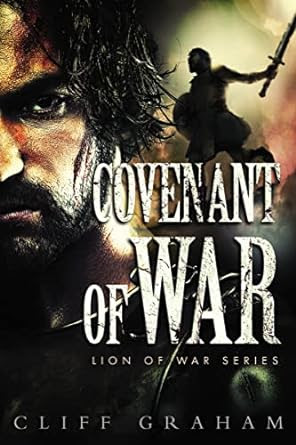
Covenant of War (Lion of War Series #2) by Cliff Graham


Published by Zondervan in March of 2012
348 pages.

There have been plenty of historical fiction books written about ancient wars as of late. Stephen Pressfield's Gates of Fire about the Battle of Thermopylae  or Conn Iggulden's Emperor Series about Julius Caesar come to mind. Bible-based historical fiction about war is pretty rare, however. Cliff Graham has chosen to write about the Old Testament's most complicated and best-documented warrior, David in the Lion of War Series.

In Covenant of War, David has just become King of Israel after the deaths of Saul and Jonathan. The kingdom is still quite torn and David's control of some areas is in name only. While he is still consolidating his power, the Philistines invade, yet again.


Graham has written the book based on the warriors described in 2 Samuel 23 and 1 Chronicles 11. The texts are hardly true histories in the sense that they tell a complete story and there is a lot of detail to fill in to make a full-fledged novel out of the material provided. Graham has done a solid job of providing a coherent story. The story focuses on the thirty leaders mentioned in the text, especially the three mentioned as "David's mighty warriors" is 2 Samuel 23:8. There is intrigue aplenty as David defends his people from the Philistines.

Graham fleshes out those warriors pretty well, but David is pictured as an erratic, capricious ruler throughout the book. I never got a feel for David throughout the book. It made the whole book seem rather difficult to read because the motivations of David are hidden. The battle scenes, however, are quite vivid (and bloody).

I rate this book 3 stars out of 5.

This book can be found on Amazon.com here: Covenant of War.

Reviewed on June 4, 2012

Featured Post

<b><i>BAN THIS BOOK (audiobook)</i></b> by Alan Gratz

Published in 2017 by Blackstone Audio, Inc. Read by Bahni Turpin. Duration: 5 hours, 17 minutes. Unabridged. My Synopsis Ban This Book is t...

Popular posts over the last 7 days