The Human Blend: The Tipping Point Trilogy, Book One (audiobook) by Alan Dean Foster


Lackluster characters hurt a very interesting premise


Read by David Colacci
Published by Tantor Media, November 2010.
Duration: 9 hours, 56 minutes,
Unabridged.

Ultra-prolific author Alan Dean Foster introduces yet another series with The Human Blend, the first installment of a trilogy set in a relatively near-future Savannah, Georgia.

In this interesting new world the direst predictions about global warming have come true. America’s southern states have become near-tropical. Flooding ocean waters have buried coastal cities, forced them to move onto stilts or have caused cities to move inland. Much of Florida is underwater, the Everglades have swallowed the rest.

Political changes have swept the world as well. The United States is now part of a larger country called Namerica. Several countries in Asia are equal to, if not more important than Namerica. The moon, Mars and Jupiter’s moon Titan have been colonized as well.

Alan Dean Foster
But, the most important changes are the changes to the individual. In this future world, plastic surgery has become relatively cheap, easy and almost entirely safe. Called “melding”, new technologies have allowed millions upon millions of clients to “gengineer” themselves in an amazing number of ways. They can add animal tissue and literally grow feathers, gills, become amphibians, or fly. Clients can become exact duplicates of movie stars, athletes or anything else they can dream up. Do you want extra arms, eyes in the back of your head, or robotic hands with interchangeable parts? No problem. Want something a little more dangerous? Back alley gengineering clinics offer more dangerous options such as hidden weapons.

Alan Dean Foster introduces us to this strange new world through a meld named Whispr – a street thug who has had radical gengineering to make him hyperthin. Whispr and his accomplice Jiminy are working the streets of Savannah with a weapon that turns off pacemakers so that they may loot the dead bodies of their victims. They have just removed an exquisite hand from the body of their latest victim in hopes of selling it to a back alley clinic when they find an electronic storage device, a futuristic flash drive that is made of an unknown metal but is literally as thin and as flexible as a thread.

As Whispr and his various companions travel through the underworld trying to identify this thread and perhaps even download the information on it, they become the targets of police, hitmen and the bodies start to pile up in a hurry.

David Colacci, narrator
The narrator, David Colacci, does a fantastic job of creating a number of distinct character voices and accents ranging from Asian to Creole to Eastern European to southern redneck to South American Spanish. However, even the considerable talents of Colacci could not save the book from an inexplicable attack of wordiness for wordiness’ sake. Alan Dean Foster demonstrates in the book that he can be a master of the language with truly brilliant riffs of alliteration, simile and witty bits of conversation that make the listener smile at his cleverness. But, like a drum solo at a rock concert, a little bit of this goes a long way. Keep it up too long and the fans step out and look for popcorn. I found my attention wandering as a character named Wizzwang let loose with one cutesie, sex-crazed, pseudointellectual verbal barrage after another in the last hour or so of this audiobook. It seemed like Foster was trying to stretch the story out rather than cover new territory.

Another problem with the book is that there is really no one to root for. Whispr is not really likable – he kills people just to loot their bodies. His friends are no better. They are not lovable rogues, like Johnny Depp’s Captain Jack Sparrow. Rather, they are just criminals with bland but talkative personalities. There is the mystery of the threat data storage device, but this is not enough to compel the reader to carry on.

Fortunately, I found the world created by Alan Dean Foster to be quite interesting and I especially enjoyed the descriptions of the food dispensers, the new climates created by global warming and the effects of gengineering on society. As this installment ends, Whispr and his accomplice (a beautiful “natural” doctor who specializes in creating high-quality melds) are heading off to Africa to try to discover more about this “thread” and discover why everyone wants it so badly. I find myself wondering what new things I will learn about this distinctive vision of the future in the next installment.

I rate this book 4 stars out of 5.

This book can be found on Amazon.com here: The Human Blend.

Reviewed January 22, 2011.

First Blood by David Morrell


Decent, but not Morrell's best work


Originally published in 1972.

The copy I have of First Blood includes an interesting forward by the author in which he discusses the Rambo phenomenon that swept the world after the Stallone movies were made. That forward was written several years ago and the Rambo legacy continues today. Just last night I saw a commercial for a Nicholas Cage movie that mentions Rambo twice.

Anyway, this is Morrell's first novel and it is not bad. Morrell tries to work in several serious themes and tries to make it a piece of really violent literature rather than settle for just a bit of escapism. In fact, this novel was used for several college and high school classes as a novel to discuss until the Rambo movie phenomenon overwhelmed the books.

Even though this was regarded highly enough by some instructors to be used in the classroom, I think that it missed the mark a bit too much - the rivalry between Rambo and the sheriff was a bit too contrived and the Special Forces officer sent to help with Rambo never really worked well for me. He was too aloof, too uncommitted to his soldier (Rambo) or to the people he was sent to protect.
David Morrell


As an action thriller this book seemed overblown - it reminded me, ironically, of the Rambo II movie (Morrell discounts Rambo II and Rambo III because he had little say in the screenplays. He wrote the novelizations in an attempt to salvage a bit of the flavor of his original character) - too over the top. Just too much.

I rarely say this, but now I have said it in two of my last three reviews - the movie is better than the book. The motivations of the Rambo character are more defined (even though the sheriff and deputies are reduced to stereotypes of redneck country cops) and, ironically, the action in the blockbuster Hollywood action flick is more believable than in the book.

I rate this book 3 stars out of 5.

This book can be found on Amazon.com here: First Blood

The Princess Bride: S. Morgenstern's Classic Tale of True Love and High Adventure by William Goldman


Great book, great movie, great story no matter the format!

Originally published in 1973.

The author, 
William Goldman
I wasn't even aware that The Princess Bride: S. Morgenstern's Classic Tale of True Love and High Adventure was even a book until I was looking through the special features on my DVD and they were speaking of the difficulties they had bringing the book to the big screen. Once I found out about the book I just had to get it!

So, is it better than the movie?

While I certainly enjoyed the background information on Fezzik and Inigo, this is one of the first books that I can honestly say is better as a movie. Notice, that I have given this book 5 stars, so we are distinguishing between very good and very, very good here. Still, the movie is a further abridgment of S. Morgenstern's classic tale (wink, wink) that makes the story even stronger.


My edition had a wonderful new introduction the recounted some of the struggles and joys in making the movie and includes the first chapter of the long-lost 'sequel' entitled 'Buttercup's Baby.' Both are worth your time.

I rate this book 5 stars out of 5.

This book can be found on Amazon.com here: The Princess Bride: S. Morgenstern's Classic Tale of True Love and High Adventure by William Goldman.

Crisis on Centaurus (Star Trek) by Brad Ferguson


A pleasant enough read but at times it was just 'off'


Published in 1986 by Pocket Books.

The premise of Crisis on Centaurus is that the colony Centaurus is bombed by a terrorist group and approximately 1 million victims die. The planetary government is in a shambles and the Enterprise is dispatched to aid in whatever way possible. However, Enterprise is having a series of computer failures and is not up to full capacity so things get tricky for Kirk and the crew.

Ferguson has written an adequate Star Trek novel - his main characters are written very solidly, but his supporting characters are rather like cardboard cutouts. The women weep and the men clench their teeth and pound their fists in anger at the news of the terrorist attack.

Having the benefit of hindsight in regards to the 9/11 attacks, I found the behavior of many of the characters to have been implausible at best, including doctors taking time away from the thousands of refugee patients to tour the Enterprise and especially the Mardi Gras-type partying that was going on in the new capitol city just a few days after a million people were killed in the planet's old capitol city. Remembering the somber mood of the country after 9/11 that went on for weeks with only a few thousand deaths, I found it to have been a jarring, hard to believe part of the story.

The first half of the story was really much, much better than the contrived second half. It is the first half that pulls it up to the third star and makes this a book that I recommend, albeit weakly.

I rate this book 3 stars out of 5.

This book can be found on Amazon.com here: Crisis on Centaurus by Brad Ferguson.

Reviewed on August 12, 2005.

A Return to Common Sense: Seven Bold Ways to Revitalize Democracy by Michael Waldman


Some good thoughts but...


Published in 2008 by Sourcebooks Inc.

Written by a former speech writer for President Bill Clinton, A Return to Common Sense Seven Bold Ways to Revitalize Democracy features a series of suggestions for how to improve democracy in America. His seven suggestions are:

1. End Voter Registration as We Know It.

2. Rocking the Vote. (issues such as voter ID, changing election day, changing the primary system)

3. Stop Political Hacking. (use electronic voting machines but with scan-tron type backups)

4. Campaign Finance Reform (public financing based on the NYC model)

5. Gerrymandering (stop the creation of "safe" districts for both Democrats and Republicans)

6. Flunk the Electoral College (recommends not changing the Constitution but rather going around it at a state level)

7. Restore Checks and Balances (more Congressional oversight of the Executive branch)


I have no problem with many of these suggestions but Waldman is a bit simplistic in some of his recommendations. For example, he suggests a national voter registration system but has no plans for how local election officials should deal with local registrations.

He bemoans the fact that fundraising is so important to the modern Congress and the election system that demands an endless supply of funds. He also is bothered that Congress does not do enough to oversee the Executive Branch (with some justification, in my opinion) but on page 128 belittles the efforts of Congress to investigate the Clinton Administration's use of White House Christmas Cards to fundraise. Huh, you'd think he'd be all for oversight and limiting fundraising...
Michael Waldman


Interestingly, he is very excited about Congressional oversight over the Executive and never worried about the growing power of the court system in "creating " law.

His recommendations on changing the election day, the way we create Congressional districts, having paper backups for electronic elections, campaign finance reform and increasing Congressional oversight have value. On the other hand, his suggestions for the other problems are, quite often, silly and should be dismissed out of hand.

I rate this book 3 stars out of 5. A good place to start the discussion, but not the end. It can be found on Amazon.com here: A Return to Common Sense: Seven Bold Ways to Revitalize Democracy by Michael Waldman.

Reviewed on May 17, 2009.

Gates of Fire: An Epic Novel of the Battle of Thermopylae by Steven Pressfield


Published in 2005 by Bantam.

First and foremost - Gates of Fire is a top-notch bit of writing. It is one of the better books that I have read and is a fantastic example of the value of historical fiction. Pressfield takes the Spartans and makes them real. He takes their struggle for independence against a world-shaking power and makes it not just an academic enterprise, but something the reader becomes invested in. He takes these names from history and makes them flesh and blood for the reader. Is that the way they really were? No. Most likely not. But, no history book can do that definitively either.

This is Steven Pressfield's most popular book for a reason. He makes the Spartans and the battle between the 300 Spartans (and a few hundred other semi-professional Greek soldiers) against the Persians at the Battle of Thermopylae come to life. This battle was most recently featured in the cartoonish (but still great) movie 300, which is not based on this book but, of course, shares many of the same characters and themes.

Steven Pressfield
Pressfield drags you into the story and makes you feel like you are there - in an ancient battle - in the maelstrom of death and destruction and blood and confusion. Pressfield takes a spare skeleton of a story passed down to us in our modern age and makes it do more than just come alive - you almost feel like you were there and that you know these characters personally. That is a true gift.

I have but one quibble - the map in the front of the book is a big help, but it would have been better if it had been more detailed. I wish that it would have included all of the city-states mentioned in the book as well as have included the roads that the main characters (and the armies) take multiple times.

This book can be found on Amazon.com here: Gates of Fire: An Epic Novel of the Battle of Thermopylae

I rate this book 5 stars out of 5.


The Middle East: A Brief History of the Last 2,000 years by Bernard Lewis


2000 years in 387 pages - A great effort but somewhat unsatisfying.

Published in 1997.

Don't get me wrong - I am came to The Middle East: A Brief History of the Last 2,000 Years as a true fan of Bernard Lewis. His book The Crisis of Islam: Holy War and Unholy Terror was one of the more thought-provoking books I read last year. However, this book is quite different than 'Crisis'. It's scope is massive, and it is a history book rather than a work of examination and informed conjecture.

Lewis addresses these shortcomings in his introduction and admits that it will be a difficult undertaking to do it well. He acknowledges that whatever format he chooses to cover this history, it will be unsatisfying for some. I give him credit for doing it well, but not as great as the other books and articles of his that I've read.

Bernard Lewis
The book is broken up into three general sections. The first is a general overview of the Middle East over the last 2,000 years. It is a bit overwhelming and frustrating. Overwhelming because the empires, dynasties and civilizations rise and fall so quickly that I felt like I was watching a time-elapsed movie. It was frustrating because there were some new areas (for me) that I really wished he would explore, such as the link between the Persians and the Jews of the Roman Era. I was also intrigued by the Coptic Christians, but learned little more than I already knew. Lewis is fairly skimpy with the life of Mohammed and the early spread of Islam as well. I give this section 3 stars.

The second section is called 'Cross sections' and it deals with specific topics throughout the 2,000 years of history, such as the military or agriculture. I give this section 4 stars.

The last section goes into the struggles the Middle East has experienced since Europe and the West have become such a vital part of the world since the European Renaissance. This is Lewis' strongest area and by far the most interesting to read. I give this section 5 stars.

So, the average of the 3 sections is 4 stars - my final score for this book.

This book can be found on Amazon.com here: The Middle East: A Brief History of the Last 2,000 Years.

Reviewed on August 2, 2005. 

How to Break a Terrorist: The U.S. Interrogators Who Used Brains, Not Brutality, to Take Down the Deadliest Man in Iraq by Matthew Alexander


A fascinating read

Published in 2008 by Free Press.

How to Break a Terrorist: The U.S. Interrogators Who Used Brains, Not Brutality, to Take Down the Deadliest Man in Iraq is a fascinating must-read for anyone who is interested in the war on terror. I was handed this book by a friend and I assumed it was going to be a typical anti-war screed that demands that terrorists be "understood" and coddled.

There is also little fear of coddling with Alexander. He is repulsed and haunted by the senseless butchery that went on in Iraq and was sickened by those that were willing to kill innocents with suicide bombings. Alexander's techniques only prove that his eyes were strictly on the goal - stop Zarqawi.

Alexander's techniques are hardly "touchy-feely" - in a way they are a form of psychological trickery. He fools his interview targets into giving him the information he wants and then exploits their trust. It is also the type of technique that any regular viewer of TV detective shows see every day.

Matthew Alexander
The methods Alexander espouses only make sense to me, a veteran teacher. It is easier to get cooperation from someone that you can create a sense of rapport with, even if it is only temporary.

Anyway, the book reads like a suspense novel. It is a quick and intense read and absolutely riveting and informative.

Well done. Highly recommended.

I rate this book 5 stars out of 5. It can be found on Amazon.com here: How to Break a Terrorist: The U.S. Interrogators Who Used Brains, Not Brutality, to Take Down the Deadliest Man in Iraq by Matthew Alexander.

Reviewed on May 18, 2009.

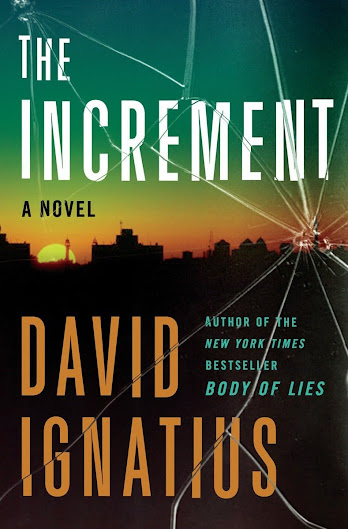
The Increment: A Novel by David Ignatius


It started out so strong but...


Published in 2009.

The Increment started out so strong, the characters were so strong, the plot was crisp and the whole thing just felt right.

The plot centers around two characters. One is an Iranian nuclear scientist that is disillusioned with the Iranian regime. The other character is a veteran CIA chief - the head of the Iranian desk.

Like I said, the book starts out very strong. I was intrigued by the characters, the situation and the back story of the two main characters.

By the end of the first page I was convinced I was reading a 5 star book.

But, the characters started to change. They started acting differently. For example, the head of the CIA is a retired Admiral. He comes off as a principled, with-it kind of leader who is just out of his element when he's not commanding a ship. Fine. Later on, he has multiple scenes in which he just plays with toy ships rather than making decisions. He goes from being a leader to being a little boy. Other characters make similar shifts.

So, for the 2nd 100 pages I had determined that this was probably a 4 star book. Good, but not great.

Throw in the goofy technology (you cannot realistically power an electronic device through radio waves, folks, if we could your cell phone would never run out of power. This book has a device being powered by a hand held device hidden under a robe beaming signals through the walls of a hardened nuclear facility - fun stuff but more sci-fi than reality), the satellite system that literally takes dozens of photos of ALL of Iran, including dumpy little towns that aren't even on the map (we photograph every square inch all day long and we don't know what's going on?), and the skimpy treatment of the special unit that the book is named after and...

well, the book degenerated to a 3 star piece of pulp fiction. Nothing special. It's a good airplane ride read. It can be found on Amazon.com here: The Increment: A Novel by David Ignatius.

Reviewed on May 20, 2009.

1601 Conversation as it was by the Social Fireside in the Time of the Tudors (kindle) by Mark Twain


The commentary is actually more interesting than the story


Originally published anonymously in 1880.

Literary critic Edward Wagenknecht called 1601 "the most famous piece of pornography in American literature."


Just to be clear, it's not really pornography, at least not by modern standards. Rather, it's a short story featuring Queen Elizabeth I, Ben Jonson, Beaumont, Shakespeare, the Duchess of Bilgewater, Sir Walter Raleigh, and a few other people all in a closet talking about passing gas and sex.

Sound strange?

Well, it is. And - it's only so-so funny.

Mark Twain (1835-1910)
3/4 of my edition was a fairly interesting commentary on the history of the story and about the characters. We learn that Twain wrote this as a diversion after the publication of Tom Sawyer (while he was working on Huckleberry Finn) during a time of writer's block. Twain showed it to some friends who published a few copies and then it snowballed. Twain's 1601 went "viral" before there was an internet, apparently.


I rate this kindle short story 3 stars out of 5. It can be found on Amazon.com here: 1601 Conversation as it was by the Social Fireside in the Time of the Tudors.

Reviewed on May 20, 2009.

The House of the Scorpion (audiobook) by Nancy Farmer


Recommended for middle schoolers through adults 

 
National Book Award, Young People's Literature, 2002.

Published in 2002.

Limiting The House of the Scorpion to a young adult audience is a disservice to the book and to the themes it brings up. This would be a fantastic book for an adult discussion group - there are so many themes and controversial topics that a group could discuss for hours and hours.


That being said, I nearly quit listening to this audiobook after the first hour. It was sooooo slow to get started. On top of that, it was often dark and opressive. However, after the character Tam Lin comes in to the story the whole book changes and you would have had to fight me to get me to give the book up. By the time the end came around I felt like I had lived a life with Mateo and was thoroughly satisfied.

So, what kind of themes are there? Well, this book, in my opinion, points out the dangers that many of the more Conservative thinkers warn us about with our current policies towards bio-technology and, to a lesser extent, immigration.

Nancy Farmer
The future, as portrayed in The House of the Scorpion is often a dark place with clones created solely to provide body parts for their originals and "eejits" - people with computer chips inserted into their brains to make them completely docile and the perfect slaves who will literally do the task they're assigned to do until they are told to stop (or die). The United States is no longer the world's only superpower and there is a new country between Mexico (now called Aztlan) and the USA. It is called "Opium". Opium serves as a buffer between Aztlan and the U.S. that is run by a cartel of drug lords with drug plantations worked by eejits, most of whom are illegal aliens from the U.S. or Mexico who were captured and enslaved (the parallels with the American underground labor force comprised of illegal immigrants can be easily made).


Aztlan has become a country obsessed by economic success and the duty to the larger society as a whole. The goal there seems to be the bee hive - all workers know their place and sacrifice for the good of the society. The mantra is the "5 principles of Good Citizenship" and the "4 Attitudes Leading to Right-Mindfulness." The success of the state is paramount over the interests of any individual.

Grand themes run throughout the book such as:

-What does it mean to be human?

-Who is accorded human rights?

-What are the limits of cloning? Do we clone people just to use them for parts? Do we clone fetuses just to use their parts (as happens in the book)?

-The rights of the individual vs. the demands of the state? Where are the boundaries or should there be any? Is the individual entirely free? Can the state demand everything of the individual? Is there a difference between an eejit and an Aztlanian worker bee?

The audiobook lasts 12.5 hours and is read brilliantly by Robert Ramirez (NOTE: There are other audiobook versions out there with different readers). I'm glad I stuck through the initial slow parts - I was thoroughly rewarded.

I rate this book 5 stars out of 5.

This audiobook can be found on Amazon.com here: The House of the Scorpion

Reviewed May 21, 2009.

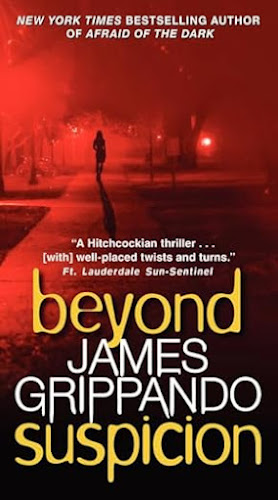
Beyond Suspicion (Jack Swyteck #2) by James Grippando


Published in 2002.

Beyond Suspicion is a quick-moving book and is a sequel to Grippando's first published novel 'The Pardon'. I read 'The Pardon' many years ago, but reading the first book is not a necessary requirement - Grippando sets the stage very well in this book so it can be a 'stand alone' novel.

I shot through this book very quickly - the plot drags you in pretty well and Grippando's writing style keeps the book moving along at a quick pace. The main character is fairly average and his world is suddenly turned upside down by one case and its connections to the underworld. Murder, mayhem and one family crisis after another keep it interesting. Grippando fills this novel with a multitude on interesting characters, any one of which would be strong enough to be the main character in a book.

A good solid read - a great summertime novel.

This book can be found on Amazon.com here: Beyond Suspicion.

I rate this book 4 stars out of 5.

Reviewed on July 25, 2005.

The Man Who Met the Train: A Carl Wilcox Mystery by Harold Adams


So, what is a 'rawboned' mystery?


Published in 1988 by Mysterious Press.

My copy of  The Man Who Met the Train had a snippet from a review from the Chicago Sun-Times in which they said it was a 'rawboned' mystery. I was intrigued by that characterization and can now report to you what that means.

It means that this mystery is sparsely written - no extravagant detail and most conversations aren't even fully fleshed out. It's a quick and dirty read about some quick and dirty crimes set in two small towns in Depression-era South Dakota. In style and setting it reminded me of a western. The hero, Carl Wilcox, comes upon a wrecked car. Inside are four dead adults and one survivor - a little girl.

Wilcox is eventually hired on by local bigwigs to investigate the circumstances of the crime, seeing as how he has previous experience as a police officer. Wilcox starts to pull at the loose threads of this crime and starts to discover that some very prominent local names are being implicated in these murders and other crimes.
Harold Adams

The most interesting aspect of the story is the budding personal life of Wilcox. One of the local ladies enjoys serious flirtation with him and the little girl he saved from the wreck who trusts no one but him. It is enjoyable to follow along with Wilcox's discomfort and awkwardness in dealing with this traumatized little girl. He has obviously been a loner for a while and suddenly he is looking at the prospect of a family and dealing with having to sing little kid sings in the car and telling stories before bed time.

This is a solid little read. Now I'll be on the lookout for other books labeled 'rawboned'.

I rate this book 4 stars out of 5.

This book can be found on Amazon.com here: Man Who Met the Train: A Carl Wilcox Mystery

Reviewed on July 21, 2005.

The Jury by Steve Martini


A great legal thriller

Published in 2001.

The oddly titled The Jury (it's not about the jury at all - they are barely mentioned) is a sharp, tight legal thriller that hums right along until the neat little twist at the end.

Paul Madriani and his law partner Harry Hinds have are defending a murder suspect, a genetic researcher named David Crone. The book joins the trial already in progress. Madriani and Hinds have one big problem, though. The unflappable Crone keeps so many secrets - trade secrets, research secrets and vital information that he just didn't think was important enough to mention to his attorneys that they don't really know where they stand in any of this.

Throw in a family friend with a genetic disorder that may be cured by Crone's research, you get a solid mixture of urgency, ambiguity and frustration that kept me glued until the end.

I rate this book 4 stars out of 5.

This book is found on Amazon.com here: The Jury by Steve Martini.

Reviewed on February 8, 2011.

A Place Called Freedom by Ken Follett


An informative historical adventure

Originally published in 1995.

Follett's A Place Called Freedom was one of the most requested books when I worked at a now-defunct used book store many many years ago. I finally got around to reading it and I can see why it was in such demand.

Follett introduces the reader to the turbulent politics on 1760s England, Scotland and America. He throws in a liberal dose of romance and the reader will be reminded of the Tom Cruise / Nicole Kidman epic movie Far and Away. There are plenty of similarities - both feature poor, rural heroes who fall in love with the landlord's spunky daughter. Nevertheless, it's a great read and unique enough to stand up in its own right.

I recommend it to anyone who is interested in a view of England's politics and turmoil on the eve of the American Revolution - it puts America's arguments for revolution in a clearer context - it even strengthens them. On top of that, the book is a great read.

I rate this book 5 stars out of 5.

This book can be found on Amazon.com here: A Place Called Freedom


Reviewed on July 16, 2005.

I Heard the Owl Call My Name by Margaret Craven


A wonderful book - it creates a world for the reader and at the end you are sad to leave it.

Originally published in 1967.

For me, when I read an absolutely excellent novel, I have a hard time getting into another one - you end up rejecting the new one because it's not as good as the last one. This is one of those novels for me. So, I guess I'll be cleansing the reading palate with a few magazines.

I first read I Heard the Owl Call My Name when I was 14 or 15 years old. I haven't thought about it for years until I came across it at a book sale and picked it up on a whim. I approached re-reading it with some trepidation - I was afraid that it would not be as good as I remembered and I would be disappointed.

Well, it wasn't as good as I remembered - it's much better! Age and experience make you appreciate some things more, I suppose.

I shot through I Heard the Owl Call My Name in less than 24 hours - a new record for this slow and steady reader. Granted, it's a short novel (my copy was 159 pages), but it pulls you in an you want to learn more about this native American village and the young vicar sent to minister to them. I teach high school and I have a small library of books in my classroom. From time to time, I am asked by students to recommend a book and this one will shoot up to the top of my list with Of Mice and Men.

I rate this book 5 stars out of 5.

This book can be found on Amazon.com here: I Heard the Owl Call My Name.

Reviewed on June 30, 2005.

Killing Time by Caleb Carr


Considering the reputation of this author, I was quite disappointed


Originally published in 2000.

In order to start with positive thoughts - What does Carr do right with Killing Time?

1. His vision of the future, published in the year 2000 about the year 2023, does correctly predict that Afghanistan would be a hotspot for the American military due to a fanatical, independently wealthy, international Muslim terrorist.

2. He predicted that the U.S. would become involved with Saddam Hussein in Iraq over WMDs. (Ironically, in this book, Saddam tries to nuke France in 2006)

3. Carr does an interesting thing by writing a sci-fi book that sounds Victorian.

4. His beginning themes of capitalism gone amuck are interesting, despite their misguided nature.

What does he do wrong?

1. There is little or no character development. Even our main character is minimally fleshed out. He joins a group of anti-information age terrorists with little or no qualms, despite the fact that he knows nothing about them, he's confused by their cause. We learn little about these people except that they know everything about him - and they don't share any of their information with the reader.

2. This team of people is like the supersmart Justice League - they all have wonderful skills and abilities that complement one another - but we know precious little about them or their motivations. Plus, the only skill exhibited by one of these 'super friends' just seems to be that he can cook gourmet meals in a hurry.

3. They have a super airplane/submarine that can make itself invisible. It is nearly untouchable and is practically unbeatable. Also, it gets real boring after a while. There's no challenge that they cannot overcome since they always have their super ship.

4. This book would have been much, much, much more interesting if Carr would have expanded on each of these 'superfriends' and explained their motivations. Carr could have let us see this world through all of their eyes and made it more interesting than the straight-ahead approach he often uses. Carr only approaches this with two characters - what about the rest?

So, if I were giving it a grade, I'd give it a solid 'D' - weak character development and presence of the 'super ship' are offset by initial interesting themes and visions of the future. If Carr were a student in my class, I'd send him back to do a lot of revising.

I rate this book 2 stars out of 5.

This book can be found on Amazon.com here: Killing Time.

Reviewed on June 29, 2005.

The Mother Tongue: English and How It Got That Way by Bill Bryson


I was so thrilled with this book - at least I was at first...


Originally published in 1990.

I borrowed The Mother Tongue from my mom - I picked it up off of the shelf and after reading the first 3 or 4 pages I knew that I had to finish it. So, I borrowed the book and was happy with it and its light and humorous telling of the long and occasionally tortured history of the English language.

But...

the mistakes and problems started to pile up. Bryson illustrates a lot of his points by showing the reader how other languages had similar developments. Most often he uses French and German, which is appropriate considering their close ties to English. On occasion, though, he uses Spanish, which is something that I am sensitive to since I teach Spanish. Mr. Bryson's assertions about Spanish accents and pronunciation were wrong more often than right. Too bad Mr. Bryson did not have a Spanish speaker actually pronounce a few of the words for him so he could see that his points were flawed from their inception. It called into question the rest of his pronouncements.

Bill Bryson. Photo by Wes Washington.
To make it worse, this normally breezy, fun book gets seriously bogged down about halfway through - but it does pick up rather nicely - only to get mired down again at the very end with a seemingly endless discussion of palindromes and crossword puzzles.


I do recommend the book - with reservations. There are lots of wonderful things to be read in it - just bring along your grain of salt, and occasionally your ability to skim!

I rate this book 3 stars out of 5.

This book can be found on Amazon.com here: The Mother Tongue: English and How It Got That Way.

Reviewed June 26, 2005.

What's So Great About America by Dinesh D'Souza


Fantastic!


Originally published in 2002.

D'Souza starts Whats So Great About America with a thorough indictment of America. In a 30 page chapter entitled "Why They Hate Us" he honestly and thoroughly lays out all of the arguments about why America is reviled by so many. By the end of the chapter the reader begins to wonder if there really is anything so great about America.

The balance of the book is spent answering every charge leveled in the first chapter. I have rarely read a book on contemporary politics in which I agree so thoroughly with his analyses. I may be just a high school history teacher but I do a lot of thinking about history and a lot of reading. The big ideas such as those of Locke, Rousseau and Jefferson fascinate me and I like to think about what their philosophies mean for us if implemented in the real world.

D'Souza's comments on the West being an inheritance from both Athens and Jerusalem (pp. 60-61) closely mirror a conclusion I came to myself one day when discussing Ancient Greece with a class. I guess that makes the Book of Acts the actual document that founds the West...hmmm.
Dinesh D'Souza


I loved this quote from a friend of D'Souza that wanted to immigrate to the United States from India very badly: "I really want to live in a country where the poor people are fat." (p. 77)

D'Souza's analysis of Lincoln, slavery and the rigmarole that he went through to finally get rid of it is so brilliant that I will refer to it next time I teach it in history class. (pp. 116-8)

At no point does D'Souza deny that America needs improvement. He does not claim it is a finished product. But, he does assert that for all of its warts and imperfections it is, as Lincoln put it, "the last, best hope of Man on Earth."

The book is a bit dated, even though it is only 7 years old. The War in Iraq, the election of Barak Obama and other events came to mind as I read the book. I hope that D'Souza offers a revision with additional commentary. Perhaps discussion pages at the end, too? It comes to mind because my edition is from Penguin Books and they do that with many books.

I rate this book 5 stars out of 5.

This book can be found on Amazon.com here: What's So Great about America.

Reviewed on May 23, 2009.

Note: I wrote this review nearly 14 years ago. Back then, I respected D'Souza and his opinions. A lot has happened since then. The rise of the Age of Trump has changed things. Maybe the shock of Trump made the scales fall from my eyes. Maybe Trump's success compelled otherwise restrained people to advocate a number of things that I disagree with. Maybe they always were that way and the Age of Trump freed them. Either way, I cannot say that I support this man any longer. I don't know what I would rate the book nowadays, but back then it was a 5 star read for me, so it maintains that rating.

Featured Post

<b><i>BAN THIS BOOK (audiobook)</i></b> by Alan Gratz

Published in 2017 by Blackstone Audio, Inc. Read by Bahni Turpin. Duration: 5 hours, 17 minutes. Unabridged. My Synopsis Ban This Book is t...

Popular posts over the last 7 days