CAR TALK SCIENCE: MIT WANTS ITS DIPLOMAS BACK by Tom Magliozzi and Ray Magliozzi


For years a staple on the weekend schedule of every NPR station was "Car Talk", a call-in show featuring brothers Tom and Ray Magliozzi. These guys were experts in practical car maintenance and repair, they could talk all day long and they clearly enjoyed each other's company. The show was entertaining and informative. The last new show was broadcast in 2012.

Neither of these brothers was a professional mechanic, but they operated a "bring your own parts and fix it yourself" car shop in Cambridge, Massachusetts and picked up a thing or two along the way. They also both have degrees from the Massachusetts Institute of Technology (M.I.T.), also located in Cambridge. 

They used to receive calls that covered all sorts of car-related topics. Most were straight up car questions, but some were different. In this case, these are more science-related. Some are kind of duds, like the rather long conversation about Boy Scout pinewood derby cars. I did enjoy the conversation about creating an aerodynamic spoiler for mattresses being hauled on top of cars. For me the best conversation was a debate about whether it is better to take the shorter route over a big hill in the family car to go visit a nearby relative or if it is better to take a longer route around the hill and stay on flat land.

This was a so-so collection since I can only remember two segments that I liked. The rest were just so-so or best left in the studio archives.

I rate this collection 3 stars out of 5. It can be found on Amazon.com here:

THE BROKEN CONSTITUTION: LINCOLN, SLAVERY, and the REFOUNDING of AMERICA (audiobook) by Noah Feldman


Published in 2021 by Macmillan Audio.
Read by the author, Noah Feldman.
Duration: 11 hours, 14 minutes.
Unabridged.


In The Broken Constitution Feldman argues that the Constitution as it was known to Congressman Abraham Lincoln (he served in the Congress from 1847-1849) was already a broken Constitution and maybe had been broken since it had been ratified in 1788. What caused this break? No real surprise - slavery.

Abraham Lincoln (1809-1865)
Feldman details the compromises that had been in place to induce the Southern states to join a stronger Federal union and how those compromises were re-hashed in the decades that followed in acts like the Missouri Compromise (1820), the Nullification Crisis (1832-33) and the Compromise of 1850. The Dred Scott decision by the Supreme Court in 1857 only heightened tensions between the slave states and the rest of the union. Feldman's point is that if the Constitution were not already broken, these crises wouldn't have been so dramatic and wouldn't have actually have been crises.

When the Confederate states start seceding after Lincoln's 1860 Presidential election, it was really a continuation of the ongoing series of crises. Feldman details all of those crises and also tells how Lincoln's rising political career was affected by them. 

Feldman then details how Lincoln often broke the rules of the Constitution in the name of restoring U.S. Constitutional government to the Confederate states. Lincoln's political evolution during the war paved the way for the 13th, 14th and 15th amendments. The 14th Amendment (1868) in particular changed the relationship between the Federal government and the citizens of the United States and made the Federal government the ultimate guarantor of Civil Rights.

This is not a book for readers who are not already very aware of the issues that created all of the crises I mentioned above and eventually caused the Civil War. Feldman spends almost no time talking about the fighting in the war. He assumes the reader knows all about them and can follow along without anything more than a reminder.

I rate this book 4 stars out of 5. It was an interesting take.

This book can be found on Amazon.com here:  THE BROKEN CONSTITUTION: LINCOLN, SLAVERY, and the REFOUNDING of AMERICA by Noah Feldman.

WOLF PACK (Joe Pickett #19)(audiobook) by C.J. Box


Read by David Chandler.
Duration: 9 hours, 51 minutes.
Unabridged.


Synopsis:

Wyoming game warden Joe Pickett is back on the job and glad to be doing the mundane work of a game warden once again.

The game warden in the district next to his reaches out and tells him about a fancy drone she has spotted. The drone is being used to drive winter-weakened deer and elk into groups and then panic them into stampedes, killing and maiming several of them. Of course, this is a violation of Wyoming law.

But, when they go to track down the owner, they find that they are stymied everywhere they look. Once they find the owner, it turns out that they wish they hadn't found what they are looking for...

Review:

This is a pretty engrossing thriller with lots of action.

But...

Huge chunks of this book is told from the perspective of characters that are guests in this series. I don't know exactly what percentage, but it felt like Joe Pickett was mostly a guest in book number 19 in the Joe Pickett series. There was not a lot of game wardens doing game warden things because the series has largely moved away from that and, in my opinion, that is simply a shame.

Don't get me wrong, I enjoy Joe and his family and his friend Nate very much and I was happy to go along for another ride with them in this book. However, this was a good book, but not a great one because it moves away from Joe Pickett and becomes a thriller that could've have been adapted into any police series without a lot of thought. 

I rate this 4 stars out of 5 because it is a good thriller, but I am disappointed.

This book can be found on Amazon.com here: WOLF PACK (Joe Pickett #19) by C.J. Box.

THE MYTH of the LOST CAUSE: WHY the SOUTH FOUGHT the CIVIL WAR and WHY the NORTH WON by Edward Bonekemper III


Published in 2105 by Regnery History.

Edward Bonekemper (1942-2017) was a lawyer by day and historian in his spare time. He worked for the federal government in a couple of regulatory departments. Imagine an attorney coming into a conference room and telling you that you have regulatory issues and then proceeding to lay down one document after another after another that proves it until you have a pile of papers covering your table.

Bonekemper brings that tenacity to his history books as well. He often comes with a point to prove and he brings tons of proof.

In this case, he goes after "The Lost Cause". What is The Lost Cause? It was (and still is) an apologist movement for the Confederacy that says that slavery was not a primary cause of the war and, besides that, slavery was not that bad. Robert E. Lee was the best general of the war (maybe American history) and his personal honor was unimpeachable and his only fault was that the trusted men like his subordinate General James Longstreet who betrayed him at the Battle of Gettysburg. Grant was a butcher who simply used brute force, superior numbers and more supplies to complete the task of overwhelming the brave defenders of the Confederacy who were clearly the more superior soldiers. Throw into this mix the myth that literally thousands of African Americans joined the Confederate army, formed units and actively participated in combat in great numbers. 
Ulysses S. Grant (1822-1885)
and Robert E. Lee (1807-1870)

Bonekemper is devastatingly thorough in his arguments. He argues quite convincingly that Grant was the most brilliant general of the war. To be fair to Grant's reputation, it should be remembered that there were only 4 complete armies that surrendered during the war and Grant took 3 of them. Bonekemper decides to make his argument about the skill of Grant by re-telling the details of his Vicksburg campaign. Typically, Lee's performance at Chancellorsville is often highlighted as the best performance by a general in a battle, but Grant's 6 month plus long Vicksburg campaign is simply an amazing example of initiative, diversrion and speed. This campaign led to the surrender of an entire army, opened the Mississippi as a save way to ship goods into and out of the Midwestern United States, severed of Louisiana, Texas and Arkansas from the Confederacy, destroyed the capitol of Mississippi and defeated of a second Confederate army. All of this while mostly avoiding direct assaults and being outnumbered by the total number of Confederate troops in the field. 

Bonekemper is very critical of Robert E. Lee's skills as a commander - both strategically and tactically. He makes good points especially on a strategic level (big picture, the entire country view), but I think he is a bit tough on Lee, especially on his performance during the Seven Days Battles in 1862 when Lee took over the Army of Northern Virginia in the middle of a campaign because its original commander was severely wounded (he was sidelined for more than 5 months).

Interestingly, this book is published by Regnery History, a publisher that mostly features Lost Cause Civil War history. 

I rate this book 5 stars out of 5. Highly recommended.

This book can be found on Amazon.com here: THE MYTH of the LOST CAUSE: WHY the SOUTH FOUGHT the CIVIL WAR and WHY the NORTH WON by Edward Bonekemper III.

LA MUERTA: LAST RITES #1 (graphic novel) by Brian Pulido


Story by Brian Puildo.
Written by Mike Maclean.

The Zavalas are a crime cartel with a connection to the occult. That in and of itself is not ridiculous since some of the Mexican cartels have taken advantage of religious symbols and ideas in their propaganda.

Maria Diaz came back from the fighting in Afghanistan to find that the Zavalas killed her entire family. She decided to dress up in a disguise, adopt a new persona and get even, very much like The Punisher. Unlike The Punisher, who wears a skull on this shirt, she paints a skull on her face, Day of the Dead-style.

What follows is an almost constant gun battle interspersed with bombs, acid attacks and more. If you like non-stop action, this book has that in spades. If you like character growth of any sort, you will be disappointed.

Turns out, I value character growth. The Zavalas are not explained, for example. They just keep coming up with more and ever-weirder bad guys, culminating in a big boss bad guy who looks like she was designed by a 12 year old boy with a fascination with BDSM. Seriously, who fights a bomb throwing, pistol-shooting former soldier bent on revenge by wielding an Aztec sword and wearing a teeny tiny leather string bikini with thigh-high stiletto boots?


The art was up and down - sometimes top-notch, sometimes skimped over.

I rate this graphic novel 2 stars out of 5. It can be found on Amazon.com here: LA MUERTA: LAST RITES #1 (graphic novel).

THE PRINCESS, the SCOUNDREL, and the FARM BOY by Alexandra Bracken


Published in 2019 by Disney LucasFilm Press.

The Princess, the Scoundrel, and the Farm Boy is a YA re-telling of Star Wars: Episode IV: A New Hope. It is told from the perspective of three different characters: Princess Leia, Han Solo and Luke Skywalker - in that order.

The book starts out, like the movie, with the attack of Leia's ship and the fight as stormtroopers board it and stays with her through the destruction of Alderaan. The middle of the book starts with Han in the cantina looking at the results of Ben Kenobi's handiwork with a light saber. It stays with Han until they escape from the Death Star. At that point, it switches to Luke and stays with him until the end.

This is more than a simple re-telling of the movie, though. That book was already written by George Lucas (ghost-written by Alan Dean Foster) a long time ago.

There are lots of direct quotes from the movie ("I recognized your foul stench when I was brought on board." "That's no moon..." "No reward is worth this." "I used to bull's-eye womp rats...") but the strength of the book is that it adds to the plot of the movie. We get background on the activist background of Princess Leia, Han Solo's secret desire to be part of something larger and more meaningful, more details on the little bit of training Kenobi gave Luke on the Millennium Falcon and the training that Luke got so that he could go from flying a T-16 to an X-Wing so well. 

All of the additions made sense and the story still flowed smoothly. I read the original novel at least 10 times back in the early 80s and I can't count the number of times I have seen the movie (so many times that my mind supplied the correct bits of musical soundtrack as I read along). T
his book was a lot of fun. I have no idea if this book would make sense to anyone who hadn't already seen the movie, but I enjoyed it.

I rate this book 4 stars out of 5. It can be found on Amazon.com here: 
THE PRINCESS, THE SCOUNDREL, AND THE FARM BOY by Alexandra Bracken.

BLOOD MONEY: A LUCKY DEY THRILLER (audiobook) by Doug Richardson


Published in 2019 by Velvet Elvis Entertainment.
Read by Tim DeKay.
Duration: 9 hours, 35 minutes.
Unabridged


Synopsis:

On a lonely country road in Kern County, north of Los Angeles, a police officer is murdered while he is trying to help 2 crash victims.

The police officer is the little brother of a hard-charging officer named Lucky Dey and Lucky is determined to get the murderer at all costs. They determine that the driver of a black semi hauling a matching black refrigerated trailer is probably the murderer. The evidence points towards it heading to Los Angeles.

Lucky rolls into down at 100+ MPH, meets up with a contact/babysitter from LAPD and they soon figure out that this is even more of a mess than they thought it was...

My review:

The general idea of Blood Money was good, but just too busy. I think the story was told through at least eight different characters and that just diffused the action and drive of the story too much. On top of that, almost none of the characters are likable. For example, the main character is semi-racist throughout the book. Is semi-racist a thing? He says racist comments throughout the book. I guess that makes him just a simple racist. Also, sexist. But, on a positive note, he is good with kids.

******Spoilers******

Even worse, I never really could figure out what the deal was with the bad guy, but he had amazing powers of recuperation. He went from barely being able to walk due to a heavily damaged knee (took a superhuman effort to walk a few blocks) to being able to kill again, dispose of the body, stalk a man, drive with a clutch (18 wheelers have sooooo many gears!) and then also get involved in a running gun fight while literally climbing all over vehicles - all in the same day!

******End spoilers********

I rate this book 2 stars out of 5. This author should have been able to do better. He is literally the writer of multiple action screenplays that you have heard of - like Bad Boys and Die Hard 2.

It can be found at Amazon.com here:
BLOOD MONEY: A LUCKY DEY THRILLER by Doug Richardson.

Note: I was sent a free review copy of this audiobook from the publisher so that I could write an honest review.

KING PHILLIP II: A LIFE from BEGINNING to END (Kindle) by Hourly History


Published in 2020 by Hourly History.

King Philip II (1527-1598) ruled Spain at its most powerful. This is the Spain that took over Portugal, consolidated its New World holdings, conquered the Philippines, stopped Ottoman naval expansion in the Eastern Mediterranean, stopped Protestant expansion in several areas yet lost the Spanish Armada to the English and suffered a series of losses in the Netherlands. It was the first that could reasonably claim that the sun never set on its empire. 

Philip's personal life takes up a lot of this book. For such a powerful man, his personal life had to humble him. He had multiple wives who died from a variety of ways, but usually related to giving birth.  He also lost several children.

His oldest son suffered from physical and mental illnesses that were so pronounced that the Philip II stepped in and barred his son from being next in line for the throne. That son died in custody, possibly by making himself ill while being held in confinement by poisoning himself or freezing himself by covering himself in ice and sleeping on beds of ice.

The beauty and the weakness of this book series is the brevity of each book. They are designed to be read in about an hour, which means I can explore a whole new area or person with little time commitment. But, I always end up with questions. In this book, Philip's self-assigned role as a defender of the Catholic faith and the politics in that arena was given light treatment.

I rate this short e-book 3 stars out of 5. Nothing wrong with this book - it doesn't make the reader an expert, but it did fill in some blanks in my personal knowledge of this time period.

This e-book can be found on Amazon.com here:  King Philip II: A Life from Beginning to End in 2020 by Hourly History.


HOW the WORD IS PASSED: A RECKONING with the HISTORY of SLAVERY ACROSS AMERICA (audiobook) by Clint Smith


Clint Smith decided to explore several key historical sites that have ties to American slavery and how the consequences of American slavery has echoed down throughout American history.

He is looking for constant threads in American history from the perspective of African Americans. He visits Thomas Jefferson's Monticello, New Orleans, Angola Prison, a plantation in Louisiana that emphasizes the lives of the majority of the people that lived and worked there (the slaves and the Jim Crow era labor that was trapped there), a Confederate grave yard, the place were Juneteenth happened in Texas, New York City (a slave stronghold in the North for a surprisingly long time) and finally a fortress used as a slave market in Africa.

Thomas Jefferson (1743-1826) and Sally Hemings (c. 1773-1835)
This is a difficult book in many ways. Smith intentionally digs into difficult questions and is an excellent interviewer. His first location is Monticello and his interviews and observations are just about perfect. He explores the contradictions that should fill every discussion of Jefferson. There is a powerful discussion about Sally Hemings, how slavery has been dealt with on the Monticello tours and how the refusal to acknowledge this complicated past reflects the history we want to hear rather than the history that actually happened.

Monticello provided a strong start and the rest of the book was not quite as strong but still provided plenty to think about. This is a topic that America seems to want to avoid at all costs. This is evidenced by all of the furor over the 1619 Project and the abject fear that someone might be teaching something similar to Critical Race Theory in America somewhere. 

I rate this book 5 stars out of 5. It can be found on Amazon.com here: HOW the WORD IS PASSED: A RECKONING with the HISTORY of SLAVERY ACROSS AMERICA (audiobook) by Clint Smith.

This book would go well with these books that I have read in the last year: 

THE FAITHFUL SPY: DIETRICH BONHOEFFER and the PLOT to KILL HITLER by John Hendrix


Dietrich Bonhoeffer is well-known as one of the few ministers who stood up to the Nazis and kept his ministry completely independent of the totalitarian regime. Eventually, his principled stand led to his death in prison. Along that path there was a point where he closed down his ministry and used his connections to get a position in military intelligence.

At first, this sounds like he totally gave in to the Nazis. However, it turns out that the military intelligence and the Nazi intelligence departments were completely separate entities and they did not get along very well. Bonhoeffer used that mistrust and friction to his advantage - he sent intelligence to the Allied powers, he helped with plans to sneak Jews out of Germany.

These were easy actions on a moral level - if you believe the regime in charge of your country is evil, you will work against it. But, the more Bonhoeffer thought about it, the more he considered taking more decisive action - action that would end in the sin of murder. He joined a plot to assassinate Hitler...

This biography was very well done. The book is sort of a regular biography combined with a heavy dose of graphic novel. The pictures are sometimes accurate and sometimes heavily symbolic, like the wolf picture posted above (pages 60-61).

I rate this biography 5 stars out of 5. It can be found on Amazon.com here: THE FAITHFUL SPY: DIETRICH BONHOEFFER and the PLOT to KILL HITLER by John Hendrix.

SUBHAS CHANDRA BOSE: A LIFE from BEGINNING to END (kindle) by Hourly History


Published by Hourly History in 2020.


I am an avid reader of history, but I have areas of weakness that I am perfectly willing to shore up a bit, but I don't want to invest a ton of time in. The long history of India is just one of those areas for me. I know more than most people, but I can see the glaringly empty areas of ignorance.

Subhas Chandra Bose was one of those people for me. I had heard of him, but only described as sort of an "anti-Ghandi". He wanted independence as much as Ghandi did, but thought the non-violent protests were a waste of time. Subhas Chandra Bose was not only willing to fight - he thought it was the only way India would be free of English rule.

Bose was born in India but formally educated in England. He was poised to take his place in the bureaucracy of colonial India. But, he rejected that offer and became active in the independence movement. 

As World War II loomed, Bose saw it as an opportunity to free India. He approached the Fascist powers for support. Germany and Italy poo-pooed him but Japan saw the potential and financed a army of Indian nationals - but waited too late to make a difference. 

The beauty and the weakness of this book series is the brevity of each book. They are designed to be read in about an hour, which means I can explore a whole new area or person with little time commitment. But, I always end up with questions. In this book, I found myself wondering how much faith the Japanese really had in Bose and his army and why they waited so long to fund it.

I rate this book 4 stars out of 5. It can be found on Amazon.com here:  SUBHA CHANDRA BOSE:  A LIFE from BEGINNING to END (kindle) by Hourly History.

MEDICAL MYTHS, LIES and HALF-TRUTHS: WHAT WE THING WE KNOW MAY HURT US by Dr. Steven Novella


Presented by the author, Dr. Steven Novella.
Duration: 12 hours, 25 minutes.
Unabridged.


Dr. Steven Novella addresses common questions and misconceptions that people often have about medicine. 

The topics covered range from the very serious (like cancer, for example) to the relatively lightweight (do caffeinated drinks actually do anything to hydrate a person?).

Novella explains the science behind each of his discussions in everyday language and his demeanor is more like that of a friend than that of a lecturing authority figure. 

As in all books of this sort, there were parts that I was keenly interested in and parts that I didn't care a whole lot about. But, on the whole, this book is well worth your time.

I rate this audiobook 4 stars out of 5. It can be found on Amazon.com here:  MEDICAL MYTHS, LIES and HALF-TRUTHS: WHAT WE THING WE KNOW MAY HURT US by Dr. Steven Novella.

SPIDER-MAN: MAYHEM in MANHATTAN (audiobook) by Len Wein and Marv Wolfman


Originally published as a paperback book by Pocket Books in 1978.

Published by Marvel as an audiobook in 2019.
Read by Tristan Wright.
Duration: 4 hours, 9 minutes.
Unabridged.

Spider-Man is busy being "your friendly neighborhood Spider-Man" when he encounters a dead body thrown out of a New York City luxury high-rise apartment onto the street below. While he is investigating, two beat cops stumble upon them and a rookie cop on his first night shift tour takes a shot at Spider-Man. Worse than that, they make Spider-Man the prime suspect for the murder and Daily Bugle publisher J. Jonah Jameson starts yet another media campaign against Spider-Man. 

Can things get worse? 

Spidey finds out that they certainly can as he begins an investigation to clear his name...

******

Spider-Man: Mayhem in Manhattan was kind of a tedious listen. Clearly, this book re-published as an audiobook in response to the Spider-Man craze that has come along since Spider-Man was added to the Marvel Cinematic Universe and not on its own merits as a piece of literature. Note: this book is not a part of the MCU, since it was published 30 years before the release of the first MCU movie. This was the first paperback in a short-lived series of books that Pocket Books published.

I am going to be tough on this audiobook because both Marvel and DC have done some nice work with their novels in the last few years - books that really dive deep into the character, something that Spider-Man actually helped to pioneer in the comics. This audiobook feels like more of a money grab - just publishing something that Marvel already owns rather than creating a new book written to higher standards. 

In this book the fight scenes are quite good, but the dialogue sounds stiff and like my grandparents would have spoken in 1978 rather than a college student (Yes, I was alive in 1978 - I am pretty old).

My biggest pet peeve is that there is a big reveal scene where Spider-Man finally figures out who is behind everything and the reader is supposed to be shocked who the bad guy is. Any casual fan of Spider-Man knows who it was from the little bit we saw of the character from the opening scene where the victim was thrown from the building. It was so anti-climactic when the big reveal officially happens. It would have been better to have just seen everything from Spider-Man's point of view and let it be a mystery to everyone.

The reader, Tristan Wright did a nice job.

I rate this audiobook 2 stars out of 5. It can be found on Amazon.com here: SPIDER-MAN: MAYHEM in MANHATTAN (audiobook) by Len Wein and Marv Wolfman.

Note: This book is also published under these alternate titles: The Amazing Spider-Man: Mayhem in Manhattan and Stan Lee Presents The Amazing Spider-Man: Mayhem in Manhattan.

THE PRESIDENT'S BRAIN IS MISSING (audiobook) by John Scalzi


Published by Macmillan Audio in 2019.
Originally published by Tor Books in 2011.
Read by P.J. Ochlan.
Duration: 47 minutes.
Unabridged.


When the President notices that he can't force his head to go underwater during his morning swim and he complains of being lightheaded, his aides take him off for a medical checkup. 

The author, John Scalzi
During the checkup, the President's doctor determines that the President does indeed have a major medical problem - his brain is missing but he continues to walk and talk like normal. His aides scramble to try to figure out what may have caused this and what they should do.

******

First things first in this hyper-political time: This audiobook is not a commentary on either President Trump or President Biden since the story was originally published during the first term of the Obama's presidency.

In a way, this is very much a piece of throwback science fiction, like a Twilight Zone story. It takes a weird premise and runs with it for a while.

I rate this audiobook 4 stars out of 5. It can be found on Amazon.com here: THE PRESIDENT'S BRAIN IS MISSING (audiobook) by John Scalzi.

THE DAWN of EVERYTHING: A NEW HISTORY of HUMANITY (audiobook) by David Graeber and David Wengrow


Published by Macmillan Audio in 2021.

Read by Mark Williams.
Duration: 24 hours, 2 minutes.
Unabridged
.

In my professional life I am a high school history teacher. I don't teach it now (I teach another subject), but in the past when I taught world history I taught that the origins of civilization in the traditional way and it always goes something like this:

-At first there were wandering groups of people, probably based around 1 or 2 families. Things were fairly democratic because these groups had to talk things out to make decisions.

-Somebody along the way figured out how to domesticate a few animals.

-Somebody along the way figured out how to domesticate plants. Some small fields were started and left mostly on their own while the wandering continued with scheduled returns to the fields.

-Eventually, the fields were so productive that it made no sense to leave them.

-Populations grew, towns were developed and simple authoritarian government led by almost always by a man who served as an all-powerful king of some sort always sprang up to manage the resources, resolve property disputes, etc.

-With the exception of Athens and a few other Greek city-states, democracy was non-existent. 

The classic case for this was Egypt. The way we taught it is that it has always gone this way, pretty much without fail - like it was a law of human behavior.

In The Dawn of Everything, these authors come at this with a different perspective. They've done a lot of research and have come to the conclusion that what happened in Egypt was not only not the norm but may have been a fairly unique exception. 

The authors look at the roots for our the official history of how it had to have happened (we really have no idea how, when you think about it). They then proceed to take a long look at why it is wrong to say that all or even most civilizations followed that pattern when they adopted agriculture. 

The authors spend 24 hours of audiobook telling us something that we all should have known to begin with without being told - there is no law to human behavior in any area. Human beings continue to come up with a multitude of familial, work, governmental and religious arrangements. Is that a feature of modern man or has that been the situation all along? My vote goes to "all along."

Monks Mound at Cahokia in Illinois. It is the largest
pyramid structure in the Americas north of Mexico
and one of the largest pyramids in the world.
This audiobook is interesting and makes a serious, well-considered argument. It looks at ancient Egypt, Crete, ancient Pakistan, Turkey, Stonehenge, Ukraine, China, Japan, Cahokia near the Mississippi River in Illinois, Poverty Point, the Aztecs, the Mayas, the Inca and more. Sometimes it gets a little too detailed, especially in the first one-third of the book, but it did bring a different perspective to my view of ancient history and was well worth listening to.

I rate this audiobook 4 stars out of 5. It can be found on Amazon.com here: THE DAWN of EVERYTHING: A NEW HISTORY of HUMANITY (audiobook) by David Graeber and David Wengrow.


JESUS LAND: A MEMOIR (Kindle) by Julia Scheeres


Published in 2005 by Counterpoint.

Winner of the 2006 Alex Award from the American Library Association.
Winner of the 2006 New Visions Nonfiction Book Award from the Quality Paperback Book Club.

Note: I read because it is on a list of books that MAGA Republicans have asked to be banned in one way or another. I call it the MAGA Censorship List. More about that down below. 

Julia Scheeres grew up in around Lafayette, Indiana. She grew up in a fundamentalist household. When she begins this memoir, she has older brothers and sisters who have moved out of the house and lives with her parents and two adopted brothers out in the country outside of Lafayette. Her family is unique in that her two adopted brothers are black and the rest of the family is white.

The first part of Jesus Land: A Memoir deals with her horrible home and school life. At home, her father is mostly a distant figure. He returns home from work and dispenses discipline - often with great physical violence. These are not spankings - these are beatings with a 2x4. 

Her mother is a distant woman - more concerned with expressing love and support to missionaries she has never met in distant lands than in her own children. Her older adopted brother sexually abuses her for years.

Her younger adopted brother, however, is the closest to her in age and in spirit. His name is David. They are best friends and truly brother and sister. They are almost inseparable.

I say almost inseparable because when they go to school, Julia finds the racist pressure too much and often separates from her brother at school just to protect herself.

Halfway through the book, Julia and her younger brother get into trouble and are shipped off to a Christian Academy in the Dominican Republic called Escuela Caribe. Escuela Caribe advertises that it will help students free themselves from the influences of popular culture and maintain their education.

The school is really a lockdown facility. It is a reform school that is staffed with people with little or no training. All that is required of the staff is a high school diploma (or a GED) and faithful zeal.The students are in the Dominican Republic because it is on an island. They can't run away from the school because they don't know the language and the school holds their passports so they cannot go back to the United States.

The school is a model of brainwashing. Psychological abuse, cruelty, and even physical abuse runs rampant. Even straight out physical violence is used in an effort to show the campers the love of Jesus.

If that sounds wrong - well, that's because it is wrong. Very wrong.

I read this book because it was on a list of books that an angry parent group wanted to ban at a school corporation because it is anti-Christian and has sexual content (more on that later). I don't think of this book as "anti-Christian". All Scheeres did was point out that she and her brothers were physically beaten in their own homes by Christians and the violence continued at Escuela Caribe by Christians who hit them in the name of Jesus. My take as a lifelong Christian is that the book is not "anti-Christian". The behavior of the supposed Christians in this book is anti-Christian. Those "Christians" literally abused the author so much in the name of Jesus that she wants nothing to do with Jesus. 

Is there sexual content? Yes.

Is it glorified? No. 

It's actually pretty sad. 

More about Escuela Caribe here in a Newsweek article. Escuela Caribe is now closed but it was bought out by a group with lots and lots of ties to Mike Pence. The new school kept some of the same employees as the old school and has the exact same qualifications to be a staff member.

This was a profound and disturbing memoir. I was not disturbed by the actions of a girl trying to find her way. I was disturbed by adult Christians who psychologically and physically abuse people so they can show them the love of Jesus. It angered me like few books have ever angered me.

I rate this memoir 5 stars out of 5. It can be found on Amazon.com here: Jesus Land: A Memoir by Julia Scheeres

FATES WORSE THAN DEATH: AN AUTOBIOGRAPHICAL COLLAGE by Kurt Vonnegut


Originally published in 1991.

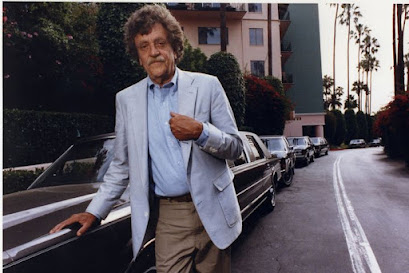
Fates Worse Than Death is a collection of essays is basically Vonnegut's commentary on the 1980's. It was interesting to note how many of his essays (or parts thereof) address current day problems. I don't know if that means there are some problems that are timeless or if it simply means that we have just ignored the problems and they have festered. I know what Vonnegut would say:

"We probably could have saved ourselves, but were too damned lazy to try very hard...and too damn cheap." (p. 116, Essay XI)
Kurt Vonnegut (1922-2007)

There are 21 essays (some are actually transcribed speeches), a preface and a lengthy Appendix with multiple essays. Like any collection, there are good ones, mediocre ones and even a couple of terrible essays here. But, I found this collection to be pretty good, especially if you space them out.

I rate this collection 4 stars out of 5. It can be found on Amazon.com here: FATES WORSE THAN DEATH: AN AUTOBIOGRAPHICAL COLLAGE by Kurt Vonnegut.

REDSHIRTS: A NOVEL with THREE CODAS (Kindle) by John Scalzi


Winner of 2012 RT Reviewers Choice Award.
Winner of the 2013 Hugo Award for Best Novel.
Winner of the 2013 Locus Award for Best Science Fiction Novel.

Published in 2012 by Tor Books.

Redshirts is considered a modern classic and I absolutely jumped at the chance to download it for free thanks to Tor Publishing's e-mail newsletter and their monthly free e-book offer. I don't take every e-book they offer, but this is a book I've been considering for a while and you can't beat the price of free.

The title of the books tells you that there is a Star Trek tie-in with this novel. As every Star Trek fan knows, on the original series the joke is that the character wearing red shirts (except for Scotty and Uhura) are expendable characters that die in a number of weird and sometimes horrible ways. 

This book features a universe similar to that of Star Trek. The characters are based on the flagship of the Universal Union fleet - the Intrepid. The fate of the redshirts on the Intrepid is much like that of the redshirts on the Enterprise on Star Trek

And...that's all I can really say without going into spoilers and I really don't want to do that. Suffice it to say - if you are a Star Trek fan, you will enjoy this book.

I rate this book 4 stars out of 5. I would have made it 5 stars but the first of the three codas at the end was so padded with repetitive information that I literally skimmed several pages of it.

This book can be found on Amazon.com here: Redshirts: A Novel with Three Codas by John Scalzi.

UPRIGHT WOMEN WANTED (audiobook) by Sarah Gailey


Published in 2020 by Tantor Audio.
Read by Romy Nordlinger
Duration: 3 hours, 52 minutes.
Unabridged.

A 2021 Hugo Award Finalist
A 2021 Locus Award Finalist
A 2020 ALA Booklist Top 10 SF/F Pick
Booklist Editor's Choice Pick

Book Riot's Best Books of 2020 So Far
Named a Best of 2020 Pick for NPR | NYPL | Booklist Bustle | Den of Geek

I have a weakness for dystopian literature. I don't do too much of it because so much of it is repetitive - usually it is World War III caused by a nuclear or bio-warfare attack by the Iranians, the Russians, the Chinese, the North Koreans, or the Americans. But, I do enjoy seeing where the author thinks we will break down and how we might recover and rebuild.

Upright Women Wanted fit the bill - a future world in which the western United States has devolved back into a Wild West environment ruled by iron-fisted sheriffs that enforce a strict moral code. Their rules include a death penalty for sexual crimes, such as homosexuality and lesbianism. The main character, Esther, had a short-lived romantic relationship with another female who was put to death for holding resistance propaganda material that she was reading because she did not want to forcibly marry a man. When Esther was assigned to marry that man, she fled.

The world she fled to is not very recognizable as modern America. The United States is involved has been involved in a war for so long and has devoted so many resources to that war that the home front has fallen to disrepair. For example, paved roads no longer exist - rich towns have gravel roads. Everyday people ride horses, use wagons and carry pistols. The clothing looks more like a western TV show than ours does. Modern jet planes still exist and are used by the military but civilian TV and radio no longer exist. Also, three states are pretty much out of the union - Utah, Florida and Maine. 

Esther stows away in the wagon of two women known as Librarians. Librarians bring literature, movies, news and packages from one town to another. If you have seen the Kevin Costner movie The Postman or read the book by the same name, the librarians serve roughly the same purpose as The Postman did in that movie/book. They knit together these communities and are welcomed almost as celebrities when they arrive. 

This book won a lot of awards and I am not sure how. Before I get judged for it, be aware that I had no problem with the book's lesbian content. I knew that was in the story when I downloaded it and I was interested in seeing how that was worked into the story. Turn out it was pretty much like I imagined. 

Careful: spoilers ahead

I was disappointed in the story because so little about the dystopian future was explained (like who was American fighting the war with and how did it let the home front deteriorate so badly) and the book felt more like the introductory chapters to a much longer story than an actual complete story. I would say that it was a novella, but novellas usually have an actual ending and this story just sort of ended at what felt like maybe the halfway point, maybe even not that far along. It felt like a solid start, but nothing more. I was not bothered at the themes of the book, I was bothered by the fact that it just...abruptly ended.

More spoilers:

The government in this story, at the local and national levels, is very much into censorship. It is odd to me that no one wants to censor the materials that the librarians carry from town to town considering that libraries are often targets for censorship. I know the book was published in 2020, but a common theme of the news in 2021 was "concerned community members", lawmakers and other politicians that clamored for schools to remove books from school and classroom libraries. There were even concerted attempts to remove books from regular public libraries. 

The idea that a government that executes people for simply possessing propaganda would not also regulate what amounts to an Old West style bookmobile carries is laughable. It would be more appropriate to have the librarians subject to thorough searches at every checkpoint and town. 

I rate this audiobook 2 stars out of 5. It can be found on Amazon.com here:  
UPRIGHT WOMEN WANTED by Sarah Gailey.

Featured Post

<b><i>BAN THIS BOOK (audiobook)</i></b> by Alan Gratz

Published in 2017 by Blackstone Audio, Inc. Read by Bahni Turpin. Duration: 5 hours, 17 minutes. Unabridged. My Synopsis Ban This Book is t...

Popular posts over the last 7 days