THE LAST DECENT PARKING SPOT in NORTH AMERICA (audiobook) by Tom Bodett


Re-published in 2009 by Random House Audio
Read by the author, Tom Bodett
Duration: 2 hours, 30 minutes

Tom Bodett's "End of the Road" series is my absolute favorite audiobook collection. It dates from the 1990's and features an eclectic cast of characters from a fishing port town in Alaska named End of the Road because you literally can't drive any farther once you've gotten there. The series is simply the telling of life in this small Alaska town - the kind of drama that one gets in everyday life. Kind of like a more realistic Andy Griffith's Mayberry set in Alaska. This series speaks to everyone's life experiences in one way or another.

This is probably the weakest of the series that I have heard so far, which means it is merely really, really, really good and one of the most enjoyable audiobook experiences that I have had this year.

In this edition, we learn about Clara, who is also the mayor's older sister and her coffee shop and how the regulars buy her a new coffee maker and fix up her shop a bit to celebrate her 20th anniversary in business. Also, they want to get a decent cup of coffee since her old coffee maker was making some pretty nasty coffee. The problem is she is cranky, cantankerous and just plain difficult so no one knows if she'll take it like it was meant, or if she'll be upset.

The story continues as the town of End of the Road searches for and hires a new City Manager.  Also, we are introduced to Doug McDoogan, a ne'er-do-well liar and get-rich-quick artist who never succeeds and can't seem to figure out why he is always down and out. But, it turns out that actually does have a skill. The story moves on to adolescent Norman Tuttle, who has a near-death experience on his dad's fishing boat and finds his place in this world again.

The last big story is the story of the destruction of the sauna featuring and best friends, the Storbocks and Flanigans, and how they ended up skiing down the road naked in the snow in the middle of the night. It all makes sense once you hear it, I promise.


I rate this story 5 stars out of 5.

This audiobook can be found on Amazon.com here: The Last Decent Parking Spot in North America.

THE BIG GARAGE on CLEAR SHOT: GROWING UP, GROWING OLD , and GOING FISHING at the END of the ROAD (audiobook) by Tom Bodett


Book version originally published in 1992
Read by the author, Tom Bodett
Duration: 2 hours, 14 minutes
Published by Random House Audio

I am an unabashed fan of Tom Bodett's cast of characters in the fictional town of End of the Road, Alaska. I first found these stories more than twenty years ago on cassette and was pleased to re-discover them because they had been re-released in digital format.

To be honest, most of the time in these stories not much actually happens except for life just going on as normal. There is no big plot to rob the bank that gets foiled, no crime to be solved. Nothing like that. It is regular life stuff being experienced by some eccentric folks in an Alaskan fishing town - literally at the end of the road, thus the name of the town is End of the Road.

But, when Bodett relates the story of middle school student Norman Tuttle being bullied and his first time going hunting and his experience at the big dance - well, we've all been there. Maybe not exactly, but close enough. And, Bodett relates it so lovingly - it is like this really is a town and these really are real people and we can see into their lives and find common ground with them.


In this episode we also meet the town's new city manager as he discovers the joys of fishing and we get to go along with dedicated vegan and animal rights activist Tamera Dupree as she heads off to Hawaii. Why is she going to Hawaii? She won a free trip to a hunting and fishing convention in a drawing and she plans to disrupt the whole thing as a protest.

I enthusiastically recommend this entire series. Among the best audiobook experiences I have had.

I rate this audiobook 5 stars out of 5.


This audiobook can be found on Amazon.com here: The Big Garage on Clear Shot.

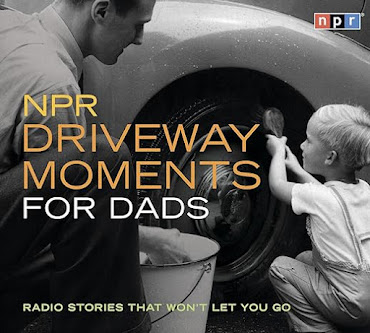
NPR DRIVEWAY MOMENTS for DADS (audiobook) by NPR


Published in 2012 by HighBridge Audio
Multicast Performance

Duration: 1 hour, 38 minutes.


Billed as "Radio Stories that Won't Let You Go", the premise of this audio series is that each of these stories is so compelling that when they were broadcast over the radio you would have waited in your car in the driveway to hear the end of the story rather than going on in to your house.

There are 21 tracks in this collection and, as in all collections, they are of varying quality. Some seem to have been included only because they fit the theme but not because they are particularly riveting. However, most are really good and a couple are very touching. The story of the dad and son who go with the Boy Scouts precisely because the dad has no real outdoor skills was quite funny. 


The "Driveway Moments" series is pretty strong and this is a solid entry. I rate it 4 out of 5 stars.

This audiobook can be found on Amazon.com here: NPR Driveway Moments for Dads.

SELECTED SHORTS: EVEN MORE LAUGHS (audiobook) by Symphony Space


Humor, Like Food, Is Highly Subjective


Published by Symphony Space in October of 2010

Multi-cast performance
Duration: 3 hours, 6 minutes

Here is the premise behind Selected Shorts: Even More Laughs - get a collection of funny short stories and have them be read by great performers such as Stephen Colbert and Alec Baldwin.

There are eight stories of varying quality. As I noted in the title of this review, humor is very subjective. What I can really tell you is that this set is designed to appeal to a wide variety of tastes - not by being middle of the road but by bringing a true eclectic mix to the production. That is certain to guarantee that the listener will not enjoy everything.

Stephen Colbert begins the collection with "The Lie",  the story
Jerry Zaks (b. 1946), one of the
performers in this collection.
of a man who is just overwhelmed with being the father of a new baby. In fact, he is overwhelmed with everything - his dead end job, his wife's new confidence and his lack of free time. In his desperation, he lies. And, he builds upon that lie until he goes way too far...

Alec Baldwin delivers a great performance in a story that I found mostly sad rather than funny. There is a story about an obscure recipe from central France that is funny but it extends the joke for so long that I tired of it and skipped to the end.

For me, the two best stories were "The Swim Team" written by Miranda July and performed by Parker Posey and the last story of the collection: "The Conversion of the Jews", performed by Jerry Zaks. Both were laugh out loud funny.


I rate this collection 3 stars out of 5. This collection is certainly a mixed bag.

This audiobook can be found on Amazon.com here: Selected Shorts: Even More Laughs.

GATEWAY to FREEDOM: THE HIDDEN HISTORY of the UNDERGROUND RAILROAD (audiobook) by Eric Foner


Published in January of 2015 by HighBridge
Read by J. D. Jackson
Duration: 9 hours, 3 minutes
Unabridged

I am torn by this audiobook. On the one hand, I am absolutely fascinated by Civil War, including all of the controversies leading up to it. On the other hand, this audiobook has real issues, including some stretches of tedious writing and stumbles from the reader.

Perhaps the most annoying thing about this book is the way that the title of the book does not really describe the book. The title, Gateway to Freedom: The Hidden History of the Underground Railroad, implies it is about the Underground Railroad across the country. Instead, this book is exclusively about the Underground Railroad's activity in New York City. Other locations are mentioned only in relation to how they tie in to the story of the Underground Railroad in New York City.

His decision to make the title so inclusive while making the actual book so exclusive is either a clever ruse by the marketing team of his publisher or, F
Eric Foner. Photo by Luath.
oner,  a lifelong resident of New York City, having lived outside of the city for only small stretches of his life, has forgotten that there is a massive country attached to his beloved city that is a part of America as well. The world does not stop at the Hudson River.

New York City was a tepid supporter of the Underground Railroad, at best. Its ties to the South were quite strong since so much Southern shipping went through New York City's ports and so many of its bankers financed Southern plantations and factories. While the country was slowly sliding towards Civil War, slavery did not seem so outrageous to many New Yorkers because they could remember when slavery was legal in New York state. Despite those ties and the legacy of slavery, it was also where two of the country's leading anti-slavery organizations put their home offices.

Foner does an excellent job of providing lots of facts about New York City's Underground Railroad infrastructure. His research is impressive. Along the way, especially in the first one-third of the audiobook, this powerful story often gets bogged down with long lists of names and groups, most of which are not particularly meaningful to understanding the story. I would have skimmed over those passages if I had been reading the book, but as a listener of the audiobook version I was just stuck listening. Plus, as a listener I kept noticing how many times that Foner overused the word "absconded" when describing a slave's attempt to run for his or her freedom - I almost started a tally sheet. 

Once we get into the meat of the book, the story gets more interesting because Foner (finally) starts to let the amazing stories of escape take center stage. Everybody who was anybody in the movement on the East Coast went through New York City at some point and these tales are an amazing testament to human courage in the face of evil.

The narration was also a weakness. It shouldn't have been because J. D. Jackson is an award winning audiobook reader many times over. His voice is a velvet smooth bass but he has multiple mispronounced words and odd pauses at unnatural places in sentences - so many that I found him to be distracting and he detracted from the overall experience rather than enhancing it. I have reviewed over 340 audiobooks and this one was one of my few bad experiences with a reader.

In the end, the solid information is hurt by a combination of a misleading title, tedious story-telling and a poor listening experience. 

I rate this audiobook 3 stars out of 5.

This audiobook can be found on Amazon.com here: Gateway to Freedom.

THE BEST of WAIT WAIT...DON´T TELL ME! (audiobook) by NPR


Published by HighBridge Company/NPR in 2008.
Multiple Performers
Duration: 2 hours, 11 minutes.

If you are familiar with the NPR radio show Wait Wait...Don´t Tell Me then you know what this collection is all about. Clever people playing silly games with news stories. This collection comes from 2006-2008 so the news is a little old. But, then again, you don´t listen to this show for the news - you listen to it for the funny takes on the news by the guests and the panel.

Guests include Michael Moore (note: I am not a big fan of Michael Moore but he was very funny), Ted Koppel, Drew Carey and NBA star Chris Paul. Besides the guests, there is just a lot of silly news and even better commentary on it.

Regular panelist Paula Poundstone was hilarious as was P.J. O´Rourke, Roy Blount Jr, Mo Rocca and Tom Bodett.

If you love this radio show, this is a must-listen.

I rate this audiobook 5 stars out of 5.


This audiobook can be found on Amazon.com here: The Best of Wait Wait...Don´t Tell Me.

THE FATEFUL LIGHTNING: A NOVEL of the CIVIL WAR (Book #4 of 4) (audiobook) by Jeff Shaara


Published in 2015 by Random House Audio

Read by Paul Michael
Duration: 25 hours, 30 minutes
Unabridged

The fourth book in what started out as a trilogy, The Fateful Lightning concludes Jeff Shaara's story of the Civil War's Western Theater with Sherman's March to the Sea and the eventual surrender of the Joseph E. Johnston's army in North Carolina. 

But, the story is more than that. It is also the story of newly freed slaves discovering what freedom truly means. It is the story of a way of life being destroyed and the hope that a new, more equitable society can rise up in its place. It is the story of a legendary commander whose self-doubts constantly plague him. It is the story of an army that knows deep down that it is going to lose but still tries to survive - for pride if for no other reason. 

Confederate Lt. General
William J. Hardee
(1815-1873)
The story focuses on two generals - Union General William T. Sherman and Confederate General William J. Hardee. Hardee is trying to cobble together a little army made up of regulars and state militia in order to stop Sherman's advance. Hardee is greatly outnumbered and he has no idea where Sherman is going. Hardee literally wrote the book on tactics that both sides used, but Hardee was clueless as to how he should proceed because Sherman's March to the Sea was an unprecedented move. Hardee couldn't attack Sherman's supply lines because Sherman had no supply lines. Sherman kept his ultimate goal secret and made it look like he had multiple destinations. Hardee had to keep his small army thinly spread out just so that he could offer a token defense.

Once Hardee retreats into the Carolinas, Sherman's goal become obvious but by this point it doesn't matter - the Confederacy is collapsing all around...

********

The finale of this series is a definite improvement over the tedious second and third installments. The first book was excellent and this one was quite good. The tendency to get into the heads of the characters and repeat trains of thought was limited when compared to the middle two books.

I am a serious student of the Civil War and I was pleased to learn so much about General Hardee. Most books mention that he wrote the Army's book on tactics and that's about it. He was quite interesting.

Shaara's choice to make a main character out of Franklin, a slave freed by the arrival of Sherman's army, was interesting. The character has little to do with the actual military and could have easily been left out. But, Franklin's discoveries about what freedom really means away from the plantation make the reality of the changes brought by Sherman much more vivid.

The combination of scenes involving Lincoln and Lincoln's assassination are powerful. Some very strong writing.

The audiobook was read by Paul Michael. I do believe that he read for the entire series (I listened to volumes 2, 3 and 4) and his voice characterizations are consistent all of the way across the series. He is so good that you recognize voices without having to be told which character is speaking.

But, for all of his voice talents, Paul Michael is an exceedingly slow reader. His Southern drawls are magnificently slow. For the first time in my life I sped up the playback of the text (I listened to a digital file). I had to speed it up to play 20% faster just to make the characters speak at a tolerable level.

I rate this audiobook 4 stars out of 5.

This book can be found on Amazon.com here: The Fateful Lightning.

TAINTED by SUSPICION: THE SECRET DEALS and ELECTORAL CHAOS of DISPUTED PRESIDENTIAL ELECTIONS by Fred Lucas


Published in May of 2016.

The 2016 Presidential election cycle has been wild, to say the least. A rookie politician with an unstoppable mouth and a veteran politician with a long, checkered past are an unlikely pairing. Throw in a couple of strong third party candidates and the fact that these are the two most hated candidates in a generation and you may very well have an election in which no one wins a majority of the votes in the electoral college.

What would happen in no one actually wins, or if it is too close to call?


Aaron Burr (1756-1836)
In Tainted by Suspicion, veteran White House correspondent Fred Lucas gives us some insight as he tells the story of six troubled Presidential elections: 1800, 1824, 1876, 1888, 1960 and 2000.

With each election Lucas describes the political environment of the time, the major players in the election and the reasons why it became a disputed election. He details how it finally worked out and then offers informed speculation as to what would have happened if the other guy had won.

Most of the stories are quite interesting. Even the "what-ifs" are pretty good, with the exception of the "what-if" for Aaron Burr because it just went on for too long. Political junkies will note the definite lean to the right for the discussion of the JFK/Nixon and Bush/Gore elections. It is there, but it is also not inaccurate, in my opinion.

For fans of Presidential politics, this is a must-read. For those that are just curious about what how convoluted American politics can get, this is a worthy introduction.

I rate this book 4 stars out of 5.


This book can be found on Amazon.com here: Tainted by Suspicion.

CANCEL MY SUBSCRIPTION: THE WORST of NPR: MOE MOSKOWITZ and the PUNSTERS PERFORM the FUNNIEST SONGS and NONSENSE that NPR HAS to OFFER (audiobook) by Moe Moskowitz and the Punsters


Originally published by Phoenix Books in April of 2001
Re-published in 2016
Multicast performance
Duration: 1 hour, 6 minutes

Moe Moskowitz used to be a semi-regular feature on NPR in the morning. He is a character created by author and high school English teacher Robert Kaplow.

NPR is not known for its humor. In fact, I listened to one of their compilation CDs that was supposed to be funny and found it to be even less funny than the normal types of stories that NPR covers during a normal morning. Great news stories but, aside from the weekend stuff, they're not particularly funny.


Robert Kaplow. Photo by Lynn Lauber
Moe Moskowitz must have been like the proverbial bull in the China shop when his bits were played. He is quick, clever and non-stop. His attention ranges all over the place. He sings, he pitches new product ideas, he pitches new story ideas, he parodies everything from Alvin and the Chipmunks to Cokie Roberts. 

The collection is sort of a recounting the amazing career of Moskowitz. The style is very much in the style of Spike Jones and the City Slickers, a group that was pretty much the Weird Al Yankovic of the 1940s and 1950s.

Was it funny? For NPR this is a knee-slapper. I found it to be amusing with just a couple of truly funny moments. I listened, enjoyed it well enough but I have no plans to go back and listen again. Lots of parody songs, lots of clever lines but nothing that really nailed it for me.

I rate this audiobook 3 stars out of 5.


This collection can be found on Amazon.com here: Cancel My Subscription: The Worst of NPR.

THE CROSSING (Harry Bosch #20) (audiobook) by Michael Connelly


Published in November of 2015 by Hachette Audio

Read by Titus Welliver
Duration: 9 hours, 24 minutes
Unabridged

In The Crossing Harry Bosch is newly retired from LAPD - a forced retirement due to a suspension due to a rules infraction. Harry's past caught up to him - too many people in too many important places are tired of Harry's "screw protocol - I'm going to solve this case" attitude.

So, Harry is now unemployed. He's suing the department. He's restoring an old motorcycle - a project that he's been looking forward to for a long time. And, he is miserable. 

His goal has always been to solve murders. It's practically his reason for his existence. Now, he has no more murders to solve because he is off the force.

Along comes his half brother, Mickey, the defense attorney, also known as "the Lincoln Lawyer" with a proposal. He wants him to do a little work on a murder case as an investigator for the defense because his regular investigator was hurt in a suspicious motorcycle accident. Normally, Harry would have nothing to do with a defense lawyer. In his mind, they get murderers off the hook and he'd be a traitor to everything he worked for his entire career.
Titus Welliver, the narrator of this audiobook, portraying
Harry Bosch in Amazon Video's 
series Bosch.


But, against his better instincts he agrees to look at the file. And, once he starts digging into the case he notices a few loose ends. And, he can't help pulling on those loose ends, even if it means he has to cross over to the other side...

Just to be fair, I have enjoyed every Harry Bosch novel but one. Quite simply, I am a fan of the series and of the author. This book is a solid addition to the series. I enjoyed the procedural part of the story and the internal struggles of Bosch as he struggles with the concept of crossing over to the defense (thus, the title). But, in the end, the resolution of the case was not as clear as the characters in the story believe it to be. 


Titus Welliver, the actor who portrays Harry Bosch on the Amazon Video television series. He does a great job. He totally gets Bosch's grumpy side.

I rate this audiobook 4 stars out of 5. 


This audiobook can be purchased on Amazon.com here: The Crossing.

DAVID and GOLIATH: UNDERDOGS, MISFITS, and the ART of BATTLING GIANTS (audiobook) by Malcolm Gladwell


Published by Hachette Audio in October of 2013.
Read by the author, Malcolm Gladwell.

Duration: 7 hours
Unabridged

Malcolm Gladwell has made his reputation by writing insightful articles in which you thoroughly learn about one thing but also how it applies to a larger concept.  Usually, there's a little light science involved and, if nothing else, the reader (or in my case, the listener) feels like he or she learned a little bit and heard an interesting story.

In this case, the premise is that in the David vs. Goliath stories, the underdog is not always as much of an underdog as it seems. He starts with the original David vs. Goliath story - the one in the Old Testament of the Bible and explains that Goliath clearly had size and strength going for him but those weren't all-pervading advantages. Goliath was strong and large but his strength made him reliant on the sword and close-in fighting. If an enemy got close to him and if Goliath got hold of him, Goliath would win. But, David was quick, small and used a sling. One commentator he quotes compares a skilled sling-user to a person using a pistol. David stands back, takes his shot, knocks down Goliath and then Goliath's strengths are all weaknesses. His size and armor makes it hard for him to get up. David rushes in and finishes Goliath.

Malcolm Gladwell in 2014.
Photo by Kris Krug.
In David and Goliath: Underdogs, Misfits and the Art of Battling Giants, Gladwell takes the lessons of the original story ("There is an important lesson in that for battles with all kinds of giants. The powerful and the strong are not always what they seem.") and applies them to other situations. Some of them are natural fits (the entertaining and inspiring story of the girl's basketball team with not a lot of talent but a whole lot of grit and the willingness to play full court defense), some not so much (education, learning disabilities, family tragedies).

But, even if the theme is imperfect throughout the book, the book itself is interesting throughout. His commentary on education and class size was interesting to this public school teacher. The conventional wisdom is that smaller is better, and it is to the point of diminishing returns. But, there is a competing conventional wisdom that says "class size does not matter." In my school system one of our assistant superintendents was fond of quoting that "fact" as she advocated for ever larger class sizes as a way to save money. It turns out they are both right. Too small (maybe 10 or 12) and the class dynamic gets weird, something I already knew from experience. Too large and the class gets unwieldy and the class dynamic changes from interactivity to college large class lecture format (near 40). I have had classes that large as well. They are tiring and the grading gets overwhelming. Plus, no one gets any sort of attention except for the troublemakers.


There's a lot of ground covered in just 7 hours and I found the whole book very entertaining. He talks about everything from the London Blitz to serial killers to the Civil Rights struggles in Birmingham in the 1960s to Leukemia. It's all interesting and I felt as though I were listening to a knowledgeable friend ramble on about vaguely related but highly interesting topics. Gladwell does a great job at narration.

The commentary about the perceived legitimacy of police forces in comparison with the British in Northern Ireland and the NYPD in a troubled neighborhood makes that section a must-read when thinking about the Black Lives Matter movement in the United States right now. 


Highly recommended.

I rate this audiobook 5 stars out of 5. It can be found here on Amazon.com here: 
David and Goliath: Underdogs, Misfits and the Art of Battling Giants,

EMBATTLED REBEL: JEFFERSON DAVIS as COMMANDER in CHIEF by James M. McPherson


Published in 2014 by Penguin Press

Famed Civil War historian James M. McPherson aims to fill in an historical gap by providing a biography of Jefferson Davis's Civil War years. He notes in his opening to Embattled Rebel that it is natural to make comparisons between Lincoln and Davis but those comparisons are often lopsided due to a lack of information. There are enough different Lincoln biographies to easily fill a truck. But, Davis is often a caricature - a difficult man who thought he could be general and commander-in-chief due to previous military experience - a man who refused to remove his friends from important military posts and also a man who carried a grudge.

That thumbnail sketch is largely true, but also incomplete. Thanks to the mass of information on Lincoln we are able to detect a sense of nuance.  A lot of source material on Davis never survived the Fall of Richmond. Even worse, many people who worked with him were unwilling to talk about it after the war - they just wanted to get on with their lives and put the war behind them. Even worse, others defended their own reputations by degrading his.

Jefferson Davis (1808-1889)

McPherson's biography of Davis pales in comparison to Doris Kearn Goodwin's work about the Lincoln Administration, Team of Rivals. Even so, this is a solid attempt to fill this glaring hole.

Even though this book mostly reinforces the stereotype view of Davis, it does provide a look into how hard it really was to be the President of the Confederate States of America. He was outgunned from the start and stayed that way throughout the war. It was very rare to have a Confederate force actually larger than the Union force it faced it battle.

But, just as it there was a shortage of men and supplies, there really was a shortage of top level officers. A truism often bandied about by Civil War devotees is that the Union had more soldiers but the Confederacy had better officers. It started out that way but battlefield deaths (Albert Sidney Johnston and "Stonewall" Jackson, to name two of the biggest losses) and difficult personalities combined against the Confederacy to even out things.  Davis is often criticized for holding on to officers like Braxton Bragg for too long but he really didn't have a lot of men with the expertise to manage an entire army. Take a look at the example of John Bell Hood - an aggressive Corps Commander who was promoted and went on to ruin an entire army in just a few months.


There really is not much new here, but it does the reader the service of collecting the information that would be scattered across a larger history of the war and consolidates it into one very readable, if smallish, book.

I rate this history 4 stars out of 5.

This book can be found on Amazon.com here: Embattled Rebel.

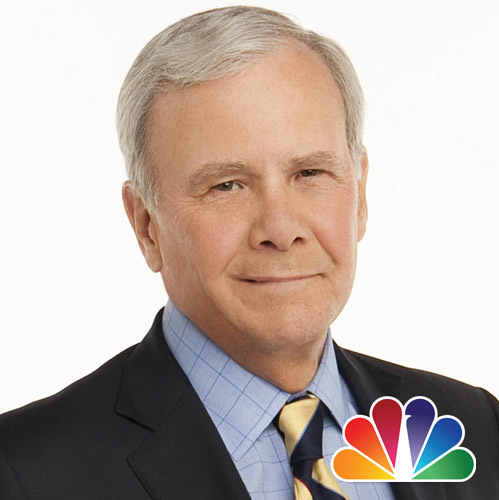
THE TIME of OUR LIVES: A CONVERSATION about AMERICA (audiobook) by Tom Brokaw


Published in 2011 by Random House Audio
Read by the author, Tom Brokaw
Duration: 7 hours, 8 minutes
Unabridged

I picked up the audiobook of The Time of Our Lives in the hopes that former NBC News anchor Tom Brokaw would be offering some in-depth analysis on a wide range of issues. After all, the cover promises to look at "Who we are, where we've been and where we need to go now to recapture the American Dream."

Instead, we get a lot of amiable reminiscing about Brokaw's family, his early career, and a bit of of a slanted history lesson with every chapter with some half-hearted advice that is based on discussion with industry leaders.


That is the essence of the problem Brokaw is a top-level journalist. He is a journalist emeritus - respected and admired for what he used to do but he is not doing the gritty stuff any more. He hobnobs and socializes with elites. If he wants to talk about some new trend in computers he can literally call Bill Gates and get his take.

But, here's the problem. Gates is no longer street-level. He's up in the clouds and he doesn't see everything any more. To make a comparison to a war situation, Brokaw is talking to the officers in their cushy offices far from the front and not talking to the people in the trenches. His sources are important people but they no longer know the realities of the daily grind. Brokaw is quoting CEOs about what is going on and not talking to the people doing the actual work.

It was most glaringly obvious in his discussions about education. He comes back to the topic time after time and his all sorts of "insights" that tell me he is talking to school corporation superintendents and not to actual classroom teachers (like me - this is my 27th year in the classroom).

For example, he refers to "charter schools" as a help to public schools. Almost no public school teacher or leader sees them that way. They see schools that are allowed to pick and choose who can attend, avoid rules that hamstring public schools (couldn't we help the public schools by removing those rules for everybody?) and hire unlicensed staff who get to become teachers with just a couple of weeks of training. A head of a school system might say that he welcomes the competition, but that's just a politician talking.

At one point Brokaw muses that maybe public schools would be better if they could use the methods that the Marines use in basic training to teach students. Sure, Tom, that would be great. Only take in the ones that make the cut (there are no physically disabled or mentally disabled Marines) and throw out anyone that won't get with the program. Tom - those are the methods that the most egregious charter schools use.


My least favorite quote from the book - I literally pulled over to write this one down because I was listening while driving: "Business is the consumer of the product that schools produce and academics have lost the sense of that." No, Tom. students are the consumer of the product that schools produce. Students are educated. Schools serve the students. Students are not boxed up and shipped out to corporations like so many gears. Students choose their own lives and a well-rounded education helps that process.

Brokaw's breathless announcement to teachers that students can use their cell phones to cheat on tests was too much for me. He was in the midst of a mini-rant about the uses of technology in the classroom and sounded like he just discovered something that we've all been missing. I laughed out loud and the gall of a man to tell professional educators something that we have been fighting on a daily basis for more than 5 years by the time this book was written. It's like he's the only one that figured this out.

But, what is really the most unforgivable thing about this book is that it has no zip. It is the audio version of an oatmeal breakfast with a few interesting stories sprinkled in. Hearing Tom Brokaw talk about bad traffic in Los Angeles and how his old house has been bought and re-modeled is not interesting listening. I was expecting something with some real analysis and some novel suggestions. What we ended up with is sweet family stories, advice to eat at home more instead of at a restaurant so you can save your money for a rainy day and the perspectives of other people who are not longer in the day-to-day grind of trying to "recapture the American Dream."

I rate this audiobook 2 stars out of 5. I was so glad to be done with it.

The Time of Our Lives can be found on Amazon.com at this link.

SPECIAL AGENT CHRISTIE LOVELACE: VILLAGE of IDIOTS by Gene Penny


Published by Eugene Penny in May of 2016.
Duration: 5 hours, 58 minutes.
Unabridged.
Read by Rebecca Roberts.

FBI Special Agent Christie Lovelace is a plucky, sarcastic, foul-mouthed agent who investigates offbeat cases. Think X-Files, but with a much more gross, much more weird take.

Lovelace has been sent to Danbury, Texas to investigate a charge of corruption. It seems that the whole town is being controlled by one man and a person may have died.

But, once Lovelace arrives, after a frustrating series of humorous personal disasters, she discovers that the body has disappeared from the morgue. When she goes to the jail to follow a lead the stench of feces is overpowering...


Plus, people keep hinting about the dead coming back to life.

It's going to be a strange Monday.

My thoughts:

For me, this book was a little too gross and a little too interested in being weird for the sake of weirdness for my taste. Too many oddball characters in one place. I like Christie Lovelace and I liked the general concept. But, I felt like the story just got lost in its own shenanigans. 


The story was read by Rebecca Roberts. She did a good job with a wide variety of voices. She made a lot of very different characterizations and showed a lot of range.

I rate this audiobook 3 stars out of 5.

This audiobook can be found on Amazon.com here: Special Agent Christie Lovelace: Village of Idiots.

Note: I received a free copy of this audiobook in exchange for an honest review.

DROWNED CITY: HURRICANE KATRINA & NEW ORLEANS (graphic novel) by Don Brown


Published in August of 2005 by HMH Books for Young Readers.

Written and illustrated by Don Brown

Sibert Honor Medalist
Kirkus' Best of 2015 list
School Library Journal Best of 2015
Publishers Weekly's Best of 2015 list
Horn Book Fanfare Book 
Booklist Editor's Choice.

The story of Hurricane Katrina has been told many ways in many different formats but this graphic novel by Don Brown is undoubtedly one of the more powerful re-tellings. The powerful combination of the simple text combined with the simple, sad drawings of this tragedy work together to move the reader.

There is no main character to the book, just a simple re-telling of the story, starting with the birth of the storm, continuing on with the multiple mistakes leading up to the flood, the horror that followed and finally following on to the re-building of the city. 

From time-to-time an unknown person will speak directly to the reader, such as when a FEMA employee says, "When I have a nightmare, it's a hurricane in New Orleans." At another point, a train conductor stands on any empty train platform next to his train and says, "We offered...to take evacuees out of harm's way. The city declined." It turns out that all of these quotes are real quotes from real people that are endnoted in the back of this graphic novel.

This is well worth your time and a portion of the proceeds are donated to Habitat for Humanity.


I rate this graphic novel 5 stars out of 5. Excellent.

As of the date of this review, this graphic novel was being sold for $12.58 on Amazon.com. Check here for current pricing: Drowned City: Hurricane Katrina and New Orleans.

THE INNOCENT (Will Robie #1) by David Baldacci


Originally published in 2012.

The Innocent introduces Will Robie, a professional hit man who works for the United States government. His hits are usually drug cartel leaders, leaders of terrorist organizations and the like.

Robie gets an assignment close to home, which is a weird thing in and of itself. The first two hits described in the book are out of country hits. The fact that they are out of country hits gives the U.S. government a bit of plausible deniability. This new assignment is in Washington, D.C. and, as far as Robie can ascertain, the target is a fellow member of the intelligence community - but not an important one.

He's willing to follow through with it until he sees that the target is actually a mom with a young son and a baby. He hesitates, tries to figure out what is going on and that's when everything goes topsy-turvy in Robie's already convoluted world...
The White House. Photo by Zach Rudisin


This book was not a particularly great book for a couple of reasons. But, I will start with the good parts. The characters are great. Robie is likable character (for a stone-cold assassin) and his character does grow throughout the book. Also, the two supporting characters are interesting and the interaction between all three of them is well done.

But, the plot holes are not just large, they are magnificent. Robie stumbles into a plot, but you find out that he didn't really stumble into it - it was enlarged to include him as well in a giant cat-and-mouse game that makes no sense when you consider how it puts the original conspiracy at so much risk. Also, I knew who it was from the beginning because of a clue that was dropped that I cannot believe Robie did not pick up on and include in a mission debriefing. If he had, the entire plot of the book could have been avoided.

Also, on a pet peeve note there is this:

I am a Spanish teacher. I notice the Spanish in books and Baldacci includes a mis-translated gem on page 182 that tells me that he can't bother to actually check his dictionary translation with any of the millions upon millions of native speakers of Spanish that live in the United States. It's not that hard. It is a symptom of the lack of follow-through that pervades the book and makes for an iffy plot.


I rate this book 2 stars out of 5.

This book can be found on Amazon.com here: The Innocent by David Baldacci.

THE FLASH: STOP MOTION (Justice League of America) by Mark Schulz


Published November 1, 2008 by GraphicAudio.
From an original novel first published in 2004.


Graphic Audio has a long tradition of creating excellent audiobooks by going back and telling stories the way that they used to tell them in the old days on the radio - with actors and sound effects. Rather than reading the story to the listener as the author wrote it, they act it out like an old-fashioned radio play.

In The Flash: Stop Motion the story focuses on Wally West, the young protege of the previous Flash, Barry Allen. Barry Allen is gone now and Wally is taking the responsibilities associated with wearing the red tights seriously. But, he is so much younger than most of the rest of the Justice League and he feels a little outclassed by the others. How can he hope to contribute as much as Superman who can practically do anything? Or the Martian Manhunter who can almost keep up with Superman and has telepathic powers? The Green Lantern is young but everyone knows that his ring gives him almost unlimited power. And Wonder Woman? She is grace, power and wisdom personified. Compared to her, The Flash is just a goofy kid. And who can hope to compare himself to the likes of Batman, even if Batman isn't a "super" like the others?

In the midst of this self-doubt, the Earth comes under attack in a series of asteroids. But, these asteroids are odd in that no one can scan them properly and what readings they can make don't make sense - they seem to be from another universe. The Flash can get some sense from them due to his ability to vibrate at different oscillations, but he keeps getting pulled away to deal with a series of bizarre murders in Keystone City in which the victims heads are literally blown up while they are sitting peacefully. And, once Wally West starts to realize what is really going on he knows that this is not something that the other members of the Justice League can deal with - it is up to The Flash to step up and save everyone and everything he has ever loved...

Normally, I am a big fan of Graphic Audio's productions, as I mentioned in the first paragraph. In this case, however, there were times when the music and action was so loud that I could not hear the voices of the characters or the narrator. This was not the case consistently, but there were times when the audio mix was just a mess. Even worse, I found it extremely hard to understand the voice of Flash's opponent. Most of the time I just guessed what he said based on the reactions of the other characters or further elaboration by the narrator.


But, if those were the only problems in this story I would have been pleased. This audiobook suffers from a near fatal case of TOO MUCH TALKING. Like in a bad play, most of the characters get their chance to step up and deliver a soliloquy. Superman gives a small one, Wally West gives a few, the Martian Manhunter gives several small ones but the worst is an incredibly long speech by a pivotal character towards the end of the book. I am not going to create spoilers but the long build up to the meeting of this character was tedious to listen to and this character's droning speech and contrary logic (that leaves a massive plot hole) just goes on and on and on. Ironically, the character just impressed on The Flash that time was of the essence because his opponent was destroying entire universes every second (or worlds, the character uses both terms interchangeably) and billions of lives were being lost every second and then the character just stands there and talks and talks and talks and tells Wally its entire history. Why? Because you should tell stories why people are annihilated, I guess.

So, way too much backstory told in long speeches, bad work on the mixing board from time to time and not enough action compared to the talking.

I rate this audiobook 2 stars out of 5.


This audiobook can be found on Amazon.com here: The Flash: Stop Motion

MY BROTHER'S FACE: PORTRAITS of the CIVIL WAR in PHOTOGRAPHS, DIARIES, and LETTERS by Charles Phillips and Alan Axelord


Published in 1993 by Chronicle Books

Designed to be a "coffee table book" rather than a thorough re-telling of the war, this history of the American Civil War is quite enjoyable. The strength of My Brother's Face is immediately obvious - the gorgeous, large photographs of soldiers, sailors, spies and other participants in the events of the Civil War.

I find that as I get older I catch myself looking at the faces of these people and wondering what life was like for them. Some of them look stiff and fake, but some, including a lot in this collection, imbue a sense of vitality, a sense that these were living, breathing people. Sometimes it is a smirk, or perhaps a look of unease.

I simply love a picture that is used in this book of the 4th U.S. Colored Troops on p. 121. This is a close-up of the picture from the book. These men all have a look of confidence, determination and even distrust that speaks to us even more than 150 years later and exemplifies what a well-chosen picture can tell the reader that even a well-written text cannot.


4th U.S. Colored Troops stationed at Fort Lincoln in
Washington, D.C.
The history part of the book is told simply and sometimes in an abrupt manner, such as on page 49 in the one page description of the Battle of Antietam. It concludes with this paragraph:

"McClellan had won a costly, if strategically vital victory, but he now seemed reluctant even to give chase to Lee. A much-frustrated Abraham Lincoln sacked his general and freed the slaves."

While all of that is true, it completely skips over the slavery debate within Lincoln's cabinet and the strategy involved - especially the need to pacify foreign governments that were contemplating intervening on behalf of the Confederacy.


Clearly, if this were the reader's only exposure to Civil War history, this book would come up short. But, if you are a student of the Civil War, this book offers something different with these portraits and photographs of camp life. Many books include pictures, including many of the pictures in this book, but few offer them in such a large format which can make all of the difference.

Despite its flaws, I rate this book 4 stars out of 5.


This book can be found on Amazon.com here: My Brother's Face.

THE EAGLE CATCHER (Wind River Reservation Mystery #1) by Margaret Coel


Originally published in 1995.


Set on the Wind River Arapaho reservation in Central Wyoming, this murder mystery features a likable cast of characters and great descriptions of cultural aspects of the Arapaho. Comparisons will inevitably be made to Tony Hillerman's series set amongst the Navajo and this book fares quite well in the comparison.

The mystery involves the murder of Harvey Castle, the tribal chairman in the middle of the Ethete powwow. The custom is that everyone camps out in tipis for the event and Harvey Castle is found stabbed to death in his tipi - murdered in his sleep.

The local police and the FBI quickly find a suspect but Father John O'Malley of the reservation's Jesuit mission doesn't buy it. He starts his own investigation and soon ruffles a lot of feathers as he starts to figure out who really killed Harvey Castle...

I really like the John O'Malley character. He was a once proud priest who was humbled by alcoholism and sent out in the middle of nowhere to get his life together. He has made a real connection with his parishioners and O'Malley's past grand failure makes him a very approachable character (and a much better priest).

The mystery was not particularly hard to solve (I nailed it early on) but it was an enjoyable read nonetheless.


I rate this book 4 stars out of 5.

This book can be found on Amazon.com here: The Eagle Catcher.


TETTERBAUM'S TRUTH (Just Call Me Angel #1) by S.R. Claridge


Published in 2010 by Global Publishing Group.
298 pages.

Tetterbaum's Truth was introduced to me as being similar to Janet Evanovich's Stephanie Plum series. For those not familiar with this ever-growing series, Stephanie is the classic "fish out of water" - she is a gorgeous, unemployed single woman who takes a job as a bounty hunter for a bail bondsman. If she brings them in, she gets paid. But, she's never used a gun. She has no skills to do this job but, in the end, she does so in her own hilarious way.

On the surface, this book does indeed have some similarities with the Stephanie Plum series. Angel Martin is a single woman who owns a bar in Chicago called Tetterbaum's Pub. She's invested her life savings in it and it's working. Her love life is a mess since her fiance dumped her and disappeared but she does have a good time with the mysterious Grayson. It's not serious but it is seriously physical. Her only living family is her Great Aunt Olga who fusses over her constantly, cooks amazing Italian food and sets her up on blind dates with "nice" but boring men.


Chicago. Photo by Allen McGregor.


But, one horrible evening everything changes. She runs down her boyfriend Grayson in a freak traffic accident that leaves her hospitalized for several days. While she is desperately trying to unravel the mystery that resulted in his death, she also starts to uncover information about her past that was hidden from her and this information changes everything...

I only rate this book 3 stars out of 5. The reasons for it come from plot details that I cannot reveal without spoiling the story and I hate it when book reviews are more of a book report and less of a teaser. In just a few words, I think that the Angel and Olga act way out of their original characters in the end of the book. Sure, lots of things happen to them but the reasons for this change are not fleshed out enough to justify them. Especially Olga who has a lifetime of issues to work through but just drops them at the end.

Nice line from the book: "Over linguini and wine, the black and white lines of right and wrong began to blur into a gray shade of loyalty, where labels became eerily synonymous." (p. 186)


This book can be found on Amazon.com here: Tetterbaum's Truth.

Note: I was sent a review paperback copy of this book in exchange for an honest review. 

Featured Post

<b><i>BAN THIS BOOK (audiobook)</i></b> by Alan Gratz

Published in 2017 by Blackstone Audio, Inc. Read by Bahni Turpin. Duration: 5 hours, 17 minutes. Unabridged. My Synopsis Ban This Book is t...

Popular posts over the last 7 days